Your Cart is Empty


Over eighty percent of American performers experience vocal strain at some point in their careers. Protecting your stage voice is crucial whether you are singing, acting, or speaking for long periods. Effective vocal care not only prevents injury but also improves quality and endurance on stage. Discover practical, research based strategies to keep your voice healthy and strong through every American performance, from gentle warm ups to professional evaluation.
| Main Insight | Explanation |
|---|---|
| 1. Begin with Gentle Warm-Ups | Start your vocal practice with gentle breathing and humming exercises to activate vocal muscles without strain. |
| 2. Practice Diaphragmatic Breathing | Use breathing techniques that expand your abdomen to create a solid foundation for vocal projection and control. |
| 3. Train Resonance for Better Projection | Enhance your vocal projection by practicing semi-occluded vocal tract exercises that utilize your body’s natural resonance chambers. |
| 4. Maintain Vocal Health with Hydration | Consistently hydrate and use natural remedies to prevent vocal strain and support the healing of your vocal cords. |
| 5. Assess and Refine Your Performance | Regularly record your voice to identify areas for improvement and track progress through structured practice routines. |
Beginning a vocal performance requires strategic preparation through careful voice warm-ups that protect and enhance your vocal capabilities. The goal is to gradually activate your vocal muscles and respiratory system without straining or causing unnecessary tension.
Recent research demonstrates the profound impact of systematic warm-ups on vocal performance. Integrating core muscle stability with vocal exercises can significantly improve voice quality and reduce potential strain. The Combined Vocal and Core Muscle Stability Warm-Up Method highlights how interconnected physical preparation truly is for singers and performers.
Your warm-up routine should begin with gentle breathing exercises that expand lung capacity and relax your diaphragm. Start by taking slow, deep breaths through your nose, allowing your abdomen to expand fully. Next, transition into soft humming exercises that gradually increase in pitch and volume. These initial steps help transition your voice from rest to performance mode without sudden stress. Analyzing vocal warm-up techniques confirms that gradual progression is key to maintaining optimal vocal parameters.
Warning: Never push your voice past comfortable ranges during warm-ups. Gentle, consistent movements are far more effective than aggressive stretching or forcing vocal sounds. Listen to your body and stop immediately if you experience any pain or unusual discomfort.
Healthy breathing and proper posture are fundamental to developing a powerful and sustainable stage voice. Your body functions as an interconnected system where breath control, muscle alignment, and vocal production work together to create exceptional vocal performance.

Advanced multimodal systems now demonstrate how precise breath control directly impacts vocal quality and pitch accuracy. Professional performers understand that breathing is not just about taking air in but managing its flow with intentional precision. Start by practicing diaphragmatic breathing techniques where your abdomen expands fully during inhalation, creating a stable foundation for vocal projection. Imagine your breath as a controlled stream rather than a sudden burst of air.
Posture plays an equally critical role in vocal performance. Stand with your feet shoulder width apart, maintaining a neutral spine that allows maximum lung expansion. Keep your shoulders relaxed and your chest open, creating an optimal pathway for airflow. Voice care experts recommend consistent hydration and avoiding environments that strain your vocal mechanism. Drink water regularly and be mindful of your breathing patterns throughout daily activities.
Warning: Forcing breath or maintaining incorrect posture can lead to vocal fatigue and potential long term damage. Always listen to your body and progress gradually, allowing natural muscle memory to develop through consistent practice.
Mastering vocal projection requires understanding and training your body’s natural resonance chambers. Your voice is not just a product of your vocal cords but a complex system involving multiple physical spaces that amplify and shape sound.
Comprehensive vocal exercise research reveals that specific techniques can dramatically improve vocal acoustic qualities. Start by practicing semi occluded vocal tract exercises designed to optimize sound production. These techniques involve creating partial mouth closures like humming or using narrow tube resonance methods that help align your vocal mechanism and enhance sound projection.
To develop resonance, focus on creating space in your vocal tract. Imagine your throat and mouth as an acoustic instrument where subtle adjustments can produce remarkable sound quality. Practice speaking and singing with an open throat sensation by dropping your jaw slightly and maintaining a relaxed neck and shoulder region. Experiment with different mouth shapes and resonance placements to discover how slight modifications can dramatically increase your vocal power and clarity.
Warning: Resonance training requires patience and consistent practice. Avoid forcing sound or creating unnecessary tension. Always warm up properly and listen to your body to prevent vocal strain or potential injury.
Maintaining optimal vocal health requires a holistic approach that combines preventive strategies and natural healing techniques. Your voice is a delicate instrument that demands consistent care and thoughtful protection against potential strain and damage.
Professional voice care recommendations emphasize several key strategies for preserving vocal wellness. Hydration plays a critical role in maintaining vocal cord flexibility and preventing inflammation. Drink room temperature water consistently throughout the day and avoid extreme temperatures that could shock your vocal mechanism. Herbal teas with honey and ginger can provide additional soothing properties that support vocal tract healing.
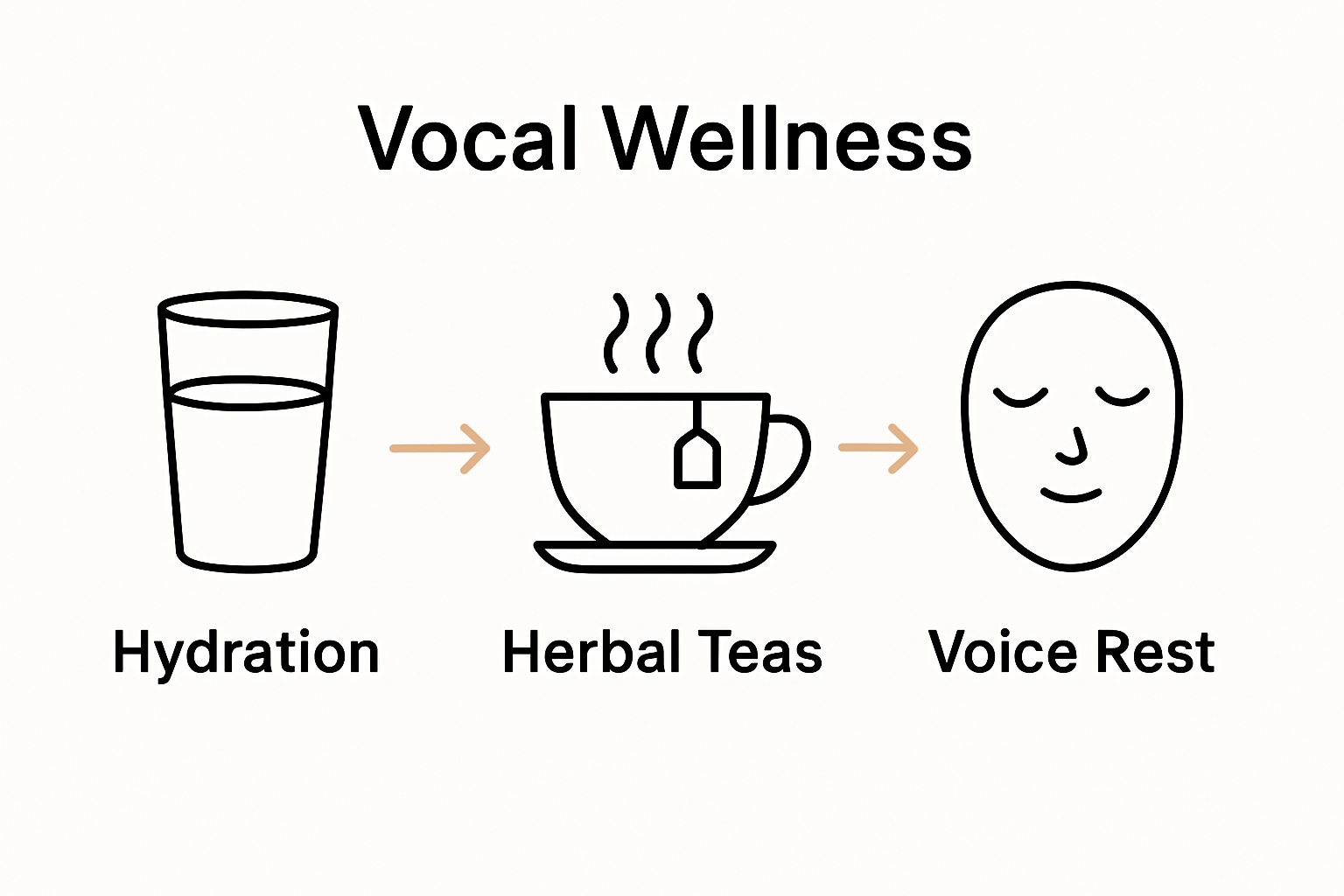
Natural remedies can significantly enhance vocal recovery and resilience. Incorporate throat friendly nutrients like zinc and vitamin C to boost immune function and reduce inflammation. Develop a routine that includes vocal rest periods and gentle herbal gargle solutions using ingredients like sage or chamomile. These natural approaches help create a protective environment for your vocal cords while supporting their natural healing processes.
Warning: While natural remedies are beneficial, they are not substitutes for professional medical advice. If you experience persistent vocal issues or pain, consult a healthcare professional specializing in voice and throat health.
Developing a professional stage voice requires consistent self evaluation and strategic refinement. Your vocal journey is an ongoing process of listening understanding and adapting to your unique vocal instrument.
Recording techniques offer powerful insights into your vocal performance. Create regular audio or video recordings of your singing or speaking to objectively analyze your vocal qualities. Listen critically for tone consistency pitch accuracy and emotional resonance. Pay attention to areas where your voice feels strained or lacks projection and use these observations as targeted improvement opportunities.
Comprehensive vocal exercise research demonstrates that systematic assessment can dramatically enhance vocal performance. Develop a structured practice routine that includes specific technical exercises focusing on areas identified during your self review. Track your progress through detailed practice journals noting improvements in breath control tone quality and emotional expression. Consider working periodically with a vocal coach who can provide professional external feedback and help you navigate complex technical challenges.
Warning: Self assessment requires emotional detachment. Avoid harsh self criticism and approach your vocal development with curiosity and patience. Your voice is a skill that evolves through consistent mindful practice.
If you are serious about improving your stage voice naturally and protecting your vocal health you understand the importance of resonance training and gentle voice care highlighted in this guide. Many vocalists struggle with hoarseness and vocal fatigue which can hinder performance and confidence. At TMRG Solutions, we offer targeted products designed to support your vocal journey including specially formulated natural remedies and tools that help improve resonance and voice quality while reducing strain.

Explore our Improve resonance and voice quality - TMRG Solutions collection to discover herbal sprays and oils that align perfectly with warm-up and breath control techniques. For singers and performers seeking comprehensive support check our Singer Enhancements - TMRG Solutions range of products trusted by vocal coaches and professionals. Take immediate steps to protect and uplift your voice naturally by visiting https://tmrgsolutions.com and find the right solutions tailored to your vocal needs today.
To prepare your voice naturally, start with gentle warm-ups like breathing exercises and soft humming. Focus on taking slow, deep breaths to relax your diaphragm and gradually stimulate your vocal muscles.
Improving vocal projection can be achieved through resonance training, which involves practicing semi-occluded vocal tract exercises. Aim to create space in your vocal tract and adjust your mouth shape to enhance sound quality with consistent practice.
To maintain vocal health, prioritize hydration by drinking room temperature water and using soothing herbal teas. Incorporate regular vocal rest periods into your routine to prevent strain, ensuring your vocal cords are protected and kept in optimal condition.
Assess your vocal progress by recording audio or video of your singing. Listen critically for tone consistency and pitch accuracy, and identify areas needing improvement to refine your practice routine and focus on targeted technical exercises.
Posture significantly impacts your stage voice by enabling maximum lung expansion and proper breath control. Stand with your feet shoulder-width apart, keep a neutral spine, and ensure your shoulders are relaxed to create an optimal environment for vocal production.
