Your Cart is Empty


A stronger singing voice comes from coordination, not pressure. Breath support, resonance, gentle range-building, consistent warmups, recovery time, and awareness of early fatigue all matter more than pushing louder or longer.
TMRG products can significantly improve voice comfort, clarity, mucus balance, stamina, and recovery routines for singers who want their voice to feel more reliable during practice and performance.
Helpful TMRG next steps: explore Singing Enhancement Support, Improve Resonance and Voice Quality, and Vocal Load Support.
Over 60 percent of american singers experience some form of vocal fatigue at least once a year. Whether you are an aspiring performer or simply someone who enjoys singing for fun, protecting your voice is vital. Building healthy vocal habits not only keeps your instrument strong but also reduces your risk of injury. This guide offers clear steps to help american singers develop daily routines and practical skills for long lasting vocal health and progress.
| Key Point | Explanation |
|---|---|
| 1. Prioritize Vocal Hydration | Drinking at least 8 glasses of water daily helps keep vocal folds lubricated, reducing strain and risk of injury. |
| 2. Establish a Gentle Warm-Up Routine | Begin with soft humming and gentle scales to gradually prepare your voice for singing, avoiding any strain. |
| 3. Practice Diaphragmatic Breathing | Engage your diaphragm with controlled deep breaths to provide robust support for sustained vocal performance. |
| 4. Incorporate Targeted Vocal Exercises | Use smooth exercises like sirens and staccato notes to strengthen your voice without excessive pressure. |
| 5. Regularly Monitor Vocal Health | Keep a journal of your vocal practice and sensations, adjusting your routine to prevent potential strain or injury. |
Strengthening your singing voice begins with developing consistent, intentional daily habits that protect and enhance your vocal instrument. This step focuses on creating a sustainable routine that supports vocal resilience and prevents unnecessary strain.
First and foremost, proper vocal hydration plays a critical role in maintaining vocal health. Drinking adequate water throughout the day keeps your vocal folds lubricated and flexible, reducing the risk of friction and potential damage. Aim for at least 8 glasses of water daily, avoiding excessive caffeine and alcohol which can dehydrate your vocal tissues.
Beyond hydration, your daily routine should incorporate strategic practices that minimize vocal stress. Avoiding vocal irritants like smoking, secondhand smoke, and environments with excessive dust or chemical fumes will help preserve your vocal quality. Consider using a humidifier in dry environments to maintain optimal moisture levels for your vocal mechanism.
One powerful habit to cultivate is a morning vocal warmup routine. Start with gentle humming, lip trills, and soft scales to gradually awaken your vocal muscles without causing strain. These low-intensity exercises help increase blood flow to your vocal folds and prepare them for more intensive singing later in the day.
Warning: Never push your voice when you feel tired or experiencing any throat discomfort. Listening to your body and respecting its limits is fundamental to long term vocal health and preventing potential injuries.
Implementing strategic vocal warm ups is crucial for preparing your voice for optimal performance and preventing potential strain. This step will guide you through a comprehensive approach to awakening your vocal mechanism safely and efficiently.
Vocal warm up techniques are essential for singers looking to protect and enhance their vocal range. Before any intensive singing session, begin with gentle exercises that gradually increase vocal flexibility. Start with soft humming to activate your vocal folds without excessive pressure. Progress to lip trills and gentle scales that move through your comfortable middle register, allowing your voice to wake up incrementally.
The University of St. Augustine recommends a structured warm up sequence that includes multiple stages. Begin with breathing exercises that engage your diaphragm and support proper breath control. Next, transition to resonance exercises like gentle humming and sirens that help open your vocal tract. These techniques help prevent vocal strain by gradually increasing vocal muscle engagement.
A critical aspect of effective warm ups is maintaining consistent, gentle movements. Avoid pushing your voice into extreme ranges during warm ups. Instead, focus on smooth transitions and listening to your body’s signals. Create a 10 to 15 minute routine that includes breathing work, soft vocalizations, and gradual pitch exploration.
Warning: If you experience any pain or significant discomfort during warm ups, stop immediately. Pushing through vocal strain can lead to long term damage and potential vocal cord injury.
Breathing is the fundamental foundation of powerful and sustainable vocal performance. This step will help you develop core breathing techniques that transform your singing by creating a robust support system for your voice.
Diaphragmatic breathing techniques are essential for singers seeking consistent vocal control and endurance. Start by placing one hand on your chest and another on your abdomen. Breathe deeply so that your lower hand moves while your upper hand remains relatively still. This indicates youre engaging your diaphragm correctly rather than shallow chest breathing.

Consistent practice of abdominal breath support helps singers maintain vocal stability and expand their range. Focus on creating a steady, controlled airflow that supports each note without tension. Imagine your breath as a smooth, continuous stream rather than a series of abrupt bursts. Practice sustained notes while maintaining a relaxed, open throat and engaged core muscles.
To develop proper technique, incorporate daily breathing exercises that challenge your lung capacity and control. Practice inhaling for four counts, holding for four counts, and exhaling for eight counts. This builds lung strength and teaches precise breath management. Gradually increase the duration as you become more comfortable with the technique.
Warning: Always listen to your body. If you experience dizziness or discomfort during breathing exercises, stop and return to normal breathing. Pushing beyond your current capacity can lead to unnecessary strain.
Targeted vocal exercises are the cornerstone of building vocal strength, flexibility, and resilience. This step will guide you through strategic techniques that systematically enhance your singing capabilities while protecting your vocal health.
Voice therapy techniques offer singers a structured approach to developing vocal prowess. Begin with gentle sirens that move smoothly across your vocal range, starting from low to high pitches. These sliding exercises help stretch your vocal folds and improve muscle coordination without causing unnecessary tension. Focus on maintaining a relaxed throat and consistent airflow throughout each exercise.
Abdominal breath support transforms how you approach vocal exercises. Practice staccato exercises that require precise breath control. Start by singing short detached notes using controlled bursts of air. This technique strengthens your diaphragm and teaches you to modulate breath pressure with precision. Alternate between soft and slightly louder volumes to develop dynamic control.
Incorporate articulation drills that challenge your vocal clarity and agility. Practice tongue twisters and consonant combinations that force precise muscle movements. Start slowly and gradually increase speed as your muscle coordination improves. These exercises not only enhance vocal flexibility but also improve overall pronunciation and vocal clarity.
Warning: Always warm up before intensive vocal exercises. Pushing your voice without proper preparation can lead to strain or potential vocal cord damage. Listen to your body and stop immediately if you experience any discomfort.
Successful vocal development requires consistent self assessment and careful attention to your vocal health. This step will teach you how to recognize your vocal progress while protecting your most valuable instrument from potential damage.
Monitoring vocal health involves understanding the subtle signs of vocal stress. Pay close attention to changes in your voice such as persistent hoarseness, unexpected pitch shifts, or discomfort during singing. Keep a vocal journal documenting your daily practice, recording sensations, range improvements, and any challenges you encounter. Note how your voice feels before and after practice sessions to track your progress and identify potential strain points.
Vocal maintenance strategies are critical for preventing long term damage. Implement quiet time breaks during intensive practice sessions. Limit continuous singing to 20 to 30 minute segments followed by 10 minute rest periods. During these breaks, hydrate and allow your vocal muscles to relax. Avoid speaking loudly or shouting in environments that might cause additional strain.
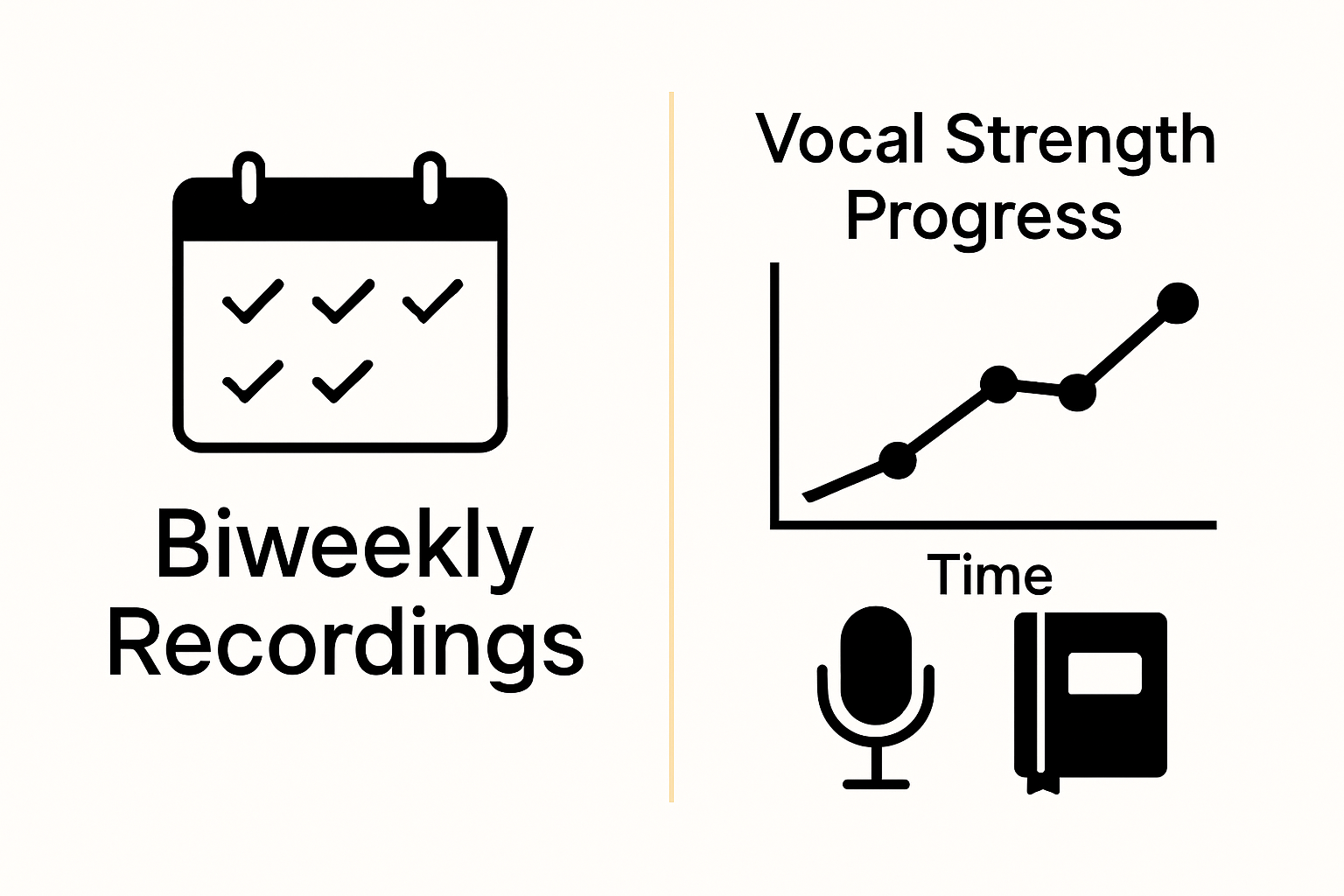
Establish a personal vocal health assessment routine. Every two weeks, record yourself singing the same challenging passage and compare your recordings. Listen for improvements in tone, clarity, breath control, and overall consistency. This method provides objective feedback about your vocal development and helps you adjust your practice approach.
Warning: Persistent throat pain, sudden voice changes, or difficulty singing should prompt immediate consultation with a vocal health professional. Never ignore ongoing discomfort or assume it will resolve itself.
Building a strong singing voice naturally demands consistent care to avoid strain and vocal fatigue as highlighted in the step-by-step guide. Whether you struggle with maintaining vocal hydration, managing breath support, or preventing hoarseness, addressing these challenges with targeted products can make all the difference. For singers and voice professionals seeking to enhance vocal resilience and recover naturally, adopting a regimen that complements proper vocal exercises is key.
Explore our range of carefully formulated Singer Enhancements designed to support your vocal health with natural ingredients that soothe and strengthen.

Don’t risk long term vocal damage by ignoring subtle signs of strain. Take control today by visiting https://tmrgsolutions.com to find personalized remedies and tools that perfectly accompany your vocal strengthening journey. Start protecting and improving your singing voice now with proven natural solutions crafted from 25+ years of expertise.
To keep your singing voice hydrated, drink at least 8 glasses of water daily. Incorporate hydration into your routine by carrying a water bottle and setting reminders to sip throughout the day.
Start with gentle humming, lip trills, and soft scales to warm up your voice. Aim for a 10 to 15-minute routine that includes breathing exercises and smooth transitions through your vocal range.
Practice diaphragmatic breathing by placing one hand on your chest and another on your abdomen, ensuring that only your lower hand moves while breathing deeply. Perform lung capacity exercises daily to build strength and control, such as inhaling for four counts and exhaling for eight counts.
Incorporate targeted vocal exercises like sirens to stretch your range and staccato exercises to enhance breath control. Focus on gentle movements and perform these exercises for 10 to 15 minutes, gradually increasing intensity as your voice gets stronger.
Take breaks every 20 to 30 minutes during intensive practice sessions to prevent vocal strain. Use this time to hydrate and allow your vocal muscles to relax, helping to maintain vocal health.
Look for symptoms like persistent throat pain, sudden changes in your voice, or difficulty singing. If you experience these issues, seek professional help immediately to address potential vocal injuries.
