Your Cart is Empty


Struggling through a rehearsal in Paris or preparing for opening night on Broadway, many professional singers and actors face a familiar obstacle: persistent vocal fatigue and hoarseness that linger long after the applause fades. These symptoms disrupt not only performance quality but also daily vocal comfort and confidence. When accurate information about vocal recovery is scarce, misconceptions can delay healing or worsen strain. Explore natural, research-driven strategies for restoring vocal strength, clarity, and resilience, helping you sustain your craft without risking long-term damage.
| Point | Details |
|---|---|
| Vocal Recovery is Active | Vocal recovery is not just about silence; it involves active physiological regeneration through tailored vocal management strategies. |
| Types of Vocal Fatigue | There are two main types of vocal fatigue: phonotraumatic, caused by physical strain, and non-phonotraumatic, stemming from neuromuscular imbalances. |
| Risk of Neglecting Recovery | Inadequate vocal recovery can lead to irreversible damage and long-term health issues for professional voice users. |
| Common Recovery Mistakes | Misunderstanding the balance between rest and active management can hinder healing, with premature vocal engagement being a significant risk. |
Vocal recovery represents a specialized physiological process where vocal tissues restore themselves after intensive use or potential strain. Complex vocal loading mechanisms demonstrate that recovery is not merely a passive resting state, but an active biological regeneration process involving intricate muscular and tissue repair systems.
Contrary to popular belief, vocal recovery isn’t simply about complete silence or total voice rest. Professional vocalists and voice practitioners understand that strategic vocal management involves nuanced approaches tailored to individual vocal characteristics. The scientific literature suggests that vocal fatigue and vocal loading are interconnected phenomena requiring sophisticated understanding beyond simplistic rest recommendations.
Misconceptions about vocal recovery frequently emerge from inadequate knowledge about vocal physiology. Many individuals assume that vocal rest means absolute silence, when research indicates that gentle, controlled vocal exercises can actually promote faster healing. Standardized vocal recovery protocols highlight the importance of understanding individual vocal demand and implementing targeted recuperation strategies.
Pro tip: Monitor your vocal fatigue levels by tracking vocal performance indicators like pitch stability, vocal endurance, and recovery time after intensive vocal sessions.
Vocal fatigue is a complex phenomenon that manifests in multiple forms, each with distinct characteristics and underlying mechanisms. Professional voice users experience diverse hyperfunctional voice disorders that can be broadly categorized into two primary types: phonotraumatic and non-phonotraumatic vocal strain. These classifications help professionals understand the nuanced nature of vocal challenges and develop targeted intervention strategies.
The phonotraumatic vocal strain occurs when excessive mechanical stress is placed on vocal tissues, typically resulting from improper vocal techniques, prolonged speaking, or high-intensity vocal performances. This type of strain often involves physical damage to the vocal folds, causing inflammation, microtears, and potential long-term vocal cord modifications. Professional singers, teachers, and public speakers are particularly susceptible to this form of vocal fatigue.

Heterogeneous perceptual and physiological symptoms reveal that non-phonotraumatic vocal strain stems from neurological and muscular imbalances rather than direct physical trauma. This type of vocal fatigue is characterized by decreased vocal efficiency, reduced pitch control, and increased vocal effort without apparent structural damage. Factors like psychological stress, hormonal changes, and underlying medical conditions can contribute to this complex form of vocal strain.
Pro tip: Conduct a weekly vocal health self-assessment by tracking your speaking duration, vocal comfort levels, and any noticeable changes in vocal quality or endurance.
Here’s a comparison of the two main types of vocal fatigue and their distinguishing features:
| Fatigue Type | Primary Cause | Typical Symptoms | Commonly Affected Groups |
|---|---|---|---|
| Phonotraumatic | Extreme vocal loading | Hoarseness, inflammation | Singers, teachers, speakers |
| Non-phonotraumatic | Neuromuscular imbalance | Pitch instability, vocal effort | Individuals under stress |
Physiological stressors underlying vocal health challenges encompass a wide range of environmental, behavioral, and medical factors that can significantly impact vocal performance. These stressors include excessive voice use, poor vocal techniques, environmental conditions, and underlying medical complications that progressively compromise vocal cord integrity and functionality.
Professional voice users frequently encounter multiple causative factors contributing to vocal strain. Environmental triggers such as persistent noise exposure, chemical pollutants, viral infections, and prolonged speaking engagements create cumulative stress on vocal mechanisms. The most common symptoms include progressive hoarseness, diminished vocal range, persistent vocal fatigue, and a noticeable decrease in vocal endurance that can dramatically affect professional performance.
Complex vocal health dynamics reveal that vocal issues are rarely isolated incidents but interconnected physiological responses. Specific symptoms manifest through multiple indicators: reduced vocal control, increased throat tension, unexplained voice breaks, altered pitch stability, and persistent vocal discomfort. These symptoms suggest deeper underlying challenges that require comprehensive assessment and targeted intervention strategies.
Pro tip: Create a weekly vocal health journal documenting speaking duration, environmental conditions, physical symptoms, and any noticeable changes in vocal performance to track potential stress patterns.
Vocal recovery processes require a holistic approach that combines strategic rest, targeted hydration, and mindful vocal management. Professional voice users must understand that recovery is not simply about stopping vocal activity, but actively supporting vocal tissue regeneration through intentional techniques and lifestyle modifications.
Hydration stands as a fundamental pillar of natural vocal recovery. Drinking adequate water helps maintain mucus membrane elasticity, reduces inflammation, and supports the body’s natural healing mechanisms. Complementing hydration, voice professionals should implement structured rest periods that allow vocal tissues to recuperate. These rest intervals are not complete silence, but rather carefully managed vocal activities that prevent excessive strain while maintaining muscle flexibility.
Active vocal recovery strategies involve comprehensive self-assessment and targeted interventions. These techniques include gentle vocal warm-ups, breathing exercises, strategic vocal load management, and understanding individual vocal fatigue indicators. Professionals must develop heightened awareness of their vocal limitations, recognizing early signs of strain and implementing immediate recovery protocols before significant damage occurs.
Pro tip: Create a personalized vocal recovery toolkit including hydration tracking, vocal warm-up routines, and daily vocal effort monitoring to proactively manage your vocal health.
This table summarizes leading natural recovery techniques and their main benefits:
| Technique | How It Helps | Example Practice |
|---|---|---|
| Hydration | Reduces tissue irritation | Drinking water regularly |
| Gentle vocal warm-ups | Maintains flexibility | Humming, light scales |
| Breathing exercises | Reduces tension | Diaphragmatic breathing drills |
| Strategic rest periods | Allows tissue repair | Alternating speaking and silence |
Chronic vocal fatigue mechanisms reveal profound consequences of neglecting proper vocal recovery. Prolonged vocal strain can transform from a temporary performance challenge into a serious long-term health issue, potentially causing irreversible damage to delicate vocal fold tissues and fundamentally compromising professional vocal capabilities.
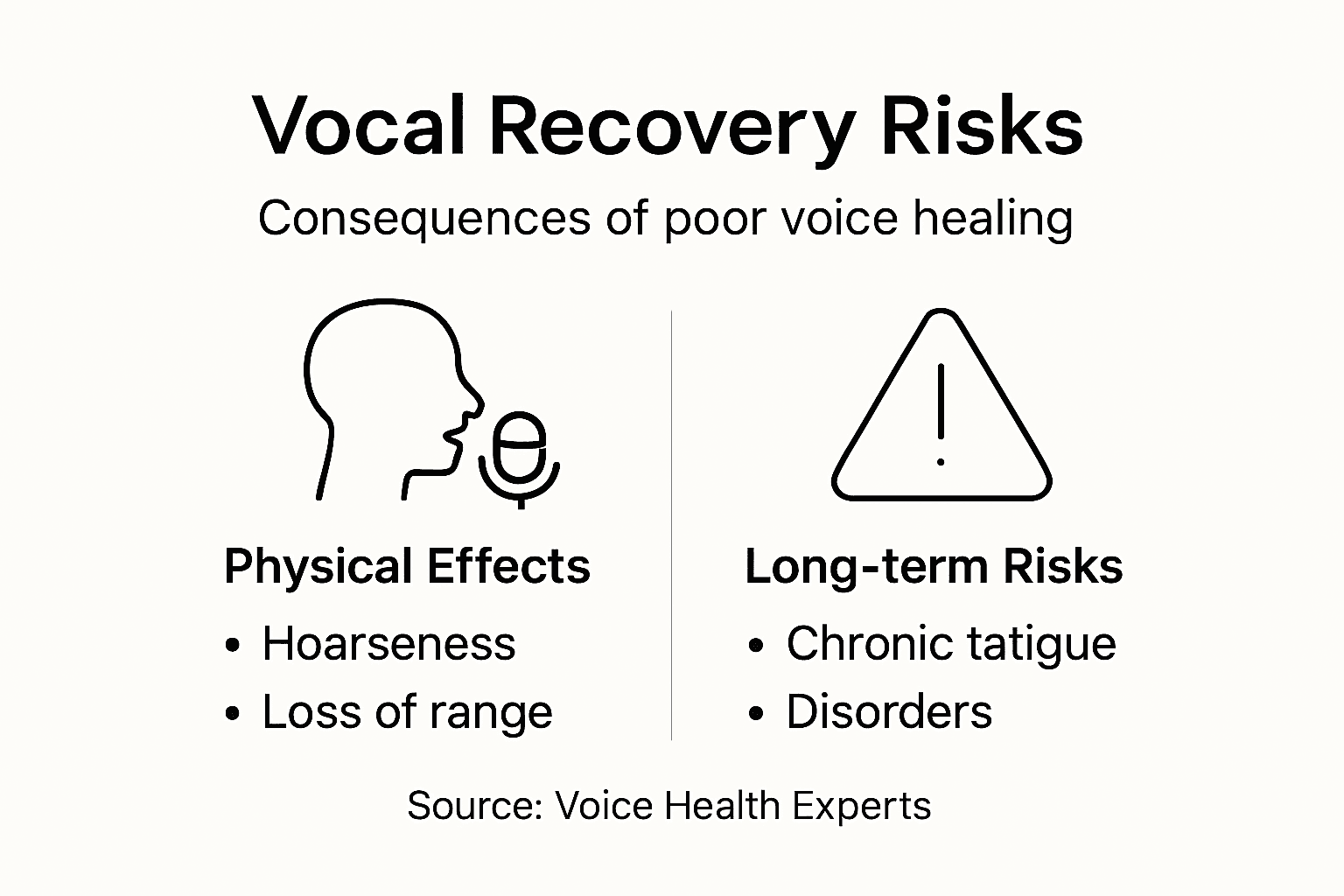
Professional voice users face significant risks when consistently pushing vocal boundaries without implementing strategic recovery protocols. These risks include developing persistent hyperfunctional voice disorders that progressively degrade vocal quality, reduce vocal range, and create permanent alterations in vocal cord structure. The cumulative effect of inadequate recovery can lead to complete vocal breakdown, forcing extended periods of voice rest or requiring complex medical interventions.
Hyperfunctional voice disorder progression demonstrates that untreated vocal strain can create a cascading series of physiological complications. These complications extend beyond immediate vocal performance, potentially impacting overall communication abilities, professional opportunities, and psychological well-being. Vocal tissue damage can result in altered vocal resonance, increased vocal effort, and diminished vocal stamina, fundamentally changing an individual’s primary communication instrument.
Pro tip: Establish a daily vocal health monitoring system that tracks vocal fatigue indicators, rest periods, and performance quality to proactively prevent long-term vocal damage.
Vocal recovery misconceptions frequently derail successful healing processes, leading professional voice users into counterproductive rehabilitation strategies. The most critical error involves misunderstanding the delicate balance between complete vocal rest and strategic vocal management, which can inadvertently prolong recovery or cause additional tissue damage.
Premature vocal engagement represents a significant risk during the healing process. Many professionals mistakenly believe that immediate return to full vocal performance demonstrates resilience, when in reality, this approach can cause lasting damage. Ignoring early fatigue signals, pushing through vocal discomfort, and failing to implement graduated vocal loading techniques can transform a minor vocal strain into a chronic condition requiring extensive medical intervention.
Vocal effort management strategies highlight the importance of nuanced recovery approaches. Common mistakes include neglecting hydration, disregarding environmental factors that impact vocal healing, and applying inconsistent vocal care protocols. Voice professionals must develop heightened awareness of their physiological responses, recognizing that vocal recovery is a sophisticated, multifaceted process requiring patience, precision, and comprehensive self-monitoring.
Pro tip: Develop a detailed vocal recovery journal tracking daily vocal load, hydration levels, rest periods, and healing progress to create a personalized, data-driven rehabilitation strategy.
Vocal fatigue and strain can take a serious toll on your voice and confidence. The article highlights how critical it is to understand the delicate balance between vocal rest and active recovery. If you are experiencing symptoms like hoarseness, pitch instability, or persistent vocal effort, tackling these challenges with targeted care is essential. At TMRG Solutions, we offer a wide range of natural and effective remedies specifically designed to support the complex process of healing and maintaining vocal health.

Explore our Singer Enhancements - TMRG Solutions collection to find specialized herbal formulas, sprays, and oils that hydrate and soothe your vocal tissues. Don’t let vocal strain hold you back. Visit All Products - TMRG Solutions to discover solutions tailored to your unique voice needs. Start your journey to stronger, more resilient vocal performance today by visiting https://tmrgsolutions.com and take confident steps toward lasting vocal recovery.
Vocal recovery is a physiological process where vocal tissues restore themselves after intensive use or strain, involving active biological regeneration and repair.
Gentle, controlled vocal exercises combined with adequate hydration and strategic vocal management can promote faster healing of vocal tissues, contrary to the common belief that complete silence is necessary.
Vocal fatigue can result from excessive voice use, poor vocal techniques, environmental factors, and underlying medical conditions. It manifests in symptoms like hoarseness, decreased vocal range, and overall vocal strain.
During vocal recovery, it’s important to avoid premature vocal engagement, ignoring early fatigue signals, and neglecting hydration. These mistakes can prolong recovery or lead to further tissue damage.
