Your Cart is Empty


Most professional vocalists are surprised to learn that over 60 percent of American singers regularly fall for persistent breathing myths that actually block healthy vocal production. For anyone serious about enhancing performance and fighting issues like hoarseness or vocal fatigue, understanding the true science behind singing breath is vital. This guide cuts through outdated beliefs and reveals the essential techniques that help American and international singers master breath control for long-term vocal health and clarity.
| Point | Details |
|---|---|
| Breath Control is Essential | Effective singing breath involves advanced control, not just deep inhalation; it requires years of training for mastery. |
| Diverse Breathing Techniques | Singers should explore various techniques like diaphragmatic and appoggio, as different methods suit individual styles and capabilities. |
| Muscle Coordination is Key | Strong singing relies on the synchronized action of the diaphragm, intercostals, and abdominal muscles to support vocal performance. |
| Common Mistakes to Avoid | Many singers mistakenly engage in clavicular breathing; learning to relax and properly use breathing muscles is crucial for vocal health. |
Breathing in singing represents far more than simply inhaling and exhaling air. It is a sophisticated physiological process that transforms ordinary breath into powerful vocal expression. Contrary to popular misconceptions, singing breathing involves precise muscular coordination and complex respiratory mechanics that differ significantly from everyday breathing patterns.
Understanding these respiratory dynamics requires examining how professional singers manipulate breath control. Respiratory kinematics during singing reveal distinct movement patterns that challenge traditional assumptions about singing breath. Research demonstrates singers utilize greater abdominal contribution and demonstrate asynchronous movements between their rib cage and diaphragm, creating a nuanced approach to air management that novices often misunderstand.
Most amateur singers hold several persistent myths about breathing technique. Common misconceptions include believing that chest breathing provides optimal vocal power, that deep breaths always translate to better sound, or that breath control can be mastered overnight. In reality, effective singing breath requires years of systematic training, understanding anatomical mechanics, and developing muscular awareness. Professional vocalists learn to engage their entire respiratory system with precision, using controlled air pressure and strategic muscle engagement to produce resonant, sustained tones.
Pro tip: Practice diaphragmatic breathing exercises daily for 10 minutes to develop the muscle memory and breath control essential for superior vocal performance.
Singers employ multiple breathing techniques, each with unique physiological mechanics and vocal implications. Comprehensive respiratory studies reveal four primary breathing approaches used by professional vocalists: clavicular, costal, diaphragmatic, and appoggio, each offering distinct advantages and challenges for vocal performance.
The clavicular breathing technique involves primarily using upper chest muscles, which is often considered the least efficient method. Beginners frequently default to this approach, characterized by shallow breaths that limit vocal power and resonance. In contrast, costal breathing engages the intercostal muscles around the rib cage, providing more substantial breath support and allowing for greater vocal control. Professional singers typically prioritize diaphragmatic breathing, which enables deeper, more controlled air intake by actively engaging the diaphragm muscle, creating a stable foundation for sustained vocal production.
The most advanced technique, appoggio, represents a sophisticated Italian method of breath management that balances muscular engagement between the diaphragm, intercostal muscles, and abdominal wall. This nuanced approach allows singers to maintain consistent air pressure, control tone quality, and extend vocal phrases with remarkable precision. Professional vocal techniques demonstrate that different breathing methods suit various musical styles and individual vocal characteristics, emphasizing that no single technique works universally for all singers.
The following table compares common singing breathing techniques and their practical vocal impact:
| Breathing Technique | Key Muscles Engaged | Vocal Support Quality | Common Use Cases |
|---|---|---|---|
| Clavicular | Upper chest | Weak, shallow | Beginner practices |
| Costal | Rib cage/intercostals | Moderate, controlled | Transitional training |
| Diaphragmatic | Diaphragm | Strong, stable | Professional performance |
| Appoggio | Diaphragm, abdomen, rib cage | Highly refined, consistent | Advanced classical singing |
Pro tip: Record yourself practicing different breathing techniques and analyze your vocal performance to identify which method provides the most natural and comfortable support for your unique voice.
Comprehensive neuroscientific research reveals the intricate muscle coordination required for effective singing breath support. The respiratory system involves a complex interplay between multiple muscle groups, neural control mechanisms, and precise biomechanical coordination that transforms simple breathing into a sophisticated vocal performance mechanism.
The primary muscle groups involved in singing breath support include the diaphragm, intercostal muscles, and abdominal wall muscles. These muscles work in a synchronized dance, controlled by both central and peripheral nervous system signals. The diaphragm acts as the primary engine of respiratory movement, creating negative pressure that draws air into the lungs. Simultaneously, intercostal muscles expand and contract the rib cage, while abdominal wall muscles provide crucial stabilization and pressure regulation during exhalation.
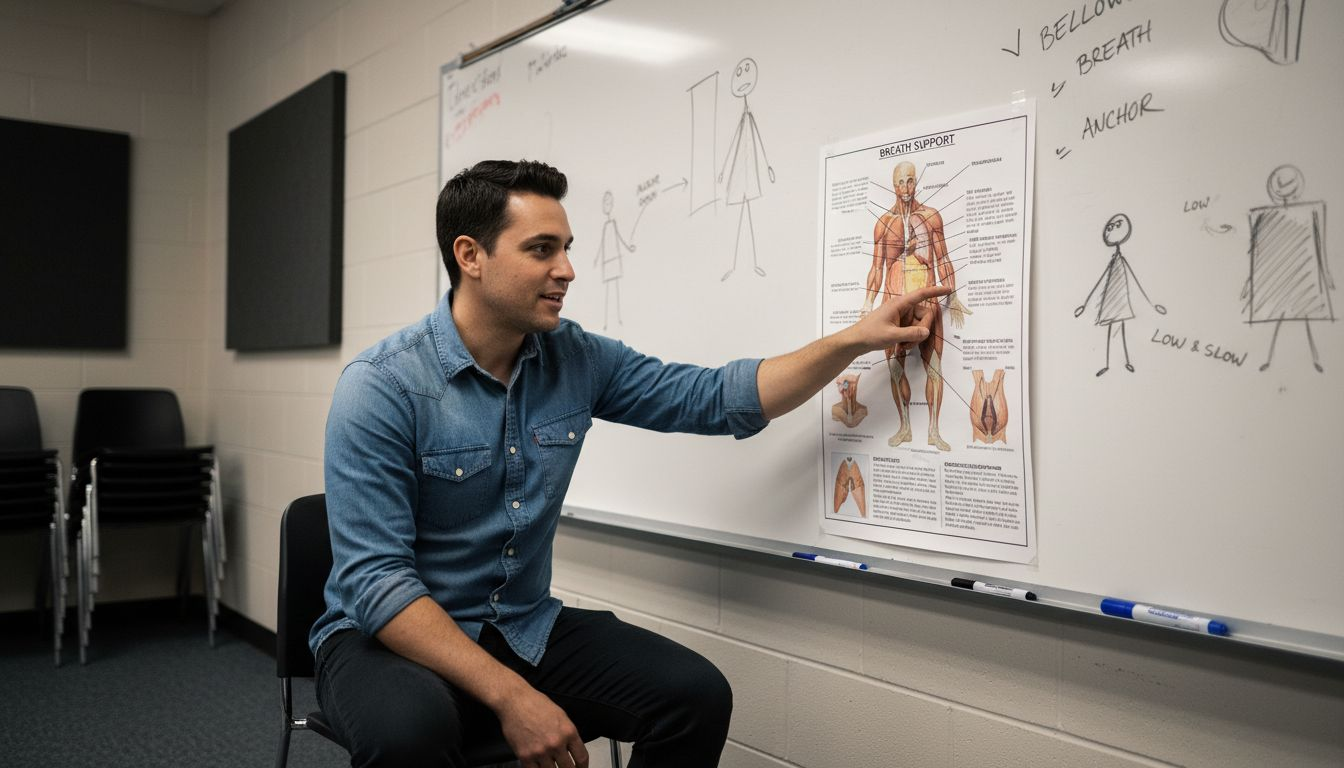
Professional vocalists develop extraordinary neuromuscular control through years of training, learning to manipulate subtle muscle tensions and respiratory pressures. Scientific studies since the 1970s have progressively refined our understanding of the physiological mechanisms underlying vocal breath support, demonstrating that effective singing requires more than simply moving air. It demands precision, timing, and an almost intuitive understanding of how muscular engagement influences tone, resonance, and vocal endurance.
Here is a summary of respiratory muscles, their function, and role in vocal performance:
| Muscle Group | Primary Function | Role in Singing Breath Support |
|---|---|---|
| Diaphragm | Draws air into lungs | Creates stable air flow |
| Intercostal muscles | Expands rib cage | Adjusts thoracic pressure |
| Abdominal wall | Stabilizes exhalation | Regulates air for resonance |
Pro tip: Practice isolating and consciously controlling individual respiratory muscle groups through targeted breathing exercises to develop the nuanced muscular awareness essential for superior vocal performance.
Breath control fundamentally generates vocal sound and plays a critical role in maintaining long-term vocal health, representing far more than a simple technical skill. Professional singers understand that proper breath management directly influences vocal endurance, tone quality, and overall physiological performance.
Improper breath control can lead to significant vocal strain and potential long-term damage. Excessive air pressure, inconsistent respiratory patterns, and tension in the respiratory muscles can cause vocal cord inflammation, reduced resonance, and premature vocal fatigue. Singers who fail to develop sophisticated breath control techniques often experience reduced vocal range, decreased tonal clarity, and increased risk of developing chronic vocal disorders.
Beyond vocal mechanics, effective breathing strategies contribute to broader physical and psychological well-being, interconnecting respiratory function with stress reduction and overall health. Controlled breathing techniques not only optimize vocal performance but also support immune system function, reduce performance anxiety, and promote mental clarity. Professional vocalists recognize breath control as a holistic practice that extends well beyond simple sound production, integrating physical technique with mental and emotional regulation.
Pro tip: Develop a daily breathing awareness practice that focuses on maintaining consistent, relaxed respiratory muscle engagement to protect and enhance your vocal instrument.
Contrary to popular belief, powerful singing is not about pushing more air, but managing respiratory mechanics with precision. Many singers unknowingly sabotage their vocal performance through fundamental breathing errors that compromise their sound, endurance, and overall vocal health.
The most prevalent breathing mistakes include clavicular breathing, where singers primarily use upper chest muscles, and over-contraction of abdominal muscles, which restricts natural respiratory movement. Comprehensive research identifies specific respiratory technique errors that can lead to vocal strain, reduced resonance, and premature vocal fatigue. These technical missteps often result from inadequate training, misunderstood vocal pedagogy, or unconscious tension patterns that develop over time.
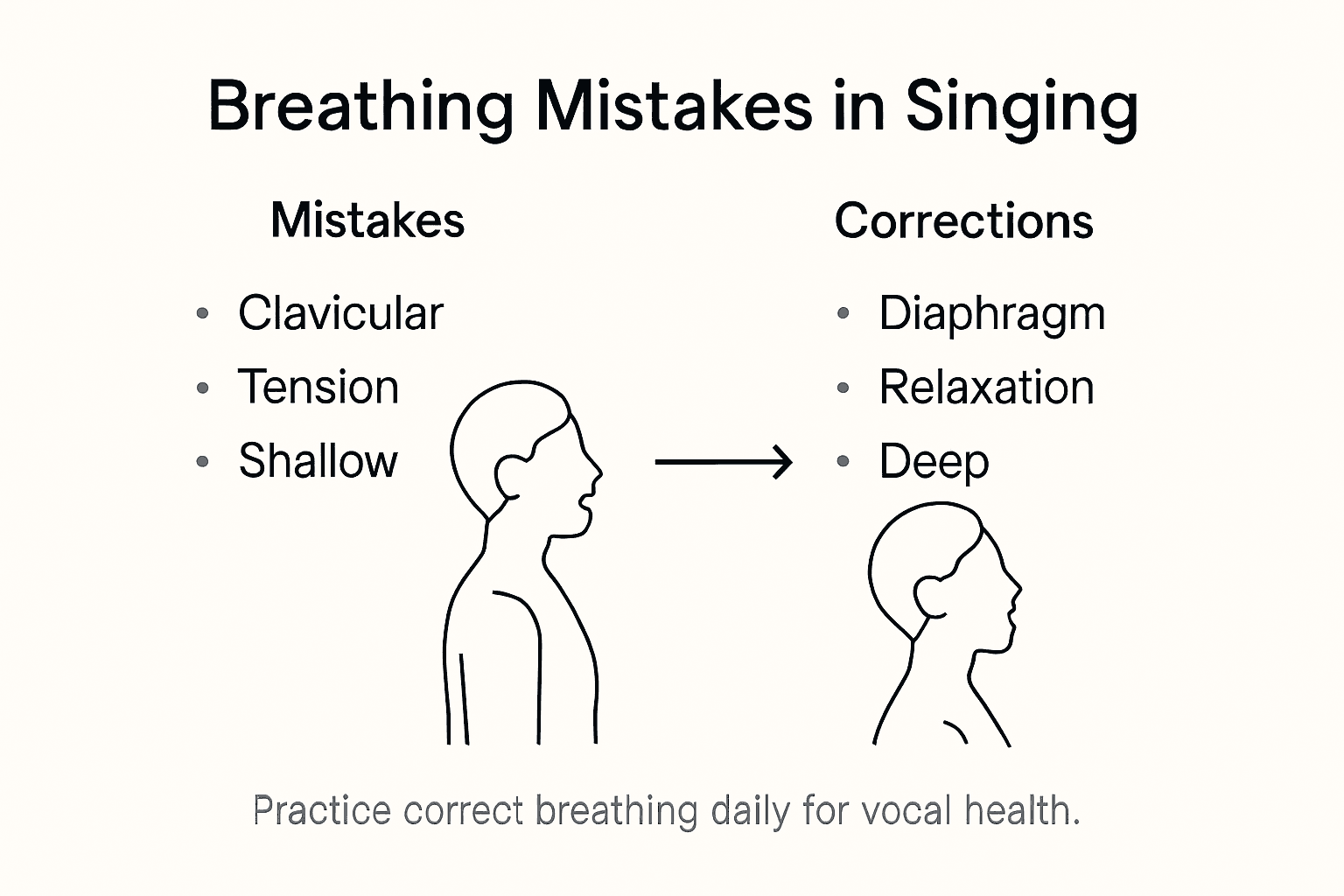
Effective breathing technique requires unlearning these ingrained habits and developing a nuanced understanding of respiratory mechanics. Singers must focus on maintaining relaxed, efficient muscle engagement, allowing the diaphragm to descend naturally and enabling controlled, consistent air pressure. This involves developing body awareness, practicing targeted breathing exercises, and gradually retraining respiratory muscles to support rather than impede vocal production.
Pro tip: Record yourself singing and analyze your breathing patterns, paying close attention to chest tension, shoulder movement, and abdominal engagement to identify and correct potential respiratory technique errors.
Breathing plays a critical role in vocal health and performance as outlined in the article. Many singers and voice professionals face challenges such as vocal fatigue, strain, and hoarseness caused by improper breath control and muscle coordination. To overcome these issues, focused support on breath management and vocal endurance is key. Developing precise respiratory mechanics combined with natural remedies can dramatically improve your voice’s strength and resilience.
Discover a wide range of targeted solutions at Singer Enhancements - TMRG Solutions designed specifically to support breath control, reduce inflammation, and enhance vocal stamina.

Take control of your vocal health with trusted remedies backed by over 25 years of expertise. Visit https://tmrgsolutions.com now to explore All Products - TMRG Solutions and start your journey to better breath support and lasting vocal wellness. Don’t wait until vocal strain holds you back from your best performance. Act today to protect and empower your voice for the long term.
Breath control is crucial in singing as it influences vocal endurance, tone quality, and overall vocal health. Proper breath management helps prevent vocal strain and ensures consistent sound production.
Improper breathing techniques can lead to vocal cord inflammation, reduced resonance, and increased vocal fatigue. Over time, this can cause chronic vocal disorders if not addressed.
Common breathing techniques for singers include diaphragmatic breathing, costal breathing, and the advanced appoggio method. Each technique provides different levels of support and control for vocal performance.
Improving breath support requires consistent practice of targeted breathing exercises, focusing on relaxing and efficiently engaging the diaphragm and intercostal muscles to maintain controlled air flow.
