Your Cart is Empty


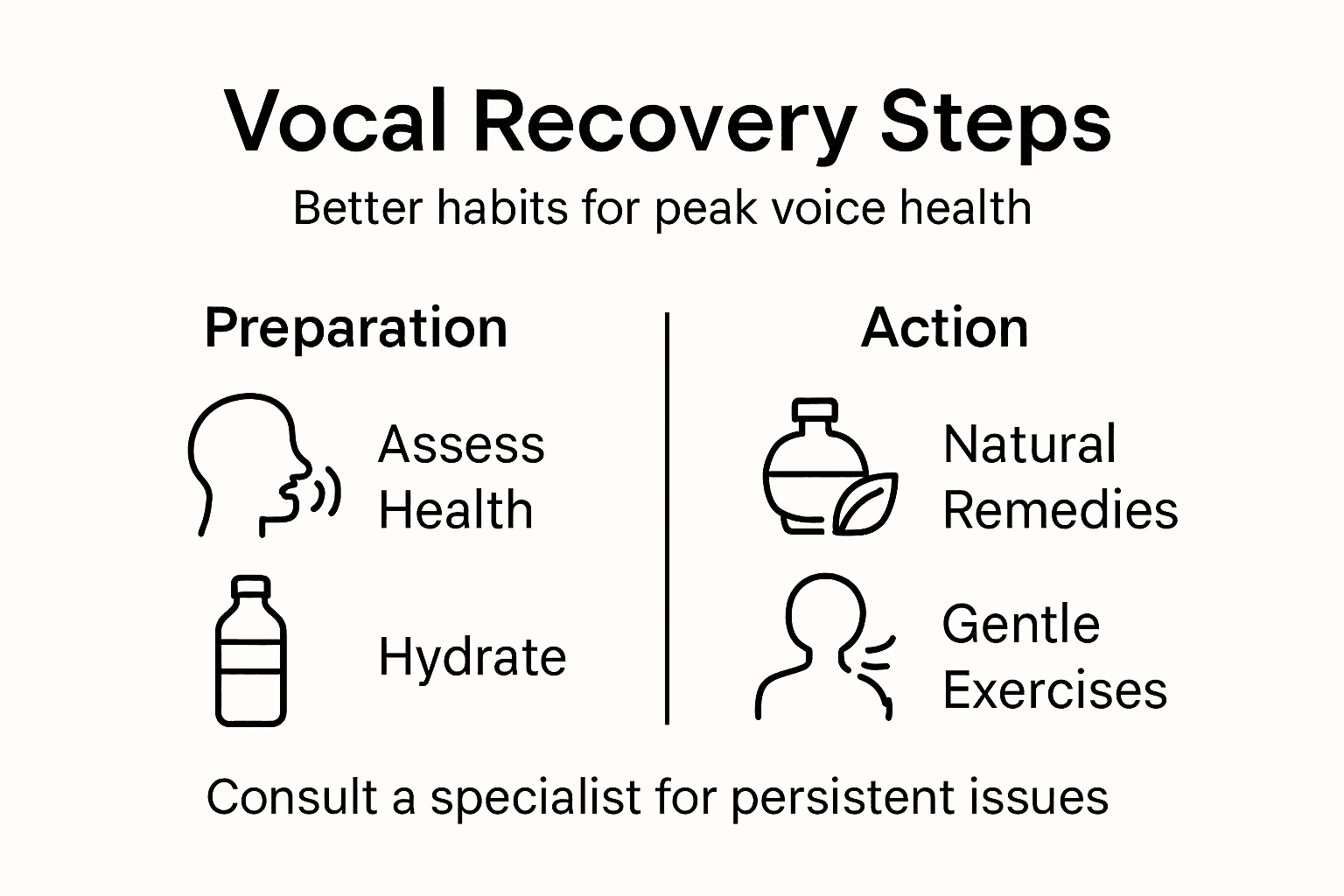
Vocal fatigue can disrupt even the most seasoned performances, leaving professional singers and voice actors searching for solutions beyond rest. Protecting your voice matters, especially when every tone and nuance influences your artistry and career. By blending comprehensive assessment, targeted environmental changes, and natural remedies for vocal recovery, you discover practical steps to restore vocal strength while maintaining optimal performance on global stages.
| Essential Insight | Explanation |
|---|---|
| 1. Monitor Vocal Symptoms Regularly | Regularly track changes in voice quality, discomfort, and fatigue to detect early problems. This helps in preventing further damage. |
| 2. Maintain Proper Hydration | Drink at least eight glasses of water daily and consider steam inhalation to keep vocal folds hydrated and functioning optimally. |
| 3. Use Natural Remedies for Healing | Implement soothing remedies such as herbal throat sprays and warm salt water gargles to reduce inflammation and promote recovery. |
| 4. Practice Gentle Vocal Exercises | Engage in soft humming, gentle pitch glides, and controlled breathing to gradually rebuild voice strength without strain. |
| 5. Consistently Track Progress | Keep a log of vocal performance metrics and adjust recovery routines based on regular self-assessments and evaluations. |
Understanding your vocal health starts with a systematic evaluation of your current voice condition and potential underlying issues. This assessment helps you detect early signs of vocal strain and prevent further damage.
To effectively assess your vocal health, follow these key diagnostic steps:
Professional voice assessment involves a comprehensive review of vocal function. This multidisciplinary approach considers your medical history, occupation, and specific vocal demands. Symptoms like persistent hoarseness, reduced vocal range, or increased vocal effort can signal potential disorders.
Here’s a quick reference to symptoms indicating when to seek professional vocal assessment:
| Symptom | What It Indicates | Recommended Action |
|---|---|---|
| Persistent hoarseness | Ongoing vocal fold irritation | Schedule evaluation with voice specialist |
| Reduced vocal range | Possible muscle tension or swelling | Seek professional screening |
| Increased vocal effort | Potential underlying vocal disorder | Book a comprehensive voice exam |
| Voice breaks/volume loss | Possible vocal fold damage | Consult a speech-language pathologist |
Early recognition of vocal symptoms prevents long-term damage and ensures optimal voice performance.
Your assessment should include objective observations about vocal behavior, such as:
Pro tip: Maintain a detailed voice journal tracking daily vocal performance and any unusual symptoms for more accurate self-assessment.
Successful vocal recovery requires creating an optimal environment that supports vocal fold healing and maintaining proper hydration. This step focuses on preparing your physical surroundings and internal body conditions to promote vocal health.
Start by addressing your immediate environmental factors. Vocal hygiene strategies emphasize managing external conditions that impact vocal performance. Your preparation should include:
Hydration is crucial for vocal recovery. Your vocal folds require consistent moisture to function properly. Aim to drink at least eight 8-ounce glasses of water daily, focusing on steady intake throughout the day rather than large quantities at once.
Proper hydration maintains a protective mucus layer that lubricates your vocal folds and reduces injury risk.
Additional hydration techniques include:
Pro tip: Keep a dedicated water bottle near your workspace and set hourly reminders to ensure consistent hydration.

Natural remedies and targeted therapies can significantly accelerate your vocal recovery process by supporting healing and reducing inflammation. This step focuses on implementing holistic approaches that nurture your vocal health from multiple angles.
Voice therapy strategies emphasize a comprehensive approach to vocal rehabilitation. Your natural remedy protocol should include:
Natural remedies work best when combined with mindful vocal practices. Consider incorporating essential oils like lavender or chamomile, which can help reduce throat tension and promote relaxation. Honey-based treatments can also provide natural lubrication and anti-inflammatory benefits for your vocal folds.
Below is a summary of how natural remedies support different aspects of vocal healing:
| Remedy Type | Main Benefit | Optimal Usage Time |
|---|---|---|
| Herbal throat spray | Reduces throat irritation | Before & after voice use |
| Warm salt water gargle | Eases inflammation | Morning and night |
| Steam inhalation | Boosts vocal fold hydration | Prior to vocal activity |
| Honey mixture | Soothes and lubricates | As-needed for dryness |
Consistent, gentle treatment is more effective than aggressive interventions when supporting vocal recovery.
Additional natural therapy techniques include:
Pro tip: Create a personalized vocal recovery kit with natural remedies, ensuring you have soothing treatments readily available during your healing journey.
Vocal recovery requires a systematic and careful approach to rebuilding your voice’s strength and flexibility. Vocal function exercises provide a structured method to gradually restore your vocal capabilities without causing additional strain.
Your gentle vocal exercise routine should focus on controlled, low-intensity movements that support healing and muscle coordination. Key exercises include:
Start with short, 5-10 minute sessions, emphasizing proper technique over intensity. Each exercise should be performed with minimal tension, using relaxed abdominal breathing and maintaining a comfortable posture. Pay close attention to your body’s signals and stop immediately if you experience any pain or discomfort.
Consistency and gentleness are more important than aggressive vocal workouts during recovery.
Basic vocal exercise progression:
Pro tip: Use a mirror during exercises to monitor tension in your neck and facial muscles, ensuring a relaxed approach to vocal rehabilitation.
Tracking your vocal recovery requires consistent and objective assessment to ensure you’re making meaningful progress. Regular voice assessments are critical for understanding your vocal healing trajectory and making necessary adjustments.
Develop a structured approach to monitoring your vocal health by tracking key performance indicators:
Establish a baseline by documenting your initial vocal condition through recordings or professional evaluations. This provides a reference point for measuring improvement and identifying potential setbacks. Pay attention to subtle changes in vocal fatigue, resonance, and overall voice production.
Small, consistent improvements are more significant than sporadic dramatic changes.
Your monitoring strategy should include:
Pro tip: Create a digital spreadsheet or voice recovery app to systematically log your vocal health metrics and track your healing journey.
Struggling with vocal fatigue, hoarseness, or persistent voice breaks can feel frustrating and worrying. This article highlights how a step-by-step recovery plan involves careful vocal assessment, hydration, natural remedies, and gentle exercises to rebuild your voice without strain. If you want to accelerate your healing journey and support your vocal health naturally, explore our curated range of products designed specifically for singers and voice professionals who face similar challenges. Our Singer Enhancements - TMRG Solutions offer herbal sprays, voice therapy kits, and soothing remedies that align perfectly with the gentle recovery techniques discussed.

Take control of your vocal health today by integrating trusted, natural products with your recovery routine. Visit All Products - TMRG Solutions to find the complete selection, including solutions for managing phlegm and viscosity, which are common concerns during vocal recovery. With over 25 years of expertise and countless testimonials, https://tmrgsolutions.com is your partner for effective and gentle vocal rehabilitation. Start your healing journey now and give your voice the care it deserves.
Start by monitoring changes in your voice quality, including pitch, tone, and resonance. Keep a detailed voice journal to track symptoms like hoarseness or vocal fatigue over a few weeks, which will help you identify patterns and potential issues.
Ensure your workspace is free of irritants and has optimal moisture levels. Install a room humidifier and maintain a comfortable temperature to create a more supportive environment for your vocal folds.
Implement gentle remedies such as herbal throat sprays and warm salt water gargles to soothe your throat. Use these treatments consistently, especially before and after vocal use, to reduce inflammation and promote healing.
Practice soft humming and gentle pitch glides to ease your vocal tension. Begin with short sessions lasting 5–10 minutes daily, focusing on maintaining proper technique and minimizing strain on your vocal cords.
Develop a routine to track key indicators like daily vocal comfort levels and changes in voice quality. Document these observations weekly to ensure you stay on the right path and make necessary adjustments in your vocal exercises.
Stop vocalizing immediately if you feel any discomfort or pain. Pay attention to your body’s signals and focus on gentle exercises and rest until your voice feels comfortable again.
