Your Cart is Empty


Vocal cord paralysis can affect volume, clarity, breath control, swallowing comfort, and vocal stamina. Because it can involve nerve function and airway safety, symptoms should be evaluated and managed by qualified medical and voice professionals.
TMRG products do not treat or reverse vocal cord paralysis. They may support the surrounding voice-care routine by helping with throat comfort, mucus management, clearer-feeling resonance, and day-to-day vocal hygiene while the customer follows professional guidance.
Related TMRG support: Vocal Load Support, Hoarseness Voice Support, and all TMRG products.
Most American singers and voice professionals face an unexpected reality when vocal cord paralysis disrupts their careers. This neurological condition affects about one in 100,000 people each year, limiting voice control and musical range. For anyone dependent on their voice, the impact extends beyond performance, causing anxiety about long-term recovery. Discover proven methods for natural rehabilitation and expert insights that help protect, restore, and maximize vocal health in demanding international environments.
| Point | Details |
|---|---|
| Vocal Cord Paralysis Overview | Vocal cord paralysis affects voice production due to impaired movement of vocal folds, leading to difficulties in speaking, breathing, and swallowing. |
| Types and Causes | The condition can be unilateral or bilateral, with potential causes including surgical complications, neurological disorders, and viral infections. |
| Voice Impact | Vocal cord paralysis significantly alters voice quality, causing issues such as hoarseness, reduced volume, and pitch control challenges. |
| Recovery Strategies | Effective recovery emphasizes voice therapy, hydration, and avoiding vocal strain to promote healing and enhance vocal function. |
Vocal cord paralysis is a serious neurological condition affecting the voice production mechanism, characterized by impaired movement of one or both vocal folds. Vocal fold paralysis occurs when the nerve signals controlling the laryngeal muscles become disrupted, preventing normal vocal cord function.
The condition can manifest in two primary forms: unilateral and bilateral paralysis. In unilateral paralysis, one vocal cord remains immobilized, while bilateral paralysis involves both vocal cords. This neurological disruption significantly impacts an individual’s ability to speak, breathe, and swallow effectively. Professional singers and voice practitioners are particularly vulnerable, as the condition directly compromises vocal performance and range.
Medical professionals identify multiple potential causes for vocal cord paralysis, including surgical complications, neurological disorders, viral infections, and direct nerve injuries. Symptoms typically include a weak, breathy voice, difficulty projecting sound, increased vocal fatigue, and potential challenges with swallowing. Some individuals might experience subtle changes initially, while others encounter more pronounced functional limitations.
Key Characteristics of Vocal Cord Paralysis:
Pro tip: Consult a laryngologist immediately if you experience persistent vocal changes or breathing difficulties to prevent potential long-term complications.
Vocal cord paralysis is a complex neurological condition with multiple potential causes and manifestations. The two primary types of vocal cord paralysis are unilateral and bilateral, each presenting distinct challenges for voice professionals and patients.
Unilateral Vocal Cord Paralysis involves the immobilization of a single vocal cord, which can result from various neurological and medical interventions. Common causes include surgical complications, particularly during procedures involving the neck, chest, or head regions. Nerve trauma, tumors, viral infections like Lyme disease, and neurological disorders such as stroke or Parkinson’s disease can trigger this condition. Notably, approximately 50% of vocal cord paralysis cases have no definitively identified origin.
Bilateral Vocal Cord Paralysis represents a more severe manifestation, where both vocal cords are affected. This rare condition can significantly compromise respiratory function and voice production. Potential triggers include complex neurological disorders, extensive surgical interventions, significant nerve damage, or systemic health conditions that disrupt nerve signaling mechanisms.
Primary Causes of Vocal Cord Paralysis:
Here’s a comparison of unilateral vs. bilateral vocal cord paralysis to highlight their unique challenges:
| Type of Paralysis | Affected Vocal Cords | Voice Impact | Breathing Difficulty |
|---|---|---|---|
| Unilateral | One | Mild to moderate changes | Occasionally present |
| Bilateral | Both | Severe or complete loss | Frequently present |
Warning Signs to Monitor:
Pro tip: Document and track any subtle vocal changes, and consult a laryngology specialist for comprehensive diagnostic evaluation to identify potential underlying causes.
Vocal cord paralysis profoundly disrupts the intricate mechanics of voice production, creating significant challenges for sound generation. When one or both vocal cords become immobilized, the fundamental process of voice creation is fundamentally altered, leading to substantial changes in vocal quality, projection, and overall communication capabilities.
In unilateral vocal cord paralysis, the immobilized vocal cord cannot vibrate in sync with its healthy counterpart, resulting in a distinctive voice pattern characterized by breathiness, weakness, and reduced volume. Professional singers and voice practitioners experience particularly dramatic impacts, with potential loss of vocal range, reduced pitch control, and increased vocal fatigue. The paralyzed vocal fold fails to close properly during speech, creating air leakage that diminishes sound clarity and resonance.
Bilateral vocal cord paralysis represents an even more severe scenario, where both vocal cords are affected. This condition can dramatically compromise not just voice quality but also essential respiratory functions. Singers and voice professionals might encounter complete voice instability, significant pitch limitations, and potential breathing difficulties that extend beyond simple vocal performance challenges.
Primary Voice Alterations from Vocal Cord Paralysis:
Specific Performance Impacts:
Pro tip: Consult a specialized laryngologist immediately to develop a tailored voice rehabilitation strategy that addresses your specific vocal cord paralysis symptoms.
Vocal recovery from paralysis requires a comprehensive approach that prioritizes strategic treatment and holistic vocal care. Natural recovery methods focus on supporting the body’s inherent healing mechanisms while minimizing additional strain on damaged vocal structures.

Voice therapy represents the cornerstone of natural vocal rehabilitation, offering targeted exercises designed to strengthen remaining functional muscle groups and improve overall vocal cord resilience. Practitioners typically recommend gentle, progressive techniques that help retrain neural pathways and restore muscular coordination. These interventions may include specialized breathing exercises, resonance training, and carefully structured vocal practices that prevent further tissue damage while encouraging gradual healing.
Hydration and environmental management play critical roles in supporting vocal cord recovery. Professional singers and voice practitioners must create an optimal healing environment by minimizing vocal strain, staying well-hydrated, and avoiding irritants that could compromise vocal tissue regeneration. This includes maintaining consistent humidity levels, using nasal saline to prevent congestion, and implementing strict vocal rest protocols during critical healing phases.
Natural Recovery Strategies:
Key Healing Principles:
Pro tip: Consult a specialized voice rehabilitation expert to develop a personalized recovery plan that addresses your specific vocal cord paralysis symptoms and healing potential.
Recovering from vocal cord paralysis requires meticulous attention to preventing potential recovery setbacks. Professional singers and voice practitioners must navigate their rehabilitation with exceptional caution, understanding that seemingly minor mistakes can significantly derail healing progress.
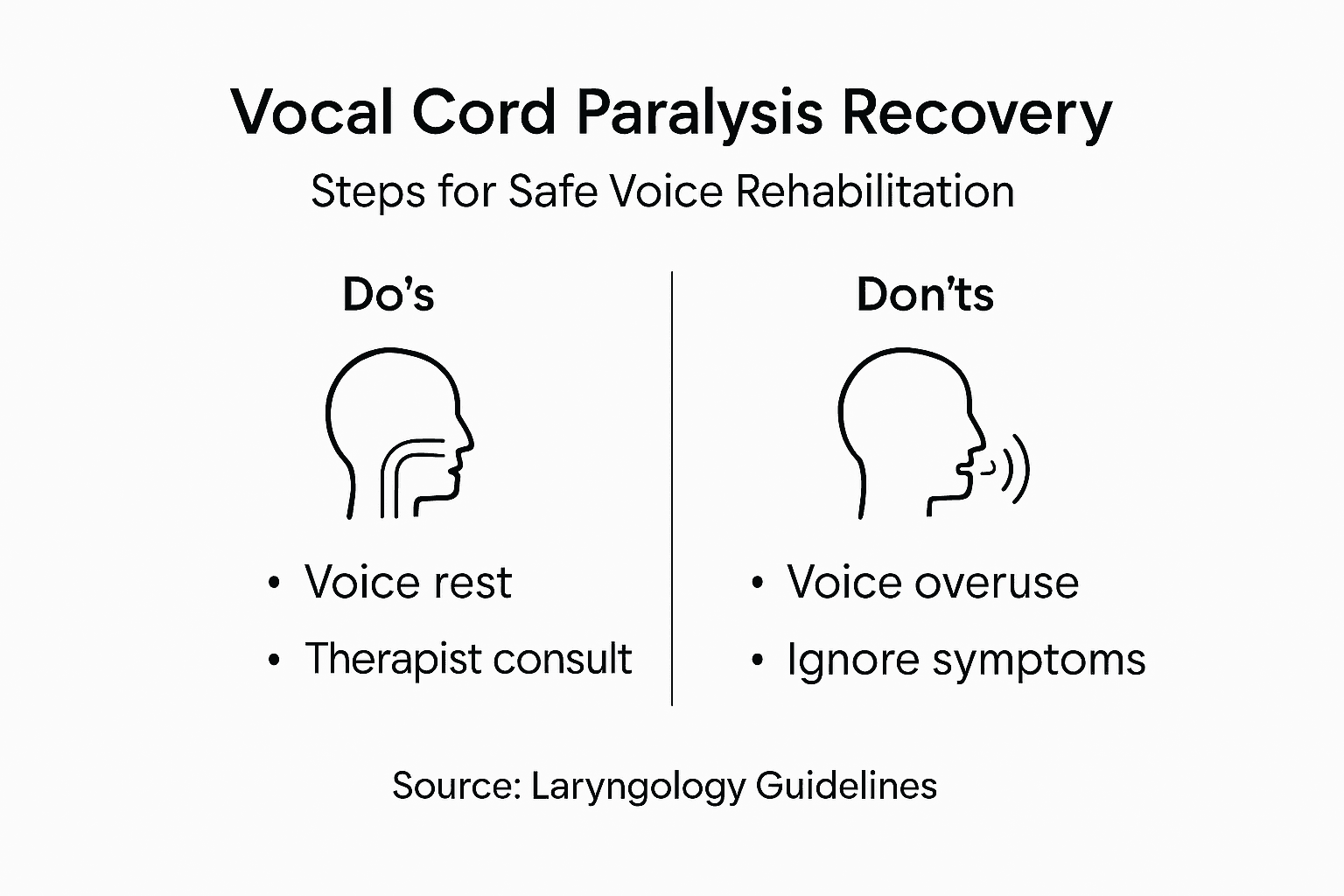
Voice overuse represents the most critical mistake to avoid during vocal cord paralysis recovery. This includes eliminating forceful vocal behaviors like shouting, excessive talking, throat clearing, and aggressive coughing. Vocal strain can compromise nerve regeneration and muscular healing, potentially extending recovery time or causing permanent damage. Singers must resist the temptation to test vocal limits, instead focusing on controlled, gentle vocal exercises prescribed by speech pathology professionals.
Environmental and lifestyle factors also play crucial roles in preventing recovery mistakes. Maintaining optimal hydration, avoiding vocal irritants like smoking or excessive alcohol, and managing stress levels can significantly impact healing potential. Professional voice users should create a supportive recovery ecosystem that minimizes external stressors and promotes neurological and muscular regeneration.
Critical Recovery Mistakes to Avoid:
Recommended Recovery Safeguards:
Below is a reference table summarizing effective strategies and pitfalls in vocal cord paralysis recovery:
| Strategy Category | Effective Practice | Pitfall to Avoid |
|---|---|---|
| Voice Rehabilitation | Progressive voice therapy | Premature vocal strain |
| Lifestyle Management | Maintain good hydration | Exposure to vocal irritants |
| Medical Guidance | Follow specialist advice | Ignoring professional support |
Pro tip: Create a detailed recovery journal to track vocal progress, document limitations, and collaborate effectively with your voice rehabilitation specialist.
Struggling with the challenges of vocal cord paralysis can feel isolating especially when your voice is your instrument. The article highlights critical concerns such as hoarseness, breathy voice, vocal fatigue, and the need for careful voice rehabilitation strategies. If you are facing difficulty projecting your voice or managing vocal strain it is essential to support your recovery with natural remedies and expert-approved therapies designed specifically for these neurological voice impairments.

Explore comprehensive care options tailored to your unique needs through our specialized Paralysis - TMRG Solutions collection. Using natural herbal formulations and voice therapy kits endorsed by vocal coaches and medical professionals, you can strengthen your vocal cords safely. Visit https://tmrgsolutions.com now to access proven products that enhance vocal health while preventing common recovery mistakes. Take control of your healing journey today because your voice deserves the best care and support.
Symptoms of vocal cord paralysis include a weak or breathy voice, difficulty projecting sound, increased vocal fatigue, and potential challenges with swallowing. Some individuals may also experience subtle vocal changes initially.
There are two primary types of vocal cord paralysis: unilateral and bilateral. Unilateral involves one vocal cord being immobilized, while bilateral affects both vocal cords, significantly compromising voice and respiratory function.
Vocal cord paralysis can lead to diminished vocal range, reduced volume, difficulty maintaining consistent tone, and increased vocal fatigue. This condition can severely affect a singer’s ability to perform and maintain vocal health.
Natural recovery methods include voice therapy exercises, proper hydration, vocal rest, humidity management, and stress reduction techniques. Consulting with a voice rehabilitation expert can help develop a personalized recovery plan.
