Your Cart is Empty


The vocal folds need comfortable closure, flexible vibration, moisture, and balanced effort to produce a clear and reliable voice. When the throat is dry, irritated, mucus-heavy, swollen, or fatigued, tone, pitch, projection, and endurance can all suffer.
TMRG products can significantly improve voice comfort, clarity, mucus management, and daily voice function when used as part of a responsible vocal-care routine. They do not replace diagnosis, voice therapy, or medical care for ongoing symptoms.
Related support: Hoarseness Voice Support, Improve Resonance and Voice Quality, and Vocal Cord Phlegm Support.
Most American vocalists experience vocal fatigue or hoarseness at some point in their career, with research showing that up to 30 percent of professional performers face recurring voice issues. Whether you are singing on Broadway or acting in major European productions, vocal strain and injury threaten performance quality and long-term vocal health. This guide reveals the science behind vocal cords and practical ways professionals can safeguard their voice using proven natural remedies and advanced recovery strategies.
| Point | Details |
|---|---|
| Vocal Cord Structure | Understanding the five layers of vocal cords is essential for effective voice modulation and performance. |
| Vocal Health Awareness | Professional singers should recognize early signs of vocal distress to prevent long-term damage. |
| Natural Recovery Strategies | Hydration, environmental management, and strategic vocal rest are crucial for vocal recovery and health. |
| Avoiding Vocal Strain | Maintaining proper technique and avoiding overuse are key to preserving vocal strength and preventing injuries. |
The human vocal cords, scientifically termed vocal folds, represent a sophisticated biological mechanism essential for sound production and communication. Located within the larynx, these paired soft tissue structures function as far more than simple sound generators.
Anatomically, vocal cords consist of five intricate layers that enable precise vibratory control. These layers include:
Each layer contributes unique mechanical properties that allow for nuanced voice modulation. The specialized mucosal wave generated during speech and singing enables performers to produce complex vocal tones and maintain consistent sound quality.
Vocal folds play multiple critical physiological roles, extending beyond voice production. They regulate airflow during breathing, protect the airway during swallowing, and serve as a fundamental component of respiratory and vocal health. Professional singers and actors rely on understanding these intricate mechanisms to optimize vocal performance and prevent potential strain or injury.
Pro tip: Practice gentle humming exercises to maintain vocal cord flexibility and promote healthy mucosal wave patterns without excessive strain.
The human larynx contains two distinct types of vocal folds: true and false, each serving unique physiological functions. False vocal cords, also known as vestibular folds, are shelf-like structures located in the supraglottic region, positioned strategically above the true vocal cords.
While true vocal cords are primarily responsible for sound production and phonation, false vocal cords play a critical protective role. Key differences include:
True Vocal Cords
False Vocal Cords
The anatomical distinctions between true and false vocal folds significantly impact their physiological functions. Professional vocalists must understand these differences to maintain optimal vocal health and prevent potential strain or injury. False vocal cords serve as a secondary protection mechanism, while true vocal cords remain the primary instrument for voice generation.

Understanding the complex interactions between these two types of vocal folds can help performers and medical professionals develop more targeted approaches to vocal care and performance optimization.
Here’s a concise summary of the differences and functions of true and false vocal cords:
| Feature | True Vocal Cords | False Vocal Cords |
|---|---|---|
| Location | Lower laryngeal region | Upper supraglottic region |
| Tissue Sensitivity | Highly sensitive and flexible | Thicker, less flexible |
| Primary Function | Sound generation and phonation | Airway protection |
| Clinical Relevance | Prone to vocal strain and nodules | Rarely involved in voice issues |
Pro tip: Consult a professional laryngologist to conduct a detailed examination of your vocal fold structures and identify any potential functional variations.
Voice production is a complex biomechanical process involving precise coordination between lungs, vocal cords, and respiratory muscles. When air is expelled from the lungs, it passes through the closed vocal folds, causing them to vibrate and generate sound waves that form the basis of human communication.
The fundamental mechanism of sound generation involves several key components:
Pitch is dynamically controlled by adjusting the tension, length, and mass of the vocal folds, allowing singers and speakers to produce a remarkable range of tones. Professional vocalists can manipulate these parameters through specialized breathing techniques and muscle control, enabling them to create complex vocal expressions.
The human voice operates like a sophisticated musical instrument, with the vocal tract acting as an adaptive resonance chamber. Subtle changes in vocal fold positioning can dramatically alter sound production, enabling everything from whispers to powerful operatic notes.
Pro tip: Practice controlled breathing exercises to improve your ability to modulate vocal fold tension and enhance overall vocal range and flexibility.
Vocal health challenges like hoarseness, fatigue, and potential injuries represent significant obstacles for professional performers and speakers. These conditions can dramatically impact vocal performance, transforming a powerful voice into a strained, uncomfortable instrument that limits professional capabilities.
The primary vocal health challenges include:
Hoarseness
Vocal Fatigue
Potential Injuries
Professional vocalists must recognize early warning signs of vocal distress, including persistent throat discomfort, unexpected pitch changes, and difficulty maintaining vocal consistency. These symptoms often indicate underlying issues requiring immediate attention and potential professional medical intervention.
Effective vocal health management requires a proactive approach, combining proper technique, regular vocal rest, hydration, and targeted exercises to maintain optimal vocal cord function and prevent potential long-term damage.
Below is a quick reference for common vocal issues and recommended initial care strategies:
| Issue | Early Warning Sign | Immediate Care | Professional Action |
|---|---|---|---|
| Hoarseness | Persistent raspy voice | Increase hydration | Laryngologist assessment |
| Vocal Fatigue | Rapid loss of vocal power | Vocal rest | Speech therapy evaluation |
| Injury | Throat pain or lost pitch | Avoid vocal strain | Medical diagnostics |
Pro tip: Implement a structured vocal warmup routine and monitor your vocal performance for any persistent changes or discomfort that might signal developing vocal health issues.
Vocal health recovery requires a comprehensive approach that prioritizes gentle, natural healing techniques. Professional performers and speakers must understand that successful vocal rehabilitation goes beyond simple rest, involving strategic interventions that support comprehensive tissue recovery and prevent future damage.
The core natural recovery strategies include:
Hydration
Environmental Management
Lifestyle Modifications
Vocal hygiene practices play a critical role in supporting natural recovery and preventing long-term vocal damage. These strategies require consistent implementation, focusing on proactive protection rather than reactive treatment. Performers must develop a nuanced understanding of their vocal limitations and create personalized recovery protocols.
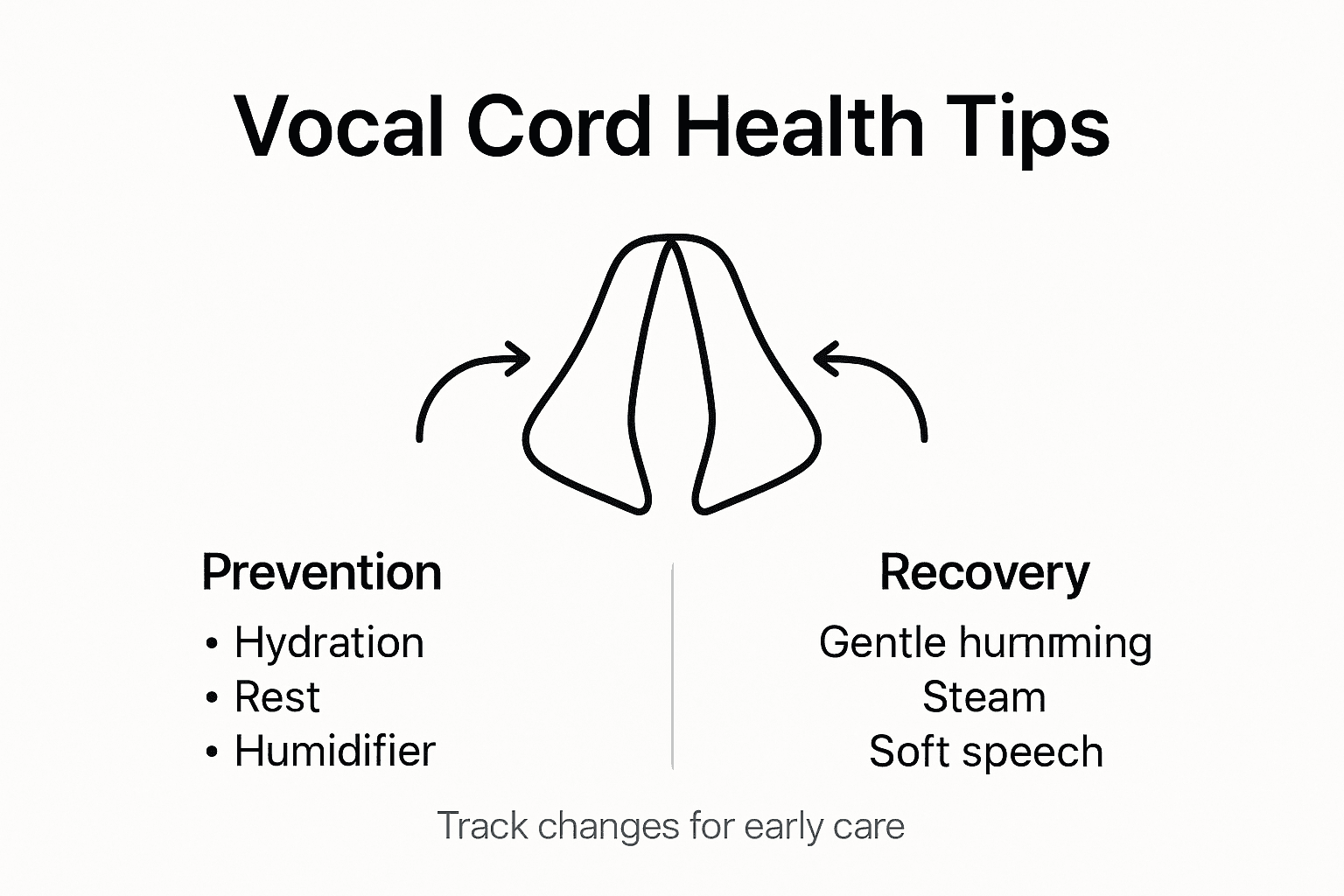
Successful vocal recovery demands patience, mindfulness, and a holistic approach that considers physical, environmental, and psychological factors affecting vocal health. Professional vocalists should view recovery as an ongoing process of careful maintenance and intentional healing.
Pro tip: Create a personalized vocal recovery journal to track hydration, rest periods, and potential irritants, enabling more targeted and effective healing strategies.
Preserving vocal strength requires understanding and avoiding common mistakes that can permanently damage vocal cord performance. Professional performers must recognize that vocal health is a delicate balance of technique, care, and strategic prevention.
The most critical mistakes that compromise vocal strength include:
Vocal Overuse
Technique Errors
Environmental Stressors
Preventing vocal damage requires a comprehensive approach that addresses both physical technique and environmental considerations. Professional vocalists must develop keen awareness of their vocal limitations, creating personalized strategies that protect their most valuable professional asset.
Successful vocal preservation goes beyond simple avoidance. It demands active engagement with vocal health, continuous learning, and a holistic understanding of how physical, emotional, and environmental factors interact to impact vocal performance.
Pro tip: Develop a personalized vocal assessment checklist that tracks potential strain indicators, helping you proactively manage your vocal health before serious issues emerge.
Understanding the delicate anatomy and function of your vocal cords is the first step to preventing issues like hoarseness, vocal fatigue, or nodules that can interrupt your performance. This article highlighted challenges such as vocal strain and the importance of proper vocal fold tension and airway protection. If you notice signs like raspy voice, loss of vocal range, or discomfort, don’t wait until these problems worsen.

Explore effective remedies and natural enhancements at Singer Enhancements - TMRG Solutions designed specifically for voice professionals who want to protect and optimize their vocal cords. If you are experiencing persistent vocal strain or suspect nodules, our solutions leverage over 25 years of expertise to aid recovery and promote lasting vocal health. Take control now by visiting TMRG Solutions where you can find targeted therapies including sprays, oils, and voice therapy kits, tailored to your unique vocal needs. Don’t let vocal challenges hold back your performance—act today to preserve your most valuable instrument.
The vocal cords, or vocal folds, are primarily responsible for sound production and phonation. They also regulate airflow during breathing, protect the airway during swallowing, and are crucial for overall respiratory and vocal health.
False vocal cords, or vestibular folds, are located above the true vocal cords and play a protective role by preventing foreign body entry. True vocal cords are directly involved in sound generation, vibrating to create speech and singing.
Vocal strain or injury can occur due to overuse, improper technique, inadequate hydration, or exposure to irritants. Symptoms might include hoarseness, fatigue, and pain in the throat, which should be addressed promptly to prevent long-term damage.
To maintain vocal health, stay hydrated, manage your environment by reducing irritants, allow for vocal rest, and practice proper technique. Regular warmups and awareness of your vocal limits are essential for preserving vocal strength.
