Your Cart is Empty


Long hours under stage lights can leave even the most seasoned performers battling vocal fatigue. For professional singers and actors, protecting the voice is essential to sustain their career and artistic expression. Understanding the underlying causes of vocal disorders is vital, as these medical conditions can lead to persistent hoarseness, lost range, and pain. This article offers clear insights into identifying, preventing, and recovering from the vocal challenges unique to performance professionals.
| Point | Details |
|---|---|
| Understanding Vocal Disorders | Vocal disorders can significantly impact a performer’s career and require prompt medical attention to prevent long-term damage. |
| Proactive Management | Regular vocal health assessments and tailored care plans can mitigate risks associated with vocal disorders. |
| Holistic Approach | Performers should integrate physical, psychological, and professional support strategies for optimal vocal health. |
| Prevention Strategies | Maintaining vocal hygiene, proper hydration, and effective warm-up techniques are critical for preserving voice quality. |
Vocal disorders represent complex medical conditions that critically impact professional performers’ careers and vocal capabilities. These conditions emerge from the extraordinary strain placed on vocal mechanisms during intensive performance settings, affecting singers, actors, and public speakers who rely on vocal precision and endurance.
Professional voice users experience a wide range of vocal pathologies affecting laryngeal function. These disorders can manifest through multiple mechanisms:
The most prevalent vocal disorders include:
Understanding these disorders requires recognizing the intricate physiological demands placed on performers’ vocal systems. Laryngeal pathologies represent significant challenges that can dramatically interrupt professional trajectories if left unaddressed.
Medical professionals categorize vocal disorders based on their origin, duration, and specific impact on vocal production. Some disorders develop gradually through repeated stress, while others emerge suddenly from acute vocal strain or infection.
Pro tip: Schedule regular vocal health assessments with a specialized laryngologist to catch potential disorders before they become career-threatening complications.
Vocal disorders encompass a complex range of medical conditions that uniquely challenge professional performers. Organic and functional voice disorders manifest through various physiological and psychological mechanisms, dramatically impacting a performer’s vocal capabilities.
The primary types of vocal disorders for performers include:
Key symptoms that performers should carefully monitor are:
Specific laryngeal disorders often present unique challenges for performers. These conditions can range from benign but disruptive vocal nodules to more complex neurological interruptions that fundamentally alter vocal production.

Understanding these disorders requires recognizing the intricate relationship between physiological stress, psychological factors, and vocal performance. Performers must remain vigilant about subtle changes in their vocal mechanism and seek professional assessment at the first sign of persistent symptoms.
Here’s a quick overview of vocal disorder types and how they impact performers differently:
| Disorder Category | Main Cause | Typical Impact on Performers |
|---|---|---|
| Organic | Tissue changes or lesions | Physical vocal limitations, audible voice quality changes |
| Functional | Misuse or tension | Reduced vocal flexibility, fatigued voice |
| Neurological | Nerve or brain signal disruption | Unpredictable voice loss, difficulty controlling pitch |
| Psychological | Emotional or mental stress | Inconsistent voice clarity, performance anxiety |
Pro tip: Develop a comprehensive vocal health monitoring routine that includes regular professional assessments and immediate intervention when unexpected vocal changes occur.
Professional voice users face a complex landscape of vocal health challenges that extend far beyond simple vocal strain. These risks encompass a multifaceted range of physiological, environmental, and psychological factors that can dramatically impact a performer’s vocal capabilities.
The primary causes and risk factors include:
Occupational vocal load presents significant challenges for performers, with several key risk categories emerging:
Demographic factors also play a nuanced role in vocal disorder development. While age, sex, and individual lifestyle choices contribute to risk, their impact remains less consistent compared to direct performance-related stressors.
Understanding these risk factors requires a holistic approach that considers the intricate interactions between physiological health, performance demands, and individual vocal mechanism resilience.
Pro tip: Develop a personalized vocal health assessment that tracks your unique risk factors and creates targeted prevention strategies.
Voice injuries pose significant challenges for performers, potentially derailing careers and creating profound professional uncertainty. These vocal health challenges extend beyond mere technical limitations, impacting psychological well-being and professional confidence.
The critical performance impacts include:
Performers experiencing vocal disorders typically encounter several profound challenges:
Career longevity for performers with voice disorders demands proactive management and strategic healthcare interventions. Early recognition, comprehensive treatment, and targeted rehabilitation can significantly mitigate potential career disruptions.
Understanding these challenges requires performers to adopt a holistic approach to vocal health, viewing their voice as a critical professional asset that demands consistent care and professional attention.
Pro tip: Develop a comprehensive vocal health portfolio that includes regular medical assessments, performance documentation, and strategic recovery plans.
Comprehensive vocal health strategies are essential for performers seeking to protect and rehabilitate their vocal mechanisms. These approaches require a multidisciplinary methodology that integrates medical expertise, behavioral modifications, and targeted interventions.
Key prevention strategies include:
Effective recovery approaches require a comprehensive, targeted intervention:
Tailored rehabilitation strategies demand individualized approaches that consider each performer’s unique vocal demands and physiological characteristics. Successful recovery hinges on integrated care that addresses both physical and psychological dimensions of vocal health.
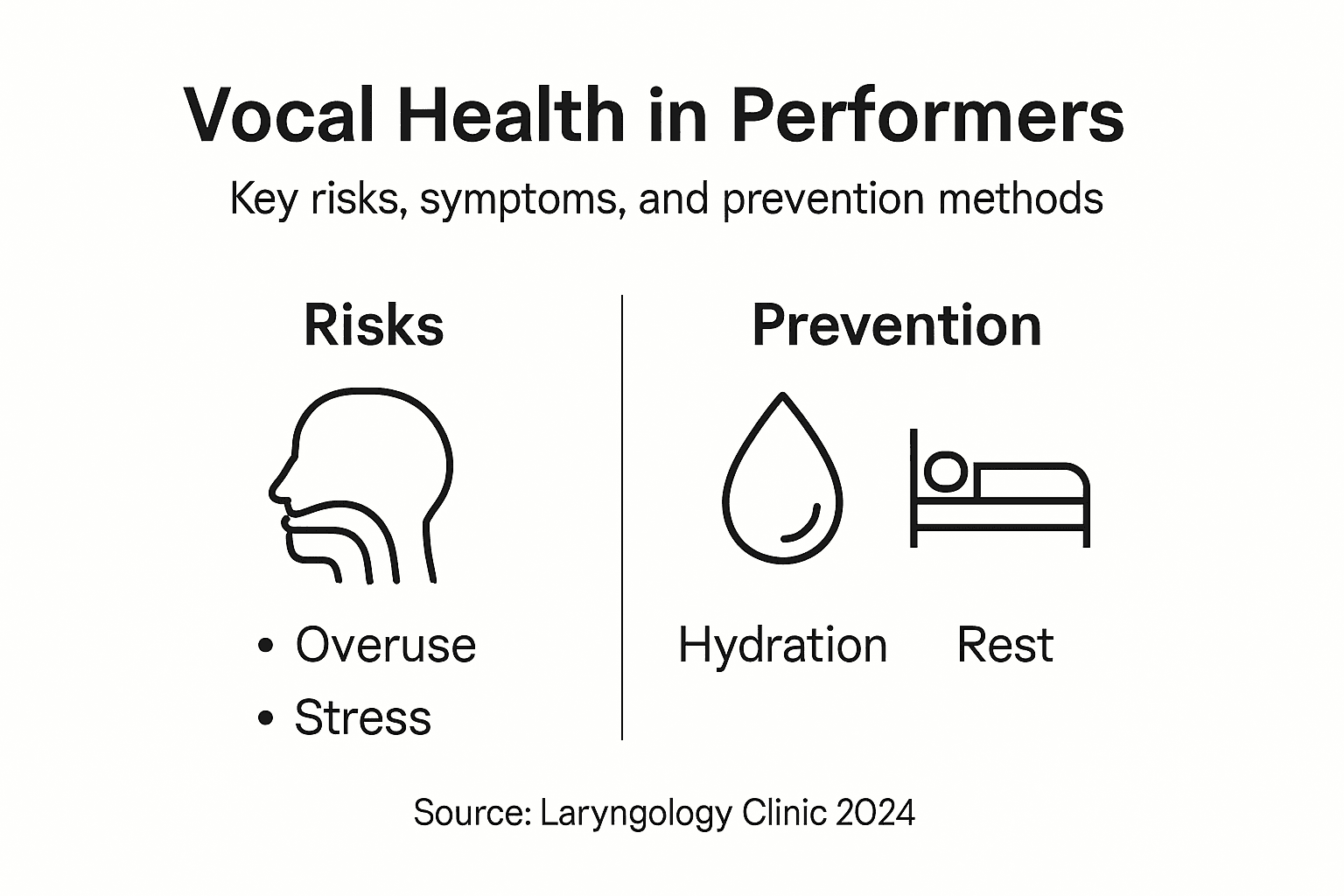
Understanding these approaches requires performers to view vocal health as a dynamic, holistic process requiring consistent attention, professional guidance, and personalized intervention strategies.
The table below summarizes major prevention and recovery methods and their advantages for vocal performance:
| Method | Key Benefit | When to Implement |
|---|---|---|
| Professional screenings | Early detection of issues | Biannually or after injury |
| Custom voice therapy | Targeted recovery and rehabilitation | Post-diagnosis or strain |
| Vocal hygiene routines | Maintain long-term vocal quality | Daily before and after use |
| Psychological support | Reduces stress-related complications | During sustained high-stress |
Pro tip: Create a comprehensive vocal health journal tracking performance conditions, vocal fatigue levels, and recovery progress to support targeted interventions.
Vocal disorders such as nodules, hoarseness, and vocal fatigue can threaten every performer’s career and confidence. If you recognize symptoms like persistent hoarseness or sudden vocal breaks, addressing them quickly with proven, natural remedies is essential. At TMRG Solutions, we understand the unique challenges performers face and offer specialized products that support vocal health and recovery. Explore our targeted options especially designed for conditions including nodules - TMRG Solutions and vocal paralysis challenges with our Paralysis - TMRG Solutions solutions.

Don’t let vocal issues sideline your performance or long-term career. Take control of your vocal health today by visiting TMRG Solutions to find expert-endorsed natural sprays, voice therapy kits, and dietary guides crafted to restore and enhance your voice. Act now to maintain your vocal strength and professional edge with products that thousands of voice professionals trust.
Common types of vocal disorders in performers include vocal nodules, laryngitis, polyps, chronic hoarseness, and muscle tension dysphonia. These conditions can significantly impact vocal performance and require attention from healthcare professionals.
Key symptoms of vocal disorders include persistent hoarseness, sudden pitch breaks, decreased vocal range, voice fatigue, pain during speaking or singing, and sudden voice loss. Monitoring these symptoms is crucial for timely intervention.
Performers can prevent vocal disorders by maintaining proper hydration, implementing vocal rest periods, using correct vocal warm-up techniques, and regularly monitoring vocal load and stress. Regular otolaryngological screenings are also highly beneficial.
If you experience vocal fatigue or noticeable changes in your voice, it’s important to seek professional assessment from a laryngologist or speech-language pathologist. Early intervention is key to preventing more severe vocal disorders.
