Your Cart is Empty


Nearly 40 percent of teachers worldwide—many using techniques inspired by leading American voice coaches—will experience vocal nodules at some point in their careers. For professional singers and actors, these tiny growths threaten both artistry and earning power by altering vocal tone, range, and stamina. Understanding what causes nodules, who faces the highest risks, and the most effective natural remedies can help you safeguard your voice and return to confident performances.
| Point | Details |
|---|---|
| Vocal Nodules Are Common in Professionals | Vocal nodules develop from vocal strain and are prevalent in teachers, singers, and actors due to their high vocal demands. |
| Symptoms Require Early Attention | Persistent hoarseness and vocal fatigue are key warning signs that necessitate immediate evaluation to prevent lasting damage. |
| Multiple Treatment Approaches Exist | Treatments include voice therapy, surgical options, and lifestyle modifications, with a focus on personalized recovery strategies. |
| Natural Remedies Enhance Vocal Health | Hydration, vocal rest, and specialized breathing techniques are vital for maintaining vocal health and preventing nodules. |
Vocal nodules are small, callous-like growths that develop on the vocal folds, typically caused by repeated vocal strain and improper voice usage. These benign lesions create hard, swollen areas that interfere with normal vocal cord vibration, leading to significant changes in vocal quality and performance capabilities. Professional voice users like singers, actors, teachers, and public speakers are particularly susceptible to developing these challenging vocal complications.
Research indicates that certain professional groups face higher risks of vocal nodules. A study comparing professional voice users revealed significantly higher incidences of voice-related complaints, with teachers representing nearly 40% of documented cases. The primary factors contributing to vocal nodule development include:
Younger professionals with less experience appear more vulnerable to these vocal challenges. Research involving 242 teachers demonstrated that educators with limited teaching experience were more prone to developing vocal nodules, particularly when working in environments with challenging acoustic conditions such as dry classrooms, loud spaces, or rooms with significant echo.

Here’s a summary of professionals at risk for vocal nodules and typical workplace challenges:
| At-Risk Profession | Typical Workplace Challenges | Contributing Factors to Nodules |
|---|---|---|
| Teachers | Loud classrooms, dry air, large groups | Prolonged speaking, poor acoustics |
| Singers | Frequent rehearsals, stage performances | High vocal demands, inadequate rest |
| Actors | Projecting voice, variable environments | Voice strain from role requirements |
| Coaches | Yelling over crowds, outdoor exposure | Extended loud speech, environmental irritants |
| Call center agents | Continuous phone conversations | Repetitive use, limited hydration |
Pro Tip - Vocal Health Preservation: Always warm up your voice gradually before intensive speaking or singing sessions, and incorporate regular vocal rest periods to minimize the risk of developing vocal nodules.
Vocal nodules manifest through a series of distinctive symptoms that professional voice users should carefully monitor. These warning signs often develop gradually, making early detection critical for preventing long-term vocal damage. Acoustic analysis of voices reveals significant changes in voice quality associated with vocal nodules, highlighting the importance of understanding these early indicators.
The most common symptoms experienced by individuals developing vocal nodules include:
Research among otolaryngologists and singing teachers confirms that early recognition of these symptoms is crucial for timely intervention. Professional voice users should pay particular attention to changes in their vocal performance, noting any unexplained alterations in sound quality, range, or vocal endurance. The progression of symptoms can vary, with some individuals experiencing mild discomfort while others encounter more pronounced vocal challenges.
Additionally, certain risk factors can exacerbate symptom development. These include frequent throat clearing, chronic coughing, smoking, alcohol consumption, and inadequate vocal hydration. Professionals who rely on their voice should be especially vigilant about monitoring these early warning signs and seeking professional evaluation at the first indication of persistent vocal changes.
Pro Tip - Vocal Symptom Tracking: Maintain a daily vocal journal to document any changes in your voice, recording specific symptoms, duration, and potential triggers to help healthcare professionals accurately diagnose and treat potential vocal nodules.
Vocal nodules emerge from a complex interplay of physiological and environmental factors that systematically strain the delicate vocal cord structures. Research among educators reveals multiple intricate risk factors contributing to vocal nodule development, demonstrating that certain professional environments and individual characteristics significantly impact vocal health.
The primary causes and risk factors for developing vocal nodules include:
Professional surveys among voice care specialists highlight that inadequate vocal training and systematic voice misuse are critical contributors to nodule formation. Certain professional groups face heightened risks, particularly those who depend on their voices as primary work tools. Teachers, singers, actors, coaches, and call center representatives are especially vulnerable due to prolonged daily vocal demands.
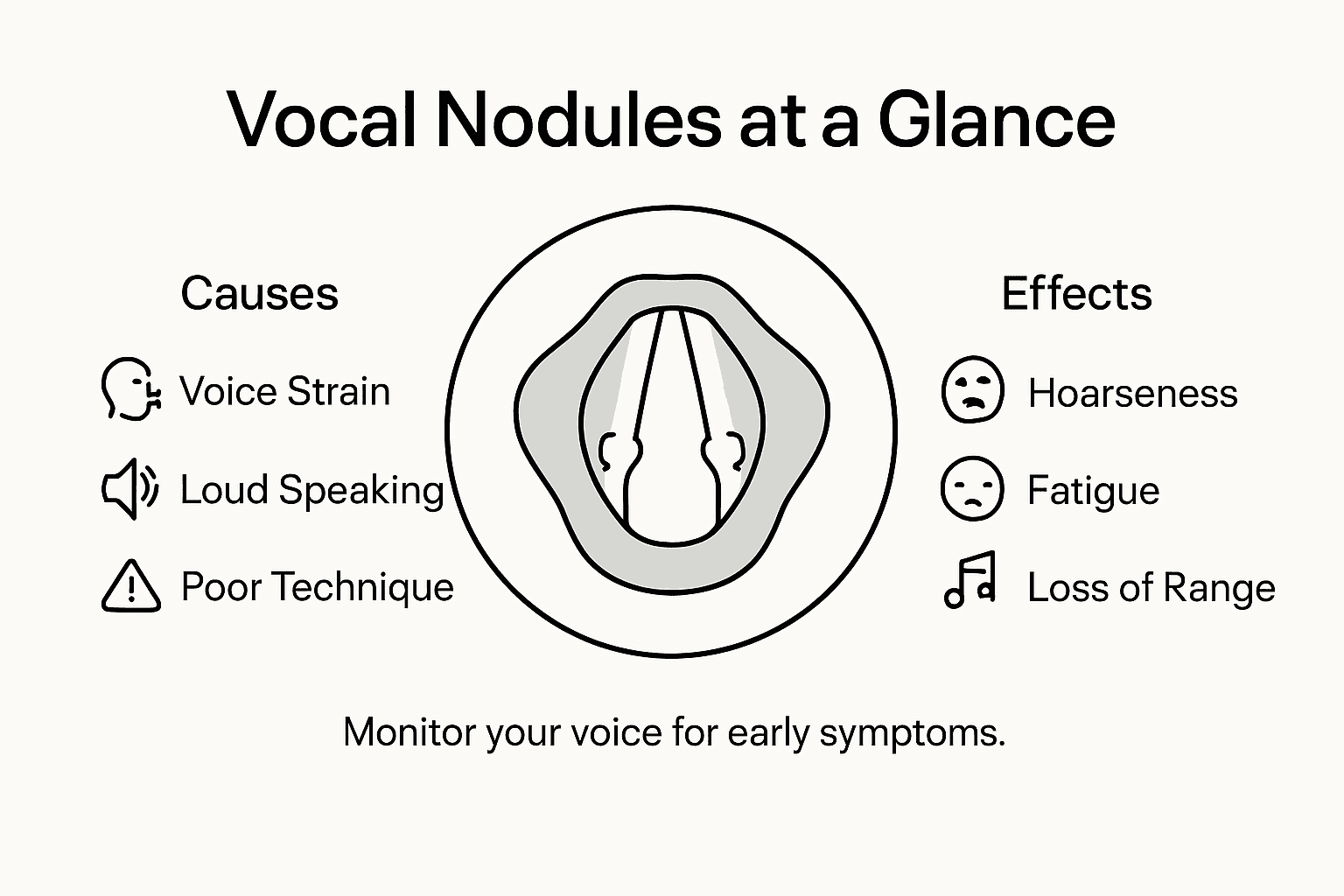
Environmental and physiological factors play significant roles in nodule development. Workplace conditions like excessive noise, poor acoustics, dry air, and high-stress communication settings can accelerate vocal cord damage. Additionally, individual health conditions such as acid reflux, allergies, and respiratory infections can create inflammatory responses that increase susceptibility to vocal nodules.
Pro Tip - Vocal Strain Prevention: Implement regular vocal rest periods and practice proper breathing techniques to minimize unnecessary strain on your vocal cords, reducing the likelihood of developing vocal nodules.
Addressing vocal nodules requires a comprehensive and personalized approach that combines multiple treatment strategies. Clinical research demonstrates that both intensive and traditional voice therapies can effectively improve vocal fold health, offering hope for professionals experiencing vocal challenges.
The primary treatment options for vocal nodules include:
Long-term studies confirm that intensive voice treatment can produce sustained improvements in voice quality and function, with most patients maintaining significant vocal improvements up to six months after treatment. The recovery process typically involves a multidisciplinary approach, combining medical assessment, targeted therapy, and strategic lifestyle adjustments.
Professional voice users require particularly nuanced treatment strategies. A comprehensive recovery plan often includes detailed vocal technique retraining, biomechanical assessments of speaking and singing mechanics, and gradual reintroduction of vocal demands. Specialized exercises designed to reduce vocal cord strain, improve breath support, and promote optimal vocal fold healing are critical components of successful rehabilitation.
The following table compares common treatment approaches for vocal nodules:
| Treatment Approach | Main Benefits | Limitations |
|---|---|---|
| Voice Therapy | Non-invasive, preserves voice | Requires commitment and practice |
| Surgical Intervention | Addresses severe cases quickly | Potential for scarring, downtime |
| Lifestyle Modification | Supports long-term prevention | Results may be gradual |
| Hydration/Nutrition | Supports tissue healing | Not effective alone |
| Stress Management | Reduces tension injuries | Indirect effect, needs consistency |
Pro Tip - Gradual Vocal Rehabilitation: Collaborate closely with a voice specialist to develop a personalized recovery roadmap, implementing progressive vocal exercises and carefully monitored practice sessions to rebuild vocal strength and flexibility.
Natural remedies play a critical role in maintaining vocal health and preventing the progression of vocal nodules for professional voice users. Expert research highlights the importance of comprehensive voice care strategies that extend beyond traditional medical interventions, emphasizing holistic approaches to vocal preservation.
Key natural remedies and voice care strategies include:
Vocal pedagogues consistently recommend specialized breathing strategies and resonance techniques to minimize phonotrauma and protect vocal cord integrity. These natural interventions focus on developing sustainable vocal mechanics that reduce unnecessary strain and promote long-term vocal resilience. Professional voice users must approach vocal care as a comprehensive lifestyle practice, integrating physical, nutritional, and psychological support systems.
Environmental modifications also contribute significantly to natural voice care. Professionals should create vocal-friendly spaces by controlling humidity, minimizing irritants, using proper amplification when speaking, and maintaining consistent vocal hygiene. Advanced techniques like mindful speaking, diaphragmatic breathing, and targeted vocal exercises can help professionals develop more efficient and sustainable vocal production methods.
Pro Tip - Vocal Self-Assessment: Develop a daily vocal journal to track your voice quality, energy levels, and potential strain, allowing you to proactively identify and address potential vocal health challenges before they escalate.
Vocal nodules create frustrating challenges for professionals who rely on their voice every day. Excessive strain, hoarseness, and vocal fatigue can threaten your career and passion. If you identify with these struggles, discovering effective relief and prevention methods is critical. At nodules - TMRG Solutions, you can find natural remedies and voice care products specially formulated to reduce swelling and support vocal fold healing.

Don’t wait until vocal nodules worsen and impact your voice further. Explore our expert-backed voice therapy kits, hydration solutions, and lifestyle aids designed to restore strength and flexibility while protecting against future damage. Visit https://tmrgsolutions.com today and take your first step toward a healthier voice. For those experiencing signs of vocal strain, also see helpful resources at Lack of proper adduction / breath voice - TMRG Solutions to enhance vocal technique alongside natural care.
Vocal nodules are small, callous-like growths on the vocal folds caused by vocal strain and improper voice usage. They can lead to hoarseness, vocal fatigue, and changes in vocal quality, affecting the performance capabilities of professional voice users, such as singers and teachers.
Professional voice users, particularly teachers, singers, actors, coaches, and call center agents, are at a higher risk due to prolonged voice usage, improper techniques, and challenging acoustic environments that exacerbate vocal strain.
Common symptoms include persistent hoarseness that does not improve with rest, breathy or raspy vocal quality, difficulty maintaining pitch, vocal fatigue, and a sensation of a lump in the throat, indicating the need for early intervention.
Treatment options include voice therapy with speech-language pathologists, vocal rest, and lifestyle modifications. In severe cases, surgical intervention may be necessary, alongside hydration and stress management strategies to promote healing.
