Your Cart is Empty


Most american singers are surprised to learn that the average person can only access about one and a half to two octaves of their full vocal range. This fundamental aspect of singing shapes everything from style to performance quality, affecting amateurs and professionals alike. Understanding what defines your unique voice is more than a technical pursuit—it can open new doors to growth, artistry, and long-term vocal health for anyone eager to explore their potential.
| Point | Details |
|---|---|
| Understanding Vocal Range | Vocal range is defined by pitch spectrum, vocal fold flexibility, resonance, and breath support, crucial for classification of singing voices. |
| Influence of Genetics | Genetics and physical anatomy significantly shape vocal range, with both hereditary traits and environmental factors affecting singing ability. |
| Role of Training | Systematic vocal training enhances vocal capabilities by focusing on techniques like breath control and mastering vocal registers. |
| Impact of Lifestyle Choices | Daily habits such as hydration, nutrition, and rest are vital for maintaining vocal health and performance capabilities. |
A vocal range represents the complete spectrum of musical pitches a human voice can effectively produce, spanning from its lowest to highest audible notes. According to Wikipedia, this range is fundamental in classifying different singing voices into distinct categories like soprano, mezzo-soprano, tenor, and bass.
Vocal range isn’t simply about hitting random high or low notes. It involves understanding complex physiological mechanisms within the human voice. Wikipedia explains that different vocal registers emerge through specific vibratory patterns of vocal folds. These registers include modal voice (standard speaking and singing range), falsetto, vocal fry, and whistle, each producing unique acoustic characteristics.
The primary components that define vocal range include:
Understanding vocal range requires recognizing it as a complex interaction between physical anatomy, muscular control, and refined technique. For singers seeking to expand their abilities, mastering breath control and vocal techniques becomes crucial in developing a broader, more versatile vocal instrument.
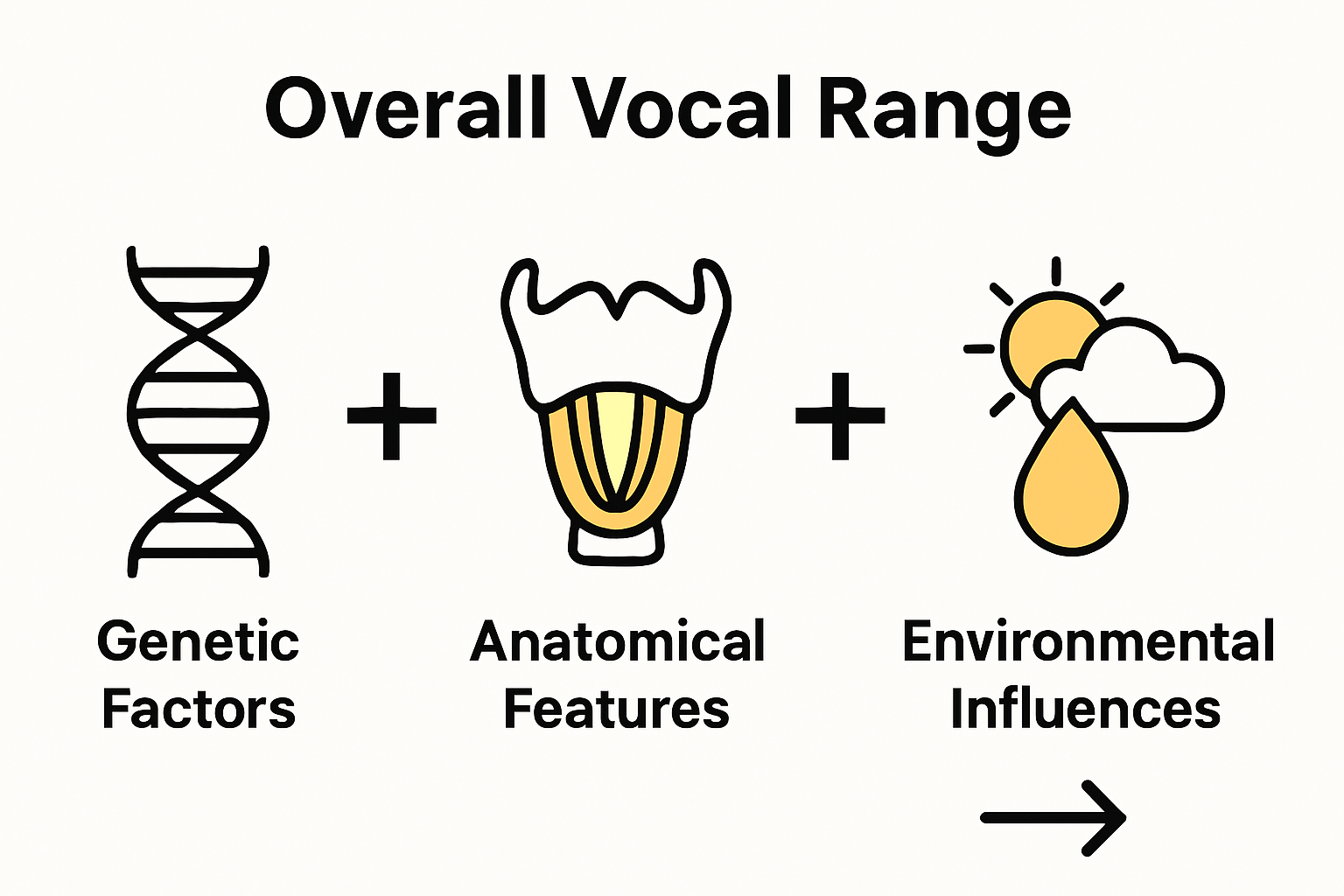
Vocal range isn’t solely a product of training and technique but is significantly shaped by our genetic blueprint and physical anatomy. Groundbreaking research from PubMed involving 12,901 Icelanders revealed fascinating genetic insights, identifying specific variants in the ABCC9 gene directly associated with voice pitch and vocal characteristics.
The complex interplay between genetics and environment becomes evident when examining how inherited traits influence vocal potential. PubMed research on Australian twins demonstrated that genetic factors and shared environmental influences contribute equally to an individual’s singing ability. This suggests that while genetics provide a foundational framework, environmental factors like training, nutrition, and vocal practice can substantially modify one’s inherent vocal capabilities.

Key anatomical factors influencing vocal range include:
For singers and vocal performers seeking to maximize their genetic potential, understanding these biological constraints becomes crucial. While genetic predispositions play a significant role, targeted vocal practice steps can help individuals work effectively within their natural anatomical limitations.
Vocal training is a transformative process that can dramatically expand and refine an individual’s vocal capabilities. According to Wikipedia, vocal pedagogy reveals that systematic instruction focusing on fundamental techniques like proper breathing, posture, and phonation can significantly enhance vocal range and overall performance quality.
Wikipedia emphasizes the critical importance of understanding and mastering different vocal registers. These include modal voice, falsetto, and whistle registers, each requiring specialized training techniques. By developing targeted exercises for each register, singers can create a more flexible and extended vocal range, breaking through previous physiological limitations.
Key vocal training techniques that impact range include:
For singers looking to elevate their vocal performance, exploring proven vocal techniques can provide structured pathways to significant improvement. Consistent, mindful practice transforms raw potential into remarkable vocal ability.
Vocal health represents a complex interplay of physiological, environmental, and lifestyle factors that directly impact an individual’s vocal range and performance capabilities. Research from PubMed investigating Australian twins revealed fascinating insights, demonstrating that shared environmental factors such as family musical exposure significantly predict singing ability and vocal development.
Environmental conditions play a crucial role in maintaining vocal flexibility and preventing potential damage. Factors like humidity levels, air quality, temperature, and exposure to irritants can dramatically influence vocal cord function and overall vocal resilience. Professional singers and speakers must remain acutely aware of these external conditions to protect their most valuable instrument.
Key health and environmental factors affecting vocal range include:
For those seeking comprehensive strategies to maintain optimal vocal health, exploring vocal cord hydration techniques can provide essential insights into protecting and enhancing vocal performance.
Vocal health extends far beyond training techniques, deeply intertwining with daily lifestyle choices that can dramatically enhance or compromise vocal performance. According to Wikipedia, vocal pedagogy emphasizes that consistent vocal care practices are integral to maintaining and improving vocal range, highlighting the profound connection between lifestyle decisions and vocal capabilities.
Certain lifestyle habits can create significant challenges for vocal performers. Factors such as smoking, excessive alcohol consumption, poor sleep patterns, and chronic stress can lead to vocal cord inflammation, reduced elasticity, and diminished overall vocal resilience. These lifestyle choices directly impact the muscles, mucous membranes, and overall physiological mechanisms responsible for voice production.
Key lifestyle factors influencing vocal performance include:
Vocal professionals seeking to protect their instrument can benefit from understanding how to safeguard their voice through strategic lifestyle modifications and proactive health management.
Navigating vocal development requires understanding the subtle distinctions between challenging yourself and potentially damaging your vocal instrument. According to Wikipedia, a prevalent misconception is that forcefully pushing the voice beyond its natural range will automatically lead to improvement. In reality, such aggressive approaches can cause significant strain and potential long-term vocal damage.
Wikipedia highlights another critical error: misunderstanding vocal registers and attempting to sing unsupported across different ranges. These mistakes can rapidly lead to vocal fatigue, reduced performance capability, and increased risk of injury. Professional vocalists must develop nuanced awareness of their unique vocal mechanisms and respect their physiological limitations.
Common vocal misconceptions that can compromise vocal health include:
Singers committed to long-term vocal excellence can protect their voice by understanding these potential pitfalls and developing a more mindful, holistic approach to vocal training.
Struggling with vocal fatigue or feeling stuck within your natural vocal range is frustrating. This expert guide highlights how complex factors like genetics, anatomy, training, and lifestyle shape your voice. If you want real improvement without risking damage, addressing these pain points with targeted support is essential. Our Singer Enhancements - TMRG Solutions offer natural remedies and proven tools designed to strengthen your voice safely and effectively.

Take control of your vocal health now by exploring solutions tailored to your unique needs. Whether you face challenges like hoarseness, vocal strain, or want to expand your capabilities, discover trusted products and expert guidance at https://tmrgsolutions.com. Visit us today and start empowering your voice for lasting performance improvement.
Vocal range is determined by several factors, including pitch spectrum, vocal fold flexibility, resonance, and breath support. Genetic influences such as vocal cord length and larynx size also play a significant role.
Yes, vocal training can significantly expand your vocal range. Techniques such as breath control exercises, resonance training, and register transition practice can help refine your voice and increase its versatility.
Genetics can shape vocal range by influencing anatomical factors like vocal cord length and thickness, as well as the size of the larynx. Studies have shown that genetic traits contribute to one’s singing ability, which can be enhanced through environmental factors and training.
Lifestyle choices such as hydration, nutrition, sleep quality, and stress management can significantly affect vocal health and performance. Avoiding harmful habits like smoking and excessive alcohol consumption also plays a crucial role in maintaining a strong and flexible voice.
