Your Cart is Empty


Every american professional who relies on their voice knows how fragile this essential tool can be. Roughly 30 percent of vocal professionals experience voice problems at some point, affecting both career and confidence. Whether you are a singer, teacher, or public speaker, understanding vocal maintenance is vital to safeguard clear, strong communication. With the right habits in place, you can reduce strain, avoid long-term damage, and keep your voice resilient for years to come.
| Point | Details |
|---|---|
| Vocal Maintenance is Essential | Regular care is crucial for anyone relying on their voice, as it prevents voice disorders and enhances performance. |
| Understanding Vocal Strain | The complexities of vocal use demand awareness of personal limits and potential environmental impacts to avoid serious challenges. |
| Holistic Vocal Care | Effective techniques integrate physical practices with mental health awareness for sustained vocal resilience. |
| Risks of Neglect | Failing to maintain vocal health can lead to permanent damage and profound emotional consequences, making proactive care necessary. |
Vocal maintenance represents a comprehensive approach to protecting and nurturing one’s vocal mechanism, ensuring optimal performance and preventing potential voice disorders. At its core, vocal maintenance encompasses a strategic set of practices designed to preserve vocal health, minimize strain, and support long-term vocal resilience.
The critical importance of vocal maintenance emerges from understanding how fragile and complex the human voice truly is. Professional singers, speakers, actors, and educators rely on their voices as primary communication tools, making consistent vocal care not just beneficial, but essential. Vocal cord maintenance involves multiple interconnected strategies that protect against potential damage from overuse, environmental factors, and improper technique.
Professional voice users face significant risks without proper maintenance. Research indicates that excessive vocal strain can lead to serious complications like vocal fatigue, hoarseness, and potential long-term vocal cord damage. These issues aren’t merely temporary inconveniences but can dramatically impact professional performance and personal communication abilities. By implementing systematic vocal maintenance techniques, individuals can significantly reduce their risk of developing chronic voice problems and maintain vocal clarity, strength, and flexibility.
Key components of effective vocal maintenance include:
Ultimately, vocal maintenance is about proactive self-care, recognizing that your voice is a delicate yet powerful instrument requiring thoughtful, consistent attention.
Vocal strain represents a complex spectrum of challenges that can significantly impact professional and personal communication. Professional singers face numerous laryngeal pathologies that emerge from consistent misuse and overexertion of their vocal mechanisms, creating a range of potential health complications that require careful management and understanding.
The most common vocal challenges can be categorized into several critical areas. Voice disorders manifest in multiple forms, including muscle tension dysphonia, vocal cord lesions, and spasmodic dysphonia. Each condition presents unique symptoms and challenges that can dramatically affect an individual’s ability to communicate effectively and perform vocally with confidence.
Professional voice users encounter specific strain types that demand targeted interventions. Chronic vocal challenges often result from:
Beyond physical manifestations, vocal strain carries significant psychological impacts. Performers and speakers experiencing persistent vocal challenges may encounter reduced professional confidence, increased anxiety about vocal performance, and potential career limitations. Understanding these multifaceted challenges is crucial for developing comprehensive vocal maintenance strategies that address both physiological and emotional dimensions of vocal health.
Effective vocal care requires a holistic approach that encompasses physiological understanding, strategic techniques, and consistent practice. Speech Level Singing techniques demonstrate that minimizing vocal strain while producing natural sound is fundamental to long-term vocal health, emphasizing the importance of technique over pure volume or intensity.
The core principles of vocal maintenance revolve around several critical strategies. Voice therapy interventions highlight the necessity of understanding individual vocal mechanics, implementing targeted exercises, and developing awareness of potential strain indicators. Vocal resilience emerges from a combination of proper breathing techniques, consistent practice, and mindful performance approaches.
Professional vocalists and speakers must prioritize several key practices:
Beyond physical techniques, effective vocal care demands a comprehensive understanding of the intricate relationship between mental state, physical technique, and vocal performance. Psychological factors like stress, confidence, and emotional regulation play significant roles in vocal production, making holistic care essential for sustainable vocal health and performance excellence.
Professional singers face significant risks when neglecting systematic vocal maintenance, with potential consequences that extend far beyond temporary discomfort. Continuous vocal strain and improper technique can progressively damage delicate vocal mechanisms, leading to long-term performance limitations and potentially career-ending complications.

The profound implications of vocal neglect manifest through multiple complex pathways. Voice disorders can dramatically impair communication abilities, transforming what was once a powerful instrument into a source of professional and personal frustration. Vocal deterioration represents a cumulative process where small, seemingly insignificant strain accumulates into substantial structural damage over time.
Specific risks associated with vocal maintenance negligence include:
The psychological dimension of vocal health cannot be overlooked. Professionals experiencing vocal decline often encounter profound emotional challenges, including decreased self-confidence, performance anxiety, and potential career disruption. Understanding these multifaceted risks transforms vocal maintenance from an optional practice to an absolute necessity for anyone relying on their voice as a critical professional tool.
Speech Level Singing techniques represent a groundbreaking approach to preserving vocal health, emphasizing sustainable performance strategies that minimize strain while maximizing vocal potential. These advanced techniques demonstrate that long-term vocal wellness is not about restricting vocal expression, but strategically managing vocal mechanics to ensure consistent, resilient performance.
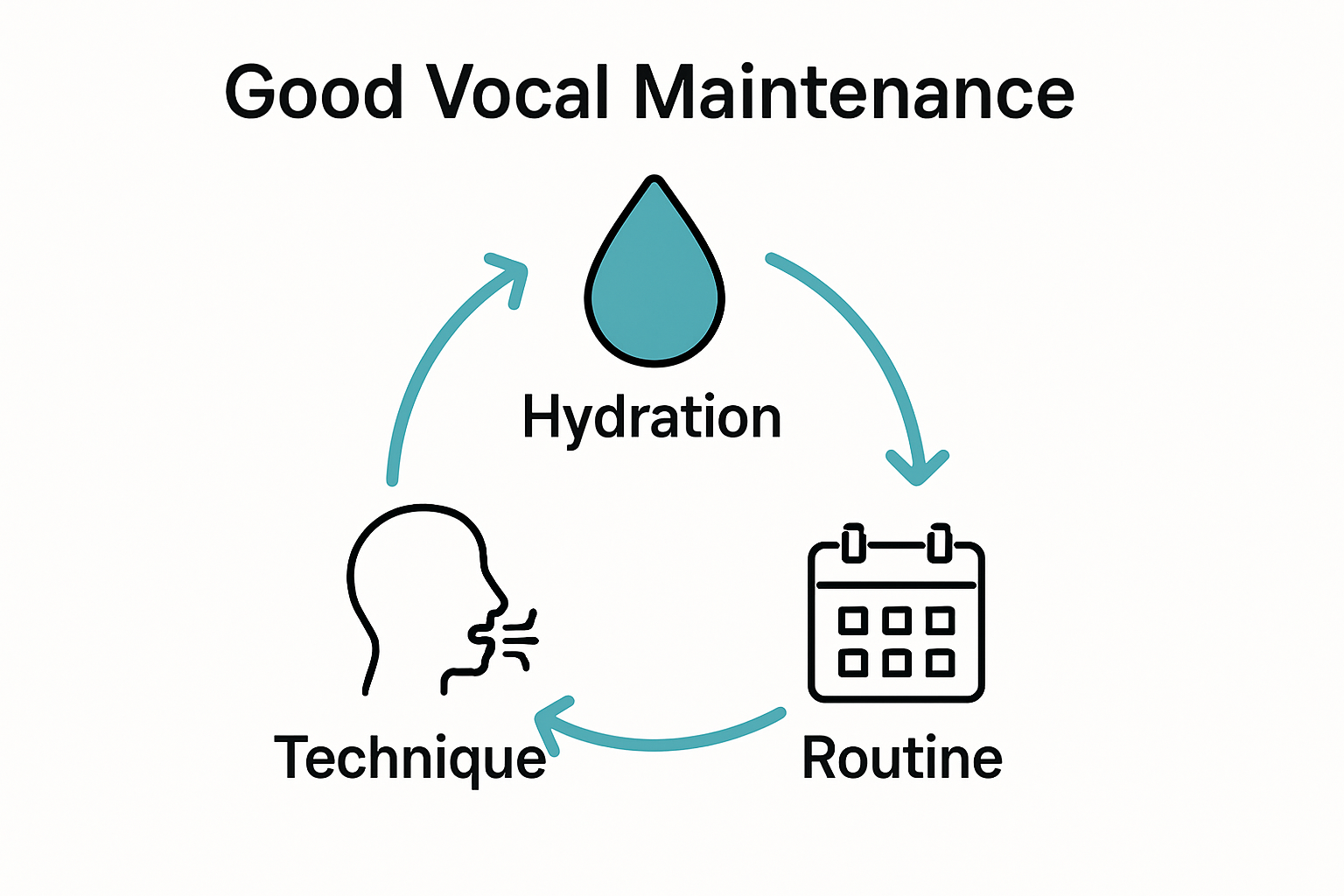
Effective vocal health requires a comprehensive, multidimensional strategy. Voice therapy interventions underscore the importance of proactive maintenance, highlighting that most vocal challenges can be prevented or mitigated through consistent, informed practices. Vocal resilience emerges from understanding individual vocal limitations and implementing targeted, personalized care techniques.
Critical best practices for sustaining vocal health include:
Professional vocalists understand that vocal health transcends simple mechanical techniques. It represents a holistic approach integrating physical technique, psychological awareness, and consistent self-monitoring. By treating the voice as a sophisticated instrument requiring nuanced care, performers can sustain their vocal capabilities and prevent potential long-term damage through intelligent, strategic maintenance.
Vocal maintenance is essential to avoid strain, hoarseness, and vocal fatigue that can threaten your voice’s strength and clarity. If you seek to maintain optimal hydration, master breathing techniques, and perform effective vocal warm-ups to prevent long-term damage, explore specially formulated products designed to support your vocal health. Our Singer Enhancements - TMRG Solutions category offers natural remedies and tools trusted by vocal professionals to nurture and protect your voice.

Take control of your vocal health today by visiting https://tmrgsolutions.com and discovering our full range of options in All Products - TMRG Solutions. Start your journey to lasting vocal resilience and prevent the risks of neglect highlighted in our complete vocal maintenance guide.
Vocal maintenance refers to a comprehensive approach to protecting and nurturing the vocal mechanism, which includes practices aimed at preserving vocal health, minimizing strain, and supporting long-term vocal resilience.
Vocal maintenance is vital for singers, speakers, and performers because it helps prevent voice disorders, reduces the risk of long-term vocal cord damage, and maintains clarity, strength, and flexibility of the voice, essential for effective communication and performance.
Key practices for effective vocal maintenance include consistent hydration, proper breathing techniques, regular vocal warm-ups, understanding individual vocal limitations, minimizing environmental stressors, and avoiding harmful vocal behaviors like excessive shouting.
Neglecting vocal maintenance can lead to serious risks, such as permanent vocal cord scarring, chronic inflammation, reduced vocal range, increased susceptibility to infections, and may even require surgical intervention due to the cumulative damage to the vocal cords.
