Your Cart is Empty


Vocal fatigue and hoarseness can disrupt every performance, leaving even seasoned professionals frustrated by sudden limits on their artistry. For singers and actors, maintaining a resonant and resilient voice is more than routine—it is the core of their career. Learning how to assess vocal health, recognize early warning signs, and apply natural remedies and focused recovery strategies provides a foundation for safer, faster recovery and long term vocal strength.
| Key Insight | Explanation |
|---|---|
| 1. Assess Vocal Health Regularly | Conduct self-evaluations and monitor symptoms to identify vocal strain. |
| 2. Prioritize Vocal Rest | Implement complete vocal silence for 24 to 48 hours to facilitate healing. |
| 3. Stay Hydrated Consistently | Drink plenty of water and use a humidifier to maintain vocal health. |
| 4. Utilize Natural Remedies | Incorporate herbal teas and throat sprays to soothe and protect vocal folds. |
| 5. Adjust Recovery Plans | Track progress and modify exercises based on vocal performance improvements. |
Assessing your vocal health is a strategic process that reveals potential strain and damage. Your goal is to understand the current condition of your voice through careful examination and targeted observations.
Begin by conducting a thorough self evaluation using comprehensive voice assessment techniques. Start with a detailed voice history review that explores your speaking and singing patterns. Note frequency of performance, typical vocal demands, recent illness, allergies, and any persistent vocal fatigue. Examine your voice quality by recording yourself speaking and singing to detect subtle changes in pitch, resonance, and clarity.
Physical assessment involves checking for symptoms like persistent hoarseness, vocal breaks, limited range, pain while speaking or singing, and reduced vocal endurance. Pay attention to how your voice feels during different activities tracking discomfort levels. Watch for warning signs such as throat tightness, unexplained vocal strain, or difficulty maintaining consistent sound quality. If multiple symptoms persist beyond two weeks, consulting a professional voice specialist becomes crucial.
Pro tip: Create a voice journal documenting your vocal performance, tracking daily changes, symptoms, and potential triggers to help identify patterns of vocal strain.
Here is a summary of common vocal strain symptoms and what they may indicate:
| Symptom | Possible Cause | Suggested Action |
|---|---|---|
| Persistent hoarseness | Overuse or inflammation | Begin rest, consult specialist |
| Vocal breaks | Muscle fatigue | Monitor, track frequency |
| Pain with speaking | Tissue irritation | Immediate rest recommended |
| Limited range | Swelling or strain | Gentle exercises after rest |
| Reduced endurance | Hydration issues | Increase water intake |
Immediate vocal rest and strategic hydration are crucial first steps in recovering from vocal strain. Your primary goal is to create an optimal healing environment for your vocal folds while preventing further damage.

Begin by implementing complete vocal silence for 24 to 48 hours. This means absolutely no talking, singing, whispering, or making any vocal sounds. During this period, minimize vocal fold inflammation through total vocal rest. Use alternative communication methods like writing, texting, or using gesture apps to interact. If professional or personal obligations require communication, consider having a designated communication proxy who can speak on your behalf.
Parallel to vocal rest, focus intensely on hydration. Drink room temperature water consistently throughout the day aim for at least eight 8-ounce glasses. Avoid caffeine, alcohol, and sugary drinks that can dehydrate vocal tissues. Use a humidifier in your living and sleeping spaces to maintain optimal moisture levels for your vocal membranes. Herbal teas without caffeine can provide additional soothing benefits and support mucous membrane health.
Pro tip: Keep a dedicated water bottle with measurement markings to track your hydration and ensure you consistently meet your daily water intake goals.
Natural remedies and targeted vocal care products offer powerful support for vocal recovery and healing. Your objective is to strategically use botanical solutions and specialized products that soothe and protect your vocal folds during the healing process.
Start by exploring natural vocal healing strategies that can accelerate your recovery. Prioritize herbal teas with slippery elm or licorice root, known for their anti inflammatory properties. Prepare these teas at room temperature to avoid thermal shock to your vocal tissues. Steam inhalation with chamomile or eucalyptus can help open respiratory passages and provide gentle moisture to irritated membranes. Look for throat sprays containing natural ingredients like honey, glycerin, and marshmallow root that lubricate and protect vocal surfaces.
Complementary to herbal approaches, select vocal care products specifically designed for singers. Seek out lozenges with natural demulcents that create a protective coating on throat tissues. Use water-based throat sprays that provide instant hydration without alcohol or harsh chemicals. Consider natural throat coat tinctures that support mucous membrane repair and reduce inflammation. Always read ingredient lists carefully and choose products free from menthol or numbing agents that can mask underlying vocal strain.
Pro tip: Keep your natural remedies and vocal care products in a dedicated recovery kit, making them easily accessible during your vocal healing journey.
Here is a comparison of selected natural remedies and commercial vocal care products:
| Product Type | Key Benefit | Main Ingredient | Ideal Use Scenario |
|---|---|---|---|
| Herbal tea | Reduces inflammation | Slippery elm | Daily soothing, mild strain |
| Throat lozenge | Coats throat tissue | Honey | Quick relief, dry throat |
| Steam inhalation | Moisturizes vocal tissues | Eucalyptus/Chamomile | Severe dryness, congestion |
| Alcohol-free throat spray | Instant hydration | Glycerin | On-the-go, performance prep |
Targeted vocal therapy exercises are critical for systematic vocal recovery and rebuilding your voice’s strength and resilience. Your primary objective is to implement carefully selected techniques that promote healing and prevent future vocal strain.
Begin with semi-occluded vocal tract exercises designed to reduce muscle tension and optimize vocal fold function. Start with gentle lip trills, which help reset vocal cord coordination without excessive pressure. Practice straw phonation by humming through a narrow straw, which creates back pressure that supports efficient phonation and minimizes vocal fold stress. These techniques help retrain your vocal muscles to work more efficiently and reduce unnecessary tension.
Progress to breathing and resonance exercises that support overall vocal health. Practice diaphragmatic breathing by placing one hand on your chest and another on your abdomen, ensuring movement occurs primarily in the lower area. Implement gentle humming exercises that explore different pitch ranges without forcing sound production. Focus on maintaining consistent airflow and minimal tension. Gradually increase exercise complexity as your voice becomes more stable, always monitoring for any discomfort or additional strain.
Pro tip: Record your vocal exercises to track progress and identify subtle improvements in your vocal recovery journey.
Monitoring your vocal recovery requires systematic tracking and thoughtful adjustments based on observable changes. Your goal is to develop a responsive approach that adapts to your voice’s healing process and unique challenges.
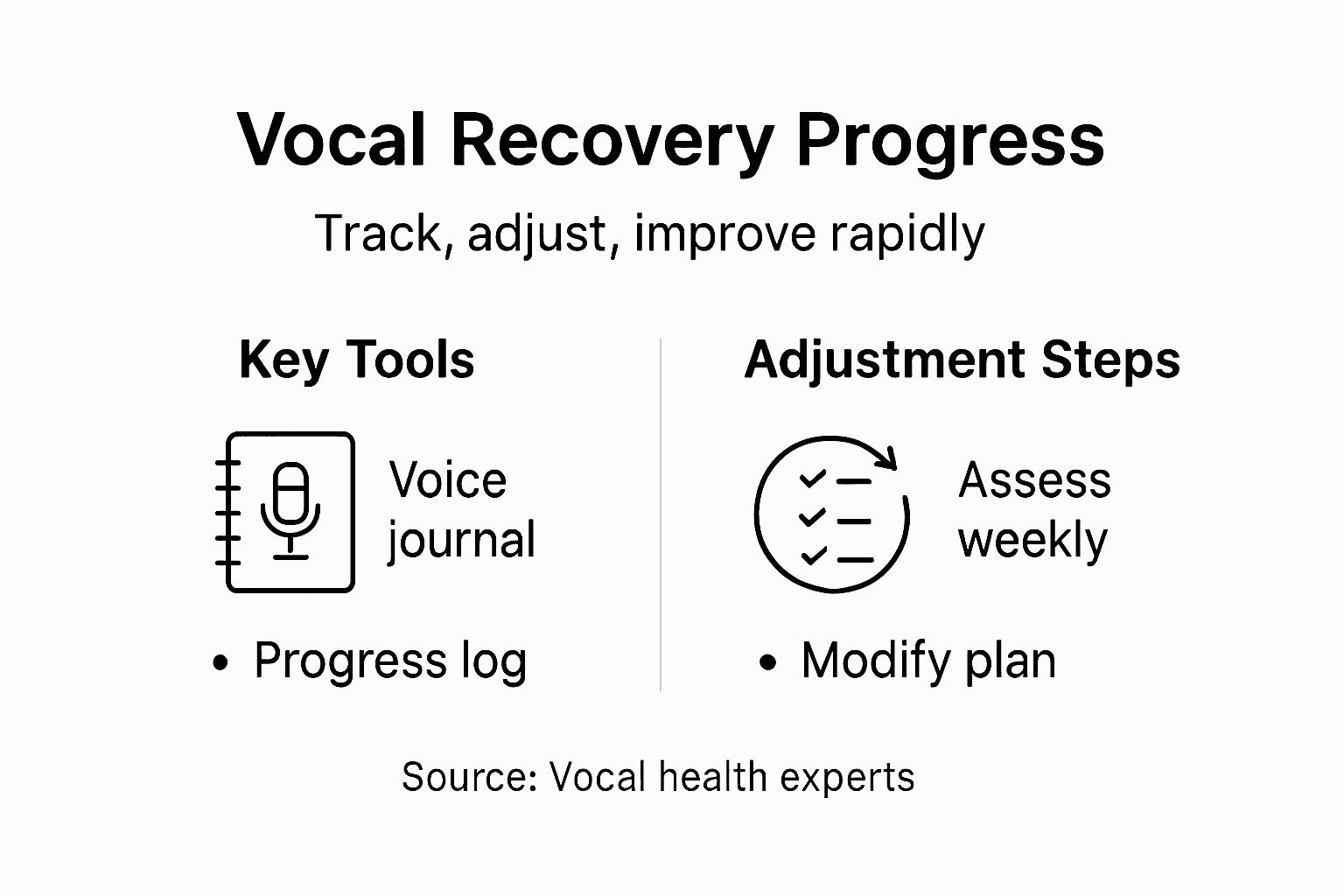
Implement regular voice rehabilitation assessments that provide objective insights into your vocal recovery. Create a structured tracking system where you record daily voice quality, noting factors like vocal endurance, pitch stability, and any residual strain or discomfort. Use a simple rating scale from 1 to 10 to quantify your vocal performance, paying special attention to changes in vocal fatigue, resonance, and overall comfort during speaking or singing.
Design a flexible recovery framework that allows for incremental modifications. If you notice persistent challenges or plateaus in your vocal healing, consider consulting a professional voice specialist who can provide personalized guidance. Watch for signs of improvement such as increased vocal range, reduced vocal tension, and more consistent sound production. Be prepared to modify your vocal exercises, rest periods, and hydration strategies based on these observations. Remember that vocal recovery is not linear and requires patience and attentive self monitoring.
Pro tip: Take a short video recording of your vocal exercises weekly to create a visual and auditory progress log that helps you objectively track your vocal rehabilitation.
Experiencing vocal strain, hoarseness, or fatigue can be frustrating when your voice is your most important tool. This advanced vocal recovery guide highlights key challenges like persistent hoarseness, muscle fatigue, and limited vocal range that demand immediate attention with proper care and support. If you are committed to restoring your voice quickly and safely, incorporating effective natural remedies and targeted therapies is essential to prevent further damage and boost your healing journey.
Discover proven products and specialized kits tailored for singers and voice professionals at Singer Enhancements - TMRG Solutions. Our collection addresses vocal abuse and load issues with carefully formulated solutions available at Vocal abuse / Vocal load - TMRG Solutions.

Don’t wait until vocal strain worsens. Act now to protect and strengthen your voice with trusted natural products backed by over 25 years of expertise. Visit TMRG Solutions to explore our full range of effective vocal health essentials, and start your fast vocal recovery today.
Start by conducting a self-evaluation using voice assessment techniques like documenting your vocal history and recording your voice. This will help identify any strain or changes in quality, which can guide your recovery plan.
Implement complete vocal rest for 24 to 48 hours, avoiding all vocal sounds. Additionally, stay hydrated by drinking at least eight 8-ounce glasses of water daily to support your vocal folds.
Explore natural remedies like herbal teas with slippery elm or throat sprays containing honey. These solutions can soothe your vocal folds and reduce inflammation, contributing to faster recovery.
Begin with semi-occluded vocal tract exercises, such as lip trills and straw phonation, to reduce tension and improve coordination. Aim to practice these exercises daily until you notice improvements in vocal comfort and stability.
Establish a structured tracking system to record daily vocal quality, noting any changes or improvements. Use a simple 1 to 10 rating scale to quantify your vocal performance and adjust your recovery plan as needed.
Consult a professional voice specialist if you experience persistent symptoms or if your vocal recovery plateaus after implementing your initial recovery steps. Early intervention can help prevent long-term damage and optimize your healing process.
