Your Cart is Empty


Professional vocalists and lecturers know that even a minor change in vocal quality can threaten a career, especially when you consider that over 30 percent of American singers will experience voice problems linked to vocal nodules. With lives and reputations riding on every word and note, understanding the real causes behind vocal fatigue is essential. This guide debunks common myths about vocal nodules and highlights practical, natural solutions to help you protect your voice and perform at your peak.
| Point | Details |
|---|---|
| Vocal Nodules Are Manageable | Despite common myths, vocal nodules can often be treated effectively with voice therapy rather than surgery. Early detection is crucial for effective management. |
| Nodule Formation Patterns | Nodules can be characterized as immature or mature based on their tissue properties and visibility, influencing their impact on vocal quality. |
| Vocal Strain Triggers | Professional voice users should be aware of vocal strain caused by excessive talking, singing improperly, and lack of rest, leading to nodule development. |
| Holistic Vocal Health | Maintaining hydration, managing stress, and scheduling regular vocal assessments are essential strategies to protect vocal health and prevent nodules. |
Vocal nodules are small, benign growths that develop on the vocal folds, often resulting from repetitive vocal strain or misuse. These callus-like formations typically appear at the midpoint of the vocal folds and can significantly impact a professional voice user’s performance. Vocal cord nodules are symmetric lesions most commonly observed in young women and pre-adolescent boys, arising from excessive vocal stress known as phonotrauma.
Contrary to popular misconceptions, vocal nodules are not career-ending conditions. Many professionals mistakenly believe that these growths automatically require surgical intervention or permanently damage vocal capabilities. However, research demonstrates that most cases can be effectively managed through targeted voice therapy and proper vocal health strategies. The key is early detection and implementing appropriate rehabilitation techniques that reduce vocal strain and promote healing.
The physiological mechanism behind vocal nodules involves repetitive friction and trauma to the vocal fold mucosa. When vocal folds are repeatedly stressed through excessive talking, singing, or improper vocal techniques, the body responds by developing protective callus-like tissue. This thickening can cause symptoms like hoarseness, breathiness, and reduced vocal range. Professional voice users such as singers, teachers, and public speakers are particularly susceptible to developing these growths due to the intense demands placed on their vocal apparatus.
Pro Tip - Vocal Preservation Strategy: Schedule regular vocal assessments with a professional voice therapist and implement daily vocal warm-up and cool-down routines to minimize the risk of developing vocal nodules and maintain optimal vocal health.
Vocal nodules exhibit distinct morphological characteristics that help medical professionals diagnose and classify their development. Nodules can be categorized based on their specific laryngoscopic appearance, primarily divided into two primary stages: immature and mature formations. Immature nodules are characterized by soft, recently formed, and edematous tissue, while mature nodules demonstrate firm, fibrotic, and distinctly defined structures.
The formation pattern of vocal nodules typically involves a symmetric bilateral development at the precise midpoint of the vocal folds. Interestingly, these lesions often present with a nuanced asymmetry, where one side develops a dominant subepithelial lesion while the contralateral side forms a reactive counterpart. This asymmetric yet structured development reflects the body’s complex response to persistent vocal fold trauma and indicates how repeated stress impacts vocal tissue.
Here is a comparison of immature and mature vocal nodules that highlights their key diagnostic features:
| Stage of Nodule | Tissue Characteristics | Visibility on Exam | Implications for Voice |
|---|---|---|---|
| Immature | Soft, edematous | Subtle, less defined | Mild hoarseness likely |
| Mature | Firm, fibrotic | Clearly defined, prominent | Persistent vocal roughness |
Age and vocal usage significantly influence nodule development, with children and professional voice users experiencing unique formation patterns. Factors such as duration of dysphonia, intensity of vocal strain, and individual physiological responses contribute to the nodules’ structural evolution. Professional singers, teachers, and public speakers are particularly susceptible to these formations due to the repetitive mechanical stress placed on their vocal apparatus. The progression from soft, inflammatory lesions to more rigid, fibrotic growths demonstrates the body’s adaptive response to continuous vocal microtrauma.
Pro Tip - Nodule Progression Tracking: Maintain a detailed vocal journal documenting your speaking and singing workload, noting any changes in voice quality, to help healthcare professionals track potential nodule development and intervention strategies.
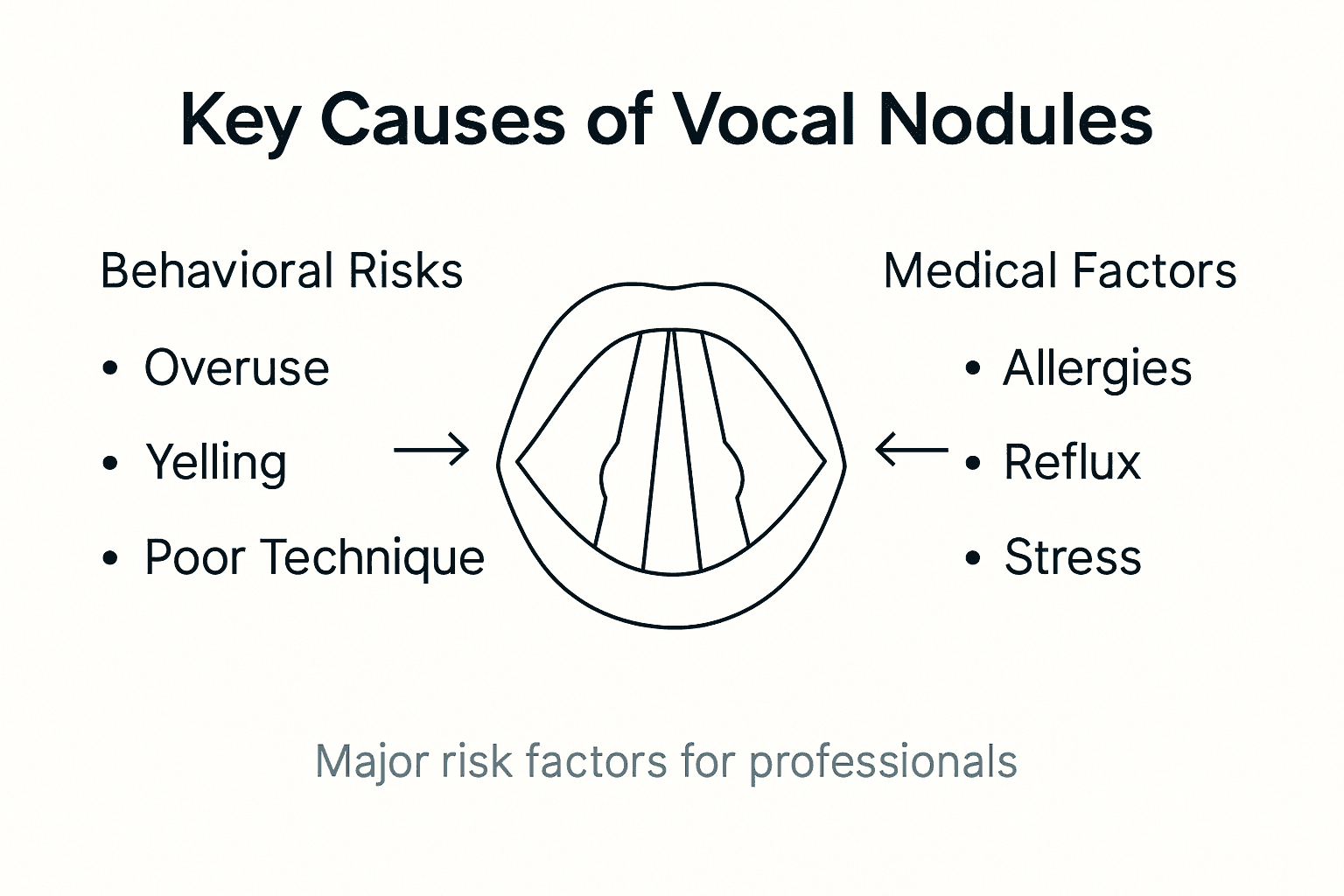
Vocal strain represents a complex physiological response to sustained mechanical stress on the vocal apparatus. Chronic vibratory trauma produces the primary mechanism for vocal nodule development, concentrating most intensely at the mid-membranous vocal fold where impact stress reaches its peak. Professional voice users—including singers, teachers, public speakers, and call center representatives—frequently experience this repetitive tissue damage through habitual vocal behaviors that push their vocal mechanisms beyond natural limits.
The specific behaviors triggering vocal strain encompass a wide range of maladaptive vocal techniques. These include persistent loud speaking, frequent yelling, excessive throat clearing, improper singing methods, and prolonged vocal projection without adequate rest or technique. Each of these actions creates microscopic trauma to the delicate vocal fold tissues, gradually thickening and hardening the mucosa through cumulative mechanical stress. Professional vocalists are particularly vulnerable, as their careers often demand vocal performances that challenge physiological vocal cord resilience.
Understanding the biomechanical progression of vocal strain reveals why certain professionals are more susceptible to nodule formation. The vocal folds operate like intricate muscular membranes, designed to vibrate hundreds of times per second during speech and singing. When these tissues experience repeated aggressive contact without proper conditioning or recovery, they respond by developing protective thickening—essentially creating callus-like growths to shield themselves from continuous mechanical stress. This adaptive response, while protective, ultimately compromises vocal quality and can lead to significant performance limitations if left unaddressed.
Pro Tip - Vocal Mechanics Awareness: Develop a personalized warm-up and cool-down routine that includes gentle vocal exercises and hydration strategies to reduce mechanical stress and promote vocal cord resilience.
Vocal health encompasses a complex interplay of medical conditions and lifestyle factors that can significantly impact vocal cord integrity. Medical and lifestyle triggers create a multifaceted risk environment for vocal nodule development, extending far beyond simple mechanical strain. Professional voice users must understand these nuanced triggers, which range from physiological challenges to environmental and psychological influences that gradually compromise vocal resilience.

Respiratory and systemic health play critical roles in vocal cord vulnerability. Conditions such as chronic allergies, recurring respiratory infections, and acid reflux directly impact vocal fold mucosa, creating an inflammatory environment that predisposes individuals to tissue damage. Dehydration emerges as a particularly insidious factor, reducing the natural lubrication of vocal tissues and increasing friction during speech or performance. Certain medications that cause mucosal dryness further compound these risks, creating a perfect storm of potential vocal cord stress that can accelerate nodule formation.
Psychological and lifestyle factors introduce another layer of complexity to vocal nodule development. Chronic stress and anxiety manifest physically through increased muscle tension, particularly in the neck and throat regions. This persistent muscular engagement creates additional mechanical stress on vocal structures. Lifestyle choices such as smoking, excessive alcohol consumption, and poor vocal hygiene practices dramatically escalate the risk of developing vocal nodules. Moreover, environmental factors like persistent exposure to dry air, dust, or chemical irritants can create a cumulative inflammatory response that weakens vocal fold resilience over time.
The table below summarizes lifestyle and medical risk factors for vocal nodule development:
| Risk Factor Type | Example Triggers | Effects on Vocal Folds |
|---|---|---|
| Medical | Allergies, reflux | Increased inflammation |
| Lifestyle | Smoking, dehydration | Reduced tissue resilience |
| Environmental | Dry air, dust | Greater mucosal irritation |
Pro Tip - Holistic Vocal Protection: Develop a comprehensive wellness strategy that integrates hydration, stress management techniques, regular vocal rest, and periodic professional vocal health assessments to mitigate multiple lifestyle and medical risk factors.
Professional performers face uniquely complex vocal challenges that dramatically elevate their risk of developing vocal nodules. Professional singers demonstrate significantly higher prevalence of vocal fold pathologies across different musical genres, with risks escalating proportionally to their performance intensity and vocal technique. Musical theatre performers, contemporary singers, and classical vocalists represent particularly vulnerable populations, experiencing cumulative vocal strain that progressively compromises their vocal apparatus.
The occupational demands of professional vocalists create a perfect environment for vocal nodule development. Different musical genres present distinct risk profiles, with contemporary and musical theatre performers often experiencing more aggressive vocal techniques that push physiological boundaries. Extended performance schedules, multiple daily rehearsals, high-intensity vocal projection, and limited recovery time compound the mechanical stress on delicate vocal fold tissues. Factors such as improper breathing techniques, inadequate vocal warm-ups, and inconsistent vocal health practices further increase the likelihood of developing chronic vocal injuries.
Beyond musical performers, professional speakers—including teachers, lecturers, coaches, and corporate trainers—encounter similar vocal health challenges. Their continuous vocal engagement, often in challenging acoustic environments, subjects their vocal mechanisms to sustained stress. Microphone techniques, speaking volume, presentation duration, and individual vocal conditioning significantly influence nodule risk. Performers across various disciplines must recognize that vocal nodules represent not just a medical condition, but a potential career-limiting professional hazard that requires proactive management and strategic vocal preservation techniques.
Pro Tip - Performance Vocal Protection: Implement a comprehensive vocal maintenance protocol that includes daily warm-up routines, periodic professional vocal assessments, strategic performance scheduling with adequate rest periods, and personalized vocal technique refinement.
Vocal nodules pose a serious challenge to professionals who rely on their voice every day. The article highlights how vocal strain, misuse, and lifestyle factors lead to these stubborn nodules that cause hoarseness and fatigue. If you are a singer, teacher, or public speaker struggling with persistent vocal roughness or pain, you need targeted support that respects your vocal health and helps prevent further damage. Understanding the importance of proper vocal technique and care is only the first step.

Discover natural and effective remedies tailored to your needs at TMRG Solutions. Our dedicated nodules - TMRG Solutions collection offers carefully crafted herbal formulations and voice therapy kits designed to soothe irritation and boost vocal recovery. For those experiencing breathiness or incomplete vocal fold closure, explore our specialized Lack of proper adduction / breath voice - TMRG Solutions products that support healthier vocal function. With over 25 years of expertise, we combine natural approaches with client-backed results to help you reclaim your vocal strength.
Don’t wait until nodules worsen and limit your career potential. Take action now and visit TMRG Solutions to find solutions that protect and restore your voice for lasting performance success.
Vocal nodules are small, benign growths on the vocal folds that develop due to repetitive vocal strain or misuse, often caused by excessive talking or improper vocal techniques.
Professional voice users such as singers, teachers, and public speakers are particularly at risk due to the intense demands placed on their vocal apparatus, which can lead to repetitive trauma and stress on the vocal folds.
Common causes include loud speaking, frequent yelling, excessive throat clearing, improper singing methods, and prolonged speaking or singing without adequate rest, all of which create micro-trauma to the vocal tissues.
Most cases of vocal nodules can be effectively managed through targeted voice therapy and vocal health strategies rather than surgery, emphasizing early detection and appropriate rehabilitation techniques to reduce vocal strain.
