Your Cart is Empty


More than 80 percent of professional singers and voice-over artists face ongoing vocal strain linked to diet. For international performers and american talents alike, the pursuit of vocal excellence hinges on daily nutrition choices that protect and repair delicate vocal cords. Understanding how specific foods and hydration strategies shape sound quality can be transformative. This guide explains practical dietary factors that safeguard vocal performance through natural, science-backed solutions.
| Point | Details |
|---|---|
| Nutrition is Vital for Vocal Health | A well-planned diet enhances vocal cord performance and resilience through hydration, anti-inflammatory foods, and proteins that support tissue repair. |
| Hydration is Essential | Consistent water intake is crucial to maintain mucus viscosity and overall vocal cord lubrication, preventing strain during voice use. |
| Avoid Harmful Foods | Foods high in dairy, caffeine, and sugar can increase mucus production and inflammation, negatively affecting vocal quality. |
| Monitor Dietary Impact | Keeping a food and vocal performance journal can help identify personal dietary triggers that affect vocal health. |
A healthy voice requires strategic nutritional planning that goes far beyond simple eating habits. Professional vocalists and voice artists understand that diet directly impacts vocal cord performance, tissue resilience, and overall sound quality. Diet and vocal cord health reveal a complex relationship between nutrition and vocal mechanics.
Nutritional requirements for vocal health center on three primary dimensions: hydration, inflammation management, and tissue repair. Vocal cord tissues are delicate muscular structures that demand specific nutrients to maintain flexibility, strength, and healing capacity. The right dietary approach supports mucus membrane integrity, reduces vocal strain, and enhances overall vocal endurance. These tissues require consistent micronutrient support to maintain optimal function and recover quickly from intensive vocal performances.
The core elements of a voice-supportive diet include strategic hydration, anti-inflammatory foods, and protein-rich nutrients that promote cellular repair. Key nutritional priorities involve consuming foods that reduce mucus production, minimize throat inflammation, and provide robust tissue regeneration capabilities. Complex carbohydrates, lean proteins, and omega-3 fatty acids play critical roles in maintaining vocal cord health by supporting cellular membrane function and reducing systemic inflammation.
Pro tip: Drink room temperature water consistently throughout the day, avoiding extreme cold or hot beverages that can shock vocal cord muscles and potentially cause temporary tissue constriction.
Nutritional elements play a pivotal role in maintaining optimal vocal health, extending far beyond basic dietary considerations. Professional voice users must understand the intricate relationship between specific nutrients and vocal cord performance. Professional voice care strategies highlight the critical connection between nutritional intake and vocal resilience.
Micronutrient composition becomes crucial for vocal tissue maintenance. Key nutritional factors include vitamins A, C, and E, which support mucous membrane integrity and reduce inflammatory responses. Zinc and selenium contribute to cellular repair mechanisms, helping vocal tissues recover from strain and potential microtrauma experienced during intensive vocal performances. Protein intake also plays a significant role, providing essential amino acids that support tissue regeneration and muscular flexibility in the vocal apparatus.
Hydration emerges as a fundamental nutritional strategy for vocal health. Water consumption directly impacts mucus viscosity, vocal cord lubrication, and overall tissue elasticity. Voice professionals should prioritize consistent, moderate water intake throughout the day, avoiding excessive caffeine and alcohol that can dehydrate vocal tissues. Complex carbohydrates, lean proteins, and omega-3 fatty acids further support vocal cord health by reducing systemic inflammation and promoting cellular membrane stability.

Pro tip: Incorporate foods rich in beta-carotene like sweet potatoes, carrots, and spinach to support mucous membrane health and provide natural vocal tissue protection.
Here is a concise summary of nutrients crucial for vocal health and their roles:
| Nutrient | Role in Vocal Health | Primary Food Sources |
|---|---|---|
| Vitamin A | Supports mucous membrane integrity | Sweet potatoes, carrots, spinach |
| Vitamin C | Reduces inflammation | Berries, citrus fruits, bell peppers |
| Vitamin E | Enhances tissue repair | Almonds, sunflower seeds, spinach |
| Zinc | Promotes cellular repair | Chicken, pumpkin seeds, beans |
| Selenium | Tissue resilience | Brazil nuts, fish, eggs |
| Omega-3s | Lower systemic inflammation | Salmon, flaxseed, walnuts |
Understanding the complex relationship between diet and vocal performance is crucial for voice professionals. Top foods for vocal health reveal a nuanced approach to nutrition that directly impacts vocal cord function and resilience. Certain foods can dramatically enhance or undermine vocal quality, making dietary choices a critical component of vocal maintenance.
Beneficial foods play a transformative role in vocal health. Green leafy vegetables like spinach and kale provide essential nutrients that support mucous membrane integrity. Lean proteins such as chicken and fish contribute amino acids necessary for tissue repair and muscle flexibility. Antioxidant-rich fruits like berries help combat inflammation and protect vocal tissues from oxidative stress. Hydrating options including herbal teas and water-dense fruits support optimal vocal cord lubrication and maintain tissue elasticity.
Conversely, certain foods can significantly harm vocal performance. Dairy products tend to increase mucus production, potentially creating a coating that interferes with vocal clarity. Caffeine and alcohol dehydrate vocal tissues, reducing their natural resilience and flexibility. Spicy and acidic foods can trigger inflammation and reflux, causing additional strain on delicate vocal mechanisms. Chocolate and processed foods with high sugar content can also compromise vocal cord health by promoting systemic inflammation and disrupting natural tissue balance.
Pro tip: Create a vocal-friendly meal plan that prioritizes hydration, includes anti-inflammatory foods, and minimizes mucus-producing substances to maintain consistent vocal performance.
Here is a comparison between foods that support and foods that harm vocal performance:
| Food Category | Positive Impact on Voice | Negative Impact on Voice |
|---|---|---|
| Hydrating Foods | Herbal teas, water-rich fruits | Caffeinated or alcoholic beverages |
| Protein Sources | Lean meats, fish | High-fat meats, processed meat |
| Anti-inflammatories | Leafy greens, berries | Chocolate, refined sugars |
| Dairy & Mucus | Non-dairy alternatives | Milk, cheese, yogurt |
| Acidic & Spicy | Mild vegetables | Hot spices, citrus, tomato sauces |
Scientific evidence on voice hydration demonstrates the profound impact of water intake on vocal performance. Proper hydration is not simply about drinking water, but maintaining a comprehensive approach to vocal tissue health that supports optimal voice production. Voice professionals must understand how fluid balance directly influences vocal cord function, mucus membrane elasticity, and overall vocal resilience.
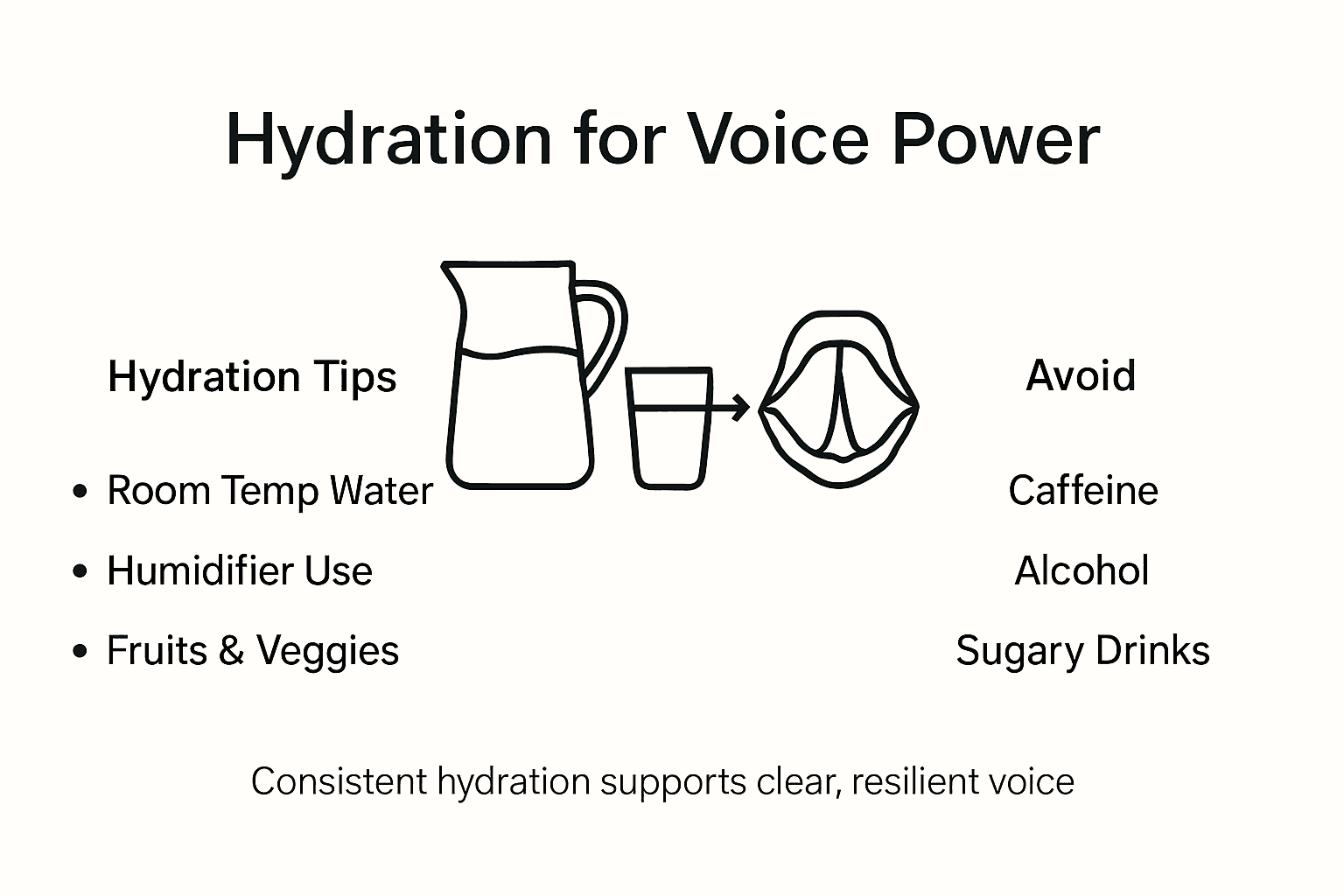
Systemic hydration affects vocal performance through multiple physiological mechanisms. When the body experiences dehydration, vocal tissues become less flexible, increasing the effort required to produce sound. Reduced hydration leads to thicker mucus secretions, which can create friction and resistance during vocal cord vibration. Professional singers and speakers need to maintain consistent fluid intake to ensure smooth, effortless voice production. Water helps maintain the thin mucus layer that lubricates vocal folds, reducing strain and preventing potential vocal cord damage.
Beyond simple water consumption, voice professionals should consider comprehensive hydration strategies. This includes understanding the optimal temperature and timing of fluid intake, recognizing how different beverages impact vocal performance, and implementing a consistent hydration routine. Herbal teas, water-rich fruits, and electrolyte-balanced fluids can supplement standard water intake. Steam inhalation and humidity control also play crucial roles in maintaining vocal tissue moisture, especially in dry or air-conditioned environments that can rapidly deplete vocal cord hydration.
Pro tip: Drink room temperature water consistently throughout the day, aiming for at least eight 8-ounce glasses, and use a personal humidifier during performances or extended speaking engagements to maintain optimal vocal hydration.
Dietary errors impacting vocal health reveal complex nutritional challenges that professional voice users must carefully navigate. Understanding these potential pitfalls becomes crucial for maintaining optimal vocal performance. Certain dietary habits can silently undermine vocal cord function, creating long-term complications that extend far beyond momentary discomfort.
Hydration and nutrition represent the most critical areas where voice professionals frequently make significant mistakes. Excessive caffeine and alcohol consumption dehydrate vocal tissues, reducing their natural flexibility and increasing strain during performance. Processed foods high in sugar and dairy products can trigger increased mucus production, creating a thick coating that interferes with vocal cord vibration. Irregular meal patterns and skipping essential nutrients further compromise the body’s ability to maintain vocal tissue health and resilience.
Reflux-inducing foods pose another substantial risk to vocal performance. Spicy, acidic, and fatty foods can trigger gastroesophageal reflux, which damages vocal cord tissues through repeated acid exposure. Professional voice users must become aware of individual food sensitivities, recognizing that triggers can vary significantly between individuals. Some performers might experience vocal strain from gluten, while others might react to specific dairy products or acidic foods. Developing a personalized dietary approach that minimizes individual inflammatory responses becomes essential for long-term vocal health.
Pro tip: Maintain a detailed food and vocal performance journal to track how specific dietary choices impact your voice, helping you identify and eliminate personal nutritional triggers.
Maintaining a healthy voice requires more than just mindful eating. This article highlights key challenges such as hydration, inflammation management, and tissue repair that every voice professional faces. If you’re struggling with vocal fatigue, increased mucus production, or discomfort from poor dietary choices, your voice deserves specialized care that goes beyond basics. Incorporating targeted natural remedies and voice care strategies can dramatically enhance your vocal strength and endurance.
Discover powerful solutions tailored to your needs in our Singer Enhancements - TMRG Solutions collection. These products focus on natural herbal formulations proven to soothe, protect, and rebuild vocal tissues after stress. Complement your diet with carefully crafted support so your voice can perform at its absolute best.

Take charge of your vocal health today by exploring our complete range at All Products - TMRG Solutions. For practical guidance on nutrition and vocal care, our expertly written eBooks - TMRG Solutions provide invaluable insights that align perfectly with the strategies discussed here. Visit https://tmrgsolutions.com now and give your voice the natural support it deserves.
Foods that support vocal health include green leafy vegetables, lean proteins, antioxidant-rich fruits, and hydrating options like herbal teas and water-dense fruits. These foods promote mucous membrane integrity, tissue repair, and help maintain vocal cord lubrication.
Hydration is crucial for maintaining vocal cord elasticity, mucus viscosity, and overall vocal resilience. Proper fluid intake ensures that the vocal tissues remain lubricated and reduces friction during phonation, which helps to prevent strain and potential damage.
Common dietary mistakes include excessive consumption of caffeine and alcohol, which can dehydrate vocal tissues, and eating processed foods high in sugar or dairy that can increase mucus production. Additionally, spicy and acidic foods may trigger reflux, damaging vocal cords.
Key micronutrients for vocal health include vitamins A, C, and E for mucous membrane integrity, zinc and selenium for cellular repair, and omega-3 fatty acids to lower systemic inflammation. Consuming a balanced diet rich in these nutrients can enhance vocal performance.
