Your Cart is Empty


Most American singers underestimate how much their daily habits influence vocal health. Even small environmental changes or minor lapses in hydration can lead to fatigue, strain, and long-term issues. Experts estimate that up to 60 percent of American vocalists struggle with preventable vocal problems. Setting up a healthy foundation for your voice, starting with your surroundings and hydration, can make every note clearer and safer. This guide breaks down concrete steps designed to help you build lasting vocal strength.
| Key Point | Explanation |
|---|---|
| 1. Maintain Optimal Humidity | Use a humidifier to keep humidity levels between 40% and 60% to protect your vocal cords from dehydration. |
| 2. Implement Effective Warm-Up Exercises | Start with gentle exercises like lip bubbles and humming to enhance flexibility and reduce vocal strain before performance. |
| 3. Practice Diaphragmatic Breathing | Train your respiratory system by focusing on deep belly breaths to support your voice effectively during singing or speaking. |
| 4. Develop a Structured Vocal Routine | Create a systematic practice plan that includes relaxation, breath control, resonance, and articulation exercises for daily improvement. |
| 5. Regularly Monitor Your Progress | Keep a practice journal or use apps to track your vocal range, endurance, and technique improvements for personalized training adjustments. |
Strengthening your voice begins with creating an optimal vocal environment and implementing strategic hydration techniques. Proper preparation can significantly reduce vocal strain and enhance your overall vocal performance.
Environmental factors play a crucial role in vocal health. Start by assessing your immediate surroundings. Rooms with dry air can quickly dehydrate your vocal cords, causing increased friction and potential damage. Using a humidifier helps maintain moisture levels, which is essential for keeping your vocal cords hydrated and protected. Aim to keep humidity levels between 40% and 60% for optimal vocal comfort.
Hydration goes beyond just drinking water. While consuming 1.5 to 2 liters of water daily is recommended, the quality of hydration matters as much as quantity. Spread your water intake throughout the day, avoiding large quantities right before performing. Warm herbal teas without caffeine can also provide additional vocal cord lubrication. Steam inhalation is another powerful technique that directly moisturizes vocal folds, helping to reduce inflammation and maintain vocal flexibility.
Pro Tip: Keep a dedicated water bottle near your workspace and set hourly reminders to take small, consistent sips. This approach prevents sudden overwhelming water intake and ensures steady vocal cord hydration.
Vocal warm-ups are crucial for preparing your voice to perform at its best. These targeted exercises help increase flexibility, improve breath control, and reduce the risk of vocal strain during intense singing or speaking sessions.
Start with breathing exercises that enhance vocal cord efficiency. Techniques like straw phonation and lip trills can dramatically improve your breath support and vocal technique. Begin with gentle lip bubbles and tongue trills to activate your vocal mechanism. These exercises help relax your vocal muscles, increase blood flow, and create smooth transitions between vocal registers.

Progressive warm-up techniques should move from gentle to more complex exercises. Start with soft humming to gradually wake up your voice, then move to scale exercises that extend your range. Lip bubbles and tongue trills are particularly effective because they simultaneously engage breath control and vocal flexibility. These techniques help you develop a more responsive and resilient vocal instrument, reducing the likelihood of strain during performance.
Pro Tip: Always warm up slowly and listen to your body. If you feel any discomfort or tension, pause and reset your approach, ensuring you never push your voice beyond its comfortable range.
Here is a quick comparison of common vocal warm-up techniques and their primary benefits:
| Technique | Main Focus | Typical Benefit |
|---|---|---|
| Lip Bubbles | Breath Control | Smooth airflow, relaxed vocal fold |
| Humming | Resonance | Gentle warm-up, increases flexibility |
| Straw Phonation | Vocal Efficiency | Strengthens support, eases tension |
| Tongue Trills | Flexibility & Range | Loosens muscles, aids transitions |
Breath support is the fundamental foundation of vocal strength and endurance. Mastering these techniques will transform your vocal performance and help you maintain power without unnecessary strain.
Implementing daily breathing routines can dramatically improve your vocal capabilities. Focus on diaphragmatic breathing exercises that train your respiratory system to support sustained vocal output. Start by placing one hand on your chest and another on your abdomen. Breathe deeply so that your abdomen expands while your chest remains relatively still. This technique ensures you are engaging your diaphragm correctly and creating the optimal airflow for vocal production.
Progressive breath control requires consistent practice. Begin with simple sustained exhalation exercises where you release air slowly and evenly. Practice counting or singing long tones while maintaining a steady, controlled breath. These techniques not only improve lung capacity but also teach you to manage air pressure precisely. By developing consistent breath support, you will notice increased vocal stamina, improved tone quality, and reduced vocal fatigue during extended performance periods.
Pro Tip: Practice your breathing exercises in front of a mirror to visually confirm that your abdomen is expanding while your shoulders and chest remain relaxed.
Building vocal strength is a systematic process that requires consistent daily practice and strategic exercise selection. Your goal is to develop a comprehensive routine that progressively challenges and improves your vocal capabilities.
Develop a structured vocal warm up routine that encompasses multiple dimensions of vocal health. Your daily practice should include four key components: body relaxation, breath control, resonance exercises, and articulation drills. Start with gentle body stretches to release tension, then move through breathing techniques that activate your diaphragm. Focus on resonance exercises that help you find your optimal vocal placement and articulation drills that enhance clarity and precision.
Progression is key to sustainable vocal development. Begin with short 15 minute sessions and gradually increase duration and complexity as your vocal strength improves. Design your routine to target specific vocal challenges areas such as range extension, tone consistency, and breath support. By systematically working through different vocal techniques daily, you create muscle memory and neurological pathways that enhance your overall vocal performance. Remember that consistency matters more than intensity track your progress and adjust your routine based on how your voice responds.
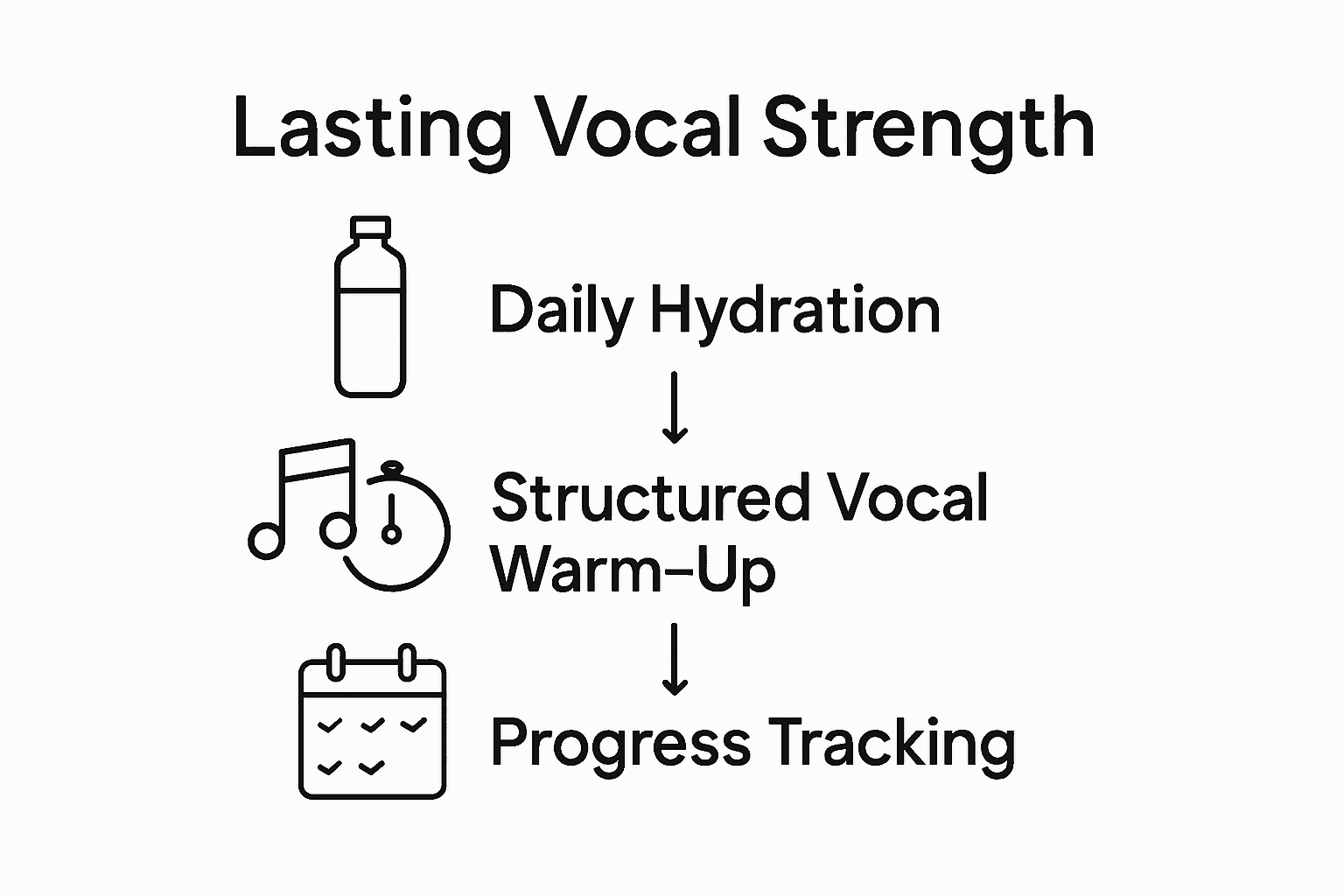
Pro Tip: Record yourself during practice sessions to objectively track your vocal development and identify areas requiring additional focused attention.
Tracking your vocal development is crucial for sustainable improvement and preventing potential strain or injury. Understanding how your voice responds to different techniques will help you create a personalized and effective vocal training approach.
Multimodal systems for detecting vocal performance can provide valuable insights into your vocal development. Consider using digital tools or apps that analyze pitch consistency, breathing patterns, and tone quality. Create a structured tracking method that allows you to document your vocal range, endurance, and specific areas of improvement. Pay attention to subtle changes such as increased breath control, smoother transitions between vocal registers, and enhanced resonance.
Consistent self assessment is key to vocal growth. Develop a weekly review process where you critically evaluate your vocal performance. Listen to recordings of your practice sessions and compare them to previous weeks. Note improvements in areas like tone clarity, breath support, and vocal stamina. Be prepared to modify your training routine based on these observations. Some weeks you might need more rest, while others might require more intense practice. The goal is to create a flexible approach that adapts to your body’s changing needs and vocal capabilities.
Pro Tip: Use a dedicated journal or digital tracking app to record your vocal practice details, including duration, exercises performed, perceived difficulty, and any physical sensations or challenges you experience.
The table below summarizes key metrics and suggested tracking methods to monitor vocal progress:
| Metric to Track | Why It Matters | Best Tracking Method |
|---|---|---|
| Vocal Range | Measures flexibility | Weekly recording and notes |
| Breath Endurance | Indicates stamina | Timed exercises, audio log |
| Tone Consistency | Shows technique growth | App analysis, self-assessment |
| Vocal Fatigue | Prevents overuse | Daily sensation journal |
If you are serious about building lasting vocal power and overcoming challenges like vocal fatigue, hoarseness, or loss of voice, having the right support is essential. The article highlights the importance of consistent hydration, breath support, and targeted strengthening routines. At Singer Enhancements - TMRG Solutions, you will find natural remedies and carefully formulated products designed to complement your daily vocal exercises and protect your voice throughout your journey.

Don’t let vocal strain hold you back from reaching your full potential. Visit TMRG Solutions today to explore our wide range of effective options including sprays, oils, and therapy kits that work hand in hand with proven vocal techniques. For issues like excess phlegm that can interfere with clean vocal production, our specialized Phlegm and Viscous Mucos collection provides targeted support. Start your path to a stronger voice now by integrating natural, trusted solutions with your practice.
Take the next step toward a healthier, more powerful voice by browsing our All Products - TMRG Solutions and find exactly what your voice needs.
To create a supportive vocal environment, use a humidifier to maintain humidity levels between 40% and 60%. This helps keep your vocal cords hydrated and comfortable, reducing strain during use.
Effective vocal warm-up exercises include lip bubbles, humming, and straw phonation. Start with gentle lip bubbles to relax your vocal muscles, progressing to scale exercises for range extension.
To enhance your breath support, practice diaphragmatic breathing by placing one hand on your chest and another on your abdomen. Focus on expanding your abdomen while keeping your chest still, and practice this technique daily to strengthen your vocal endurance.
Develop a structured daily practice routine that includes body relaxation, breath control, resonance exercises, and articulation drills. Aim for short practice sessions that gradually increase in complexity, targeting specific areas for improvement.
Monitor your vocal progress by keeping a dedicated journal to track metrics like vocal range, breath endurance, and tone consistency. Review your recordings weekly to identify improvements and adjust your practice routine as needed for optimal growth.
In addition to drinking 1.5 to 2 liters of water daily, spread your intake throughout the day to maintain steady hydration. Consider adding warm herbal teas (without caffeine) to your routine for added vocal lubrication.
