Your Cart is Empty


Most American singers and speakers unknowingly put their voices at risk every single day. Vocal fatigue can sneak up quickly, especially when you face long work hours, noisy environments, or public speaking demands. Building strong habits now means fewer doctor visits and less frustration later. Discover proven, science-backed steps that help protect your voice from strain and keep it healthy for the moments that matter most.
| Key Insight | Explanation |
|---|---|
| 1. Consistent Vocal Practice | Practice your voice for 30 to 40 minutes daily to strengthen vocal muscles and reduce strain. |
| 2. Maintain Proper Hydration | Drink 48 to 64 ounces of water daily to keep vocal cords moist and functioning well. |
| 3. Use Effective Vocal Techniques | Employ diaphragm support and controlled breathing during performances to avoid tension. |
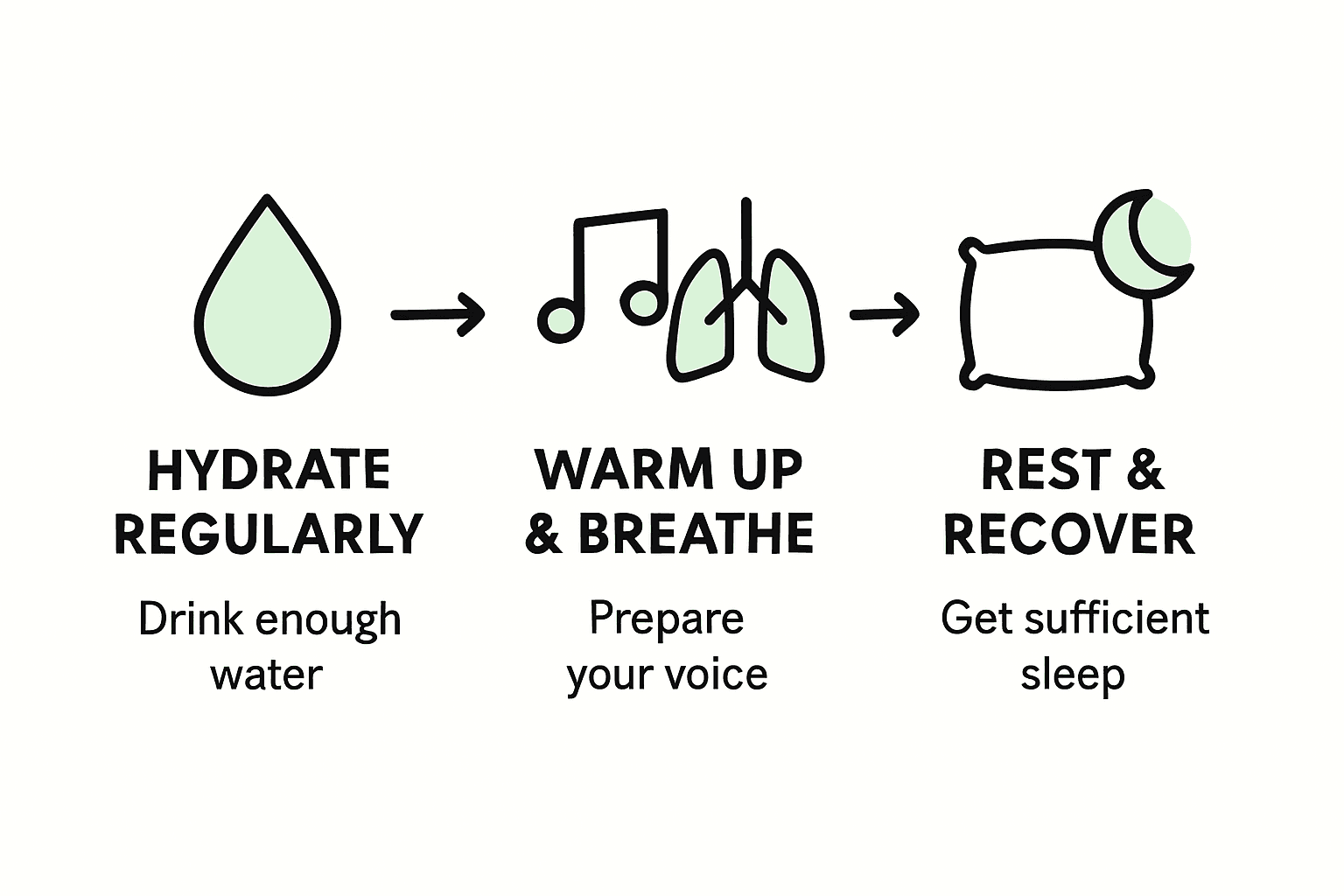
| 4. Prioritize Rest and Recovery | Get at least 8 hours of sleep and practice vocal rest to allow for tissue repair. |
| 5. Monitor Vocal Health Actively | Use a voice journal to track vocal performance and identify strain early to make necessary adjustments. |
Your vocal health starts with consistent daily practices that protect and strengthen your voice. By developing strategic habits, you can prevent hoarseness and maintain optimal vocal performance throughout your day.
Consistent vocal practice is essential for maintaining voice quality. Experts recommend practicing your voice for reasonable intervals, typically 30 to 40 minutes at a time. This approach helps condition your vocal muscles without causing strain or fatigue. During these practice sessions, focus on controlled breathing, proper articulation, and maintaining a relaxed posture.
Pay special attention to avoiding vocal behaviors that can cause damage. Excessive loud speaking, prolonged low-tone conversations, yelling, and screaming can create dangerous swelling in your vocal folds, potentially leading to serious conditions like laryngitis or vocal polyps. Be mindful of your vocal intensity and duration, especially during prolonged speaking engagements or performance situations.
Practical tip: Monitor your vocal usage throughout the day. If you feel vocal strain developing, take a break, hydrate, and perform gentle vocal warm-up exercises to restore your voice’s natural balance.
Pro tip: Develop a consistent vocal warmup routine that includes gentle humming, lip trills, and breath support exercises to prepare your voice before any significant speaking or singing activity.
Maintaining proper hydration is crucial for keeping your vocal cords healthy and preventing hoarseness. Your vocal mechanism requires consistent moisture to function smoothly and resist potential strain or damage.
Drinking adequate water is essential for maintaining vocal cord health, with experts recommending a minimum of 48 to 64 ounces of water daily. Proper hydration helps keep the mucous membranes around your vocal folds thin and flexible, which directly supports your voice’s natural functioning. This means drinking water consistently throughout the day rather than consuming large amounts all at once.

Beyond simple water intake, consider the quality of your hydration. Room temperature water is typically best for vocal health, as extremely cold or hot liquids can cause unnecessary stress on your vocal mechanism. Avoid excessive caffeine and alcohol, which can dehydrate your system and potentially create additional vocal strain. Consider incorporating herbal teas without caffeine to supplement your hydration routine and provide soothing benefits to your vocal tract.
Practical tip: Keep a water bottle with you and set periodic reminders to take small, consistent sips throughout the day.
Pro tip: Track your daily water intake using a marked water bottle or smartphone app to ensure you consistently meet your hydration goals for optimal vocal health.
Mastering proper vocal techniques is essential for delivering powerful performances while protecting your voice from potential strain or damage. Your approach to vocal performance can significantly impact your long-term vocal health and overall sound quality.
Consistent practice is crucial to maintaining vocal strength and control, with experts recommending focused practice sessions of 30 to 40 minutes. During performances, focus on maintaining balanced breathing, engaging your diaphragm, and avoiding unnecessary vocal tension. This means developing a technique that allows you to project your voice without pushing or straining your vocal cords.
Be mindful of your vocal limits and performance environment. Avoid speaking or singing too loudly, too low, or for extended periods, as these behaviors can create dangerous swelling in your vocal folds. Learn to use microphone techniques that support your natural voice, such as adjusting your distance and angle to minimize unnecessary vocal effort. Practice controlled resonance, which involves using your body’s natural acoustic spaces to amplify sound without additional strain.
Practical tip: Record and listen to your performances to identify areas where you might be overworking your voice.
Pro tip: Develop a pre performance vocal warmup routine that includes gentle stretching, breathing exercises, and light vocal sirens to prepare your voice without causing fatigue.
Recovering and maintaining vocal health requires a holistic approach that balances careful treatment, strategic rest, and natural support strategies. Understanding how to nurture your voice during periods of strain can prevent long term damage and support optimal vocal performance.
Getting adequate sleep is crucial for vocal cord recovery, with experts recommending at least 8 hours of rest each night. During sleep, your body repairs and regenerates vocal tissues, reduces inflammation, and restores overall vocal resilience. Complement your sleep routine with periods of vocal rest during the day, allowing your voice time to recover between speaking or performing sessions.
Natural remedies can provide additional support for vocal health. Avoid prolonged periods of loud or strained vocal production, which can lead to dangerous swelling and potential vocal injuries. Instead, incorporate herbal teas with honey, practice gentle steam inhalation, and use natural throat sprays that soothe and protect your vocal mechanism. Implement vocal recovery techniques like humming, gentle sirens, and targeted breathing exercises to support your voice without causing additional stress.
Practical tip: Create a dedicated vocal recovery corner in your home with herbal teas, a humidifier, and throat soothing resources.
Pro tip: Develop a consistent evening vocal wind down routine that includes gentle vocal stretches, hydration, and relaxation techniques to support overnight vocal recovery.
Successful vocal health requires consistent self awareness and proactive management of your vocal performance and recovery. Developing a keen understanding of your voice’s unique signals and potential stress points will help you prevent potential damage and maintain long term vocal resilience.
Carefully observe your body alignment and muscle tension during daily activities, paying special attention to how you speak and perform. Notice subtle changes in your speaking voice pitch, volume, and clarity as early warning signs of potential vocal strain. This means conducting regular self assessments during practice sessions, performances, and even routine conversations.
Recognize and immediately address behaviors that could compromise your vocal health, such as prolonged loud speaking, excessive yelling, or maintaining uncomfortably low vocal registers. Create a personal tracking system that allows you to log vocal performance, energy levels, hydration, and any sensations of strain or discomfort. This proactive approach enables you to make swift adjustments to your vocal routine before minor issues escalate into significant problems.
Practical tip: Use a voice journal to document your daily vocal experiences and track patterns of vocal performance and recovery.
Pro tip: Set up monthly check ins with a vocal health professional to conduct comprehensive assessments and receive personalized guidance for maintaining your unique vocal instrument.
The following table contrasts helpful and harmful vocal behaviors:
| Behavior Type | Example | Impact on Voice |
|---|---|---|
| Beneficial | Gentle humming | Prepares folds safely |
| Beneficial | Herbal teas | Soothes irritation |
| Harmful | Shouting or yelling | Causes swelling |
| Harmful | Excess caffeine/alcohol | Promotes dehydration |
Here’s a summary of key strategies for protecting and improving vocal health:
| Strategy Type | Core Action | Benefit for Vocal Health |
|---|---|---|
| Daily Habits | Scheduled practice | Builds vocal endurance |
| Hydration | Regular water intake | Maintains mucous membrane |
| Technical Technique | Diaphragm use in singing | Reduces vocal strain |
| Rest & Recovery | 8 hours of sleep | Allows tissue repair |
| Monitoring | Voice journal tracking | Early identification of issues |
Struggling to prevent hoarseness and maintain lasting vocal health can be frustrating and impact your confidence and career. This article highlights the importance of daily vocal habits, consistent hydration, proper technique, and restful recovery to keep your vocal cords strong and resilient. If you want to take control of your vocal wellness and avoid dangerous swelling or strain, explore specialized products designed to support your voice’s natural function and recovery.

Discover effective, natural remedies and tools at Singer Enhancements - TMRG Solutions that complement your vocal care routine. Whether you need soothing sprays, herbal formulations, or voice therapy kits, our expert-backed solutions help you nurture your voice safely. Start protecting your vocal health today by browsing All Products - TMRG Solutions and gain access to 25+ years of expertise at TMRG Solutions. Don’t wait until hoarseness takes over schedule your vocal health journey now.
To prevent hoarseness naturally, focus on maintaining hydration, practicing proper vocal techniques, and adopting healthy daily habits. Aim to drink at least 48 to 64 ounces of water daily and incorporate vocal warm-ups into your routine.
Effective daily habits include consistent vocal practice, monitoring vocal usage, and ensuring proper posture when speaking or singing. Practice your voice for 30 to 40 minutes at a time to strengthen your vocal muscles without causing strain.
Hydration is crucial for keeping the mucous membranes around your vocal cords thin and flexible. Drink room temperature water consistently throughout the day to maintain optimal vocal cord function and reduce the risk of hoarseness.
During performances, focus on diaphragmatic breathing and avoid straining your voice. Position your microphone correctly and practice controlled resonance to project your voice effectively while minimizing strain on your vocal cords.
Natural remedies like herbal teas with honey can soothe your throat and support vocal health. Include gentle steam inhalation and herbal throat sprays in your routine to provide additional protection and comfort for your voice.
Monitor vocal usage, body alignment, and any signs of strain or discomfort in your voice. Keep a voice journal to track your daily vocal experiences, which will help identify potential issues before they become serious problems.
