Your Cart is Empty


This singing styles guide gives you one clear path: identify the style your voice naturally fits, then train it with technique that keeps you healthy for the long run. Start here.
If your voice feels strained, hoarse, or tired after singing, stop immediately. Pushing through vocal fatigue is how breath support problems turn into real injuries.
Developing a healthy singing style requires mastering universal technique first, then layering stylistic ornamentation safely on top of that foundation.
| Point | Details |
|---|---|
| Technique before style | Master breath support, resonance, and laryngeal stability before chasing a specific genre’s sound. |
| Style is learned, not fixed | Treat new styles as an acquired “accent” you can consciously build through focused listening and drills. |
| Use a structured 4-week plan | Progress from foundation drills to song application, checking for strain every week. |
| Adjust for context | Studio favors precision and subtle dynamics; live demands stamina and slightly exaggerated projection. |
| Recover between sessions | Stop at the first sign of hoarseness and use tools like TMRG voice therapy kits and recovery sprays to support recovery. |
Every singing style guide starts the same way: you can’t develop a style until you can hear the difference between them. Each genre carries its own timbre, ornamentation, and register habits, and those cues are what separate a pop belt from a jazz croon.
Pro Tip: Pick one song per style and hum along without lyrics first. You’ll hear the resonance shape and register shifts more clearly without words distracting you.
Every style you just read about, from opera to rock, sits on the same four pillars. Skip these and you’re not developing a style, you’re risking your voice.
Vocal production depends on coordinated work between your lungs, larynx, and resonators, and that coordination only holds up when the fundamentals stay intact, according to Britannica’s overview of singing mechanics. Chase style before technique and you’ll hit a ceiling fast, usually in the form of vocal fatigue.
Pro Tip: Sing a comfortable note and place two fingers lightly on your throat. If you feel excess tension or bobbing, your larynx isn’t stable yet.
Vibrato, growl, and breathiness aren’t separate skills bolted onto singing. They’re controlled adjustments to the same breath and resonance system you just built.
The safety issue is squeezing your throat to force grit or growl. That shortcut damages tissue fast. MasterClass’s breakdown of singing styles points out that healthy belting and healthy growl both rely on breath support doing the work, not throat tension.
You don’t need hours a day. You need 20 to 30 focused minutes with a clear goal each week.
A useful loading order for each session: warm-up (lip trills, sirens), technical focus (breath or resonance drill), stylistic drill (vibrato or melisma), then song work.
Weekly self-check:
If progress stalls for more than two weeks or you notice hoarseness that doesn’t clear by the next day, that’s your cue to bring a recording to a teacher rather than push harder alone.
Your natural style usually shows up in your comfort range and the ornamentation you reach for without thinking.
Style behaves like an acquired accent. Singers pick up their default habits from what they’ve listened to most, and adopting a new style means consciously learning new stylistic cues/02%3A_Unit_2/2.02%3A_Basics_of_Singing_6-_Singing_in_Different_Styles) while keeping your core technique intact. Experiment freely with unfamiliar styles for a few weeks, but if one consistently feels forced or causes strain, that’s information worth bringing to a teacher rather than pushing past.
Style development only works if your voice recovers between sessions. Daily habits matter more than any single big rehearsal.
Daily hydration paired with a short, consistent warm-up produces more measurable gains and fewer injuries than occasional marathon practice sessions.
If you wake up hoarse or your voice tires quickly during a session, stop and rest. A short recovery routine, voice rest, steam inhalation, and a soothing spray like TMRG Loud & Clear Voice Recovery Drops, can settle mild irritation within a day or two. See a clinician if hoarseness lasts more than two weeks, if you lose your voice entirely, or if you feel pain rather than fatigue. Our guide on preventing vocal strain covers the full daily routine.
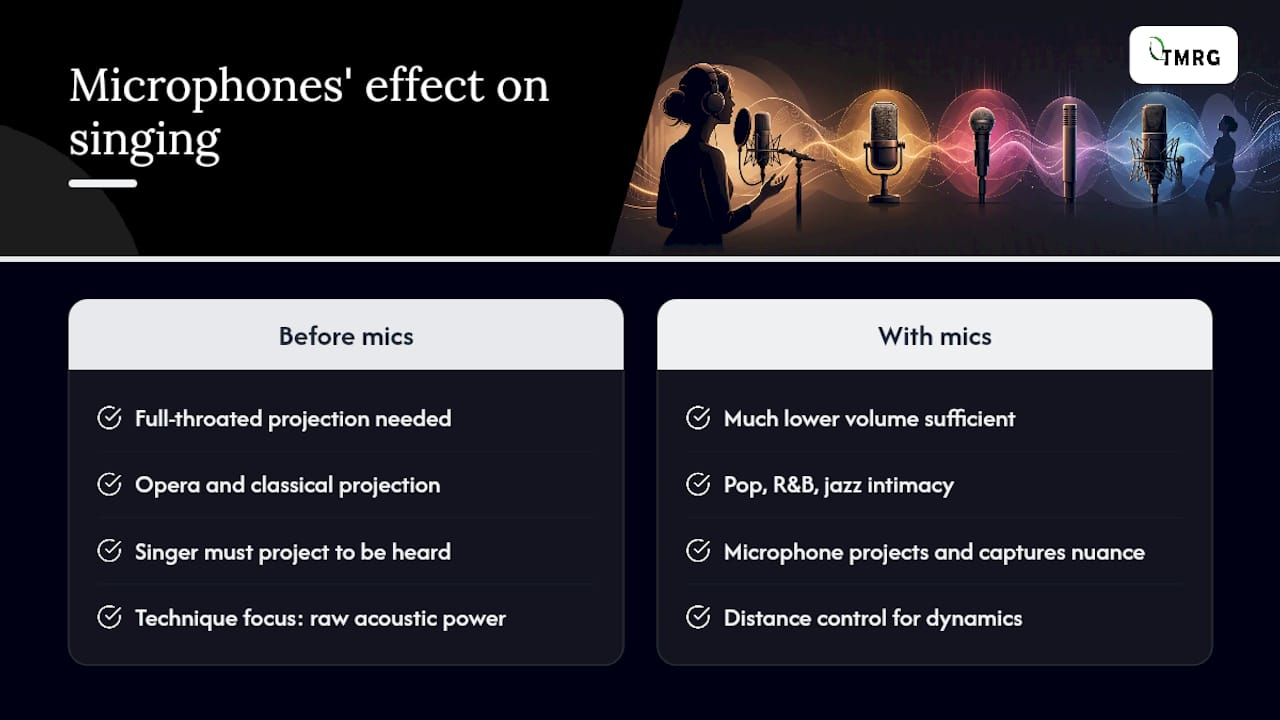
Amplification rewrote the rulebook for vocal technique. Before microphones, singers needed the full-throated projection of classical technique just to be heard across a room, which is why opera still trains for raw acoustic power.
Modern pop, R&B, and jazz vocalists sing at a fraction of that volume because the microphone does the projecting for them. This shift made breathiness, whispered runs, and intimate low-volume delivery viable as stylistic choices instead of liabilities, since a mic picks up nuance that would vanish in an unamplified room.
Microphone technique itself became a skill. Working the distance between your mouth and the mic, pulling back on loud belted notes and leaning in for soft phrases, lets you control dynamics without straining your voice to create volume changes naturally. Singers who don’t adjust mic distance often push their voice harder than necessary, mistaking a technique problem for a vocal one.
Proximity effect also matters: singing close to a mic boosts low frequencies and adds warmth, which is part of why R&B and pop vocals often sound rich and close even when sung softly. Live sound engineers expect performers to manage this, so practicing with a mic, even a cheap one at home, is worth adding to your routine if you plan to perform amplified regularly.
Recording and performing live demand different versions of the same style, and singers who don’t adjust often sound flat in one setting or the other.
In the studio, you can prioritize precision over stamina. You’re recording in takes, so you can rest between phrases, punch in corrections, and focus entirely on tone quality and subtle ornamentation like a controlled melisma run. Studio mics are also far more sensitive, which means breath noise, plosives, and sibilance all show up clearly, so softer, more controlled dynamics usually work better than the same energy you’d bring to a stage.
Live performance is a different demand entirely. You need stamina to sustain a full set, projection to fill a room even with monitors, and the flexibility to adjust on the fly if the sound mix shifts. Vibrato and dynamic swells that read as tasteful in a recording often need to be slightly exaggerated live to register with an audience past the first few rows.
The practical fix is rehearsing both contexts separately. Record yourself singing a song as if it were a studio take, then perform the same song standing and projecting as if for a live room. Notice where your technique holds up and where it breaks down. That gap is exactly what your 4-week practice plan should target next.
Too many singers try to sound like their favorite artist before they understand their own instrument, and that’s backward. The voice that develops fastest is the one worked with, not against.
Commit to one week of the plan above, record a short video before and after, and listen for what actually changed.
Building a new singing style puts real demand on your voice, and the drills in this guide work best when your instrument gets a chance to recover between sessions. Tmrgsolutions has spent over 25 years developing natural voice therapy products built specifically for singers pushing into new technique, not generic throat lozenges repurposed for performers.

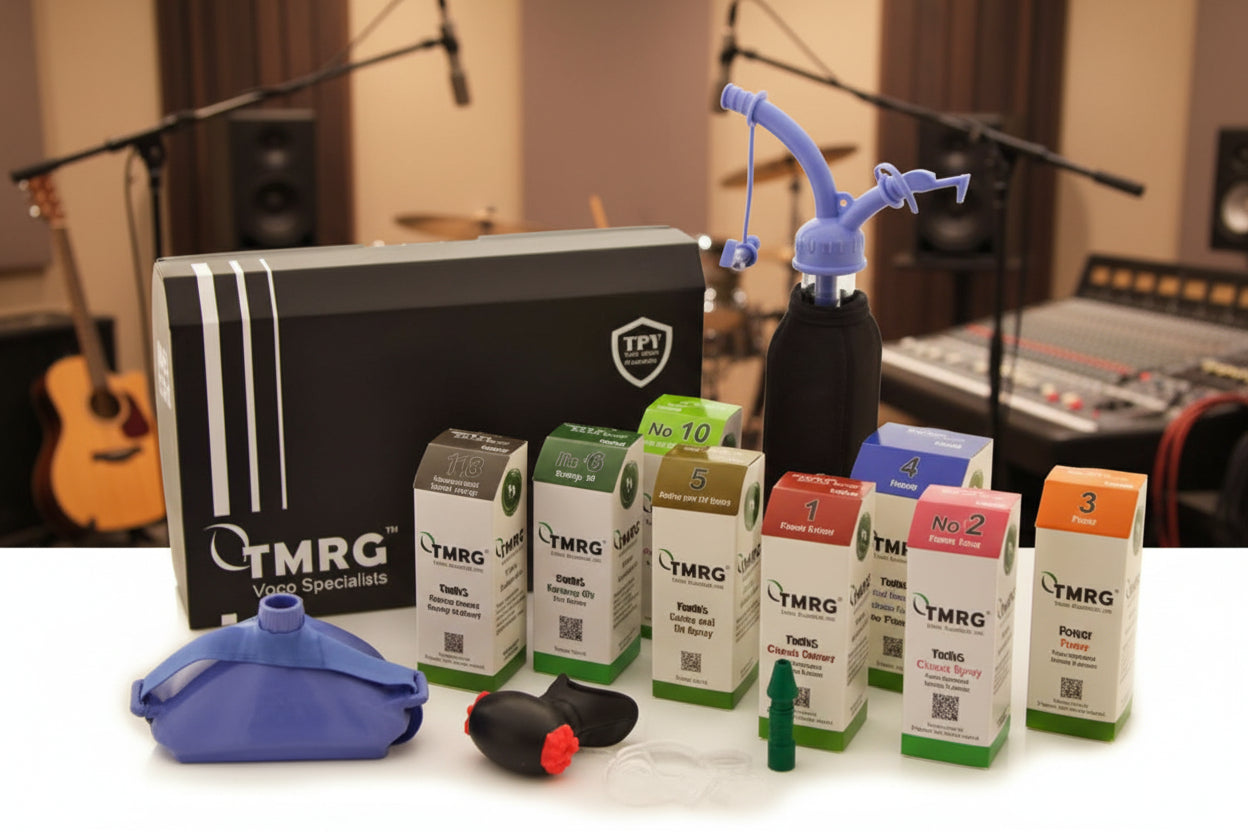
If you’re working through the 4-week plan and notice your voice tiring faster than expected, the TMRG Voice Therapy Kit Standard pairs a guided recovery protocol with herbal formulations designed for singers, not just general vocal discomfort. For quick relief between rehearsals, TMRG Shine Bright Voice Recovery Spray offers stage-side hydration when you need it fast. Order a kit today and give your voice the same structured support you’re giving your technique.
Classical voice classification typically lists soprano, mezzo-soprano, alto, contralto, tenor, baritone, bass-baritone, and bass, based on range and timbre. These classifications matter most in classical and choral contexts rather than pop or rock.
Opera is widely considered the most technically demanding because it requires unamplified projection, wide dynamic range, and sustained vibrato control across an entire performance without a microphone. Belting styles in musical theater and rock come close due to the sustained intensity required without straining.
Common technique priorities include breath support, resonance placement, mixed voice, vibrato control, vowel modification, dynamic control, and healthy belting, each covered in this guide’s technique sections.
Singers vary delivery through chest voice, head voice, mixed voice, falsetto, belting, breathy tone, and ornamentation like melisma or vibrato, each suited to different styles and emotional effects.
Run the self-audit in this guide: notice your most comfortable range, the ornamentation you use instinctively, and which genres you already imitate accurately, then confirm your findings with a vocal teacher if you remain unsure.
