Your Cart is Empty


Vocal strain threatens every professional who relies on their voice, from singers and actors to lecturers and public speakers. When vocal fatigue strikes, it can derail performances, compromise teaching effectiveness, and even jeopardize your career. This guide delivers practical, research-backed strategies to protect your voice from overuse, build resilience through targeted training, and maintain optimal vocal health for the long term.
Preparing Your Voice: Essential Warm-Ups And Training Principles
Verification: Identifying Issues Early And Seeking Professional Support
| Point | Details |
| Root causes matter | Vocal strain stems from overuse, improper technique, smoking, and excessive workload, particularly affecting female professionals. |
| Training builds resilience | Exercise physiology principles applied to voice training enhance fatigue tolerance and reduce injury risk. |
| Daily habits protect | Hydration, vocal load management, and lifestyle adjustments like quitting smoking are essential prevention strategies. |
| Early detection saves voices | Monitoring fatigue signs and seeking voice therapy early prevents long-term damage and maintains vocal efficiency. |
| Professional support helps | Speech-language pathologists and specialized therapy improve vocal function and prevent nodule formation. |
Vocal strain develops when you push your voice beyond healthy limits, creating tension and inflammation in the delicate vocal fold tissues. Singing without strain requires understanding this fundamental principle: excessive force causes vocal fold swelling, which then demands even more effort to produce sound, creating a damaging cycle.
The primary culprits behind vocal strain include overuse, speaking or singing too loudly, and poor vocal technique. When you repeatedly stress your vocal folds without adequate recovery, micro-injuries accumulate. These injuries can progress to visible nodules or polyps, particularly if you ignore early warning signs. Understanding these mechanisms helps you recognize risk factors before serious damage occurs.
Certain professionals face elevated risk. Research shows female occupational voice users experience vocal strain more frequently than their male counterparts, especially in high-demand roles. Singers, actors, teachers, and anyone with sustained vocal workloads must remain vigilant about avoiding vocal damage through intentional prevention strategies.
Environmental and lifestyle factors compound the problem:
Smoking directly damages vocal fold tissues, causing chronic inflammation and increasing cancer risk
Noisy environments force you to speak louder, multiplying vocal effort and strain
Dehydration reduces vocal fold lubrication, making vibration less efficient and more traumatic
Poor posture restricts breathing support, forcing compensatory tension in throat muscles
“The vocal folds are incredibly delicate structures. When inflammation sets in from overuse, your voice requires significantly more air pressure and muscular effort to function, which only accelerates the damage.”
Recognizing your personal risk profile based on occupation, vocal demands, and lifestyle choices enables targeted prevention. By addressing modifiable factors like smoking cessation and workload management, you establish a foundation for sustainable vocal health throughout your career.
Just as athletes prepare muscles before competition, vocal professionals must prime their instruments before demanding use. Warming up increases blood flow to vocal tissues, enhances flexibility, and reduces injury risk during intensive speaking or singing. Equally important, cooling down after vocal exertion helps tissues recover and prevents residual tension from becoming chronic strain.

Modern voice training draws from exercise physiology principles to build genuine resilience. The overload principle suggests gradually increasing vocal demands to strengthen tissues without causing damage. Reversibility reminds us that vocal fitness declines without consistent practice. Most critically, fatigue tolerance training prepares your voice to handle real-world demands, not just perfect technique in ideal conditions.
Interestingly, research reveals that most vocal exercises focus on skill acquisition rather than fatigue prevention. This insight reshapes how you should approach practice: dedicate specific sessions to endurance building, not just perfecting pitch or tone. Integrate vocal maintenance tips into your training schedule to balance skill work with protective conditioning.
Effective warm-up exercises systematically engage the vocal mechanism:
Diaphragmatic breathing establishes proper breath support, reducing throat tension from the start
Lip trills gently engage vocal folds while maintaining relaxed airflow and facial muscles
Humming creates gentle vibration without the tension of open vowel sounds
Sirens glide through your range smoothly, promoting flexibility and coordination
Messa di Voce develops dynamic control by crescendoing and diminishing on sustained pitches
| Exercise | Primary Purpose | Key Technique |
| Diaphragmatic breathing | Establish breath support | Expand abdomen on inhale, controlled release on exhale |
| Lip trills | Warm vocal folds gently | Maintain steady airflow through relaxed lips |
| Humming | Reduce throat tension | Feel vibration in face, not throat |
| Sirens | Increase range flexibility | Glide smoothly from low to high without breaks |
| Messa di Voce | Build dynamic control | Crescendo and diminish on single pitch without strain |
Applying tips for improving your vocal strength means treating warm-ups as non-negotiable preparation, not optional extras. Even on routine days with modest vocal demands, maintaining this habit preserves your baseline fitness and prevents gradual decline.
Pro Tip: Set a timer for 10 minutes of warm-ups before every rehearsal, performance, or teaching session. Consistency matters more than duration, and this minimal investment dramatically reduces strain risk over your career.
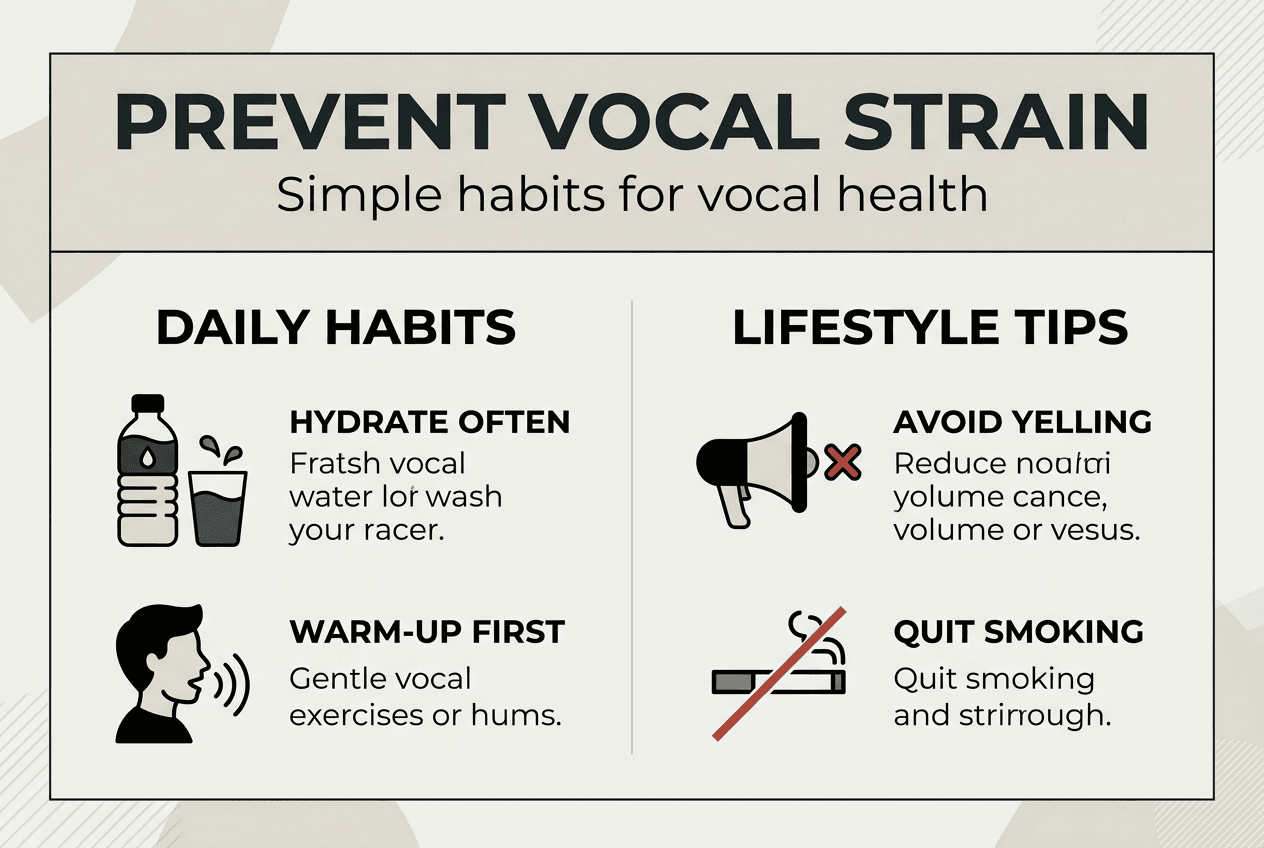
Protecting your voice extends far beyond warm-up routines into every aspect of daily life. Hydration stands as perhaps the single most impactful habit you can adopt. Hydrated vocal folds vibrate more efficiently, requiring less force to produce sound and reducing mechanical stress during phonation. Aim for eight glasses of water daily, and increase intake during heavy vocal use or dry environments.
Managing vocal workload requires honest self-assessment and strategic planning. The concept of overtraining and underrecovery applies directly to voice use: excessive demand without adequate rest leads to cumulative fatigue and eventual breakdown. Track your vocal load across the week, identifying peak demand periods and scheduling recovery time accordingly.
Recognize early fatigue signals that indicate you need rest:
Increased effort required to produce normal volume
Sensation of throat tightness or discomfort
Reduced vocal range or flexibility
Hoarseness that persists beyond morning clearing
Lifestyle modifications offer powerful protection against chronic strain. Quitting smoking eliminates a major source of vocal fold inflammation and pathology. If you work in noisy environments, use amplification rather than shouting to be heard. Consider noise-canceling technology or venue changes when possible to reduce environmental vocal demands.
Daily vocal care practices create a protective routine. Avoid yelling or screaming, which creates violent vocal fold collision. Maintain good posture to support efficient breathing mechanics. Practice nasal breathing when possible to humidify and filter air before it reaches your larynx. These small habits compound over months and years into significant protection.
Preparing for strained vocal effort means anticipating challenging situations and planning accordingly. Before a demanding performance or teaching day, increase hydration 24 hours in advance. Schedule lighter vocal activities immediately after peak demands. Build buffer time between intense vocal sessions whenever your schedule allows.
Pro Tip: During extended speaking or singing sessions, schedule 5-minute vocal breaks every 45 minutes. Use this time for silent rest or gentle humming, allowing tissues to recover before fatigue accumulates to damaging levels.
The little-known trick many professionals overlook involves paying attention to speaking patterns during everyday conversations. Monitor your habitual volume, pitch, and rate of speech. Many people unconsciously speak too loudly or too quickly during casual interactions, creating unnecessary baseline strain that compounds during professional vocal use.
Early detection of vocal problems dramatically improves treatment outcomes and prevents permanent damage. Learn to recognize subtle changes in your voice quality, comfort level, and effort required for normal speaking. Persistent hoarseness lasting more than two weeks warrants professional evaluation, as does any sudden voice change without obvious cause like a cold.
Warning signs demanding immediate attention include:
Pain when speaking or singing
Complete voice loss unrelated to illness
Sensation of a lump in the throat
Significant pitch breaks or instability
Blood in phlegm or saliva
Voice therapy delivered by speech-language pathologists offers remarkable benefits for both prevention and rehabilitation. Professional voice therapy reduces strain, prevents nodule formation, and improves vocal efficiency through targeted exercises and technique modifications. Unlike generic vocal coaching, medical voice therapy addresses underlying biomechanical and behavioral patterns contributing to strain.
Therapists assess your vocal mechanism comprehensively, identifying subtle inefficiencies you might not recognize independently. They develop personalized exercise programs targeting your specific challenges, whether related to breathing support, laryngeal tension, or resonance patterns. Regular monitoring sessions track progress and adjust interventions as your voice responds to treatment.
An often overlooked connection exists between hearing health and vocal strain. Hearing loss increases vocal effort because you cannot accurately monitor your own volume and quality. Compensatory behaviors develop unconsciously, typically involving increased loudness and tension. If you suspect hearing changes, pursue audiological evaluation to prevent this secondary source of vocal stress.
Long-term vocal health requires ongoing vigilance and adjustment. Implement voice-saving techniques consistently, not just when problems arise. Schedule annual voice evaluations with a laryngologist if you rely on your voice professionally. These preventive checkups can identify developing issues before symptoms appear, allowing intervention at the earliest possible stage.
“Professional voice users benefit enormously from establishing a relationship with a voice-specialized speech-language pathologist before problems develop. This proactive approach means you have expert guidance ready when questions or concerns arise, rather than scrambling for help during a crisis.”
Integrate vocal recovery exercises into your weekly routine as maintenance, not just rehabilitation. These exercises build reserve capacity, allowing you to handle unexpected vocal demands without injury. Think of them as insurance against the inevitable occasions when life requires more from your voice than you planned.
Protecting your voice demands more than knowledge alone. It requires the right tools and resources to implement expert strategies effectively. TMRG Solutions offers specialized voice therapy kits designed specifically for singers, actors, and professional speakers who need comprehensive support for vocal health maintenance.

These therapy kits include carefully selected tools to build vocal strength, enhance endurance, and accelerate recovery after demanding use. Whether you choose the basic voice therapy kit for foundational support, the standard voice therapy kit for enhanced options, or the premium voice therapy kit for comprehensive care, you gain access to professional-grade resources that complement the prevention strategies outlined in this guide. Supporting your vocal health proactively prevents strain and fatigue before they compromise your performance or career.
Early signs include throat discomfort, hoarseness, vocal fatigue after normal use, and reduced vocal range. You might notice increased effort required to speak at your usual volume or pitch instability during singing. Recognizing these symptoms quickly allows you to reduce vocal demands and prevent progression to serious injury.
Diaphragmatic breathing, lip trills, humming, sirens, and Messa di Voce are highly effective warm-up exercises. Each targets different aspects of vocal function, from breath support to range flexibility. Consistent warm-ups build vocal control, reduce tension, and prepare tissues for demanding use. Explore additional voice exercises for health to expand your preparation routine.
Smoking harms vocal folds by causing chronic inflammation and tissue damage that increases risks of nodules and cancer. The heat and chemicals in smoke irritate delicate laryngeal tissues, reducing their ability to vibrate efficiently. Quitting smoking significantly lowers your risk of vocal strain, pathology, and chronic voice disorders.
Seek therapy if you experience persistent hoarseness lasting more than two weeks, discomfort when speaking, or vocal fatigue that does not improve with rest. Early intervention by a speech-language pathologist helps prevent lasting damage and improves vocal function through targeted exercises. Implementing voice-saving techniques under professional guidance maximizes recovery and prevention outcomes.
