Your Cart is Empty


Losing vocal clarity right before a major performance can disrupt months of careful preparation, leaving even seasoned professionals searching for reliable solutions. For singers and voice actors, the daily pressure on your voice is intense and ongoing, making long-term vocal wellness more than a goal—it’s a survival necessity. Embracing natural approaches like effective hydration and avoidance of vocal irritants not only preserves vocal quality but sets the foundation for a strong, resilient performance career.
| Point | Details |
|---|---|
| Prioritize Vocal Health | Consistent hydration, recovery, and environmental awareness are crucial for sustaining long-term vocal health. |
| Personalized Strategies Matter | Develop individualized warm-up routines, recovery protocols, and nutritional foundations based on specific vocal needs. |
| Understand Vocal Fatigue vs. Strain | Recognize the difference; fatigue is manageable with rest, while strain often requires longer recovery and specific approaches. |
| Preventative Habits Are Key | Establish non-negotiable practices such as daily hydration, scheduled rest days, and proper warm-ups to protect your voice. |
Your voice is not a resource you can burn through and rebuild. It’s a delicate system that demands consistent, thoughtful care over years and decades. Unlike your muscles, which recover quickly from intense exercise, your vocal folds require a different approach to sustain performance and prevent permanent damage.
Professional singers and voice actors face unique challenges that amateurs rarely encounter. You push your voice harder, more frequently, and under more demanding conditions. This elevated stress on your vocal system means understanding your specific long-term needs isn’t optional—it’s foundational to your career longevity.
Your voice requirements shift throughout your life. Age, performance frequency, vocal range demands, and environmental factors all influence how you should care for your voice. A soprano performing eight shows a week has different needs than a voice actor recording for six hours daily in a controlled studio.
Maintaining vocal health through hydration and environmental awareness ensures your epithelial tissue stays resilient and recovers faster between performances. Your vocal folds depend on consistent moisture and protection from irritants to function optimally.
Key factors affecting your long-term vocal needs include:
Here’s a quick overview of how key factors affect vocal health long-term:
| Factor | Impact on Vocal Health | Consideration for Professionals |
|---|---|---|
| Age | Increases risk of fatigue | Adjust warm-ups as you age |
| Performance Volume | Heightens strain and fatigue | Schedule more recovery days |
| Vocal Range Demands | Greater risk of strain | Prioritize gentle vocalization |
| Environment | Aggravates dryness/irritation | Manage humidity and air quality |
| Recovery Time | Determines tissue healing speed | Plan rest proactively |
| Lifestyle | Affects systemic resilience | Focus on sleep, hydration, stress |
Generic vocal advice fails professionals. You need a strategy built on two pillars: regular vocal practice and strong self-awareness about your vocal capacity.
Research shows that protective factors for vocal health include regular singing combined with high self-efficacy. This means consistently using your voice intentionally while understanding your limits and capabilities. You’re not just exercising your voice—you’re building resilience and confidence in what your voice can handle.
Your strategy should address these components:
Many professionals underestimate recovery’s role in long-term health. Your vocal folds need downtime, just like your body needs sleep. Without adequate recovery periods, accumulated fatigue leads to injury patterns that become increasingly difficult to reverse.
Your voice improves during rest periods, not during vocal use. Strategic silence is active vocal care.
Recovery doesn’t mean avoiding speech entirely. It means reducing unnecessary vocal load, avoiding shouting or intense conversation, and allowing your folds to heal from performance demands.
Pro tip: Schedule one complete vocal rest day weekly if you perform regularly—no singing, minimal talking, maximum hydration—to give your folds genuine recovery time.
Vocal strain and fatigue aren’t the same thing, yet most people use them interchangeably. Understanding the difference between them is crucial because each requires a different management approach. Confusing the two can lead you down the wrong recovery path, wasting weeks of effort.

Vocal fatigue is what happens after extended voice use. Your voice feels tired, hoarse, or strained even though you haven’t necessarily pushed hard. Vocal fatigue involves increased phonatory effort and decreased vocal function following prolonged phonation, often accompanied by compensatory muscle tension patterns.
Vocal strain is acute injury. You push too hard during a single session and damage occurs immediately. The pain, hoarseness, or loss of range happens during or immediately after the offending activity.
Vocal hyperfunction is when you use excessive muscular tension to produce sound. You’re essentially choking your voice instead of allowing it to vibrate freely. This creates a vicious cycle: tension reduces efficiency, so you work harder, creating more tension.
Hyperfunction manifests through:
Professional voice use amplifies hyperfunction risk because you repeat the same damaging patterns hundreds of times weekly.
Fatigue is neurophysiological adaptation. Your nervous system responds to repeated vocal use by adjusting how it controls your larynx. The fatigue you feel reflects these adaptations, not necessarily damage.
Strain involves actual tissue stress. Swelling, inflammation, or micro-tears occur when you exceed your vocal capacity acutely. Individual variability in vocal fatigue responses means your experience differs from other singers, especially when speaking loudly over background noise.
Key differences:
| Aspect | Fatigue | Strain |
|---|---|---|
| Onset | Gradual, after extended use | Sudden, during activity |
| Recovery | Days with reduced voice use | 1-2 weeks minimum |
| Sensation | Heaviness, difficulty projecting | Sharp pain, loss of range |
| Cause | Accumulated vocal load | Exceeding capacity acutely |
Your fatigue pattern is unique. Some singers fatigue vocally by hour three of rehearsal. Voice actors might fatigue by day two of intensive recording sessions. Others show resilience that seems enviable until they suddenly hit a breaking point.
Track how your voice changes across your typical week. Notice when fatigue appears, which exercises make it worse, and what recovery protocol actually helps you bounce back faster.
Fatigue isn’t weakness—it’s your voice communicating its limits. Learning to interpret this signal prevents strain injuries.
Pro tip: Log your vocal fatigue patterns daily for two weeks, noting time-of-day, performance type, and recovery needed, to identify your specific breaking point and adjust your schedule accordingly.
Prevention is exponentially cheaper than recovery. Once you develop chronic vocal issues, you’re fighting against established patterns that can take months or years to reverse. Building preventive habits now protects your career longevity and keeps your voice resilient through demanding performance schedules.
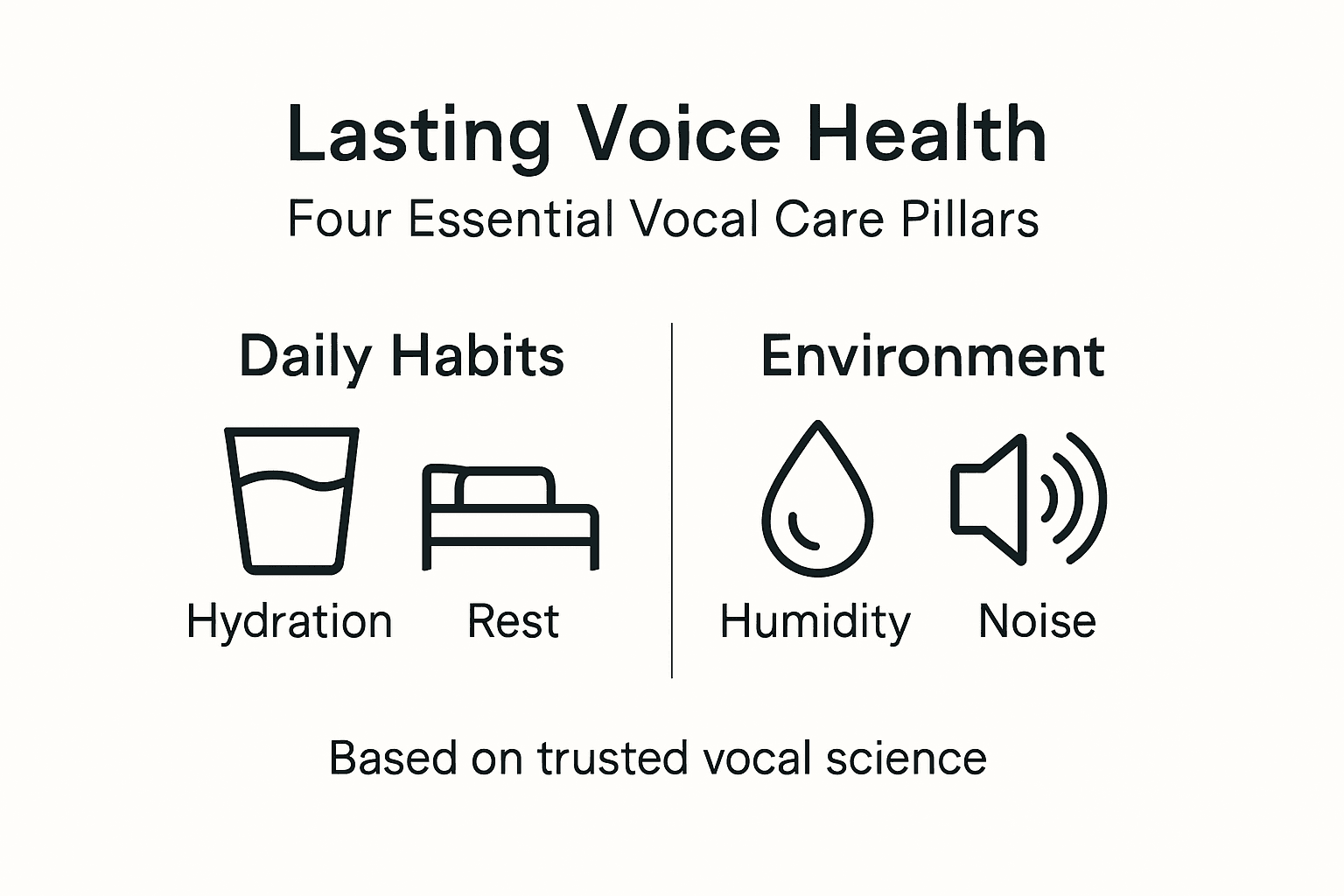
The foundation of vocal wellness rests on three pillars: hydration, strategic rest, and environmental awareness. These aren’t glamorous techniques, but they’re the difference between voices that hold up across decades and ones that deteriorate by your mid-thirties.
Effective vocal hygiene includes consistent hydration and avoiding laryngeal irritants to maintain vocal fold elasticity and function. Your vocal folds must stay moist to vibrate efficiently. Dehydration causes them to stiffen, forcing you to work harder and increasing injury risk exponentially.
Hydration isn’t just drinking water during performances. It’s maintaining systemic hydration throughout your day, every day. Most professional singers chronically under-hydrate without realizing it.
Start with these baseline practices:
Vocal rest means reducing unnecessary voice use between performances or recording sessions. This doesn’t require silence—it means conscious choice about when to speak and when to conserve energy.
Voice wellness depends on balancing vocal load with recovery through healthy vocal habits and environmental modifications. You can’t sustain eight shows weekly without recovery days strategically placed. Marathon performance schedules without rest days guarantee vocal breakdown.
Implement pacing strategies:
Your performance environment either supports or sabotages vocal health. Loud background noise, poor air quality, extreme temperature swings, and inadequate monitor systems all increase vocal strain significantly.
Voice ergonomics extends beyond your technique to include assessment of workplace conditions. Noisy rehearsal spaces force you to push harder. Dry air stiffens your vocal folds. Bad acoustics make you doubt your projection and overcompensate.
Your environment shapes your vocal demands more than most singers realize. Small environmental adjustments prevent more vocal strain than technique changes alone.
Adjust what you can control:
Pro tip: Photograph or document your rehearsal environment’s humidity, temperature, and noise levels, then identify one controllable factor to modify weekly—cumulative improvements compound into major vocal protection.
Natural remedies bridge the gap between prevention and professional medical intervention. They address the underlying inflammation, tension, and irritation that plague performers without requiring pharmaceuticals or invasive procedures. When combined with proper technique and rest, natural approaches accelerate recovery and prevent future damage.
Your toolkit should include both herbal remedies and hands-on therapies that target different aspects of vocal dysfunction. Some address inflammation. Others release muscle tension. The most effective long-term strategies use multiple modalities together.
Herbs traditionally used in voice care demonstrate anti-bacterial, anti-inflammatory, and mucolytic properties that support vocal fold healing. These aren’t folk remedies without basis. They target specific biological pathways related to pain, swelling, and mucus production that directly affect your voice quality.
Common herbal supports include:
These work best when used consistently, not sporadically. A singer experiencing fatigue should incorporate herbal support daily for two weeks to notice meaningful improvement.
Manual therapies address the muscle tension that amplifies vocal strain. Massage, transcutaneous electrical nerve stimulation, and acupuncture show evidence in reducing voice complaints by relieving compensatory tension patterns. Your neck, shoulder, and jaw muscles directly influence how efficiently your vocal folds vibrate.
When you carry tension in these areas, you force your larynx to work harder, compounding fatigue. Manual therapy breaks this cycle by releasing trigger points and restoring normal movement patterns.
Effective manual therapy options:
The table below summarizes supportive therapies and the areas they target for improving vocal health:
| Therapy Type | Primary Focus | Example Benefit |
|---|---|---|
| Herbal Remedies | Reduce inflammation | Soothe vocal tissue |
| Neck/Shoulder Massage | Relieve muscle tension | Increase vocal efficiency |
| Acupuncture | Minimize pain signals | Decrease chronic discomfort |
| Myofascial Release | Restore movement | Enhance laryngeal mobility |
Don’t choose between herbal support and physical therapy. Use them together. Take herbal remedies daily while receiving massage or acupuncture weekly, and your recovery accelerates dramatically compared to using either approach alone.
Natural remedies work best when integrated into your overall vocal care strategy, not used as substitutes for proper technique and rest.
A typical week might look like:
This combination addresses inflammation, releases tension, maintains circulation, and gives your voice the conditions needed to heal and strengthen.
Pro tip: Start with one herbal remedy and one manual therapy modality, establish consistency for three weeks, then add a second therapy—staggered implementation helps you identify which modalities benefit your voice most.
Recovery from vocal damage feels amazing until you slip back into old patterns. One week of skipped warm-ups or pushing through fatigue undoes months of careful progress. The difference between lasting vocal health and chronic problems is recognizing mistake patterns before they derail you.
Relapse happens because singers revert to convenient habits that feel normal. You’ve done them a thousand times. They worked before. But your healed voice needs protection that damaged voices required—you can’t abandon those habits just because you feel better.
Dehydration is the mistake you won’t feel immediately. Your voice seems fine at 2 PM, then by 8 PM during performance, your folds are stiff and unresponsive. Common vocal care mistakes include inadequate hydration and ignoring reflux symptoms that compound dehydration effects.
Singers slip into dehydration slowly. You’re busy. You forget water between rehearsals. Caffeine or alcohol seemed fine once, so maybe it’s fine always. Suddenly your vocal fatigue returns, and you don’t understand why.
Preventing this pattern requires non-negotiable hydration practices:
Warm-ups feel unnecessary when your voice is healthy. You skip one. Then two. Then you’re performing cold, your vocal folds tighten, and micro-trauma begins. Frequent vocal mistakes like skipping warm-ups and yelling can cause long-term damage that reverses months of recovery.
Warm-ups aren’t optional comfort measures. They’re injury prevention. Your vocal folds need gradual blood flow increase and muscle activation before demanding work.
Build non-negotiable warm-up protocols:
The confidence trap. Your voice feels strong, so you accept extra performances, longer rehearsals, or more intense vocal demands. You push through fatigue instead of honoring rest signals. Within weeks, you’re back where you started.
Recovery isn’t complete when your voice feels normal—it’s complete when you can sustain your normal schedule without fatigue accumulating.
Preventing relapse requires distinguishing between healthy voice use and overload:
Pro tip: Create a relapse warning system by rating your voice daily on a 1-10 scale and noting circumstances, then identify your personal threshold score—when you hit it, reduce vocal load immediately before damage compounds.
The challenges of maintaining lasting vocal health demand more than awareness—they require effective, targeted solutions that support recovery and prevent strain. If you are facing vocal fatigue, hoarseness, or struggling with issues caused by overuse or environmental factors, you are not alone. At TMRG Solutions, we understand that consistent hydration, strategic rest, and natural remedies are critical to your vocal resilience. Whether you are trying to prevent nodules or recover from lost voice episodes, our expertly curated products are designed to strengthen your voice naturally and safely.

Explore our Lost Voice and Nodules collections for herbal formulations and therapy kits crafted to address the specific pain points noted in long-term vocal care strategies. Take control of your vocal health now by visiting TMRG Solutions and find the natural, proven support your voice needs to perform at its best every day.
Key factors include age, performance volume, vocal range demands, environmental exposure, recovery time, and lifestyle factors. Each of these influences how you should care for your voice to maintain optimal health.
A personalized vocal care strategy should include regular vocal practice, daily warm-up routines, recovery protocols, environmental adjustments, and monitoring your vocal performance over time to ensure resilience and confidence in your voice.
Vocal fatigue occurs gradually after extended voice use, resulting in tiredness or hoarseness, while vocal strain is an acute injury caused by pushing too hard during a single session, leading to pain and loss of vocal range immediately after the effort.
Hydration is crucial because it maintains vocal fold elasticity and function, allowing your vocal folds to vibrate efficiently. Dehydration can stiffen vocal folds, increasing the risk of injury, making consistent hydration a non-negotiable aspect of vocal care.
