Your Cart is Empty


Most American and European actors know the toll vocal strain takes on performance, with over 60 percent reporting ongoing voice fatigue during demanding roles. If you rely on your voice for a living, even mild discomfort threatens auditions and professional opportunities. Vocal care is more than technique, it means understanding the science and daily choices that keep your voice resilient. Discover how natural remedies and expert practices safeguard your vocal health, so you perform with confidence and strength.
| Point | Details |
|---|---|
| Vocal Care Importance | Professional actors must actively manage their vocal health through specialized care and techniques to ensure their voices remain robust for performances. |
| Vocal Challenges | Actors face unique vocal demands that require mastery of projection, emotional control, and adaptability across various performance settings. |
| Injury Prevention | Common vocal injuries can arise from misuse; actors should monitor stress on their voices and adopt preventative measures like hydration and proper technique. |
| Holistic Approaches | Integrating physiological, environmental, and lifestyle factors is crucial for maintaining vocal health, with natural remedies and consistent self-care practices essential for recovery and performance. |
Vocal care for professional actors represents a strategic approach to protecting and maintaining the most critical instrument in their performance toolkit: their voice. Unlike casual speakers, actors experience heightened vocal demands that require specialized understanding and proactive management. Professional voice users face unique challenges that necessitate comprehensive vocal health strategies.
At its core, vocal care involves understanding the intricate anatomy of voice production. The human voice originates from the vibration of vocal folds within the larynx, a delicate mechanism that can be easily strained through improper use. For actors, this means developing a nuanced awareness of how speaking, singing, and performing impact vocal health. Voice specialists recommend techniques that optimize respiration, phonation, and resonance - critical elements that determine vocal quality and endurance.
Effective vocal care encompasses multiple dimensions: physical technique, lifestyle choices, and preventative practices. Actors must learn to monitor vocal fatigue, understand proper breathing mechanics, and recognize early signs of potential vocal strain. This includes regular vocal warm-ups, maintaining hydration, managing stress, and avoiding behaviors that can damage vocal cord integrity. Professional voice coaches often recommend specific exercises that strengthen vocal muscles and improve overall vocal resilience.
Pro tip: Invest 15 minutes daily in targeted vocal warm-up exercises to maintain vocal flexibility and prevent potential strain.
Actors face extraordinary vocal challenges that extend far beyond typical communication requirements. Actors must convey complex emotions through voice while maintaining precise technical control across multiple performance contexts. Their vocal instrument becomes a nuanced tool for character development, requiring exceptional flexibility, range, and sustained endurance.
Professional acting demands include several critical vocal dimensions. Actors must master vocal projection that can fill theater spaces, modulate emotional intensity without losing clarity, and switch between dramatically different character voices with minimal preparation. This requires a sophisticated understanding of breath control, resonance techniques, and the physiological mechanics of sound production. Voice training becomes essential, teaching performers how to protect their vocal health while expanding their expressive capabilities.
The diverse performance environments actors navigate further complicate vocal demands. Stage performances require different vocal techniques compared to film or television work, with each medium presenting unique challenges. Theater actors must project without amplification, maintaining vocal power and clarity for extended periods. Screen actors need more subtle vocal work, often performing multiple takes that require consistent emotional and technical precision. These varied requirements mean actors must develop extraordinary vocal adaptability and technical skill.
The following table compares vocal care strategies for stage versus screen actors:
| Strategy | Stage Actors | Screen Actors |
|---|---|---|
| Vocal projection needs | High, to reach audience | Moderate, microphones used |
| Emotional range demands | Exaggerated, expressive | Subtle, nuanced |
| Risk of vocal fatigue | Higher, long live performances | Moderate, multiple takes |
| Technique focus | Stamina, breath support | Consistent tone, clarity |
Pro tip: Record and analyze your own vocal performances weekly to identify subtle changes in tone, projection, and emotional range.
Professional actors confront a complex landscape of potential vocal injuries that can dramatically impact their careers. Vocal cord strain represents a significant occupational hazard for performers who consistently push their vocal limits. The human voice is an intricate biological system that can quickly become compromised when subjected to repeated stress, improper technique, or inadequate recovery time.
The most common vocal strain risks include nodules, polyps, and chronic inflammation. These conditions typically emerge from consistent vocal misuse, such as speaking or performing with excessive tension, insufficient breath support, or incorrect resonance techniques. Actors may experience progressive symptoms like persistent hoarseness, reduced vocal range, increased vocal fatigue, and unexpected voice breaks. These warning signs indicate potential underlying damage that requires immediate professional assessment and targeted intervention.

Multiple factors contribute to vocal injury risks beyond performance techniques. Environmental conditions like dry air, smoke exposure, allergic reactions, and chronic respiratory infections can exacerbate vocal vulnerability. Actors must also consider lifestyle factors such as hydration levels, sleep quality, stress management, and overall physical health. Professional voice users need a holistic approach that integrates vocal technique, medical awareness, and comprehensive self-care strategies to minimize potential long-term damage and maintain vocal resilience.
Here’s a summary of common vocal injuries and their typical warning signs for actors:
| Injury Type | Main Causes | Key Warning Signs | Typical Recovery Actions |
|---|---|---|---|
| Vocal nodules | Persistent misuse, overuse | Hoarseness, vocal fatigue | Voice rest, therapy, medical care |
| Polyps | Sudden voice trauma, overuse | Voice breaks, rough tone | Surgical removal, therapy |
| Chronic inflammation | Chronic irritation, infection | Ongoing hoarseness, pain | Treat source, reduce irritants |
Pro tip: Develop a daily vocal health log to track subtle changes in voice quality, performance endurance, and potential early warning signs of strain.
Maintaining vocal health requires a comprehensive, proactive approach that integrates medical awareness, technical skill, and holistic self-care. Vocal maintenance involves strategic medical evaluation and a deep understanding of physiological vocal function. Professional actors must develop a nuanced awareness of their vocal instrument, treating it with the same precision and care an athlete would approach their physical training.
Key strategies for vocal preservation encompass multiple dimensions of health and performance. Hydration plays a critical role, with actors needing to maintain consistent fluid intake and avoid dehydrating substances like caffeine and alcohol. Breath support techniques, including diaphragmatic breathing and controlled phonation, help reduce unnecessary vocal strain. Regular vocal warm-ups, structured rest periods, and mindful performance techniques can significantly mitigate potential injury risks. Speech-language pathologists recommend specific exercises that strengthen vocal muscles while promoting flexibility and resilience.
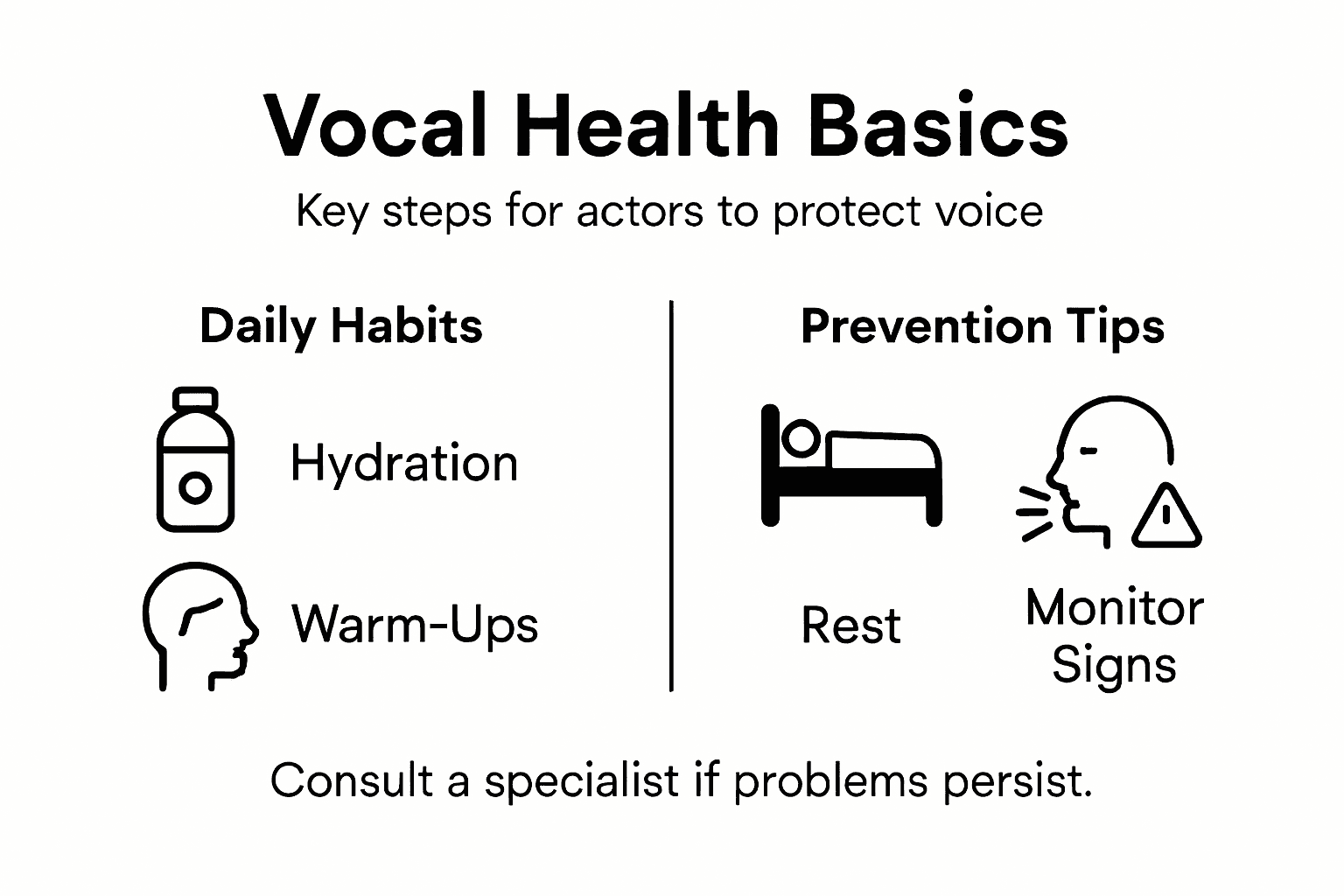
Environmental and lifestyle factors also substantially impact vocal health. Actors should create controlled performance environments that minimize vocal stress, using microphones when appropriate, avoiding smoke and excessive noise, and managing potential allergens or respiratory irritants. Nutrition, sleep quality, stress management, and overall physical wellness directly influence vocal performance. Professional voice users must adopt a holistic approach that considers the interconnected nature of vocal production, integrating physical, psychological, and technical strategies to sustain long-term vocal excellence.
Pro tip: Create a personalized vocal health routine that includes daily hydration tracking, warm-up exercises, and periodic professional vocal assessments.
Natural approaches to vocal health offer actors powerful strategies for maintaining their most essential performance instrument. Home remedies provide targeted vocal support that can prevent potential damage and enhance overall vocal resilience. These holistic methods focus on supporting the delicate mechanisms of vocal production through proactive, gentle interventions that address root causes of vocal strain.
Hydration emerges as a cornerstone of natural vocal care, with actors needing to implement strategic fluid intake and environmental management. Techniques like using humidifiers, consuming herbal teas, and avoiding dehydrating substances can significantly reduce vocal inflammation and support natural healing processes. Breathing exercises, steam inhalation, and specific herbal supplements can help soothe vocal tissues, reduce inflammation, and promote rapid recovery from minor vocal stress.
Prevention requires a multifaceted approach that integrates lifestyle modifications with targeted natural interventions. Actors should consider implementing dietary adjustments that reduce acid reflux, managing stress through meditation and controlled breathing techniques, and creating vocal-friendly environments that minimize irritants. Glycerin-based throat lozenges, honey-based treatments, and specific herbal formulations can provide immediate relief while supporting long-term vocal health. Understanding the intricate balance between physical technique, environmental factors, and natural healing becomes crucial for sustainable vocal performance.
Pro tip: Create a personalized vocal care kit with natural throat sprays, herbal teas, and hydration tracking tools to support consistent vocal maintenance.
Actors face unique vocal demands that can lead to strain, fatigue, and long-term injury without proper care. This article highlights common challenges such as vocal nodules, fatigue, and the need for precise breath control and endurance. If you want to preserve your vocal range and emotional flexibility on stage and screen you need targeted strategies that go beyond basic warm-ups.
Our collection at Singer Enhancements - TMRG Solutions offers natural remedies and specialized products designed to support vocal strength and recovery. Whether you struggle with hoarseness or want to avoid vocal fatigue our expertly formulated sprays, oils, and therapy kits are trusted by professionals for lasting results.

Take control of your vocal health today with proven solutions from TMRG Solutions. Explore our full range of products at All Products - TMRG Solutions and join thousands of voice professionals who trust us to keep their voices performing at their best. Don’t wait until strain leads to injury start your personalized vocal care routine now.
Vocal care is crucial for actors because their voice is their primary instrument. Proper vocal care helps protect against strain and injuries, ensuring they can perform effectively and convey emotions throughout various performance contexts.
Effective techniques for maintaining vocal health include regular vocal warm-ups, proper hydration, breath support exercises, and managing environmental factors that could harm the voice, such as smoke and dry air.
Actors can prevent vocal strain by using proper vocal techniques, monitoring their voice for signs of fatigue, utilizing microphones when necessary, and ensuring they take adequate vocal rests between performances.
Common vocal injuries for actors include vocal nodules, polyps, and chronic inflammation, often resulting from misuse, overuse, or insufficient recovery. Recognizing early symptoms, like hoarseness or vocal fatigue, is essential for timely intervention.
