Your Cart is Empty


A sudden bout of hoarseness or vocal fatigue can threaten even the most seasoned performer, making vocal cord polyps a serious concern for singers around the world. These benign growths often result from vocal strain, chronic irritation, or overuse, disrupting not only voice quality but also confidence on stage. Understanding the causes and symptoms of vocal cord polyps is crucial for anyone committed to maintaining peak vocal health and exploring effective, non-surgical solutions for lasting recovery.
| Point | Details |
|---|---|
| Vocal Cord Polyps | Benign growths on vocal cords can significantly disrupt voice quality, especially in professional singers. |
| Symptoms and Diagnosis | Persistent hoarseness and voice fatigue are common; laryngoscopic evaluation is crucial for diagnosis. |
| Voice Therapy Importance | Non-surgical approaches, including voice therapy and technique modifications, are essential for recovery and preventing recurrence. |
| Treatment Options | Both surgical and non-surgical treatments have unique benefits; combined therapy approaches yield optimal results for voice quality. |
Vocal cord polyps are benign soft tissue growths that develop on the vocal cords, causing significant disruption to a singer’s vocal performance. These small, fleshy lesions typically emerge from excessive vocal strain, chronic irritation, or repeated trauma to the delicate vocal fold tissues.
Some key characteristics of vocal cord polyps include:
The primary symptoms of vocal cord polyps involve voice quality changes. Professional singers may experience:
Polyps differ from vocal nodules in their appearance and development. While nodules tend to be symmetrical and harder, polyps are often larger, more asymmetrical, and can appear hemorrhagic or edematous. The impact on vocal performance can be substantial, potentially limiting a singer’s ability to perform at their peak.
Clinically, these lesions develop from repeated vocal stress, with common triggers including:
Pro tip: Early detection and professional voice therapy can significantly improve recovery outcomes and prevent permanent vocal damage.
Vocal cord polyps are complex medical conditions with several distinct classifications that help medical professionals understand their specific characteristics and potential treatment approaches. Polyps can be categorized based on multiple critical factors that impact their diagnosis and management.
Types of Vocal Cord Polyps include:
Here’s a quick reference comparing vocal cord polyp types and their clinical considerations:
| Polyp Type | Appearance | Clinical Concern |
|---|---|---|
| Sessile | Flat, broad-based | May cause subtle symptoms |
| Pedunculated | Stem-like, round mass | Can affect closure patterns |
| Hemorrhagic | Blood-filled, reddish | Higher risk for bleeding |
| Non-Hemorrhagic | Pale, less vascular | Lower inflammation risk |
Diagnostic methods for vocal cord polyps are comprehensive and involve multiple assessment techniques. Laryngoscopic evaluation remains the primary diagnostic approach, allowing direct visualization of the vocal cord structures.
Key diagnostic procedures include:
The diagnostic process focuses on understanding the polyp’s:
Histologically, vocal cord polyps demonstrate unique characteristics. They typically consist of edematous fibroblastic stroma with significant vascular components, distinguishing them from other benign laryngeal lesions.

Pro tip: Request a comprehensive voice assessment with a laryngologist who specializes in performing detailed stroboscopic evaluations to ensure accurate polyp diagnosis.
Voice therapy represents a critical approach for singers seeking non-surgical recovery from vocal cord polyps. Behavioral voice therapy strategies focus on reducing vocal strain and promoting long-term vocal health through targeted interventions.
Key voice therapy techniques include:
Technique Modifications are particularly crucial for preventing polyp recurrence. Professional singers must learn to:
Pre- and post-treatment voice therapy helps singers understand and correct harmful vocal behaviors. The therapy focuses on teaching efficient voice use, managing breath support, and protecting vocal fold structures.
Vocal technique modifications can reduce phonotrauma by up to 67% and significantly improve long-term vocal health.
Professional voice therapists typically develop personalized treatment plans that consider the individual’s specific vocal demands, performance requirements, and polyp characteristics.
Pro tip: Record and analyze your vocal performances with a professional voice coach to identify potential technique modifications that could prevent future vocal cord injuries.
Vocal cord hydration is crucial for singers recovering from polyps, with strategic moisture management playing a key role in healing and prevention. Proper hydration goes beyond simply drinking water - it involves a comprehensive approach to maintaining vocal tract health.
Key hydration strategies for singers include:
Natural Herbal Remedies can provide additional support for vocal cord recovery:
Consistent hydration can reduce vocal cord inflammation by up to 45% and accelerate healing processes.
Professional singers should develop a personalized hydration protocol that considers their individual vocal demands, performance schedule, and specific recovery needs. Environmental factors such as humidity levels, altitude, and air quality also play significant roles in vocal cord health.
Pro tip: Carry a dedicated water bottle marked with hourly hydration goals to ensure consistent fluid intake throughout your performance and recovery periods.
Treatment outcomes for vocal cord polyps demonstrate significant variability between surgical and non-surgical interventions. Professional singers face critical decisions when selecting the most appropriate recovery approach for their specific vocal cord condition.
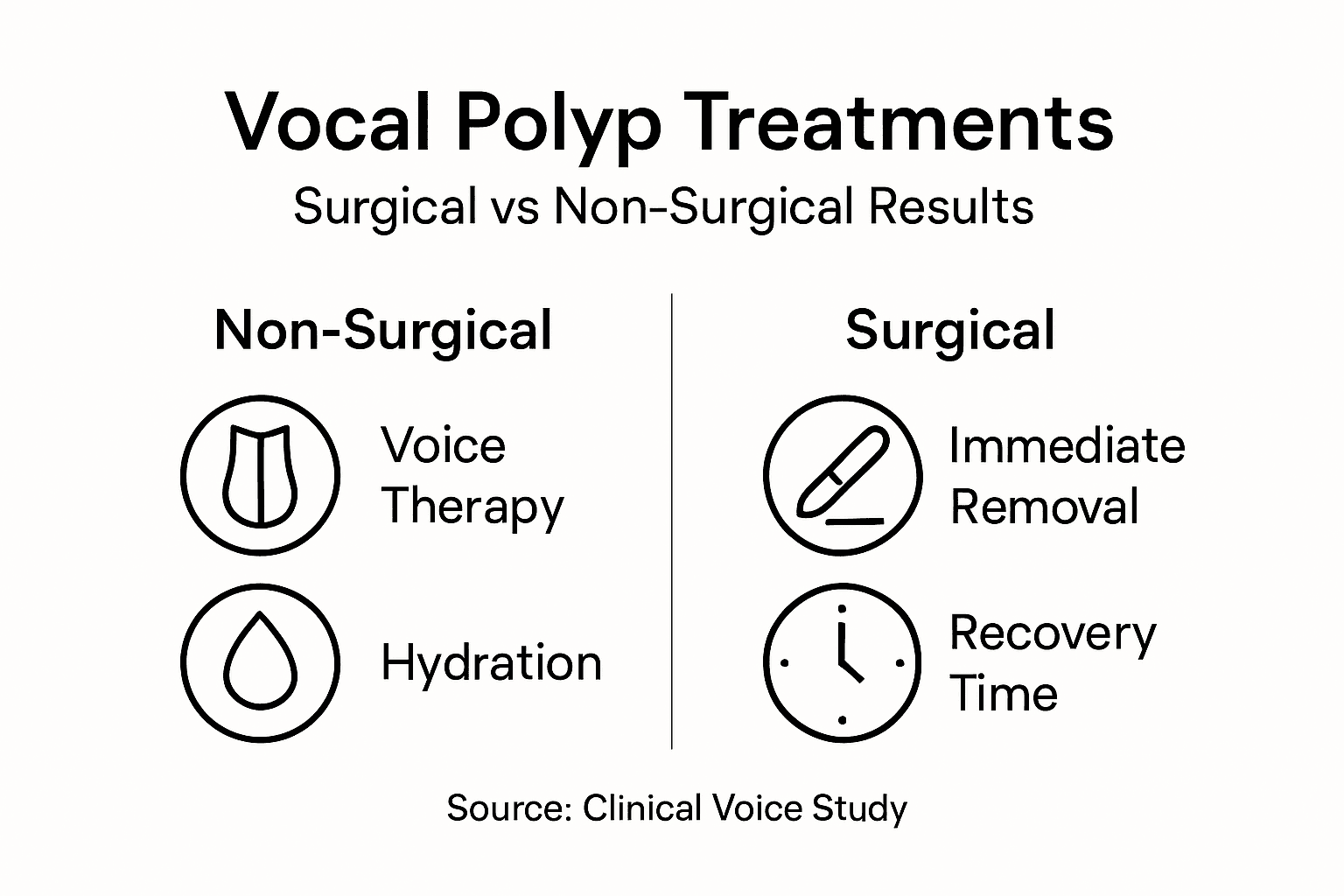
Key comparison points between surgical and non-surgical treatments include:
Below is a concise comparison of surgical and non-surgical treatment outcomes for vocal cord polyps:
| Factor | Surgical Treatment | Non-Surgical Treatment |
|---|---|---|
| Recovery Speed | Rapid, days to weeks | Gradual, weeks to months |
| Voice Quality Change | Immediate improvement | Progressive enhancement |
| Complication Risk | Higher, potential scarring | Lower, no surgical risks |
| Long-Term Outcome | Depends on technique | Linked to behavior changes |
Surgical Treatment:
Non-Surgical Treatment:
Research indicates that combined therapy approaches yield optimal results for vocal fold polyps. The integrated strategy typically involves:
Comprehensive treatment strategies can improve voice quality by up to 72% compared to single-method approaches.
Professional singers must carefully evaluate their individual vocal demands, polyp characteristics, and long-term career implications when selecting between surgical and non-surgical interventions. Each approach offers unique advantages and potential limitations that require personalized consideration.
Pro tip: Consult multiple voice specialists to develop a comprehensive, personalized treatment strategy that balances immediate symptom relief with long-term vocal health preservation.
Dealing with vocal cord polyps means facing voice fatigue, hoarseness, and reduced vocal range that can impact your entire career. Overcoming these challenges requires more than just rest — it demands focused effort on vocal hygiene, technique modification, and natural remedies that support healing without surgery. Our Singer Enhancements - TMRG Solutions offer carefully formulated products designed to reduce inflammation, protect your vocal cords, and improve hydration to accelerate recovery.

Explore trusted solutions backed by over 25 years of expertise at https://tmrgsolutions.com. Start your non-surgical recovery journey by integrating natural herbal therapies and voice care essentials that help you regain your voice’s full power and clarity. Visit our collection for nodules - TMRG Solutions to find complementary support for vocal health. Act now to protect your vocal instrument and maintain peak performance on stage and beyond.
The primary symptoms include persistent hoarseness, breathiness or roughness in vocal tone, reduced vocal range and pitch control, voice fatigue, and a sensation of a lump in the throat.
Voice therapy can help by focusing on reducing vocal strain, promoting proper vocal techniques, and teaching vocal hygiene to prevent future injuries. Techniques may include breath support training, resonance therapy, and personalized vocal exercises.
Natural remedies that may support recovery include hydration strategies, herbal teas like chamomile or slippery elm, and anti-inflammatory options such as ginger and marshmallow root. Keeping the vocal cords hydrated is essential for healing.
Surgical treatments provide rapid relief and direct removal of polyps with immediate voice improvement, but come with higher complication risks. Non-surgical treatments are gradual, focusing on vocal technique and have lower risks but require more time for noticeable changes.
