Your Cart is Empty


Most professional vocalists experience vocal fatigue even after mastering their craft, and nearly 60 percent report that environmental factors play a major role in their performance outcomes. Whether preparing for an American tour or coaching singers across Europe, setting up the right space and hydration routine can dramatically protect your voice and raise your standards. Discover how small adjustments to your environment and daily habits can leave you feeling confident, flexible, and ready for demanding sessions on any stage.
| Key Point | Explanation |
|---|---|
| 1. Create a Comfortable Environment | Set up a quiet and consistent space to enhance relaxation during vocal warm-ups. |
| 2. Maintain Consistent Hydration | Drink water regularly throughout the day to keep vocal folds lubricated and healthy. |
| 3. Release Muscle Tension | Use progressive muscle relaxation techniques to alleviate stress in the jaw and facial muscles. |
| 4. Activate Breathing Muscles | Practice deep diaphragmatic breathing to enhance breath control for vocal support. |
| 5. Assess Vocal Readiness | Conduct self-assessments to evaluate vocal performance and readiness before singing. |
Setting up the right environment and maintaining proper hydration are fundamental elements for successful vocal warm-ups. Your physical space and body’s moisture level significantly impact vocal performance and overall vocal health.
Begin by creating a comfortable, quiet space with consistent temperature and minimal external noise. Optimal vocal preparation requires a controlled environment that supports relaxed breathing and helps you focus. Open windows slightly to allow fresh air circulation, ensuring humidity levels are moderate. If the air feels dry, consider using a small humidifier to maintain appropriate moisture. Position yourself near a water source so you can hydrate consistently during your warm-up routine.
Hydration is not just about drinking water moments before singing. Professional vocalists understand that consistent water intake throughout the day prepares your vocal folds for peak performance. Aim to consume water regularly, avoiding caffeine and alcohol which can dehydrate vocal tissues. Keep room temperature water nearby during your warm-up session and take small sips between exercises. Your goal is maintaining a consistently moist environment for your vocal mechanism.
Compare how hydration methods affect vocal performance:
| Hydration Method | Benefit for Voice | Considerations |
|---|---|---|
| Room temperature water | Keeps vocal folds properly lubricated | Easy to access during practice |
| Warm herbal tea | Soothes throat and reduces irritation | Choose caffeine-free varieties |
| Sports drinks | Replenishes electrolytes after long sessions | May contain added sugars |
| Water with lemon | Encourages sips throughout the day | May cause acidity if overused |
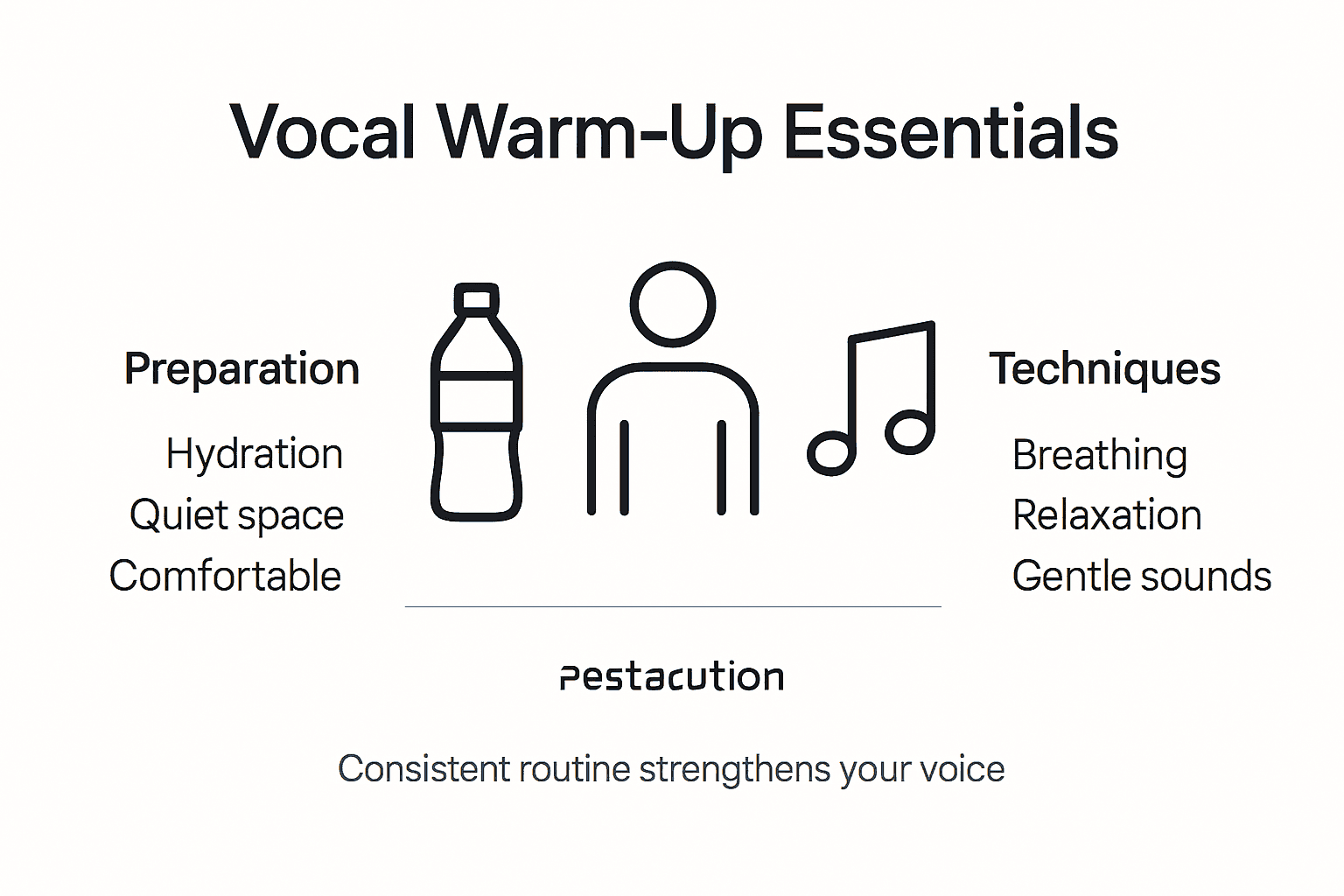
Pro tip: Keep a dedicated water bottle with measurement markings to track your daily hydration and ensure you drink at least 64 ounces before any significant vocal performance.
Releasing muscle tension is crucial for achieving optimal vocal performance. Your body needs to be relaxed and aligned to produce clear, resonant sound without strain or restriction.
Progressive muscle relaxation techniques help singers prepare their bodies for singing by systematically releasing physical tension. Start with your facial muscles and jaw area the primary zones where vocalists often hold unnecessary stress. Gently massage your jaw joints with circular motions using your fingertips to help muscles unwind. Open your mouth slightly and move your jaw side to side in smooth motions to encourage flexibility. Practice lip and tongue trills which naturally help connect breathing with muscle relaxation while warming up your articulators and vocal folds.
Breath work plays a critical role in tension release. Applied relaxation strategies teach you to recognize and quickly release muscle tension associated with performance anxiety. Focus on deep abdominal breathing where your belly expands during inhalation rather than your chest or shoulders. Practice taking slow inhales through your nose and controlled exhales through slightly parted lips. This approach helps calm your nervous system and creates a physical state conducive to free vocal expression.
Pro tip: Practice your relaxation routine in front of a mirror to visually confirm that your shoulders remain relaxed and your neck muscles stay soft during breathing exercises.
Activating your breathing and core muscles is essential for producing powerful and sustained vocal performances. Your respiratory system serves as the fundamental engine driving vocal production.

Vocal warm-up techniques focus on training respiratory muscles to maximize breath support and enhance overall vocal stamina. Begin by standing with feet shoulder width apart and place one hand on your abdomen. Practice deep diaphragmatic breathing where your belly expands outward during inhalation instead of lifting your chest or shoulders. Inhale slowly through your nose for four counts then exhale through slightly parted lips for six counts. This controlled breathing helps anchor your diaphragm and creates a stable foundation for vocal production.
Specific breathing exercises can help energize your core muscles and improve breath control. Incorporate side bends to open your rib cage and increase lung capacity. Try gentle panting exercises to release tension in your diaphragm. Use percussive consonants like “p” and “t” to activate breath support muscles and create a connection between your breath and vocal mechanism. Focus on maintaining a relaxed neck and shoulders throughout these exercises to prevent unnecessary tension.
Pro tip: Practice these breathing exercises in front of a mirror to visually confirm that your abdomen is expanding and your upper body remains relaxed during inhalation.
Engaging your vocal folds requires careful technique and precise muscle control. These gentle exercises help prepare your voice for peak performance while minimizing potential strain or injury.
Vocal warm-up techniques offer strategic exercises designed to promote healthy vocal fold vibration. Start with simple siren sounds sliding smoothly from your lowest to highest comfortable pitch. This helps transition your vocal muscles through different ranges while maintaining relaxation. Next incorporate lip trills by buzzing your lips together while producing sound. These trills naturally encourage balanced airflow and reduce unnecessary muscle tension in your vocal mechanism.
Progress through various gentle vocal exercises focusing on different vowel sounds and humming techniques. Begin with closed mouth humming to feel resonance in your facial mask and encourage gentle vocal fold engagement. Then practice open vowel sounds like “ah” and “oh” maintaining a consistent soft tone. Pay close attention to keeping your throat relaxed and breath support steady. These exercises help condition your vocal folds gradually without overexertion or potential damage to your delicate vocal tissues.
Pro tip: Record yourself performing these exercises to monitor your technique and track subtle improvements in vocal flexibility and tone quality.
Expanding your vocal range requires strategic practice and careful progression. Your goal is to gently challenge your vocal capabilities without risking strain or potential damage.
Progressive vocal exercises help singers safely explore and extend their pitch range. Begin with single note patterns starting in your most comfortable vocal register. Practice moving up and down short intervals using gentle glides and scales. Start with soft volume levels and gradually increase intensity as you feel more confident. Focus on maintaining consistent breath support and keeping your throat relaxed during these explorations. Pay close attention to any signs of tension or discomfort as indicators that you should pause and reset.
As you become more comfortable with basic pitch transitions, introduce more complex vocal challenges. Practice ascending and descending scales using different vowel sounds like “ah” “ee” and “oh” which help develop resonance and flexibility. Move through your range incrementally always maintaining control and avoiding sudden or aggressive vocal movements. Record yourself periodically to track your progress and identify areas that need additional attention. Remember that vocal range expansion is a gradual process requiring patience and consistent mindful practice.
Pro tip: Use a piano or digital tuner to help you track precise pitch movements and ensure you are progressing systematically through your vocal range.
Assessing your vocal readiness is a critical step in ensuring high-quality performance. This evaluation helps you understand your voice’s current condition and potential limitations before entering a performance scenario.
Vocal warm-ups prepare the entire body for peak performance by addressing multiple physiological factors. Begin by conducting a comprehensive self-assessment focusing on breath control, muscle tension, and overall vocal responsiveness. Check your posture alignment standing sideways in a mirror. Notice if your shoulders are relaxed and your spine remains neutral. Take deep breaths and observe how smoothly your breath flows. Listen critically to your voice during initial warm-up scales for signs of strain or inconsistency.
Professional performance rubrics offer structured methods for evaluating vocal readiness. Rate yourself across key dimensions such as breath support stability pitch accuracy and emotional connection. Consider recording a short warm-up session to review your vocal quality objectively. Pay special attention to diction clarity resonance and the smoothness of your vocal transitions. If you detect significant tension or vocal fatigue stop and reset your warm-up routine. Remember that peak performance emerges from careful preparation and honest self evaluation.
Pro tip: Create a personal readiness checklist with specific markers like breath support quality pitch range and vocal comfort to consistently track your vocal performance potential.
Here’s a summary of the key components for an effective vocal warm-up routine:
| Step Focus | Primary Goal | Essential Technique |
|---|---|---|
| Environment & Hydration | Maintain vocal fold health | Consistent water intake |
| Muscle Relaxation | Reduce tension and anxiety | Facial massages and deep breathing |
| Core & Breathing Activation | Enhance breath support | Diaphragmatic breathing drills |
| Gentle Vocal Activation | Prepare fold vibration | Sirens and lip trills |
| Range Progression | Safely expand vocal range | Gradual interval exercises |
| Performance Assessment | Evaluate readiness | Self-assessment and recording |
Mastering the art of vocal warm-ups demands more than just practice. It requires addressing key challenges like muscle tension, hydration, breath control, and vocal fold care to achieve stronger, healthier performances. If you struggle with hoarseness, vocal fatigue, or maintaining consistent vocal health during intense sessions, specialized solutions designed for voice professionals can make all the difference. Incorporating natural remedies and enhancements into your preparation can enhance relaxation, support optimal lubrication, and boost your vocal stamina.

Discover premium options tailored for singers and voice users in our Singer Enhancements - TMRG Solutions collection. These carefully crafted products are backed by over 25 years of expertise aimed at naturally supporting voice therapy and recovery. Whether you need soothing sprays, herbal blends, or targeted formulations that help reduce phlegm and support vocal fold health, our range at Phlegm and Viscous Mucos - TMRG Solutions has you covered. Take control of your vocal wellness today by exploring our full offerings at https://tmrgsolutions.com and give your voice the care it truly deserves. Start your journey now to perform with confidence and resilience.
To create an optimal environment for vocal warm-ups, ensure your space is quiet, comfortable, and free from disturbances. Aim for a controlled temperature and maintain fresh air circulation; consider using a humidifier if the air is dry.
For effective hydration, drink room temperature water regularly throughout the day, avoiding dehydrating beverages like caffeine and alcohol. Keep a water bottle handy during warm-ups, and aim to consume at least 64 ounces daily to prepare your vocal folds for performance.
To release tension, practice progressive muscle relaxation techniques by gently massaging your jaw and using deep abdominal breathing. Focus on relaxing your shoulders and neck, ensuring your body is aligned and ready for vocal performance.
Activate your breathing and core muscles by practicing diaphragmatic breathing, where your belly expands as you inhale. Stand with your feet shoulder-width apart and place a hand on your abdomen to feel the movement, practicing this for several minutes to enhance breath support.
Engage your vocal folds by starting with simple siren sounds, gliding from your lowest to highest pitch. Incorporate lip trills and gentle humming on vowel sounds to promote healthy fold vibration while maintaining relaxation throughout your vocal mechanism.
Assess your vocal readiness by conducting a self-evaluation focused on breath control and muscle tension. Stand in front of a mirror to check your posture, and listen critically to your voice during warm-ups, adjusting your routine if you notice any strain or discomfort.
