Your Cart is Empty


Long rehearsal days and back-to-back performances can leave vocalists battling persistent fatigue and wavering vocal quality. For professionals from New York to Tokyo, maintaining a strong, resilient voice is more than a luxury—it’s a job necessity. Voice therapy offers a specialized intervention built around reducing muscle tension and improving vocal stamina, delivering practical support for those seeking natural solutions to preserve their most valuable asset.
| Point | Details |
|---|---|
| Voice Therapy is Essential for Vocalists | It focuses on restoring and optimizing vocal function through targeted techniques, helping to prevent vocal disorders. |
| Customized Treatment Plans | Voice therapy involves personalized assessment and strategies tailored to the unique vocal characteristics of each performer. |
| Holistic Approaches and Natural Remedies | Incorporating holistic techniques can enhance vocal resilience and support overall well-being. |
| Proactive Management is Key | Regular assessments and a vocal health checklist can help identify issues early and maintain optimal vocal performance. |
Voice therapy represents a specialized intervention designed specifically for professional vocalists facing complex vocal challenges. At its core, this therapeutic approach focuses on restoring and optimizing vocal function through targeted techniques that address the unique physiological demands placed on professional singers and performers.
Professional vocalists encounter numerous vocal strain risks that require strategic intervention. Specialized therapeutic interventions are crucial for managing and preventing potential vocal disorders, particularly for those with high-performance vocal demands. The therapy encompasses multiple strategies aimed at:
The therapeutic process typically involves comprehensive assessment and personalized treatment plans tailored to each vocalist’s specific vocal characteristics and performance requirements. Practitioners utilize a combination of direct and indirect techniques, which might include:
Voice therapy is not just rehabilitation—it’s a proactive approach to maintaining peak vocal performance and preventing potential career-limiting injuries.
Pro tip: Schedule regular voice therapy assessments, even when you’re not experiencing active vocal issues, to maintain optimal vocal health and catch potential problems early.
Voice therapy is not a one-size-fits-all treatment, but rather a nuanced approach that encompasses multiple specialized techniques tailored to individual vocal challenges. Direct and indirect therapy approaches are strategically designed to address the unique needs of professional vocalists, ensuring comprehensive vocal health management.
The primary voice therapy approaches can be categorized into several key methodological frameworks:
Professional voice practitioners typically employ a combination of these approaches, creating personalized treatment plans that address multiple dimensions of vocal function. The therapeutic strategies might include:

Here’s a quick comparison of common voice therapy approaches and their main focus for vocalists:
| Approach Type | Focus Area | Typical Benefit |
|---|---|---|
| Symptomatic Therapy | Vocal symptom correction | Targets specific vocal problems |
| Physiologic Therapy | System coordination | Balances breathing and phonation |
| Hygienic Therapy | Habit modification | Reduces harmful vocal behaviors |
| Behavioral Modification | Stress and habits | Improves mental approach to singing |
Professional voice therapy goes beyond simple symptom management—it’s a comprehensive approach to maintaining peak vocal performance and preventing potential career-interrupting injuries.
Pro tip: Consult a specialized voice therapist who understands the unique demands of your specific vocal performance domain to develop a truly personalized treatment strategy.
Professional vocalists face unique challenges that demand exceptional vocal precision and endurance. Comprehensive vocal function treatment provides critical interventions that transform vocal performance by addressing underlying physiological limitations and optimizing vocal mechanics.
Voice therapy enhances performance through multiple strategic mechanisms:
The performance enhancement process involves intricate physiological improvements that directly impact a vocalist’s capabilities:
Professional voice therapy transforms vocal limitations into opportunities for extraordinary performance, turning potential weaknesses into strengths.
Pro tip: Record and analyze your vocal performances before and after voice therapy to objectively track your technical and expressive improvements.
Vocal fatigue represents a significant challenge for professional performers, threatening their ability to deliver consistent, high-quality performances. Vocal hygiene treatment programs offer strategic interventions that help singers maintain vocal resilience and prevent performance-limiting exhaustion.
The primary strategies for preventing vocal fatigue include:
Successful vocal fatigue prevention requires a comprehensive approach that addresses multiple physiological and behavioral factors:
Vocal fatigue is not an inevitable consequence of performance—it’s a manageable condition that can be systematically prevented and overcome.
Pro tip: Create a detailed vocal recovery journal to track your vocal performance, identifying specific triggers and developing personalized strategies for maintaining vocal health.
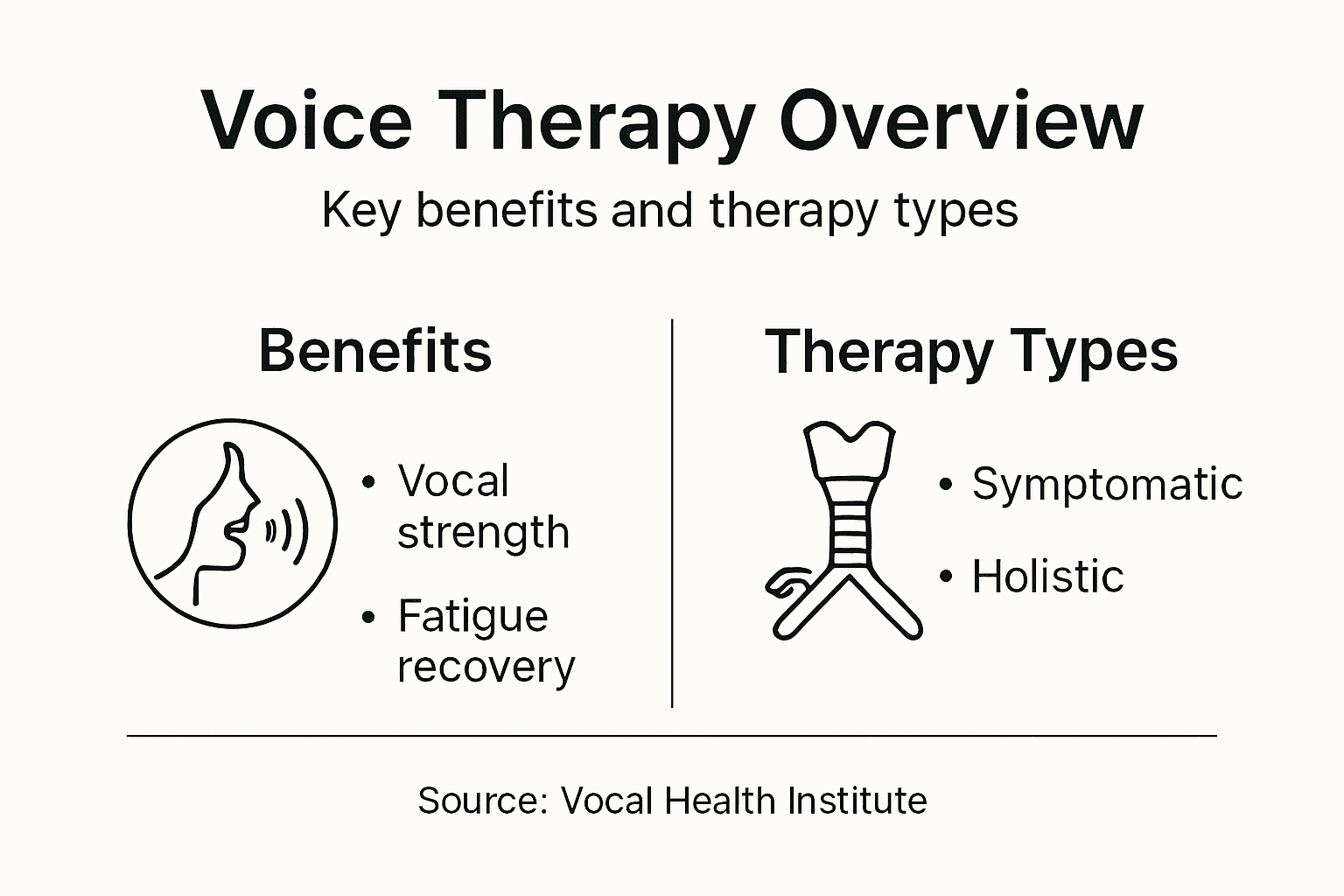
Holistic vocal health approaches offer comprehensive strategies that extend far beyond traditional medical interventions. Holistic voicework techniques provide integrative methods that address both physical and psychological dimensions of vocal performance, creating a more nuanced approach to vocal wellness.
Natural remedies and holistic techniques encompass multiple strategic interventions:
Comprehensive holistic vocal strategies involve targeted practices that support overall vocal resilience:
Use this table to understand key differences between traditional medical interventions and holistic vocal techniques:
| Aspect | Traditional Therapy | Holistic Techniques |
|---|---|---|
| Focus | Physical vocal mechanics | Whole-body wellness |
| Common Methods | Direct vocal exercises | Mindfulness, nutrition, massage |
| Goal | Correct specific dysfunctions | Support long-term vocal resilience |
| Professional Role | Speech-language pathologist | Voice coach, holistic therapist |
Holistic vocal health is about creating harmony between physical technique, psychological well-being, and mindful performance practices.
Pro tip: Develop a holistic vocal wellness journal that tracks your physical, nutritional, and emotional factors alongside your vocal performance to identify comprehensive improvement strategies.
Vocal health requires careful attention and proactive management to prevent long-term damage. Voice therapy professionals emphasize the critical importance of recognizing and addressing potential vocal health issues before they become chronic problems.
Common mistakes that professional vocalists frequently make include:
Indications that warrant immediate professional consultation:
Professional intervention is not a sign of weakness, but a strategic approach to maintaining peak vocal performance.
Pro tip: Develop a personal vocal health checklist that helps you objectively assess your vocal condition and recognize potential warning signs before they become serious issues.
If you are striving to transform your vocal performance while addressing challenges like vocal fatigue, muscle tension, or hoarseness, targeted voice therapy alone may not be enough. Achieving lasting vocal health requires combining professional techniques with natural remedies that support your vocal cords, enhance hydration, and reduce inflammation. At TMRG Solutions, our 25+ years of expertise empower vocalists like you with carefully crafted products designed to complement voice therapy and boost your vocal resilience.

Explore our specialized Singer Enhancements collection to find herbal formulations, sprays, and oils that address the key pain points discussed in voice therapy such as muscle relaxation, mucosal health, and recovery from vocal strain. Take control of your vocal journey today and experience the benefits of combining expert therapy with trusted natural support. Visit TMRG Solutions now and start your path toward stronger, healthier vocal performance.
Voice therapy is a specialized intervention for professional vocalists that focuses on restoring and optimizing vocal function by reducing muscle tension, improving vocal cord resilience, and enhancing overall vocal technique. It helps in preventing long-term damage and restoring optimal vocal range and quality.
Voice therapy enhances performance by reducing muscle tension, conditioning the vocal cords, refining technical skills, ensuring performance consistency, and preventing potential vocal injuries, allowing vocalists to deliver extraordinary performances.
Common approaches in voice therapy include symptomatic therapy, which focuses on modifying specific vocal symptoms; physiologic therapy, targeting the coordination of respiratory and phonatory systems; hygienic therapy, which eliminates harmful vocal behaviors; and behavioral modification therapy, addressing psychological stress related to performance.
A vocalist should seek professional voice therapy if they experience persistent hoarseness lasting over two weeks, unexplained changes in vocal range or quality, recurring throat pain during performances, difficulty maintaining vocal control, or increased vocal fatigue during regular activities.
