Your Cart is Empty


Bold claims about vocal hygiene have sparked widespread debate among American and international performers. Many professional singers spend years relying on outdated advice that actually increases fatigue or risks vocal damage. With over 30 percent of voice professionals experiencing persistent vocal issues in their careers, understanding the real science behind vocal care is vital. This guide separates fact from fiction, equipping you with smart, natural strategies to protect your voice and maximize performance for lasting vocal health.
| Point | Details |
|---|---|
| Prioritize Vocal Hygiene | Maintaining vocal health requires awareness of habits, environmental factors, and personalized care strategies. |
| Debunk Common Myths | Misconceptions, such as believing whispering is safer than speaking normally, can harm vocal performance. |
| Implement Healthy Habits | Professional voice users should practice controlled breathing and regular hydration to support vocal resilience. |
| Monitor Vocal Health | Regular self-assessments and a health journal can help identify issues early and prevent long-term damage. |
Vocal hygiene represents a comprehensive approach to protecting and maintaining vocal health for professional voice users like singers, actors, and lecturers. Strategic vocal care practices encompass multiple strategies designed to prevent vocal strain and support optimal voice performance. These practices involve understanding how environmental factors, personal behaviors, and physiological mechanisms interact to preserve vocal cord integrity.
At its core, vocal hygiene involves deliberate interventions that protect the delicate laryngeal tissues from potential damage. Professional voice users must recognize that vocal health extends beyond simple rest and hydration. It requires a nuanced understanding of vocal mechanics, potential irritants, and personalized management techniques. Common myths can significantly undermine vocal performance, such as the misconception that whispering is less stressful than normal speech. In reality, whispering can create more tension and strain on vocal cords compared to speaking at a normal volume.
Understanding vocal hygiene means debunking several persistent myths. For instance, contrary to popular belief, drinking cold water does not inherently harm vocal performance. What matters most is maintaining consistent hydration and avoiding sudden temperature extremes. Professional voice users should focus on practices like proper breathing techniques, managing environmental conditions, and understanding individual vocal limitations.
Here’s a quick summary of common myths and the realities of vocal hygiene:
| Myth | Reality | Impact on Vocal Health |
|---|---|---|
| Whispering reduces strain | Whispering increases tension | Greater risk of vocal fatigue |
| Cold water damages cords | Temperature extremes are the issue | Hydration is critical, not temperature |
| Rest alone keeps voice healthy | Balanced habits are required | Prevents long-term damage |
Pro Tip: Develop a personalized vocal warm-up routine that gradually prepares your voice for performance, incorporating gentle stretches and controlled breathing exercises to minimize strain and optimize vocal resilience.
Maintaining robust vocal health requires a comprehensive approach that goes beyond simple awareness. Protecting vocal performance involves strategic daily practices that support vocal cord resilience and prevent unnecessary strain. Professional voice users must develop a holistic understanding of how lifestyle, environmental factors, and personal habits directly impact vocal quality and endurance.
Key habits for maintaining healthy vocal cords include managing vocal loudness, practicing controlled breathing, and creating deliberate rest periods during extended speaking or singing sessions. Professional performers should prioritize speaking within their natural pitch range, avoiding excessive shouting or dramatic vocal fluctuations. Hydration plays a critical role, with experts recommending consuming 2-3 liters of water daily to maintain optimal vocal cord moisture and flexibility. Additionally, understanding individual vocal limitations and recognizing signs of vocal fatigue are essential skills for preventing long-term damage.
Environmental awareness becomes crucial for vocal health. This means minimizing exposure to irritants like smoke, managing acoustic environments, and avoiding voice usage when experiencing illness or significant fatigue. Nutrition and lifestyle choices also significantly impact vocal cord performance. Reducing caffeine and alcohol intake, maintaining balanced nutrition, and getting adequate sleep contribute substantially to vocal resilience. Professional voice users should develop personalized strategies that account for their unique physiological characteristics and performance demands.

Pro Tip: Create a dedicated vocal health journal to track your daily habits, hydration levels, vocal performance, and any potential strain or discomfort, allowing you to develop a more personalized and proactive approach to vocal maintenance.
Vocal health represents a delicate balance that professional voice users must carefully maintain. Chronic voice problems emerge when performers neglect fundamental vocal hygiene practices, potentially derailing careers and causing significant long-term damage. Professional singers, educators, and speakers face substantial risks when they ignore the critical signs of vocal strain and overuse.
Poor vocal hygiene practices can trigger a cascade of progressive vocal disorders. Persistent vocal misuse leads to complications like nodules, polyps, and chronic inflammation of the vocal folds. Symptoms typically begin with subtle signs such as intermittent hoarseness, reduced vocal range, and increased vocal fatigue. Educators and professional speakers are particularly vulnerable, with studies showing high prevalence of voice disorders resulting from extended vocal usage without proper rest and maintenance techniques.
Environmental and lifestyle factors significantly compound the risks of poor vocal hygiene. Excessive caffeine consumption, insufficient hydration, smoking, and chronic stress create additional strain on vocal mechanisms. Professional voice users who consistently expose themselves to harsh acoustic environments or fail to implement strategic vocal rest periods risk permanent alterations in their vocal quality. Institutional lack of support and insufficient education about vocal health management further increase the likelihood of developing chronic voice-related complications that can dramatically impact professional performance and personal communication abilities.
Pro Tip: Conduct a weekly self-assessment of your vocal health, tracking any changes in voice quality, endurance, or comfort to catch potential issues before they become serious problems.
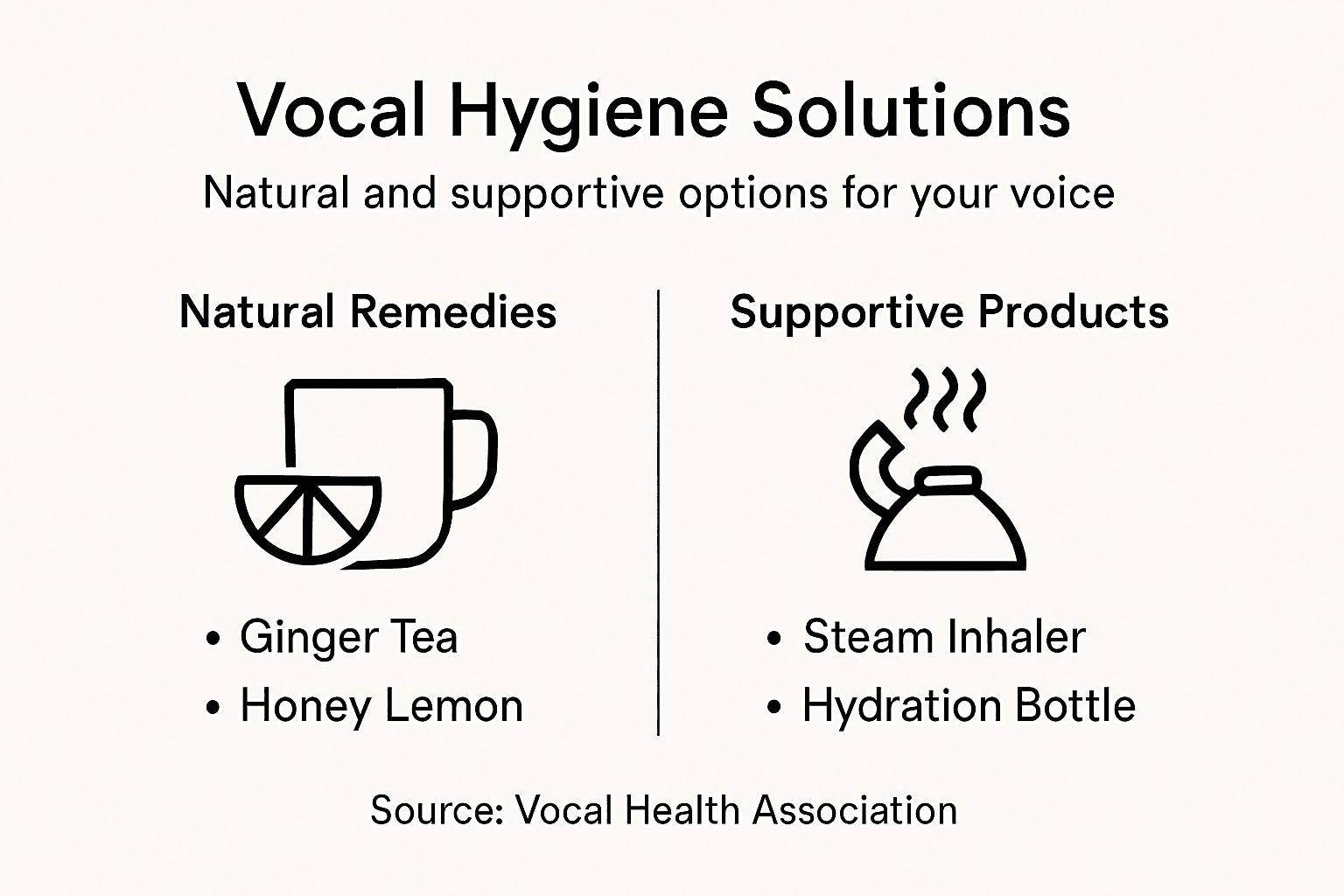
Professional voice users have a wide array of natural solutions to support vocal health and minimize potential damage. Herbal medicinal products offer promising complementary approaches to traditional vocal care strategies. Herbal remedies like ginger, chamomile, sage, linden, and turmeric have demonstrated potential in supporting vocal cord health and managing mild inflammatory conditions.
Natural therapeutic approaches extend beyond herbal remedies to include specialized vocal support products designed to minimize strain and promote healing. Throat sprays containing natural ingredients such as honey, slippery elm, and marshmallow root can provide immediate soothing effects for irritated vocal tissues. Hydration supplements and specialized lozenges formulated with anti-inflammatory botanicals offer targeted support for professional singers, speakers, and voice performers experiencing mild vocal fatigue or discomfort.
Below is a comparison of natural solutions and supportive products for vocal health:
| Solution Type | Key Examples | Main Benefit |
|---|---|---|
| Herbal Remedies | Ginger, sage, chamomile | Reduce inflammation and irritation |
| Throat Sprays | Honey, slippery elm | Soothe vocal tissues quickly |
| Hydration Supplements | Electrolyte drinks, herbal teas | Improve moisture and flexibility |
| Specialized Lozenges | Marshmallow root, botanicals | Target mild fatigue or soreness |
While natural solutions provide significant benefits, professional voice users must approach their implementation strategically. Consulting with voice specialists, understanding individual physiological responses, and monitoring potential interactions remain crucial. Some herbal products might interact with medications or have subtle side effects, emphasizing the importance of professional guidance. Professional voice users should view these natural solutions as complementary support mechanisms, not replacement for comprehensive vocal hygiene practices, proper technique, and regular professional assessments.
Pro Tip: Maintain a detailed journal tracking your responses to different natural vocal support products, documenting their effectiveness, any side effects, and your overall vocal performance to develop a personalized natural care strategy.
Professional voice users frequently encounter preventable challenges that can compromise their vocal performance and long-term health. Common vocal mistakes often stem from inadequate awareness and improper technique, potentially leading to significant vocal damage if left unaddressed. Understanding these critical errors is the first step toward developing a sustainable and resilient vocal practice.
Key mistakes include skipping essential vocal warm-ups, speaking beyond natural vocal range, and continuous voice usage without strategic rest periods. Professionals who consistently shout, speak over background noise, or ignore early signs of vocal fatigue risk developing chronic vocal disorders. Frequent throat clearing, excessive caffeine and alcohol consumption, and prolonged speaking in challenging acoustic environments can create cumulative stress on vocal mechanisms. These behaviors gradually erode vocal cord elasticity and compromise overall vocal quality and endurance.
Prevention requires a comprehensive approach that integrates mindful vocal practices, environmental awareness, and proactive health management. Professional voice users should prioritize techniques such as using microphones in noisy environments, implementing deliberate vocal rest intervals, maintaining optimal hydration, and developing efficient breathing strategies. Understanding individual vocal limitations, recognizing early warning signs of strain, and adopting a holistic approach to vocal care can significantly mitigate potential long-term vocal health risks. Regular consultations with voice specialists and ongoing self-assessment remain crucial for maintaining professional vocal performance.
Pro Tip: Create a personalized vocal health checklist that includes daily warm-up routines, hydration tracking, and self-monitoring techniques to quickly identify and address potential vocal strain.
Voice professionals understand how vital vocal hygiene is for long-lasting vocal health and peak performance. The article highlights common challenges like vocal strain, improper hydration, and the risks of ignoring early symptoms. If you want to avoid issues such as hoarseness, vocal fatigue, and chronic inflammation, it is critical to adopt proven strategies that support your unique vocal needs. TMRG Solutions offers carefully designed products that align with those essential vocal care principles, ensuring you protect and enhance your voice naturally.

Explore our Singer Enhancements - TMRG Solutions curated specifically for performers who demand vocal excellence. Whether you face challenges with vocal strain or seek comprehensive support, our range including natural sprays, oils, and therapy kits provide effective relief and strengthening benefits. Discover all options in our All Products - TMRG Solutions collection to find the right fit for your vocal hygiene routine. Don’t wait for symptoms to worsen. Visit https://tmrgsolutions.com now and take control of your vocal health with expert-backed natural solutions tailored for voice professionals.
Vocal hygiene refers to practices and habits that protect and maintain vocal health. For voice professionals, maintaining good vocal hygiene is crucial to prevent strain, fatigue, and long-term damage to the vocal cords, ensuring optimal performance.
Key habits for promoting vocal health include staying hydrated (consuming 2-3 liters of water daily), managing vocal loudness, practicing controlled breathing, and allowing for deliberate rest periods during extended speaking or singing sessions.
Yes, whispering can actually increase tension in the vocal cords and may be more straining than speaking at a normal volume. It’s important for voice professionals to speak within their natural pitch range and avoid excessive whispering to protect vocal health.
Natural products that can support vocal health include herbal remedies like ginger and chamomile, throat sprays containing soothing ingredients like honey and slippery elm, and hydration supplements such as herbal teas. These can help reduce inflammation and maintain vocal cord moisture.
