Your Cart is Empty


Vocal fatigue strikes over one in three American professionals who rely on their voices every day. If you are a working vocalist, actor, or voice coach, even minor hoarseness can jeopardize your performance and confidence. What you do before and after each session matters just as much as technique itself. Discover how simple choices in hydration, environment, and natural care routines can bring real relief and lasting vocal strength.
| Key Point | Explanation |
|---|---|
| 1. Maintain ideal room humidity | Keep humidity levels between 40-60% to ensure vocal fold lubrication and prevent strain during voice use. |
| 2. Drink plenty of water daily | Aim for 8-10 glasses of water each day for optimal vocal hydration, avoiding caffeine and alcohol. |
| 3. Use natural throat remedies | Incorporate warm salt gargles and honey to soothe and cleanse the throat while reducing inflammation. |
| 4. Implement effective vocal warm-ups | Engage in breathing exercises and vocal drills to prepare your voice, preventing strain and improving performance. |
| 5. Track vocal health daily | Maintain a vocal log to assess performance indicators, allowing for timely adjustments in your care routine. |
Creating an ideal vocal environment is foundational for maintaining vocal health guide and preventing unnecessary strain. Your goal in this step is to understand how environmental factors and hydration directly impact vocal performance, especially for professional voice users.
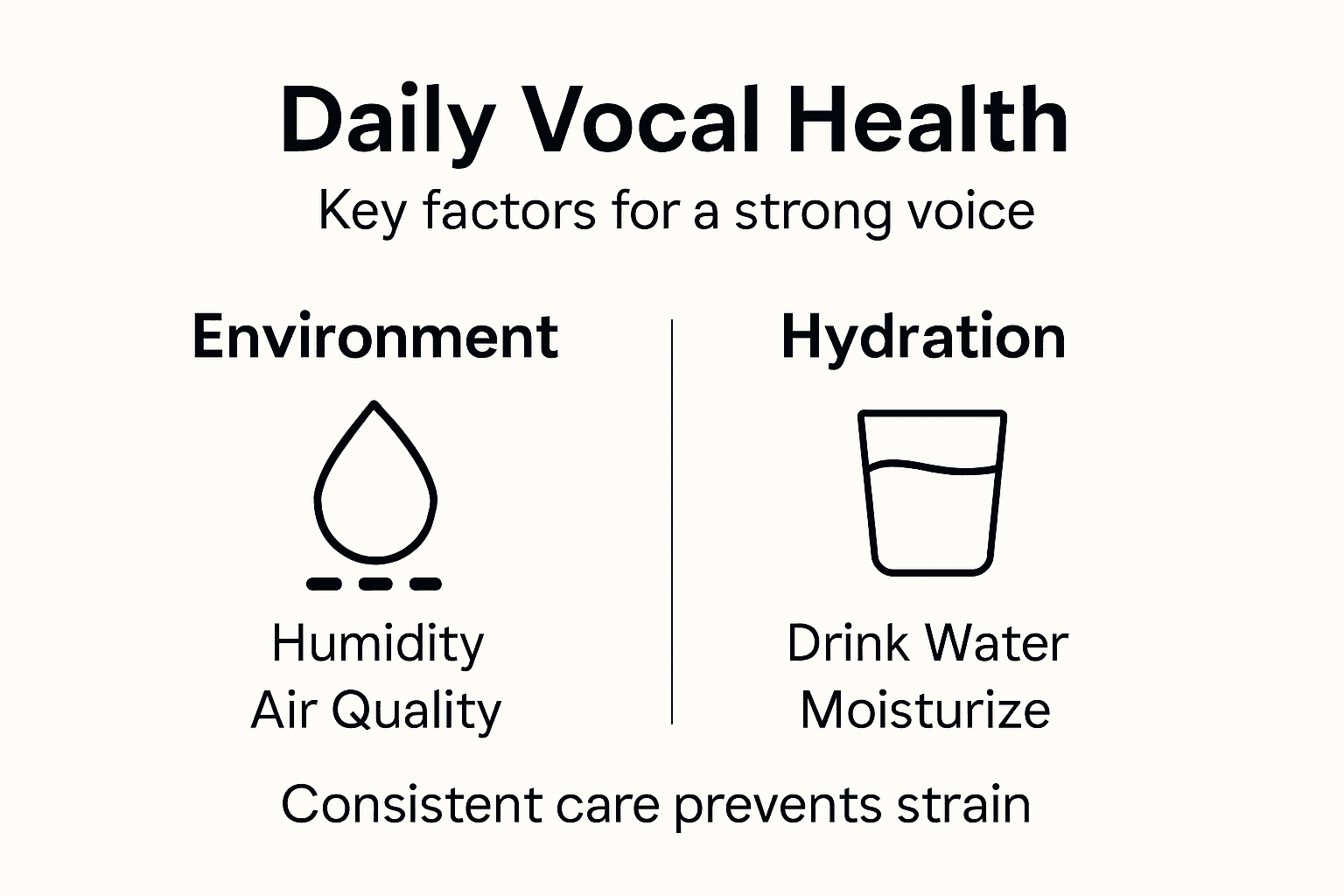
Begin by evaluating your immediate workspace for potential vocal irritants. Indoor air quality plays a significant role in vocal fold epithelial health, so consider factors like humidity, temperature, and potential allergens. Aim to maintain room humidity between 40 to 60 percent, which helps keep your vocal folds lubricated and reduces friction during phonation. Use a humidifier if your environment tends to be dry, particularly in winter months or in air conditioned spaces.
Hydration is not just about drinking water it is about systematic moisture management for your entire vocal mechanism. Professional voice users need to consume approximately 8 to 10 glasses of water daily, focusing on consistent intake rather than large volumes at once. Avoid caffeine and alcohol, which can dehydrate your vocal tissues. Consider herbal teas without caffeine as an excellent alternative for maintaining vocal tract moisture.
Here’s how environmental and hydration factors impact vocal health:
| Factor | Ideal Range/Choice | Impact on Vocal Health |
|---|---|---|
| Room Humidity | 40–60% | Keeps vocal folds lubricated |
| Beverage Choice | Water/herbal teas | Maintains optimal hydration |
| Caffeine/Alcohol | Minimized or avoided | Prevents dehydration and dryness |
| Consistency of Intake | Small, frequent sips | Reduces risk of vocal strain |
Pro tip: Keep a dedicated water bottle near your workspace and set hourly reminders to take small, consistent sips to maintain optimal vocal hydration.
Soothing and cleansing your throat involves strategic use of natural remedies that support vocal health and reduce inflammation. Professional voice users need targeted approaches that provide gentle yet effective relief without causing additional strain.

Start with simple home remedies that reduce throat irritation. Warm salt water gargles are an excellent first line of defense, helping to clear mucus and kill bacteria while lubricating your throat. Mix half a teaspoon of salt into a glass of warm water and gargle for 15 to 30 seconds before spitting out. Honey serves as a powerful natural coating agent that calms throat tissues and provides antimicrobial benefits. Consider mixing a tablespoon of raw honey into herbal tea or consuming it directly to soothe vocal cord irritation.
Expand your natural remedy toolkit with herbal solutions that support throat health. Chamomile, ginger, and echinacea teas offer anti inflammatory properties that can reduce swelling and support immune response. Create herbal throat sprays using these ingredients or prepare gentle herbal infusions that you can sip throughout the day. Always use lukewarm liquids to avoid shocking your vocal mechanism and choose caffeine free options to maintain optimal hydration.
Below is a summary of common natural remedies for soothing the throat:
| Remedy | Method of Use | Main Benefit |
|---|---|---|
| Warm Salt Gargle | Gargle for 15–30 sec | Reduces bacteria & irritation |
| Raw Honey | Add to tea or eat plain | Coats and soothes throat |
| Herbal Teas | Sip lukewarm | Anti-inflammatory support |
Pro tip: Keep a small container of local raw honey and herbal tea bags in your vocal performance kit for immediate throat soothing whenever needed.
Professional vocalists know that strategic vocal warm-up exercises are essential for maintaining vocal health and performance quality. Your warm-up routine serves as a critical preparation mechanism that helps prevent strain and optimize your vocal instrument before any speaking or singing engagement.
Begin with foundational breathing techniques that engage your diaphragm and establish proper breath support. Start with deep diaphragmatic breaths where you place one hand on your stomach and inhale slowly, allowing your abdomen to expand fully. Follow this with lip trills and humming exercises that gradually wake up your vocal folds and increase blood flow to the vocal mechanism. Progress through a series of vocal slides or sirens that stretch your range gently without pushing your voice to extremes. These exercises help lubricate your vocal folds and create smooth transitions between different vocal registers.
Expand your warm-up routine with targeted articulation drills that improve clarity and flexibility. Incorporate tongue twisters that challenge your pronunciation and muscle coordination, such as repeating phrases like “red leather yellow leather” or “unique New York” with increasing speed and precision. Alternate between soft and slightly louder volumes to build control and resilience. Always listen to your body and stop if you experience any discomfort or unusual tension.
Pro tip: Record your warm-up sessions to track your progress and identify areas where you can improve vocal consistency and technique.
Professional vocalists understand that protective vocal sprays support tissue recovery and are crucial for maintaining vocal health. These specialized products create a protective barrier that helps prevent phonotrauma and supports your vocal mechanism during intense performance periods.
Select natural herbal sprays containing ingredients like glycerin, aloe vera, and essential oils that provide immediate soothing and hydrating effects. Look for formulations specifically designed for voice professionals that include ingredients known to reduce inflammation and support vocal cord elasticity. Apply these sprays strategically before performances or extended speaking engagements, holding the bottle approximately six inches from your mouth and using 1 to 2 light sprays. Allow the spray to settle naturally without inhaling deeply or swallowing immediately.
Complementary vocal oils can provide an additional layer of protection and hydration. Choose organic plant based oils that are free from artificial additives and designed for throat and vocal tract use. Gently massage a small amount of oil along your neck and upper chest area using circular motions, which helps improve circulation and supports the muscles surrounding your vocal mechanism. Always patch test new products and consult with a vocal health professional about specific recommendations tailored to your individual vocal needs.
Pro tip: Keep your protective sprays and oils at room temperature and away from direct sunlight to maintain their therapeutic properties and effectiveness.
Professional vocalists must develop a systematic approach to monitoring vocal function through strategic assessment and recovery tracking. Your ability to recognize subtle changes in vocal performance determines the effectiveness of your long-term vocal health strategy.
Establish a daily vocal log to track key performance indicators such as vocal fatigue, range consistency, resonance quality, and recovery time after performances. Use a numerical rating system between 1 and 10 to quantify vocal strain and ease of phonation. Pay special attention to how your voice responds to different environmental conditions, hydration levels, and stress factors. Note any sensations of vocal tension, raspiness, or reduced vocal flexibility that might indicate the need for adjusted care protocols.
Implement a progressive recovery strategy that includes active rest techniques and targeted interventions. When you observe decreased vocal performance or increased strain, immediately reduce vocal load and increase rest periods. Modify your daily hydration intake, adjust warm up routines, and consider consulting a vocal health specialist if persistent issues emerge. Your recovery approach should be dynamic and responsive to your body signals, allowing for personalized modifications that support optimal vocal function.
Pro tip: Create a digital or physical vocal health journal that documents your daily vocal assessments, helping you identify patterns and make informed care decisions.
Maintaining a healthy, strong voice requires more than just daily hydration and warm-ups it demands targeted, proven support designed for vocal professionals and enthusiasts alike. The challenges of vocal fatigue, irritation, and inconsistent performance highlighted in the article call for specialized solutions that protect and enhance your unique vocal instrument. From natural soothing sprays to effective singer enhancements, you can elevate your vocal care routine with trusted products that align perfectly with proven vocal health principles.

Discover a curated selection of Singer Enhancements crafted with natural herbal formulations and backed by over 25 years of expertise. Address throat discomfort and buildup effortlessly by exploring remedies within our Phlegm and viscous mucos collection. Don’t wait until vocal strain impacts your performance visit https://tmrgsolutions.com now to equip yourself with essential vocal health tools and take decisive action toward protecting your voice today.
Creating an ideal vocal environment involves maintaining humidity between 40 to 60 percent and keeping potential irritants at bay. Use a humidifier if needed, especially in dry seasons, to ensure your vocal folds stay lubricated and reduce friction.
Aim to drink 8 to 10 glasses of water daily, focusing on consistent intake rather than large amounts at once. Consider setting hourly reminders to take small sips and avoid dehydrating beverages like caffeine and alcohol to maintain moisture in your vocal tract.
Warm salt water gargles and raw honey are effective natural remedies for throat irritation. Gargle with a mixture of half a teaspoon of salt in warm water, and consider adding a tablespoon of honey to herbal tea for soothing benefits.
Incorporate breathing techniques, lip trills, and simple vocal slides to prepare your voice without strain. Focus on gradual stretching and articulation drills, like tongue twisters, to improve clarity and flexibility before engaging your vocal cords vigorously.
Monitor your vocal performance regularly by keeping a daily log of vocal fatigue and strain levels. If you notice consistent discomfort or reduced flexibility, consider reducing vocal load and increasing rest, and adjust your hydration and warm-up exercises accordingly.
Protective vocal sprays and oils help create a barrier that supports tissue recovery and hydrates vocal cords. Regularly apply these products before performances to reduce inflammation and enhance vocal resilience, following the recommended usage instructions.
