Your Cart is Empty


Most professional singers have experienced the frustration of vocal fatigue after a demanding performance. With growing interest in holistic wellness, American and European vocal coaches now recommend natural herbal solutions to manage hoarseness and protect vocal health. In fact, research shows that over 60 percent of professional voice users worldwide incorporate herbal remedies into their routines. This guide uncovers the science behind herbal approaches and highlights practical options for singers seeking reliable, gentle alternatives to synthetic treatments.
| Point | Details |
|---|---|
| Herbal Remedies Support Vocal Health | Herbal solutions like sage, ginger, and chamomile provide anti-inflammatory benefits that support vocal cord recovery. These remedies can address vocal strain without harsh chemicals. |
| Diverse Delivery Formats | Herbal treatments can be consumed in various forms, including teas, lozenges, and tinctures, allowing for flexibility in use. Consistency is crucial for effectiveness. |
| Safe Usage Is Essential | Understanding dosage and potential allergies is critical when incorporating herbal remedies into vocal care routines. Consulting healthcare professionals can mitigate risks. |
| Integrative Approach Recommended | Combining herbal and conventional treatments offers a comprehensive strategy for vocal health, promoting both immediate relief and long-term wellness. |
Herbal solutions for vocal care represent a holistic approach to maintaining and supporting voice health through natural botanical remedies. Professional singers and vocal performers have increasingly turned to these organic treatments as alternatives to synthetic medications, recognizing their potential to address vocal strain and inflammation. Comprehensive research on herbal medicinal products demonstrates widespread usage among professional voice users worldwide.
Traditional herbal solutions offer a multifaceted approach to vocal wellness. Key herbs like sage, chamomile, ginger, linden, and turmeric have been scientifically recognized for their anti-inflammatory properties and potential to support vocal cord recovery. These natural compounds work by reducing throat irritation, decreasing mucus production, and promoting healing mechanisms within the vocal tract. Unlike synthetic treatments, herbal remedies aim to support the body’s natural healing processes without introducing harsh chemical interventions.
The effectiveness of herbal solutions stems from their complex biochemical compositions. Many herbs contain active compounds that can help reduce vocal cord inflammation, improve mucus membrane health, and support overall respiratory function. Singers and vocal professionals often integrate these natural treatments through various formats including teas, throat sprays, lozenges, and herbal supplements. The goal is not just symptom management but comprehensive vocal tract support that enhances resilience and prevents potential vocal damage.
Pro Tip: Always consult with a vocal health professional before integrating new herbal solutions into your vocal care routine to ensure compatibility with your specific physiological needs and existing health conditions.
Professional singers and vocal performers have discovered powerful natural allies in herbal remedies designed to support vocal health. Comprehensive herbal research reveals several standout herbs that provide remarkable benefits for vocal tract wellness. Marshmallow root, slippery elm, licorice root, ginger, and chamomile emerge as top contenders in natural vocal support, each offering unique protective and healing properties for singers and voice professionals.
Each herb contributes specific therapeutic mechanisms to vocal care. Marshmallow root and slippery elm contain mucilaginous compounds that create a protective coating along the throat, reducing irritation and providing exceptional hydration. Licorice root stands out for its potent anti-inflammatory and immune-boosting capabilities, while ginger and chamomile work synergistically to decrease inflammation and promote vocal comfort. These natural compounds help singers manage vocal strain by supporting the delicate mucus membranes and reducing the physiological stress associated with intense vocal performance.
The effectiveness of herbal solutions extends beyond immediate symptom relief. Many vocal health experts recommend integrating these herbs into comprehensive vocal care strategies. Practitioners can consume these herbs through multiple formats, including warm herbal teas, specialized throat lozenges, tinctures, and supplemental capsules. The key is consistent, targeted use that addresses underlying vocal tract inflammation and supports natural healing processes. Unlike synthetic treatments that may offer temporary relief, these herbal solutions aim to provide holistic support for long-term vocal resilience.
Pro Tip: Rotate different herbal remedies in your vocal care routine to maximize their individual benefits and prevent potential adaptation or reduced effectiveness over time.
Here is a comparison of popular herbs and their main vocal benefits:
| Herb | Key Benefit | Common Delivery Format |
|---|---|---|
| Marshmallow root | Soothes throat irritation | Herbal tea, lozenge |
| Slippery elm | Creates protective coating | Throat lozenge, tea |
| Licorice root | Reduces inflammation | Tea, tincture, capsules |
| Ginger | Promotes vocal comfort | Tea, powder, capsule |
| Chamomile | Decreases vocal strain | Infusion, tea, spray |
Vocal recovery is a complex process that requires targeted interventions, and herbal remedies have emerged as powerful allies in supporting vocal health. Clinical studies demonstrate that herbal medicines can significantly improve conditions like hoarseness and vocal strain, offering professional voice users a natural path to healing. The intricate biochemical mechanisms of these plant-based treatments go beyond simple symptom management, addressing the root causes of vocal inflammation and tissue damage.

The recovery process involves multiple physiological pathways where herbal compounds play a crucial role. Anti-inflammatory herbs work to reduce swelling in vocal tissues, while mucilaginous compounds create a protective barrier that supports mucosal healing. Specific herbs target different aspects of vocal recovery - some enhance blood circulation to promote tissue repair, others reduce oxidative stress, and some provide natural antimicrobial protection. This multifaceted approach allows singers and voice professionals to address vocal challenges more comprehensively than traditional medical interventions.
Implementing herbal remedies requires a strategic approach tailored to individual vocal needs. Professional voice users can integrate these natural solutions through various delivery methods, including herbal teas, throat sprays, tinctures, and dietary supplements. The key is consistency and understanding the specific properties of each herb. Some herbs work best for immediate relief, while others provide long-term healing benefits. By developing a personalized herbal protocol that considers individual vocal demands and health conditions, performers can create a robust recovery strategy that supports vocal resilience and prevents future strain.
Pro Tip: Consult with a vocal health specialist to develop a personalized herbal recovery plan that matches your specific vocal characteristics and performance requirements.
Herbal remedies for vocal health demand careful and informed approach to ensure maximum benefit and minimal risk. Professional usage research highlights the critical importance of understanding dosage, potential allergic reactions, and medication interactions before incorporating herbal treatments into vocal care routines. Professional voice users must recognize that natural does not automatically mean completely safe, and individual physiological responses can vary significantly.
Dosage considerations represent a complex landscape of individual factors. Each herb possesses unique potency levels and recommended intake ranges that depend on multiple variables including body weight, overall health status, existing medical conditions, and specific vocal performance demands. Some herbal compounds require precise measurement to prevent potential side effects, while others offer more flexible consumption protocols. Voice professionals should approach herbal dosages with scientific precision, starting with minimal recommended amounts and carefully monitoring their body’s response before gradually increasing intake.
Allergy screening and prevention form another crucial dimension of safe herbal usage. Individuals may experience unexpected allergic reactions to seemingly harmless botanical compounds, making preliminary testing essential. Professional voice users should conduct comprehensive allergy screenings, particularly when introducing new herbal remedies into their vocal health regimen. This process involves consulting healthcare professionals, performing patch tests, and maintaining detailed records of any physiological responses. Understanding potential cross-reactivity between different herbal compounds and existing medications becomes paramount in preventing adverse interactions that could compromise vocal performance or overall health.
Pro Tip: Maintain a detailed herbal remedy journal documenting dosages, reactions, and effectiveness to help your healthcare provider develop a personalized and safe vocal health strategy.
Professional voice users face complex decisions when selecting treatment strategies for vocal health, with herbal and conventional approaches offering distinct methodological frameworks. Comprehensive vocal health research reveals significant differences between these treatment paradigms, highlighting the nuanced benefits and limitations of each approach. Conventional medical treatments typically rely on pharmaceutical interventions that target specific symptoms, while herbal approaches emphasize holistic healing and systemic support.
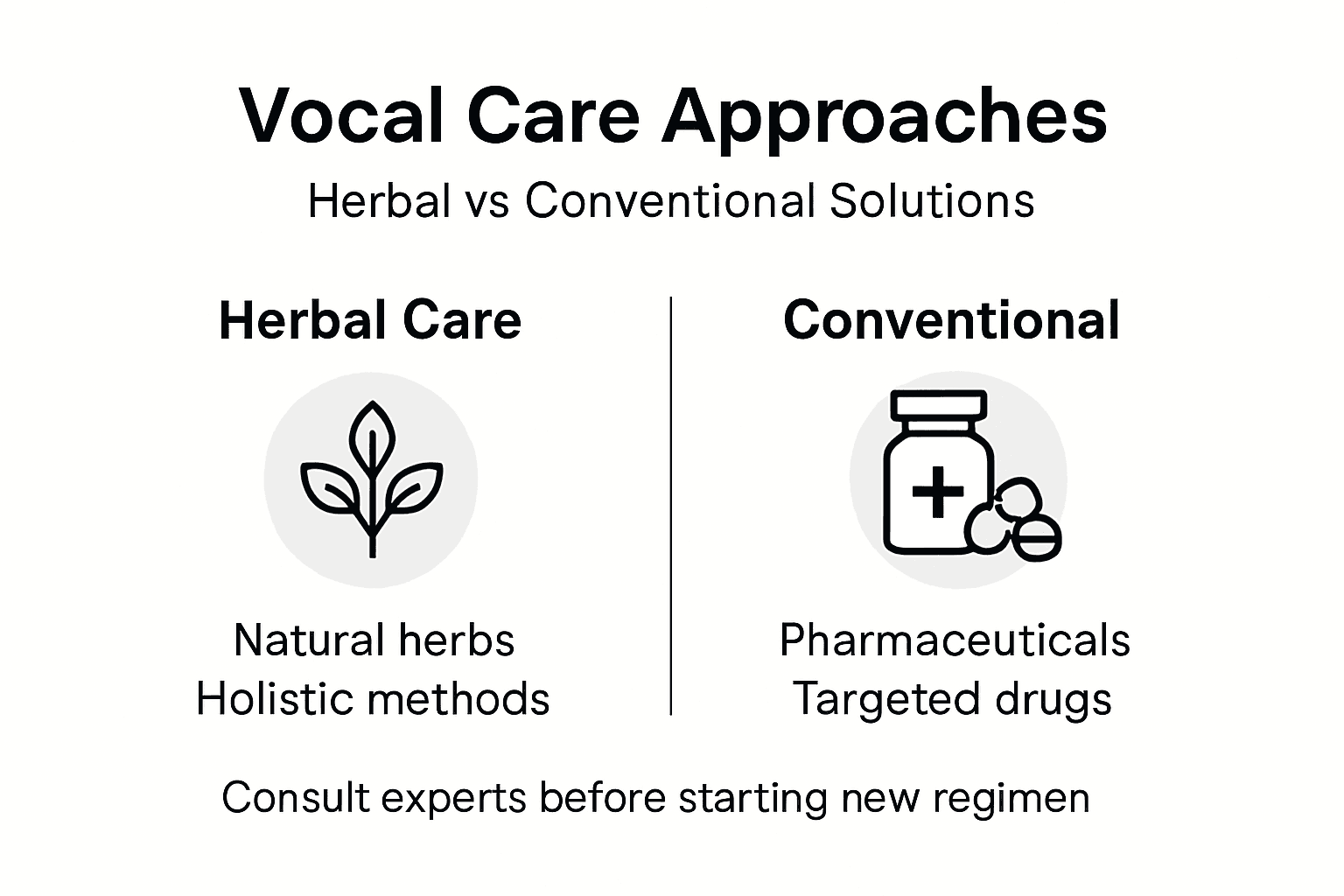
Conventional treatments often employ targeted pharmaceutical solutions like corticosteroids, antibiotics, or synthetic anti-inflammatory medications. These approaches provide rapid symptom relief but may introduce potential side effects such as hormonal disruptions, immune system suppression, or long-term physiological complications. In contrast, herbal remedies work through more subtle, comprehensive mechanisms. Natural compounds interact with the body’s inherent healing processes, supporting tissue regeneration, reducing inflammation, and enhancing overall vocal tract resilience without the harsh biochemical interventions associated with synthetic medications.
The integration of herbal and conventional approaches represents an emerging paradigm in vocal health management. Rather than viewing these strategies as mutually exclusive, progressive practitioners recommend a synergistic model that combines the immediate therapeutic benefits of conventional treatments with the long-term supportive properties of herbal remedies. This balanced approach allows voice professionals to address acute vocal challenges while simultaneously promoting underlying tissue health and preventing future complications. By understanding the unique strengths of both treatment modalities, singers and vocal performers can develop personalized care strategies that optimize vocal performance and longevity.
Here’s how herbal and conventional approaches to vocal care differ:
| Aspect | Herbal Approach | Conventional Approach |
|---|---|---|
| Primary focus | Overall vocal wellness | Symptom relief |
| Typical onset | Gradual, long-term | Rapid, short-term |
| Common side effects | Mild or rare | Potentially significant |
| Mechanism | Systemic, holistic | Targeted, symptom-specific |
Pro Tip: Consult with healthcare professionals who understand both herbal and conventional treatment approaches to develop a comprehensive, personalized vocal health strategy.
Struggling with vocal strain or hoarseness can be frustrating when your voice is your most important tool. This article highlights how natural herbal solutions target inflammation and irritation while supporting long-term vocal resilience. If you want to embrace a holistic approach that soothes and protects your voice using time-tested botanical remedies such as chamomile and licorice root, it is time to explore effective options designed specifically for vocal professionals.

Discover premium natural formulations and targeted enhancements at Singer Enhancements - TMRG Solutions crafted to meet your unique vocal needs. With over 25 years of expertise, we are dedicated to helping you alleviate vocal fatigue and maintain healthy vocal cords using safe, proven herbal remedies. Don’t wait until discomfort affects your performance. Visit https://tmrgsolutions.com now to explore our full range of solutions or browse through All Products - TMRG Solutions and take the first step toward restoring your voice naturally.
Herbal solutions support vocal health by reducing inflammation, soothing throat irritation, and promoting healing within the vocal tract. Key herbs like marshmallow root, slippery elm, and licorice root contribute unique therapeutic properties that help manage vocal strain and enhance overall voice resilience.
You can integrate herbal remedies into your vocal care through various formats such as herbal teas, throat sprays, lozenges, and tinctures. Consistency is key, so consider developing a personalized routine that addresses your specific vocal needs and health conditions.
While herbal solutions are generally considered safe, individual responses can vary. It’s essential to monitor your body’s reactions and consult a vocal health professional before introducing new herbal remedies, especially regarding dosage and potential allergies.
Herbal remedies focus on holistic support and long-term vocal wellness, while conventional treatments often provide rapid symptom relief. By combining both approaches, voice professionals can address immediate vocal challenges while promoting overall health and recovery in the vocal tract.
