Your Cart is Empty


A rough or strained voice can disrupt even the most prepared performance, leaving singers and vocal coaches searching for answers. Hoarseness is more than a fleeting nuisance—it reflects how complex and sensitive vocal health truly is. Many overlook its true nature, assuming it means immediate vocal damage, when in reality it often signals your instrument needs recovery and respect. Discover clear strategies and natural approaches designed for optimal vocal longevity and artistry.
| Point | Details |
|---|---|
| Understanding Hoarseness | Hoarseness is a common vocal condition not always indicative of serious damage and often requires targeted management strategies. |
| Types of Hoarseness | Different types of hoarseness have distinct causes, such as acute laryngitis or vocal cord nodules, requiring specific responses. |
| Vocal Health Risks | Environmental factors and personal performance behaviors significantly contribute to vocal strain and should be proactively managed. |
| Prevention Strategies | Preventive measures, like adequate hydration and proper warm-ups, combined with natural recovery techniques, are essential for vocal longevity. |
Hoarseness is a complex vocal condition characterized by unexpected changes in voice quality, pitch, and resonance. Most professional vocalists misunderstand hoarseness as simply a temporary vocal strain, when in reality, it represents a nuanced physiological response involving multiple potential triggers. Understanding vocal cord changes reveals how intricate vocal health can be.
Contrary to popular belief, hoarseness is not always a sign of serious vocal damage. It frequently occurs as a natural protective mechanism signaling that your vocal mechanism needs rest and care. About 1 in 3 people experience hoarseness at some point, making it remarkably common among singers, speakers, and voice professionals. The voice might sound rough, breathy, or strained - indicating potential underlying factors ranging from minor infections to more complex anatomical issues.
Common misconceptions about hoarseness include believing that pushing through vocal fatigue will improve performance or that complete vocal rest is always the best treatment. In reality, strategic vocal management and understanding your body’s signals are crucial. Professional vocalists need targeted approaches that address the specific cause of hoarseness, whether it stems from viral infections, acid reflux, excessive speaking, or environmental irritants.
Pro Tip: Monitor your vocal fatigue by recording practice sessions and listening objectively to identify early signs of strain before hoarseness develops.
Hoarseness represents a complex vocal condition with multiple underlying causes, ranging from minor irritations to more serious structural changes. Vocal cord lesions and infections can significantly impact a vocalist’s performance and overall vocal health. Professional singers must understand the diverse origins of hoarseness to develop appropriate management strategies.
The primary types of hoarseness stem from several key categories. Acute Laryngitis typically results from viral infections or allergic reactions, causing temporary inflammation and vocal strain. Vocal Cord Growths include benign structures like nodules, polyps, and cysts that develop from repeated vocal stress or improper technique. More serious structural issues might involve neurological disorders or rare malignancies that require immediate medical intervention.
Vocal professionals encounter different hoarseness manifestations based on specific triggers. Overuse syndromes develop from prolonged speaking or singing without proper technique, while reflux-related hoarseness emerges from stomach acid irritating vocal cord tissues. Environmental factors such as dry air, smoking, and excessive alcohol consumption can also contribute to chronic vocal changes. Understanding these nuanced causes helps vocalists develop targeted prevention and recovery strategies.
Pro Tip: Create a vocal health journal tracking practice intensity, hydration levels, and any subtle voice changes to identify potential hoarseness triggers early.
Here’s a quick guide to common types of hoarseness and their distinguishing traits:
| Type of Hoarseness | Typical Cause | Distinctive Features |
|---|---|---|
| Acute Laryngitis | Viral or allergic reaction | Sudden onset, temporary loss |
| Vocal Cord Nodules | Repetitive vocal strain | Gradual, rough and breathy |
| Polyps or Cysts | Overuse or injury | Isolated, persistent hoarseness |
| Reflux-Related Changes | Acidic irritation | Mornings worse, sensation of lump |
| Neurological Disorders | Nerve dysfunction | Weak, monotone, low volume |
Hoarseness is not a static condition but a dynamic process that evolves through distinct stages of vocal deterioration. Physiological vocal changes reveal how seemingly minor vocal strain can progressively compromise vocal performance and health. Understanding these progression stages is crucial for professional vocalists seeking to maintain optimal vocal integrity.
Initial stages of hoarseness typically manifest as subtle vocal changes. Early Symptoms include slight breathiness, reduced vocal range, and increased vocal fatigue. As the condition advances, singers may experience more pronounced issues like inconsistent pitch control, reduced vocal resonance, and diminished vocal endurance. The vocal mechanism begins to compensate for underlying irritation, creating compensatory tension that can further stress the vocal apparatus.

Progressive hoarseness follows a complex trajectory influenced by multiple factors. Persistent inflammation can lead to structural changes in vocal cord tissues, potentially developing into more serious conditions like nodules, polyps, or chronic laryngitis. Environmental factors, repeated vocal misuse, and underlying health conditions accelerate this progression. Professional vocalists must recognize these warning signs and implement strategic interventions to prevent long-term vocal damage and maintain their instrument’s optimal performance.
Pro Tip: Conduct weekly vocal assessments by recording practice sessions and critically analyzing any emerging changes in voice quality, range, or endurance.
Professional vocalists face a complex landscape of vocal health challenges that extend far beyond simple performance concerns. Occupational voice strain represents a critical threat to career sustainability and personal well-being. Understanding these intricate risk factors becomes paramount for musicians, teachers, actors, and other voice professionals seeking long-term vocal resilience.
Environmental Triggers play a significant role in vocal deterioration. Factors like persistent dry air, frequent air conditioning, excessive background noise, and poor acoustic environments can systematically compromise vocal cord health. Professional voice users often work in challenging settings that demand prolonged vocal projection, creating cumulative stress on the delicate vocal mechanism. Workplace conditions such as speaking over loud sounds, teaching in noisy classrooms, or performing in poorly designed acoustic spaces dramatically increase the potential for vocal damage.
Beyond environmental challenges, Personal Performance Behaviors emerge as crucial risk determinants. Vocal hyperfunction, characterized by excessive muscular tension during speaking or singing, represents a primary pathway to potential vocal disorders. Improper breathing techniques, inadequate hydration, inconsistent warm-up routines, and pushing vocal limits without strategic recovery create a perfect storm for chronic vocal issues. Professionals who ignore early warning signs like slight raspiness, reduced vocal range, or increased vocal fatigue are particularly vulnerable to long-term performance limitations.
Pro Tip: Develop a comprehensive vocal health log documenting daily vocal load, hydration intake, environmental conditions, and any emerging vocal sensations to proactively manage your vocal instrument.
Addressing hoarseness requires a strategic and holistic approach that combines preventive techniques and natural recovery methods. Vocal health prevention strategies offer professional vocalists critical insights into maintaining optimal vocal performance and avoiding long-term damage.
Prevention begins with understanding and mitigating key risk factors. Hydration Management plays a crucial role in vocal cord health, with professionals recommended to maintain consistent fluid intake and minimize dehydrating substances like caffeine and alcohol. Environmental control becomes equally important, involving strategies such as using humidifiers, avoiding excessive air conditioning, and creating vocal-friendly workspaces that minimize strain and irritation. Professional vocalists should implement comprehensive warm-up routines, practice proper breathing techniques, and develop awareness of vocal limitations.
Natural recovery approaches focus on providing targeted support for vocal healing. This includes voice rest, strategic vocal exercises, herbal remedies, and addressing underlying health conditions that might contribute to hoarseness. Steam inhalation, gentle throat massages, and consuming anti-inflammatory foods can support natural healing processes. Professionals must learn to recognize early warning signs and respond with immediate, appropriate interventions to prevent minor vocal issues from escalating into more serious conditions.
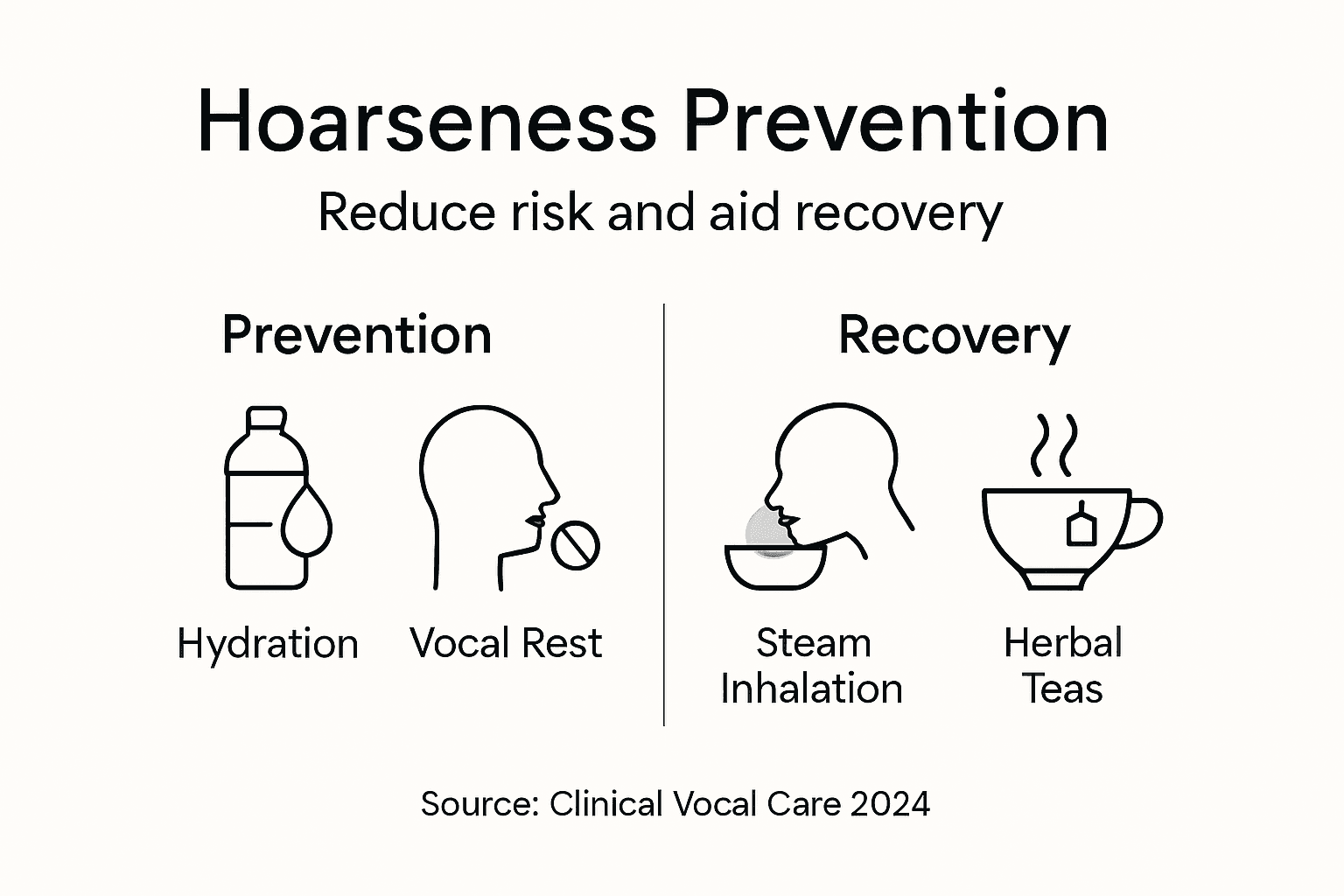
Pro Tip: Create a personalized vocal recovery kit with herbal teas, throat lozenges, a portable humidifier, and a vocal rest journal to systematically track and support your vocal health.
Below is a summary of effective prevention and natural recovery strategies for vocal professionals:
| Prevention Strategy | Recovery Method | Expected Benefit |
|---|---|---|
| Adequate hydration | Voice rest | Reduces irritation |
| Humidifier use | Steam inhalation | Soothes vocal cords |
| Proper warm-ups | Herbal remedies | Speeds healing, eases symptoms |
| Limit irritants | Throat massage | Prevents and relieves strain |
| Technique awareness | Anti-inflammatory diet | Minimizes recurrent hoarseness |
Hoarseness develops gradually and can significantly impact your vocal health if not addressed early. This condition often results from complex factors such as vocal overuse, environmental irritants, or underlying health issues. If you are a singer, actor, or any voice professional feeling vocal fatigue or noticing subtle changes in your voice, it is crucial to act now to prevent further damage and support natural recovery. Our specialized range of Singer Enhancements is designed to restore vocal strength and clarity using natural remedies trusted by professionals.

Discover proven voice therapy kits, soothing sprays, nourishing oils, and tailored dietary guides that help maintain your vocal resilience. Benefit from over 25 years of expertise with products that address hoarseness at its root. Don’t let vocal strain limit your potential Visit https://tmrgsolutions.com today to explore our full collection of All Products and take the first step toward reclaiming a healthy, powerful voice.
Initial signs of hoarseness include slight breathiness, reduced vocal range, and increased vocal fatigue. Identifying these early symptoms can help prevent further vocal deterioration.
Hoarseness progresses from subtle changes to more significant issues like inconsistent pitch control, reduced resonance, and diminished vocal endurance. Persistent inflammation can lead to structural changes in the vocal cords if not managed properly.
The main causes of hoarseness for vocal professionals include acute laryngitis from infections, vocal cord growths from repeated strain, reflux-related irritation from stomach acid, and neurological disorders that affect vocal cord function.
Vocalists can prevent hoarseness by practicing good hydration management, using humidifiers, implementing proper warm-ups, avoiding environmental irritants, and being aware of their vocal limits to minimize strain.
