Your Cart is Empty


Vocal fatigue and unclear tone can sideline even the most talented singer or voice coach. Day-to-day habits, crowded environments, and small dietary choices add up quickly, often making strain and hoarseness a constant battle for professionals around the world. Whether you are recovering from vocal injury or just trying to keep your instrument at its best, understanding and refining the basics—like hydration, environment, warm-ups, and natural remedies—can transform your vocal clarity and endurance.
| Key Point | Explanation |
|---|---|
| 1. Assess Your Vocal Habits | Document how you use your voice daily to identify strengths and weaknesses before making changes. |
| 2. Prioritize Proper Hydration | Drink plenty of water consistently, particularly before and during heavy voice use to maintain vocal fold moisture. |
| 3. Implement a Vocal Warm-Up Routine | Establish a consistent warm-up to prepare your voice and reduce the risk of injury before singing or speaking exercises. |
| 4. Use Natural Remedies Wisely | Integrate steam inhalation, herbal teas, and throat sprays into your routine for ongoing vocal health support. |
| 5. Regularly Monitor Vocal Changes | Keep a voice journal to track hydration, vocal clarity, and stress levels, helping to adjust your routine as needed. |
Before you can improve your vocal clarity, you need to understand exactly what’s happening with your voice right now. This means taking an honest look at your daily vocal patterns, recognizing early warning signs, and identifying habits that might be holding you back. Think of this as creating a baseline for your voice, much like checking your vocal health before starting any training program.
Start by documenting how you use your voice throughout a typical day. Do you speak loudly over background noise? Do you rush through phrases or hold tension in your neck and shoulders while singing? Are you pushing hard to reach high notes, or do you ease into them naturally? Pay attention to when your voice feels strongest and when it starts to fade. Many professionals don’t realize they’re creating unnecessary strain until they actually track these patterns. Write down specific moments: the morning meeting where you had to project your voice, the afternoon rehearsal that left you tired, the evening performance that felt effortless. These observations reveal your real habits, not the ones you think you have.
Next, listen for the signs that something isn’t working properly. Hoarseness, a rough or scratchy quality, loss of vocal range, difficulty hitting notes you could reach yesterday, or throat discomfort are all red flags that shouldn’t be ignored. You might also notice your voice cracks inconsistently, sounds thin or breathy, or requires more effort than it used to. Signs of voice issues can develop gradually, so catching them early makes a real difference. If you’re experiencing persistent hoarseness lasting more than two weeks, frequent vocal fatigue, or pain when speaking or singing, these warrant professional evaluation from an otolaryngologist or speech-language pathologist.
Consider how you recover between vocal demands. Do you give yourself adequate rest after performances or heavy speaking days? Are you staying hydrated, or do you push through dry throat sensations? Do you clear your throat forcefully, which can traumatize your vocal folds? Understanding how voice misuse and overuse create problems helps you connect your daily choices to the results you’re experiencing. Some professionals develop nodules or other structural issues simply because they’ve never learned to use their voice efficiently. Your vocal habits either build clarity and strength or gradually erode it.
Here’s a quick reference on common vocal problems and what they may indicate:
| Symptom | Possible Cause | Recommended Action |
|---|---|---|
| Hoarseness | Vocal strain or misuse | Evaluate habits, get rest |
| Vocal fatigue | Overuse, poor technique | Hydrate, limit vocal demands |
| Range loss | Swelling, acid reflux, tension | Adjust diet, use gentle warm-ups |
| Scratchy throat | Dehydration, irritants | Increase water, avoid smoke/alcohol |
| Cracking voice | Muscle tension, poor support | Relax body, strengthen breath control |
Also examine the environment you work in. Dry air, excessive background noise, poor lighting that creates tension, or lack of proper warm up space all influence how you must use your voice. A singer performing in a dry venue naturally compensates by pushing harder, which creates strain. A speaker in a noisy room raises volume unconsciously. A voice coach teaching back-to-back lessons without breaks accumulates fatigue. Identifying these environmental factors shows you what’s situational versus what’s truly a technique problem.
Pro tip: Record yourself speaking and singing in different situations over one week, then listen back with fresh ears to identify patterns you’re missing in the moment. Your ears hear intention; recordings reveal reality.
Your vocal folds need moisture to function at their best, and what you consume directly affects how they perform. Think of your body as the instrument and your diet as the maintenance plan. By adjusting your hydration and food choices, you’re creating an environment where your voice can be clear, powerful, and resilient. This step focuses on practical changes you can implement immediately to support vocal health from the inside out.
Start with water. Your vocal folds rely on consistent hydration to stay supple and vibrant. When they’re dry, they become irritated, strained, and vulnerable to injury. Aim to drink plenty of water throughout your day, especially on days when you’re using your voice intensively for performances, teaching, or public speaking. A good baseline is half your body weight in ounces daily, but increase this significantly when you’re actively using your voice. The challenge many professionals face is that hydration isn’t immediate. You can’t drink water thirty minutes before a performance and expect optimal vocal fold moisture. Hydration works over time, so consistency matters more than occasional large intakes. Spread your water consumption throughout the day, starting from the moment you wake up. Your vocal folds will thank you with clearer tone, easier transitions, and reduced fatigue.
Now understand what works against hydration. Caffeine and alcohol are both dehydrators that can compromise vocal fold function. Coffee, tea, and energy drinks pull moisture from your system, which means your vocal folds lose hydration even as you’re using them intensively. Alcohol has the same drying effect, sometimes even more pronounced. This doesn’t mean you must eliminate these entirely, but be strategic. If you have a performance or heavy speaking day coming up, reduce or avoid these beverages for at least 24 hours beforehand. If you do consume them, drink extra water to offset the dehydrating effects. Many singers find that cutting caffeine the day before a major performance dramatically improves vocal clarity and reduces strain.
Maintaining proper vocal hygiene through diet extends beyond water to the foods you actually eat. Certain foods trigger acid reflux, which silently damages your vocal folds even when you’re not singing. Spicy foods, acidic foods like citrus and tomatoes, fatty or greasy foods, and anything that upsets your stomach can all contribute to reflux that irritates your vocal mechanism. Keep a simple food journal for a week and note which meals leave your voice feeling strained or uncomfortable. Common culprits include hot peppers, pasta with acidic sauce, chocolate, mint, and large meals eaten close to bedtime. You don’t need to avoid all of these forever, but knowing your personal triggers lets you make informed choices around vocal demands.
Build your daily diet around vocal health. Lean proteins, whole grains, fresh vegetables, and fruits create stable energy without triggering reflux. Foods rich in antioxidants like berries and leafy greens support tissue health. Warm herbal teas like ginger or slippery elm can soothe and hydrate simultaneously, unlike dehydrating caffeinated teas. If you deal with reflux, avoid lying down for three hours after eating, and consider elevating the head of your bed slightly. These simple changes create a dramatically different vocal environment.
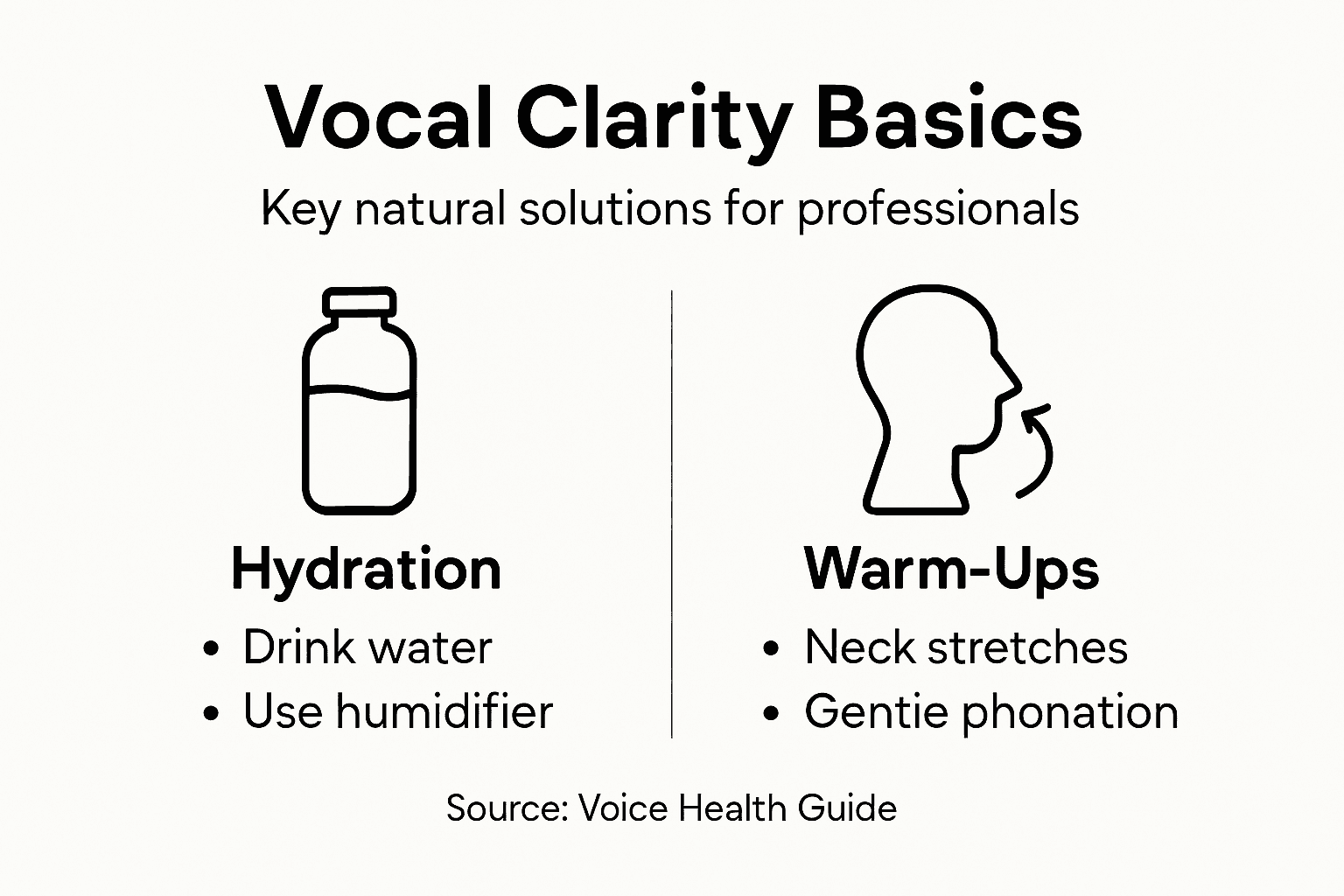
Implement a humidification strategy alongside your dietary changes. Dry air is an enemy to vocal fold health, so using a humidifier in your bedroom and practice space helps your body maintain moisture where it matters most. This becomes especially critical during winter months or in dry climates. The combination of internal hydration through smart drinking and eating, plus external moisture in your environment, creates optimal conditions for clear, healthy voice production.
Pro tip: Drink 16 ounces of water immediately upon waking and another 8 ounces every hour you’re actively using your voice, then track your vocal clarity for one week to see the direct impact of consistent hydration.
A proper warm-up prepares your voice and body for optimal performance while protecting your vocal folds from injury. Think of it as tuning an instrument before a concert. Without this preparation, you’re asking your voice to perform at full capacity when it’s essentially still asleep. This step teaches you how to build a warm-up routine that addresses your specific vocal demands and becomes an essential part of your daily practice.
Start by understanding what your warm-up should accomplish. Vocal warm-ups prepare your voice and body for singing or speaking by stretching and engaging the muscles involved in breathing, articulation, and resonance. A complete warm-up addresses several areas simultaneously. First, it stretches the large muscle groups in your neck, shoulders, and torso that support breath control. Tension in these areas directly transfers to your vocal folds, creating unnecessary strain. Second, it engages your articulators like your lips, tongue, and jaw with gentle movements and exercises. Third, it activates your vocal folds themselves through low-intensity phonation exercises. Finally, it helps you transition smoothly from your speaking voice into your singing register. Without this transition, you risk jarring your vocal folds with sudden shifts in pitch and intensity.
Build your routine around exercises that address these specific areas. Begin with physical stretches. Gently roll your shoulders backward, then forward, holding each for a few seconds. Tilt your head slowly to each side, feeling the stretch along your neck without forcing it. Extend your arms overhead and lean gently to each side. These movements release physical tension that otherwise restricts vocal fold mobility. Next, move to articulatory exercises. Open your mouth wide as if yawning, then close it slowly. Repeat this several times to relax your jaw. Then practice exaggerated lip and tongue movements: say “puh, puh, puh” with loose lips, allowing them to vibrate naturally. Make silly faces while vocalizing to engage facial muscles. These might feel awkward, but they directly loosen the mechanism that controls your sound quality.
Now address your vocal folds themselves with gentle phonation exercises. The yawn-sigh is one of the most effective warm-ups. Yawn deeply to engage your soft palate, then sigh downward on an open vowel like “oh.” This combination relaxes your vocal folds while producing gentle sound. Humming is equally valuable. Start on a comfortable middle note and hum gently, allowing the vibration to resonate through your face and head. This engages your vocal folds without force. Straw phonation deserves special attention. Insert a thin straw into your mouth (a coffee stirrer works perfectly) and phonation through it, creating back pressure that stabilizes your vocal folds while you move through your range. These exercises should feel effortless, never strained. If you’re pushing or straining, you’re defeating the purpose of the warm-up.

Progress to pitch-based exercises once your body feels loose and ready. Simple arpeggios on neutral vowels like “uh” or “oh” help your voice move smoothly through its range. Start low and gently expand upward, then back down. Never push toward your highest or lowest notes during warm-up. Your goal is preparation, not demonstration. Scale patterns, lip trills while ascending and descending, and tongue trills all build coordination and flexibility. The key is consistency. A ten-minute specialized warm-up done every single day creates vastly better results than a twenty-minute intensive warm-up done sporadically.
Tailor your warm-up to your specific vocal demands. A singer preparing for a two-hour performance needs different focus than a voice coach managing multiple back-to-back lessons or a public speaker presenting for an hour. If you’re dealing with strain recovery, emphasize gentle mobility over range exploration. If you perform in very dry environments, add humming and straw phonation to your routine because these exercises hydrate your vocal folds during warm-up. If you struggle with pitch accuracy, include more scale patterns and interval work. Your warm-up should feel like preparation, not a performance. The goal is to arrive at your actual performance or teaching with your voice ready, loose, and confident.
Pro tip: Perform your warm-up routine at the same time each day for one month, even on days you’re not performing, then notice how your baseline vocal clarity and endurance improve significantly.
Natural remedies and targeted voice care products work best when integrated strategically into your daily routine, not as emergency fixes when problems appear. This step shows you how to select and use remedies effectively to support vocal clarity, reduce strain, and accelerate recovery. Think of these tools as reinforcement for the habits you’ve already established through hydration, diet, and warm-ups.
Start with steam and humidity, which provide immediate relief and long-term protection. Inhaling steam opens your airways and moistens your vocal folds, counteracting the drying effects of performance environments and dry seasons. You don’t need expensive equipment. Boil water in a pot, drape a towel over your head, and breathe in the steam for five to ten minutes. Do this in the morning to prepare your voice for the day and in the evening to recover from vocal demands. A humidifier running in your bedroom while you sleep creates consistent moisture in the air your vocal folds are constantly exposed to. For traveling performers, a small portable humidifier becomes invaluable because hotel rooms and tour buses are notoriously dry. The moisture these tools provide directly improves vocal fold elasticity and reduces the irritation that leads to hoarseness and strain.
Salt water gargles offer targeted relief for throat irritation and mild inflammation. Mix one quarter to one half teaspoon of salt in warm water and gargle gently for thirty seconds, allowing the solution to reach your throat without forcing it down aggressively. Gargle two to three times daily, particularly after performances or heavy speaking days. Salt water reduces swelling and creates an environment hostile to bacterial growth without the harsh effects of stronger commercial products. This remedy costs pennies and requires no special ingredients, yet voice professionals rely on it consistently because it actually works.
Lozenges and throat sprays require careful selection. Non-mentholated lozenges can soothe vocal folds without triggering the numbing sensation that mentholated varieties create. Menthol creates a false sense of relief while potentially increasing irritation underneath the surface. Look for lozenges containing natural ingredients like honey, ginger, or slippery elm that actually coat and soothe your throat. Use them strategically after performances or when you notice early signs of hoarseness, but avoid relying on them as a substitute for actual rest and hydration.
Herbal remedies deserve mention, though approach them thoughtfully. Ginger tea warms and soothes your throat while providing anti-inflammatory benefits. Slippery elm creates a protective coating on your vocal folds and is particularly valuable during recovery from strain. Licorice root, used traditionally in many cultures, supports throat comfort. However, consult a healthcare provider before using herbal remedies, particularly if you take medications, because some herbs interact with pharmaceuticals or create unintended side effects. What works safely for one person might not be appropriate for another depending on your individual health profile.
Voice care oils and sprays formulated specifically for vocal professionals represent another category of support tools. Products designed to coat and protect your vocal folds during performance can reduce friction and strain when used before singing or speaking. Look for formulations using natural oils and avoid anything containing harsh chemicals or numbing agents that mask problems rather than solving them. Apply these products as directed, understanding they complement but never replace proper warm-ups, hydration, and rest.
The most critical principle is avoiding irritants that negate everything else you’re doing. Smoking, secondhand smoke, alcohol, and excessively dry air all damage vocal folds faster than remedies can repair them. If you’re using natural remedies while continuing to smoke or perform in extremely dry venues without addressing the root cause, you’re applying a bandage to a much larger problem. Your remedies work most effectively when combined with the environmental and behavioral changes from previous steps. A professional singer using all the right products but singing without adequate hydration and proper warm-ups still performs with unnecessary strain. Conversely, a singer with perfect hydration, technique, and warm-ups might use minimal remedies because prevention is far more powerful than treatment.
Pro tip: Create a weekly vocal care ritual combining steam inhalation, salt water gargles, herbal tea, and humidifier use on your heaviest vocal demand days to significantly reduce recovery time and maintain consistent clarity throughout the week.
Compare natural remedies and voice care products to help select the right support:
| Remedy/Product | Main Benefit | Best Use Timing | Notable Consideration |
|---|---|---|---|
| Steam inhalation | Moisturizes vocal folds | Morning/evening routine | Easy, inexpensive |
| Humidifier | Maintains airway moisture | Night/indoors | Portable options available |
| Salt water gargle | Reduces irritation/swelling | After heavy vocal demand | Avoid swallowing solution |
| Herbal tea (ginger) | Soothes, anti-inflammatory | Daily or as needed | Consult for interactions |
| Non-menthol lozenges | Coats and soothes throat | Temporary relief | Choose natural ingredients |
Improvement doesn’t happen through static practice. Your voice changes constantly based on stress, sleep, environmental factors, and vocal demands, so your routine must evolve accordingly. This step teaches you how to listen carefully to your voice, identify what’s working and what isn’t, and make intelligent adjustments that keep you progressing toward clarity and strength.
Start by establishing a baseline understanding of your voice’s normal state. When does your voice feel strongest? Is it right after your warm-up routine, midday after consistent hydration, or late afternoon after proper rest? Notice when clarity is sharpest and fatigue appears earliest. Record yourself speaking and singing under different conditions throughout one week. Morning recordings versus evening recordings reveal how fatigue and vocal demand accumulate. Compare recordings from quiet environments to recordings from noisy venues where you had to push harder. Compare recordings taken after good sleep versus recordings after nights with limited rest. These patterns show you your voice’s real response to different circumstances, not what you think is happening.
Monitor key indicators of vocal health and clarity. Pay attention to hoarseness, which often appears gradually before you consciously notice it. A voice that requires more effort than usual to produce is signaling that something has changed. If your range feels compressed or high notes feel strained when they usually feel effortless, your routine needs adjustment. Persistent throat discomfort, scratchy sensations, or vocal fatigue that doesn’t resolve with rest are red flags that warrant professional evaluation. Noticing changes in voice quality like hoarseness or strain allows you to address problems early before they develop into chronic issues. Many professionals wait until problems become severe before making changes, but early intervention prevents that escalation entirely.
Connect your observations to specific routine elements. When you notice your voice feeling particularly clear, work backward through your day. Did you hydrate more heavily? Did you warm up longer? Did you avoid speaking during a particular window that usually causes strain? Did you spend less time in a dry environment? Did you manage stress differently? These cause-and-effect connections reveal which elements of your routine generate the most benefit for your specific voice. What works for another singer might not be your answer. Your voice has unique characteristics and responds to specific practices. A voice coach who thrives on back-to-back lessons might need different strategies than a singer who performs once monthly. A professional speaker managing dry conference rooms needs different adjustments than a singer in humid concert venues.
Make deliberate changes to your routine based on observations, but change one element at a time so you can actually see the impact. If you simultaneously increase hydration, extend warm-ups, add a new remedy, and change your sleep schedule, you won’t know which change made the difference. Instead, try one adjustment for one week while keeping everything else consistent. Did that change improve clarity or fatigue? Did it create unexpected problems? Then implement that change permanently or abandon it, depending on results. Move to the next adjustment and repeat. This systematic approach builds a personalized routine that actually works rather than a collection of random practices.
Recognize that your routine needs seasonal and situational adjustments. Winter air is drier, so increase humidification and hydration during these months. If you travel to high altitude venues, increase water intake even more because altitude increases dehydration. If you’re recovering from illness or vocal strain, your routine looks different from your maintenance routine. If you’re preparing for an unusually demanding performance schedule, preventative practices need to intensify before the schedule arrives rather than scrambling once problems develop.
Consider working with a speech-language pathologist to objectively assess your progress. These professionals have tools to measure vocal quality changes that your ear might miss. They can identify patterns in your voice production that need adjustment and provide targeted exercises addressing your specific challenges. If you’re following this guide but not seeing the improvement you expected after several weeks, professional assessment reveals whether you need technique refinement, different exercises, or medical evaluation.
Pro tip: Keep a simple voice journal for four weeks, noting your daily hydration level, warm-up duration, stress level, vocal demands, and clarity rating on a scale of one to ten, then identify which factors correlate most strongly with your best days.
Struggling with hoarseness, vocal fatigue, or losing clarity during demanding performances is a common challenge for voice professionals. This article highlights how small but consistent changes in hydration, warm-ups, and vocal care create lasting improvement in vocal clarity. Now is the perfect moment to reinforce those healthy habits by exploring expert-backed natural remedies and performance enhancers designed specifically for your needs. Take control of your vocal health today with products that align perfectly with the strategies discussed here.

Visit Singer Enhancements - TMRG Solutions to discover specialized oils, sprays, and herbal formulations that soothe and strengthen your voice. Explore Improve resonance and voice quality - TMRG Solutions for tools that support breath control and vocal flexibility. Experience over 25 years of trusted expertise at TMRG Solutions where natural, effective vocal care products help you prevent strain and recover faster. Don’t wait until vocal discomfort affects your performance. Act now and give your voice the care it deserves.
Start by documenting how you use your voice throughout a typical day. Write down specific situations when your voice feels strong or weak, and pay attention to any signs of strain or discomfort.
Aim to drink half your body weight in ounces of water daily, and increase your intake on days when you use your voice intensively. Spread your water consumption throughout the day, starting in the morning, to maintain consistent hydration.
Incorporate stretches for your neck and shoulders, articulatory exercises, and gentle phonation techniques like humming and the yawn-sigh. Dedicate at least ten minutes each day to this warm-up routine to prepare your voice effectively.
Utilize steam inhalation and salt water gargles to soothe and hydrate your vocal folds. For best results, make these remedies part of your daily routine rather than relying on them only when problems arise.
Pay attention to changes in your voice such as increased hoarseness, unexpected vocal fatigue, or difficulty hitting notes. If you notice these issues, consider adjusting hydration, warm-up duration, or environmental factors to maintain clarity.
Keep a simple voice journal for four weeks, noting your hydration levels, vocal demands, and clarity ratings. This tracking will help you identify which factors correlate with your best vocal performance and guide necessary adjustments.
