Your Cart is Empty


TL;DR:
- Vocal cord fatigue results from overuse, inflammation, and irritation, leading to voice decline if unaddressed. Proper recovery involves strategic vocal rest, thorough hydration, early gentle exercises, and lifestyle adjustments to promote healing. Combining these methods speeds recovery and prevents long-term damage for voice users.
Vocal cord fatigue, clinically known as vocal fatigue or phonatory fatigue, is defined as the progressive decline in voice quality and increased effort required to produce sound after sustained vocal use. Singers, actors, teachers, and public speakers all face this condition regularly. The good news: most cases resolve within 1–4 weeks with the right combination of vocal rest, hydration, and targeted exercises. This guide covers every evidence-based method to relieve vocal cord fatigue, drawn from 2026 expert protocols at Yale Medicine, Cleveland Clinic, and leading voice science researchers.
Vocal fatigue occurs when the vocal folds, the two small muscle-covered bands of tissue inside your larynx, become inflamed and swollen from overuse or irritation. When that happens, your body compensates by recruiting surrounding neck and throat muscles to maintain phonation. That compensation increases strain and accelerates tissue damage.
Several conditions trigger or worsen this cycle:
Symptoms typically progress from mild hoarseness and voice breaks to complete voice loss if the underlying causes go unaddressed. Recovery timelines vary. Mild fatigue from a single heavy vocal day may resolve overnight. Acute laryngitis from a viral infection generally clears in 1–4 weeks with proper care. Chronic fatigue from repeated overuse without recovery can take months and may require professional voice therapy.
Vocal rest is the foundation of recovery, but the way you rest matters as much as the rest itself. Complete silence is not always the answer.
Follow these steps in order during the first days of recovery:
You can also find structured vocal rest schedules at Tmrgsolutions that align with these clinical guidelines.
Pro Tip: Use a whiteboard or a notes app on your phone to communicate during vocal rest periods. Removing the temptation to speak quietly or whisper protects your recovery far more than you might expect.
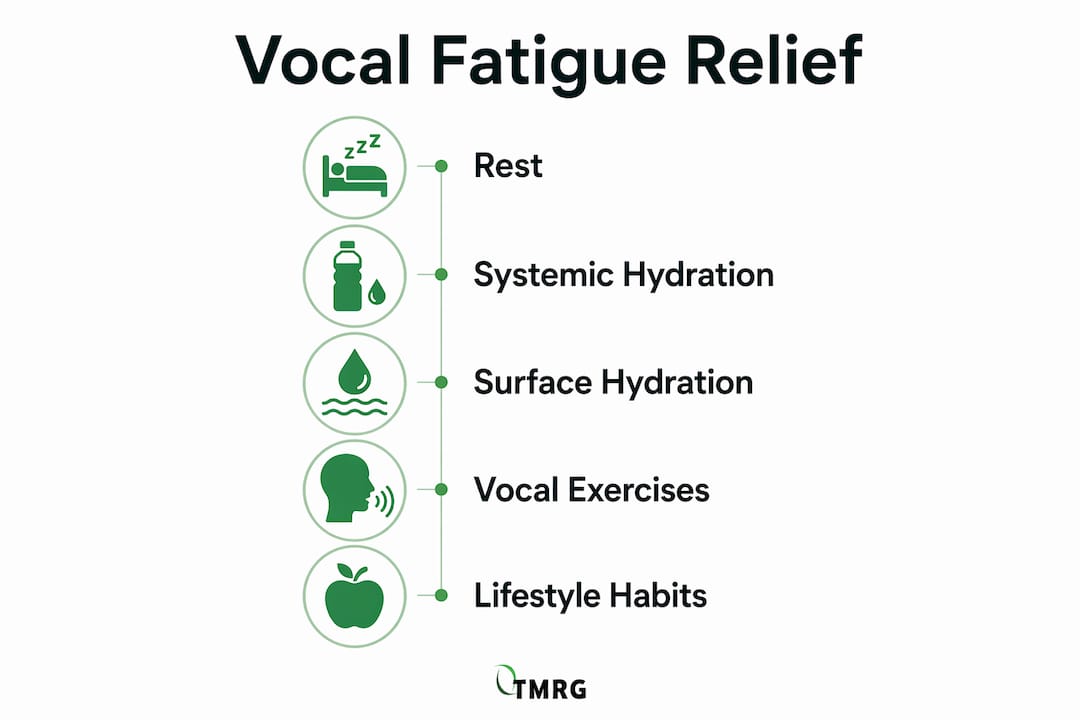
Hydration is not a single action. It operates on two levels: systemic hydration from drinking fluids, and surface hydration that reaches the vocal fold mucosa directly. Both are required.

Water is the most effective systemic hydrant for vocal tissue. Aim for at least 8–10 glasses per day during recovery, more if you are in a dry climate or have been speaking heavily. Warm water with honey is a time-tested option. Honey coats the throat and provides mild antimicrobial properties. Avoid caffeine and alcohol, both of which act as diuretics and pull moisture away from mucosal tissues.
Drinking water does not directly wet the vocal folds. The fluid must be absorbed systemically and transported to the tissue. Surface hydration methods bypass that delay.
| Method | How it works | Best for |
|---|---|---|
| Nebulized saline | Delivers 0.9% isotonic saline directly to vocal fold surfaces | Active recovery, pre-performance prep |
| Steam inhalation | Warm vapor moistens the laryngeal mucosa | Daily maintenance, morning recovery |
| Room humidifier | Raises ambient humidity to 40–50% | Overnight recovery, dry climates |
| Honey-based lozenges | Forms a protective film over throat tissue | Mild soreness, between speaking sessions |
Nebulized saline hydration at 0.9% isotonic concentration lowers phonation threshold pressure, meaning your vocal folds need less effort to vibrate. That reduced effort is exactly what fatigued tissue needs. A personal nebulizer device is a worthwhile investment for any professional voice user.
Menthol-based lozenges are drying and irritating to vocal tissue despite the temporary cooling sensation they provide. Choose pectin or honey-based lozenges instead. These form a protective, hydrating film over the mucosa rather than stripping moisture from it. You can find safe lozenge options at throat care pharmacies that stock OTC vocal health products.
Pro Tip: Run a cool-mist humidifier in your bedroom overnight during recovery. The hours you spend sleeping are prime time for tissue repair, and dry air undermines that process without you noticing.
For a deeper look at keeping vocal tissue hydrated long-term, Tmrgsolutions offers a complete hydration guide that covers both systemic and surface strategies.
The instinct to stay completely silent is understandable, but gradual vocal exercise combined with rest leads to better recovery than rest alone. Semi-occluded vocal tract exercises, or SOVTEs, are the clinical standard for early-stage vocal rehabilitation. They work by creating back-pressure in the vocal tract that gently stretches and massages the vocal folds without forcing them into high-impact collision.
Safe exercises to begin within 48–72 hours of rest:
Stop any exercise immediately if you feel pain, increased hoarseness, or throat tightness. Mild fatigue is normal. Discomfort is a signal to rest. Progress from these gentle exercises to light singing or extended speaking only when your voice feels consistently clear and effortless at the exercise level.
Recovery does not happen in isolation. The environment around you and the habits you maintain each day either support or undermine your vocal fold healing.
These habits compound over time. A singer or speaker who sleeps well, exercises regularly, and manages reflux will recover from vocal fatigue faster and experience it less frequently than one who addresses only the voice itself.
Relieving vocal cord fatigue requires combining strategic rest, systemic and surface hydration, early gentle exercises, and consistent lifestyle habits to restore vocal fold health effectively.
| Point | Details |
|---|---|
| Rest with a ratio, not a blanket | Apply 10 minutes of rest per 60 minutes of speaking rather than forcing prolonged silence. |
| Avoid whispering | Whispering increases vocal fold collision forces and slows recovery more than soft normal speech. |
| Hydrate on two levels | Drink water consistently and use nebulized saline or steam to hydrate vocal fold surfaces directly. |
| Start SOVTEs early | Lip trills, humming, and straw phonation within 48–72 hours accelerate recovery better than rest alone. |
| Address the full system | Sleep, nutrition, stress, and cardiovascular fitness all affect how quickly vocal tissue heals. |
The most common mistake I see is the all-or-nothing approach. Someone strains their voice, panics, and goes completely silent for a week. Then they jump back into full vocal use and wonder why they feel worse than before. The vocal folds are muscle-covered tissue. Like any muscle, they respond better to graduated loading than to complete shutdown followed by sudden demand.
The second mistake is treating hydration as just drinking water. Systemic hydration takes hours to reach the vocal fold surface. If you are about to perform or teach a long session, drinking a glass of water 10 minutes before does almost nothing for your vocal folds. A nebulizer session or steam inhalation 30 minutes before is far more effective.
I also want to push back on the idea that whispering is “giving your voice a rest.” It is not. The research is clear on this. Whispering creates abnormal tension across the vocal folds and can extend recovery time. If you are in a situation where you feel the urge to whisper, write it down instead.
The approach that consistently works is this: rest with intention, hydrate at both levels, introduce gentle exercises early, and treat your voice like the athletic instrument it is. Vocal users are like athletes who require proactive warm-ups and hydration to maintain performance. That mindset shift, from reactive to proactive, is what separates people who recover quickly from those who struggle repeatedly.
— Golan
When rest and hydration alone are not enough, targeted vocal health products can meaningfully accelerate your recovery.

Tmrgsolutions has spent 25+ years developing natural formulations specifically for singers, actors, speakers, and voice professionals. The TMRG Loud & Clear Voice Recovery Drops are designed to soothe and hydrate vocal tissue from within, complementing the rest and hydration strategies covered in this guide. For surface-level support, the TMRG Voice Therapy Kit Standard includes tools for a complete vocal rehabilitation protocol. Whether you are managing acute strain or building long-term vocal resilience, Tmrgsolutions offers solutions built around the same evidence-based principles described here.
Most cases of vocal fatigue resolve within 1–4 weeks with vocal rest, proper hydration, and avoidance of irritants. Severe or chronic fatigue may require professional voice therapy.
Whispering is not safe during vocal recovery. Whispering paradoxically increases vocal fold collision forces, making it more damaging than speaking softly in a relaxed, normal voice.
Pectin or honey-based lozenges are the best choice. Menthol-based lozenges dry and irritate vocal tissue, while pectin and honey form a protective, hydrating film over the mucosal lining.
Gentle semi-occluded vocal tract exercises like lip trills and humming are safe to begin within 48–72 hours of rest. Gradual exercise combined with rest produces better recovery outcomes than extended silence alone.
Drinking water hydrates the vocal folds systemically, not immediately. For direct surface hydration, use nebulized 0.9% isotonic saline or steam inhalation, which deliver moisture to the vocal fold mucosa far more quickly than drinking alone.
