Your Cart is Empty


Vocal fatigue and hoarseness can bring an unexpected halt to any singer’s or voice actor’s momentum. When your career depends on a clear, strong sound, ignoring strain puts future performances at risk. Vocal rest matters because it gives your vocal folds a chance to recover from constant vibration and trauma, reducing inflammation and allowing tissue repair. If you’re searching for natural ways to revitalize your voice in the United States or Canada, learning about vocal rest will help prevent lasting damage and restore your best sound quickly.
| Point | Details |
|---|---|
| Vocal Rest is Essential | Complete vocal rest allows for healing of the vocal folds and prevents further damage. Professional singers often adopt this practice to maintain vocal health. |
| Two Types of Vocal Rest | Complete vocal rest requires absolute silence, while relative vocal rest allows for minimal, gentle speech. Choose based on the severity of vocal strain. |
| Hydration is Crucial | Proper hydration combined with vocal rest significantly accelerates the healing process for vocal fold injuries. Aim for adequate water intake daily during recovery. |
| Early Intervention is Key | Initiating vocal rest at the first signs of hoarseness can drastically shorten recovery time. Do not wait for the voice to completely fail before acting. |
Vocal rest is straightforward in concept but profound in impact: it means stopping all speaking and singing to give your vocal mechanism a complete break. Think of it as hitting pause on your voice entirely. This isn’t casual quiet time where you’re still whispering or humming. True vocal rest means silence, allowing the tiny muscles and tissues in your larynx to recover without any vibration or strain. For singers and voice actors, this practice becomes essential when you’re dealing with hoarseness, inflammation, or that raspy quality that signals your voice is in distress.
Your vocal folds are remarkably delicate structures. These soft tissues vibrate thousands of times per second to create sound, and when overuse, illness, or injury occurs, they become inflamed and damaged. The voice production mechanism relies on precise coordination between your breathing, vocal fold movement, and resonance in your throat and mouth. When inflammation develops, even speaking casually creates what scientists call “vibratory trauma”—essentially, injured tissue being forced to vibrate when it needs healing. Vocal rest stops this trauma completely, allowing your body’s natural healing processes to reduce swelling and repair damaged cells without interference.
Why does vocal rest matter so much for your career? The recovery difference is measurable and significant. Vocal rest combined with hydration can dramatically reduce your recovery time after a cold or viral infection that causes hoarseness. Instead of pushing through multiple weeks of compromised vocal quality, proper rest might bring you back to performance condition in days. Many professional singers use vocal rest proactively before major performances or recordings, treating it as a strategy to let your voice reach its absolute peak potential. You’re also preventing serious complications—what starts as simple hoarseness can progress to nodules, polyps, or chronic laryngitis if you keep speaking and singing through the discomfort.
Pro tip: Start vocal rest early when you notice your voice feeling strained or hoarse, rather than waiting until your voice completely fails—catching problems in their early stages can mean recovering in days instead of weeks.
Not all rest is created equal when it comes to your voice. Understanding the different approaches to vocal rest allows you to choose the right strategy based on your situation, your performance schedule, and the severity of your vocal strain. The two primary categories of vocal rest exist on opposite ends of a spectrum, each serving different recovery needs.
Complete vocal rest means absolute silence. You stop speaking entirely, stop singing, stop humming, and avoid any sound production whatsoever. This is the most aggressive recovery approach and works best after surgery, severe illness, or when you have serious vocal damage like nodules or significant inflammation. During complete rest periods, you communicate using written notes, text messages, or gestures. This approach might feel extreme, but the results justify the temporary inconvenience. By eliminating all vocal fold vibration, you’re giving your voice the absolute maximum healing window. Many professional singers use complete rest for 2 to 7 days following major performances or recordings that pushed their voice hard. One critical point: whispering should be avoided because it actually stresses the vocal folds differently than normal speaking, potentially causing additional strain during what’s supposed to be a recovery period.

Relative vocal rest is more flexible and practical for singers who can’t completely step away from their lives. This approach means limiting voice use significantly while still speaking softly when absolutely necessary. You’re reducing volume, duration, and intensity of speaking. You avoid shouting, loud conversations, or extended talking sessions. You skip singing entirely, but brief, gentle speech for essentials is acceptable. Vocal naps, short periods of silence throughout your day, provide concentrated healing even during partial rest days. Think of vocal naps as strategic 15 to 30 minute pockets where you’re completely silent, spread across your day. If you have teaching responsibilities, performances scheduled, or simply can’t disappear from your life, relative rest offers a middle ground that still produces meaningful recovery without complete isolation.
Beyond these two categories, hydration and environmental humidity matter significantly. Drinking plenty of water and using a humidifier creates optimal conditions for your vocal folds to heal, regardless of which rest type you’re practicing. When you combine rest with hydration, your recovery timeline compresses noticeably.
Pro tip: Choose relative vocal rest for everyday maintenance and complete rest only when dealing with acute problems; switching to relative rest even one or two days per week prevents most vocal fatigue issues from becoming serious.
Here’s a comparison of the two main vocal rest types and when each is best used:
| Rest Type | Ideal For | Communication Method | Recovery Duration |
|---|---|---|---|
| Complete Vocal Rest | Severe damage, surgery | Written notes, gestures | 2–14 days |
| Relative Vocal Rest | Everyday voice strain | Gentle speech occasionally | 2–7 days |
When you stop using your voice, something remarkable happens at the cellular level. Your vocal folds, which have been vibrating thousands of times per second, finally get a break from the constant mechanical stress. This pause in vibration is where actual healing begins. The inflammation that accumulated from overuse or illness starts to subside because you’re no longer creating what happens with every phonation: small amounts of tissue trauma. Reducing mechanical trauma from vocal fold vibration is the foundation of vocal recovery. Without this cessation of movement, even the most robust hydration and supplementation can only do so much. Your body needs silence to repair what sound production has damaged.
The healing process unfolds in distinct phases once rest begins. During the first 24 to 48 hours, swelling and inflammation start decreasing as your body’s natural anti-inflammatory responses activate. The mucosal lining of your vocal folds, which may be raw or irritated, begins stabilizing. Around day three or four, actual tissue repair accelerates as your body increases blood flow to the damaged areas, delivering oxygen and nutrients needed for cellular regeneration. The vibratory cycle that was disrupted by swelling gradually normalizes. What’s happening isn’t passive waiting, it’s active biological repair. Your body is rebuilding collagen, restoring elasticity, and reestablishing the precise tissue structure that allows your voice to function optimally. When you maintain advanced vocal recovery strategies alongside rest, including hydration and supportive supplementation, this repair accelerates noticeably.
Beyond inflammation reduction and tissue repair, rest delivers a secondary benefit: it reduces vocal effort when you do return to speaking and singing. Swollen, irritated vocal folds require more muscular force to vibrate properly, which exhausts you faster and creates a sensation of strain. As swelling resolves through rest, your voice feels effortless again. You produce the same volume and quality with less physical exertion. This reduction in effort means you can sing longer, speak more comfortably, and maintain vocal quality throughout your day. Professional singers recognize this benefit immediately after even short rest periods. Your voice feels fresher, more responsive, and more controlled.
One critical reality: the healing timeline depends on severity. Mild hoarseness from a single performance or light illness might resolve in 2 to 3 days of relative rest. Moderate vocal fatigue typically requires 5 to 7 days. Serious inflammation or damage from surgery requires 1 to 2 weeks of complete rest. Chronic issues that developed over months or years need extended recovery periods, sometimes 3 to 4 weeks of consistent rest combined with proper care.
Pro tip: Start rest immediately when you notice hoarseness or strain, not after your voice completely fails, because early intervention shortens total recovery time dramatically.
Optimal rest isn’t just about silence. It’s a deliberate strategy that combines vocal cessation with supporting practices that maximize your voice’s recovery potential. Professional singers and actors who understand these practices consistently outperform peers who treat rest as an afterthought. The difference comes down to intentionality and timing.
The foundation of optimal rest begins with strategic timing before performances. Rather than resting only after vocal strain occurs, successful performers practice proactive rest. In the 24 hours leading up to a major performance, recording session, or demanding theater run, minimize all unnecessary talking. This isn’t about complete silence, but about conscious reduction. Skip social outings where you’d be shouting over background noise. Avoid lengthy rehearsals or teaching commitments the day before. This pre-performance rest strategy preserves vocal energy, allowing your voice to arrive at showtime at peak capacity rather than already fatigued. Some performers even implement vocal rest starting two days before critical performances for maximum vocal freshness.
Beyond rest itself, your environment and diet dramatically influence recovery outcomes. Proper hydration combined with vocal rest accelerates healing significantly. Drink consistently throughout the day, aiming for at least 8 to 10 glasses of water daily when you’re in rest periods. Equally important: avoid substances that dehydrate or irritate your vocal folds. Caffeine, alcohol, and dairy products can thicken mucus or cause irritation, undermining your rest efforts. While you’re resting your voice, your body still needs nutrition to repair tissue damage. Eat foods rich in vitamin C, zinc, and antioxidants. Ginger tea and honey support vocal health without strain. Sleep becomes your secret weapon during recovery periods. Your body performs most cellular repair during deep sleep, so prioritize 7 to 9 hours nightly when you’re actively recovering. Quality sleep combined with vocal rest accelerates healing dramatically compared to rest alone.
Implement vocal naps strategically throughout demanding weeks. Even 15 to 20 minutes of complete silence during your lunch break or between rehearsals provides measurable benefit. These micro rest periods prevent cumulative fatigue from building throughout the week. Think of them as interest payments on a vocal health investment. When you combine vocal health practices specifically designed for professional singers, including proper warm-up and cool-down techniques, with consistent rest periods, your vocal endurance increases noticeably. You can perform longer, maintain vocal quality across multiple shows, and recover faster between demanding weeks.
Pro tip: Schedule one complete rest day every two weeks year-round, not just when you’re sick, to prevent chronic fatigue and maintain consistent vocal performance quality throughout your career.
Skipping vocal rest or doing it incorrectly creates a cascade of problems that can derail your career. When you ignore the need for rest, you’re essentially asking damaged tissue to continue functioning under stress. The consequences aren’t immediate, which makes this particularly dangerous. You might feel fine for days or weeks while damage accumulates silently beneath the surface. By the time symptoms become obvious, what could have been resolved in a few days of proper rest may now require months of recovery.
The immediate risk from inadequate rest is prolonged hoarseness and vocal fatigue. Your voice sounds weak, raspy, or strained because inflammation never fully subsides. You lose range, power, and control. What should have resolved in 3 to 5 days of complete rest stretches into 2 to 3 weeks because you kept pushing. This isn’t just annoying for performers. It affects your ability to earn a living. Theater shows get canceled. Session work dries up. Recording sessions postpone. The financial impact compounds the vocal damage. Beyond hoarseness, inadequate rest allows vocal nodules, polyps, and cord dysfunction to develop. These aren’t minor issues. Nodules are small, benign growths that develop from chronic vibratory trauma. Polyps form from sustained inflammation. Both require professional intervention and potentially surgery to resolve. What could have been prevented with one week of proper rest now requires surgical removal and months of post-surgical recovery.
Improper rest creates additional complications beyond physical damage. Many singers make the critical mistake of whispering during rest periods, thinking it’s gentler than speaking. This is backwards. Whispering actually strains the vocal folds differently and can irritate them further. Some try partial measures, cutting talking in half but still singing. This doesn’t work. Your vocal folds don’t negotiate. Either you’re using them or you’re resting them. Attempting compromise creates a middle ground where damage continues at a slower pace. The healing window closes, recovery stalls, and frustration builds. Muscle tension dysphonia develops when you try to speak or sing while inflamed. Your laryngeal muscles compensate for the pain and swelling by tensing up. This creates a vicious cycle where tension makes phonation harder, causing more muscle compensation. Once this pattern establishes, breaking it requires dedicated vocal therapy even after inflammation resolves.
One often overlooked risk is perpetuating a cycle of recurring injury. If you never fully rest your voice during recovery, minor inflammation never completely resolves. Scar tissue begins forming. Your vocal folds lose some elasticity. The next vocal demand causes injury more easily because the tissue is already compromised. Singers find themselves getting hoarse more frequently, needing more recovery time between performances, and struggling with voices that never feel quite right. Understanding the various causes of hoarseness helps you recognize when rest is truly necessary rather than just when symptoms become unbearable.
Pro tip: Stop singing and minimize speaking the moment you notice hoarseness or vocal strain, rather than waiting to see if it resolves on its own, because rest started immediately prevents 80 percent of serious vocal problems from developing.
Rest stands alone as the foundation of vocal recovery, but it doesn’t work in isolation. Understanding how rest compares to other recovery methods helps you build a comprehensive strategy that addresses both immediate healing and long-term vocal health. Think of rest as the essential first step, not the only step. When you combine rest with complementary approaches, your recovery accelerates and your results improve dramatically.
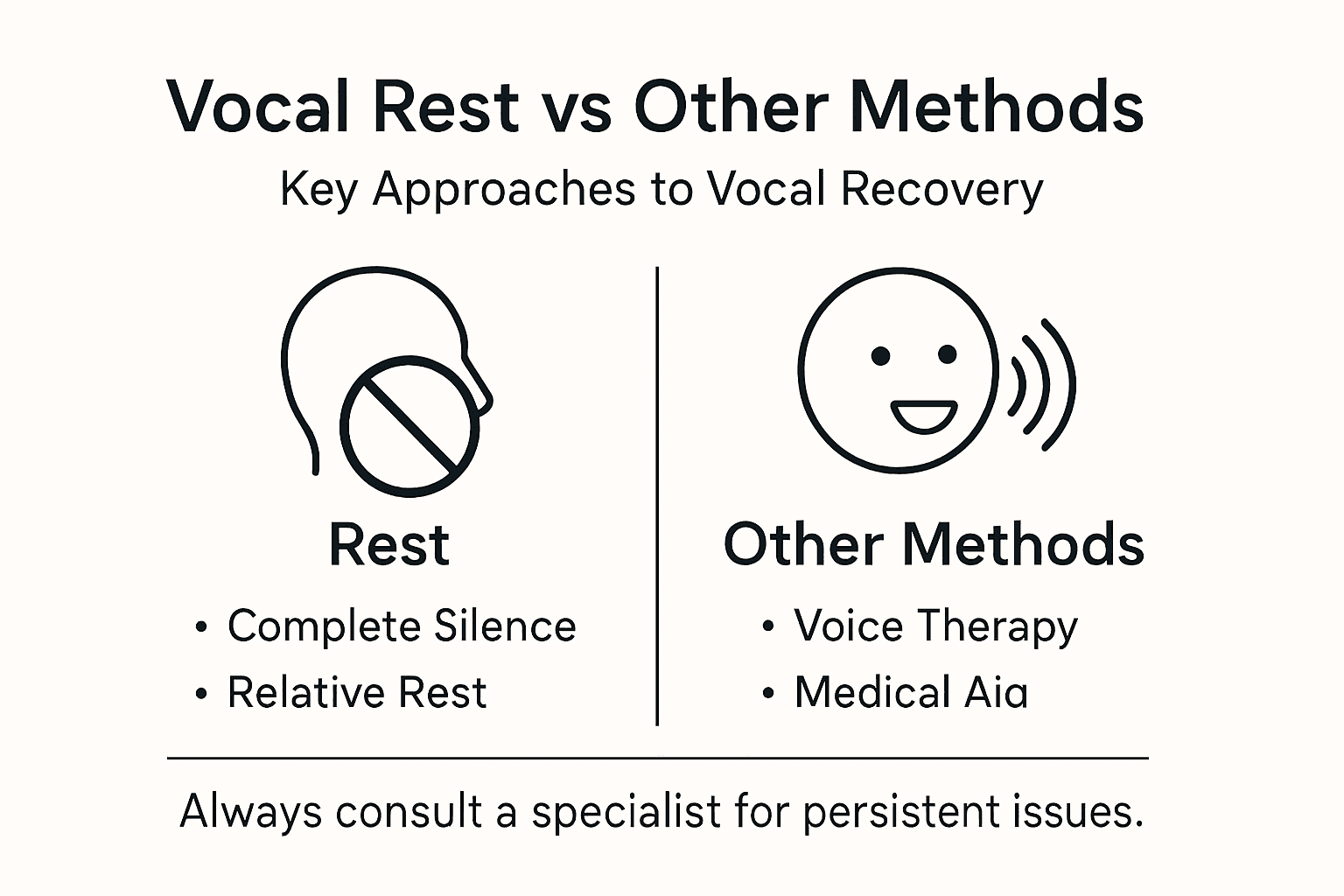
Rest versus voice therapy represents one of the most important distinctions for singers and actors. Rest addresses the immediate problem by halting ongoing damage and allowing inflammation to subside. It’s the emergency measure. Voice therapy, by contrast, teaches you how to use your voice more efficiently going forward. Rest can heal existing damage, but it doesn’t prevent future injury if you return to old vocal habits. This is why voice therapy teaches behavioral techniques to optimize voice use and prevent misuse. The ideal approach uses both: rest first to stop the bleeding, then voice therapy to ensure the injury doesn’t recur. Many singers rest for a few days, feel better, and immediately return to damaging patterns. Within weeks, they’re hoarse again. Those who combine rest with voice therapy learn safer techniques and rarely experience repeat injuries. You need rest to heal. You need therapy to stay healed.
Medical treatments and rest work synergistically. Some vocal problems stem from underlying conditions like acid reflux, allergies, or vocal cord dysfunction. Rest alone won’t fix these. You need medication or medical intervention targeting the root cause while rest removes the additional strain that compounds the problem. If reflux is irritating your vocal folds and you keep singing, inflammation worsens regardless of medication. Add rest to reduce mechanical irritation while medication addresses the chemical irritation, and healing accelerates noticeably. Similarly, voice therapy integrated with medical management produces optimal recovery outcomes, especially following surgery. Post-surgical rest protects the surgical site during initial healing. Then voice therapy prevents the behaviors that led to the original lesion. Medical intervention removes the lesion itself. All three components matter. None works optimally alone.
For singers specifically, hydration and vocal nourishment complement rest by creating optimal conditions for tissue repair. Rest stops damage. Hydration and proper nutrition fuel the repair process. Herbal support with ingredients like ginger, honey, and throat-soothing botanicals reduces inflammation while rest heals. Professional vocal recovery kits that combine these elements with rest protocols accelerate outcomes beyond rest alone. The timeline difference is measurable: rest plus comprehensive support might resolve moderate hoarseness in 3 to 5 days, while rest alone might require 7 to 10 days.
Pro tip: Use rest as your immediate intervention, then layer in voice therapy or medical treatment based on your specific problem to address both the immediate damage and prevent future recurrence.
Below is an overview of common recovery methods and their unique benefits:
| Recovery Method | Primary Benefit | Limits of Effectiveness | Best Used For |
|---|---|---|---|
| Vocal Rest | Reduces inflammation | Does not teach vocal technique | Immediate injury, strain |
| Voice Therapy | Prevents future misuse | Requires rest for acute injury | Long-term vocal health |
| Medical Treatment | Treats underlying cause | Requires rest for tissue repair | Chronic medical issues |
Rest is the cornerstone of healing vocal strain and inflammation as explained in this article. But true vocal recovery often requires more than just silence. If you are facing challenges like hoarseness, vocal fatigue, or inflammation, you need reliable, natural remedies that support your voice while you rest. Our Singer Enhancements - TMRG Solutions offer herbal sprays, oils, and supplements designed to work hand in hand with vocal rest to speed healing and reduce irritation.

Don’t let vocal problems delay your career or passion. Combine strategic vocal rest with targeted support from our selection of products tailored for voice professionals. Explore our full range of All Products - TMRG Solutions and discover how focused hydration and soothing natural remedies can protect and enhance your voice. Act now and protect your vocal health by visiting https://tmrgsolutions.com to find what your voice needs today.
Vocal rest is the practice of completely stopping all speaking and singing to allow the vocal folds to heal. It is important because it reduces inflammation and prevents further damage, enabling a faster recovery from hoarseness or strain.
Complete vocal rest should generally last between 2 to 14 days, depending on the severity of the vocal damage or strain. It is crucial to give your vocal folds the maximum healing time, especially after surgery or serious inflammation.
Complete vocal rest requires absolute silence with no voice use at all, while relative vocal rest allows for some gentle and soft speech when necessary. Complete rest is ideal for severe cases, whereas relative rest can help manage everyday voice strain.
Hydration plays a significant role in vocal recovery. Drinking plenty of water and maintaining humidity helps create the optimal conditions for the vocal folds to heal, significantly accelerating the recovery process when combined with vocal rest.
