Your Cart is Empty


Over half of American vocalists report experiencing hoarseness or vocal fatigue during demanding performance seasons. Whether you sing on stages across Europe or act in bustling Asian cities, your voice is your greatest asset and its strength directly impacts your career. This practical guide offers professional vocalists and performers worldwide natural, evidence-based steps to evaluate, care for, and enhance vocal cords so you can reduce strain and keep your voice in peak condition.
| Key Point | Explanation |
|---|---|
| 1. Assess your vocal health regularly | Conduct self-evaluations and consult professionals to identify areas needing improvement and devise strengthening strategies. |
| 2. Implement a daily warm-up routine | Engage in 15-20 minutes of targeted vocal exercises to enhance flexibility, control, and reduce the risk of strain. |
| 3. Maintain proper hydration and nutrition | Drink ample water and consume anti-inflammatory foods to keep vocal cords healthy and functional. |
| 4. Utilize natural remedies and supplements | Consider herbal solutions and nutrients like zinc and vitamin C to support vocal cord strength and reduce inflammation. |
| 5. Track your vocal progress systematically | Record practice sessions and critically evaluate your performance to identify improvements and areas for further development. |
Evaluating your vocal health starts with understanding your current voice performance and identifying potential challenges. Professional vocalists need a systematic approach to assess their vocal condition, focusing on breath control, resonance, and potential strain or fatigue. Proper vocal assessment techniques can help you pinpoint areas requiring improvement and develop targeted strengthening strategies.
Begin your vocal health assessment by performing a comprehensive self-evaluation. Record yourself speaking or singing to analyze your voice quality, checking for signs of strain such as hoarseness, inconsistent pitch, limited vocal range, or rapid vocal fatigue. Pay close attention to your breathing patterns and how air flows during vocalization. Notice if you experience tension in your neck, throat, or jaw muscles while speaking or performing. These physical signals can indicate underlying vocal cord stress or improper technique that may require targeted intervention.
Consider consulting a vocal health professional who can conduct a more detailed examination using specialized diagnostic tools. They can provide insights into your vocal cord condition, identify potential weaknesses, and recommend personalized exercises to enhance your vocal resilience. This professional assessment will complement your self-evaluation and help create a comprehensive strategy for vocal cord strengthening.
Pro tip: Keep a vocal health journal to track your voice performance, noting any changes in tone, range, or endurance. This systematic documentation will help you recognize patterns and measure improvements in your vocal conditioning over time.
Here’s a comparison of self-assessment versus professional vocal evaluation methods:
| Assessment Type | Tools & Techniques | Key Advantages | Potential Limitations |
|---|---|---|---|
| Self-Assessment | Recording, journaling | Immediate feedback, cost-effective | May overlook subtle issues |
| Professional Evaluation | Specialized diagnostics, expert analysis | Accurate diagnosis, personalized advice | Requires appointment, higher cost |
Designing an effective daily vocal warm-up routine is crucial for maintaining vocal strength and preventing potential strain or injury. Essential vocal warm-up techniques focus on preparing your respiratory system and vocal muscles for peak performance through strategic exercises that enhance flexibility and control.
Begin your warm-up routine with fundamental breathing exercises designed to strengthen your diaphragm and improve breath support. Start with deep diaphragmatic breathing where you place one hand on your chest and another on your abdomen, ensuring your belly expands more than your chest during inhalation. Progress through targeted exercises like lip trills, which help relax vocal muscles and create smooth airflow. These comprehensive breathing techniques will gradually increase your vocal range and reduce tension in your throat and neck muscles.

Consistent practice is key to developing vocal resilience. Incorporate a 15-20 minute warm-up sequence that includes humming, sirens, and gentle scale exercises to gradually increase vocal complexity. Always start softly and incrementally expand your vocal range, paying close attention to maintaining proper breath support and avoiding any sudden or forceful movements that could cause strain.
Pro tip: Record your warm-up sessions occasionally to track your vocal development and identify areas requiring additional focus or refinement.
Maintaining optimal vocal health requires more than just exercises. Your daily lifestyle choices play a critical role in supporting long-term vocal resilience and performance. Natural vocal health strategies encompass a holistic approach that considers nutrition, hydration, rest, and environmental factors affecting your vocal mechanism.
Hydration stands as a foundational element of vocal cord care. Drink at least eight glasses of water daily, focusing on room temperature water that allows your vocal tissues to remain supple and responsive. Avoid excessive caffeine and alcohol, which can dehydrate your vocal membranes and create additional strain. Incorporate vocal-friendly foods rich in anti-inflammatory properties like ginger, turmeric, and omega-3 fatty acids, which support overall throat health and reduce potential inflammation.
Protect your vocal environment by minimizing exposure to irritants such as smoke, extreme temperature changes, and loud background noise. Consider using a humidifier in dry environments to maintain optimal moisture levels for your vocal cords. Prioritize consistent sleep patterns and stress management techniques like meditation or deep breathing, as vocal performance is deeply connected to your overall physical and mental well being.
Pro tip: Create a dedicated vocal recovery zone in your living space where you can practice vocal rest and implement gentle vocal care routines away from potential environmental stressors.
The following table summarizes the effects of lifestyle habits on vocal performance:
| Lifestyle Habit | Positive Impact | Negative Consequence if Neglected |
|---|---|---|
| Hydration | Flexible vocal cords | Increased dryness, vocal fatigue |
| Nutrition | Reduced inflammation | Higher risk of throat irritation |
| Sleep | Enhanced recovery | Ongoing fatigue, weaker vocal tone |
| Environmental Care | Fewer irritants | Increased risk of throat inflammation |
Natural remedies and strategic supplementation can provide powerful support for vocal cord health and resilience. Understanding how herbal solutions interact with your vocal system will help you make informed choices about enhancing your voice naturally. Herbal solutions for vocal care offer targeted approaches to supporting vocal tissue and reducing inflammation.
Focus on supplements that directly benefit vocal cord strength and respiratory health. Key nutrients like zinc, vitamin C, and omega-3 fatty acids can help reduce inflammation and support mucous membrane health. Herbal supplements such as licorice root, marshmallow root, and slippery elm can provide natural throat protection and help soothe vocal tissues. Consider incorporating these supplements into your daily routine, always consulting with a healthcare professional to ensure they complement your specific health profile and vocal needs.
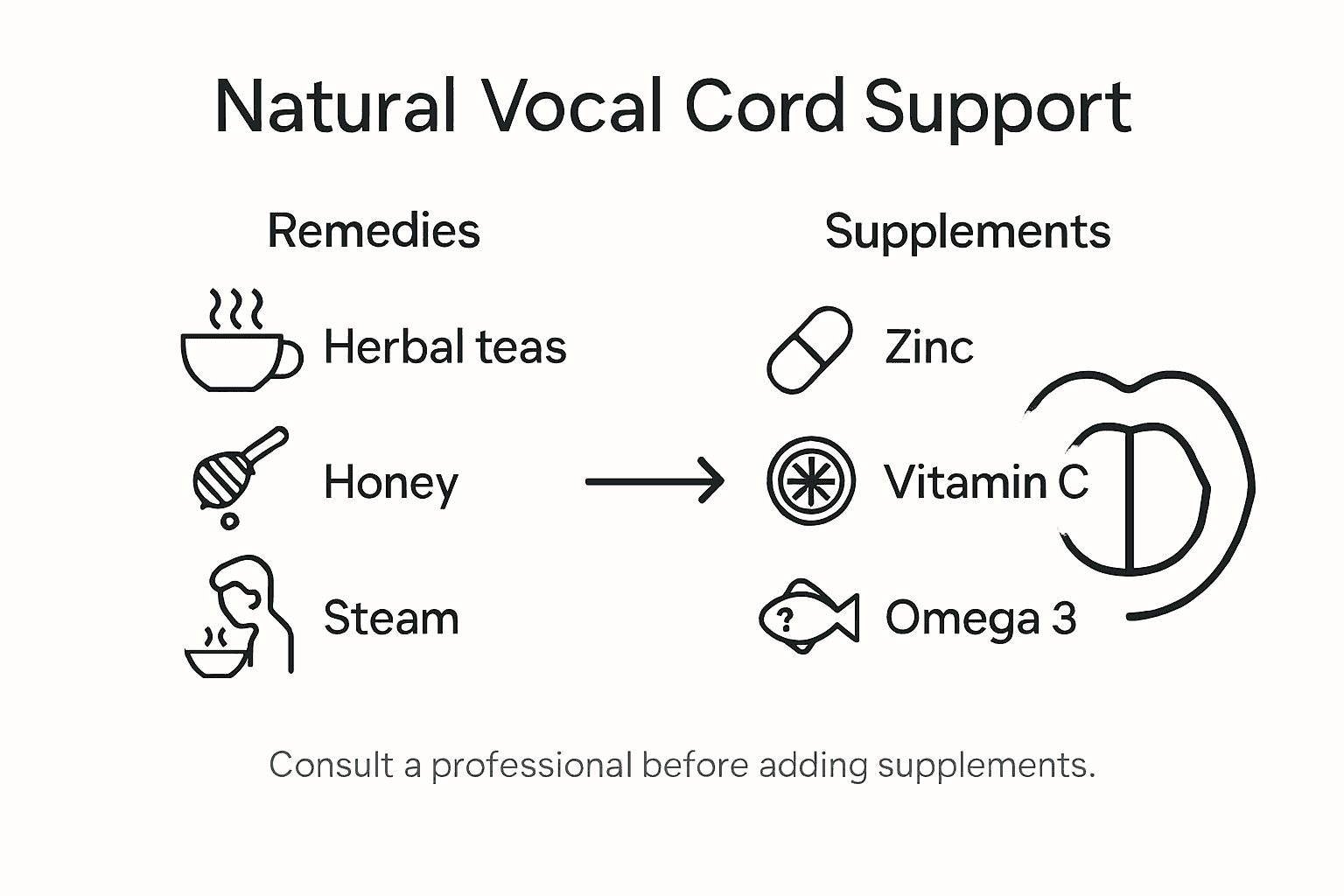
Implement a holistic approach by selecting high quality, organic supplements from reputable sources. Pay attention to your body’s response and adjust dosages carefully. Some singers find that specific herbal blends can help reduce throat irritation and support overall vocal resilience, making them valuable additions to a comprehensive vocal health strategy.
Pro tip: Maintain a detailed journal tracking your supplement intake, noting any changes in vocal performance or physical sensations to help you fine tune your natural remedy approach.
Tracking your vocal development requires a structured and objective approach to understanding your ongoing performance and potential areas of improvement. Essential breathing exercises and tracking methods are crucial for maintaining consistent vocal progress and preventing potential strain or performance plateaus.
Establish a systematic method of evaluation by recording your vocal practice sessions regularly. Use high quality audio recording equipment to capture your voice during warm-ups, practice routines, and actual performances. Listen critically to these recordings, paying attention to subtle changes in tone, breath support, resonance, and overall vocal clarity. Look for improvements in your sustained note length, vocal range, and the smoothness of your transitions between different vocal registers. Consider creating a comprehensive progress tracking spreadsheet that allows you to quantify improvements across multiple vocal parameters.
Remain flexible and willing to modify your vocal routine based on your observations. If you notice persistent challenges like vocal fatigue, inconsistent pitch, or reduced resonance, do not hesitate to revisit earlier steps in your vocal training process. Consult with vocal coaches or professional therapists who can provide expert insights into your specific vocal development needs. Remember that vocal improvement is a gradual journey requiring patience, consistent practice, and a willingness to adapt your approach.
Pro tip: Schedule quarterly comprehensive vocal assessments with a professional vocal coach to gain an external perspective on your progress and receive targeted recommendations for continued improvement.
If you are seeking lasting vocal power and want to protect your voice from strain and fatigue the strategies outlined in the article provide a solid foundation. However, combining these natural approaches with proven support can accelerate your progress and ensure your vocal cords stay healthy. At TMRG Solutions we specialize in providing natural remedies, targeted supplements, and voice therapy kits designed specifically for singers, actors, and voice professionals.

Explore our carefully curated range of Singer Enhancements crafted to ease inflammation, improve hydration, and support vocal cord resilience naturally. These herbal solutions work hand in hand with daily warm-ups and lifestyle changes to keep your voice strong and ready for performance. Take control of your vocal health now by visiting the All Products page. Start your journey toward lasting vocal power today with trusted expertise spanning over 25 years. Your voice deserves the best care and support available at tmrgsolutions.com.
To assess your vocal health, start by recording yourself speaking or singing to analyze your voice quality. Look for signs of strain, like hoarseness or limited vocal range, and maintain a vocal health journal to track your performance over time.
Incorporate a routine that includes deep diaphragmatic breathing, lip trills, and gentle scale exercises. Aim for a 15-20 minute warm-up session daily to improve your vocal flexibility and control, which can significantly enhance your vocal performance.
Maintain hydration by drinking at least eight glasses of water each day and prioritize a diet rich in anti-inflammatory foods. Establishing consistent sleep patterns and minimizing exposure to irritants can also promote optimal vocal resilience and prevent fatigue.
Yes, herbal supplements such as licorice root and slippery elm can soothe vocal tissues and support vocal cord health. Consider adding essential nutrients like zinc and vitamin C to your diet to help reduce inflammation and promote overall vocal strength.
Evaluate your vocal progress regularly by recording practice sessions at least once a week. Listening back will help you identify areas for improvement and adapt your routine as needed, ensuring you continue to develop your vocal abilities.
If you experience persistent challenges like vocal fatigue or pitch inconsistency, consult a vocal health professional for a thorough assessment. This expert evaluation can provide personalized insights and targeted strategies to strengthen your vocal cords effectively.
