Your Cart is Empty


Long hours on stage or in the studio often leave Canadian, American, and European performers searching for ways to restore their voice. The demands placed on professional singers and actors make ongoing vocal fatigue and discomfort a common challenge. Addressing this starts with understanding the principles of voice maintenance, which blends daily vocal hygiene, natural remedies, and expert strategies to protect and restore your vocal instrument for lasting career strength.
| Point | Details |
|---|---|
| Voice Maintenance is Essential | Implement daily practices to preserve vocal health and optimize performance. |
| Identify Vocal Strain Triggers | Recognize common causes of strain to develop effective prevention strategies. |
| Utilize Natural Remedies | Incorporate holistic approaches such as hydration and herbal supplements for vocal well-being. |
| Prioritize Consistent Care | Conduct regular assessments and maintain disciplined habits to prevent long-term vocal damage. |
Voice maintenance represents a comprehensive approach to preserving vocal health for professional performers, speakers, and vocal artists. Voice maintenance involves strategic practices designed to protect and optimize vocal function across physiological, technical, and psychological dimensions.
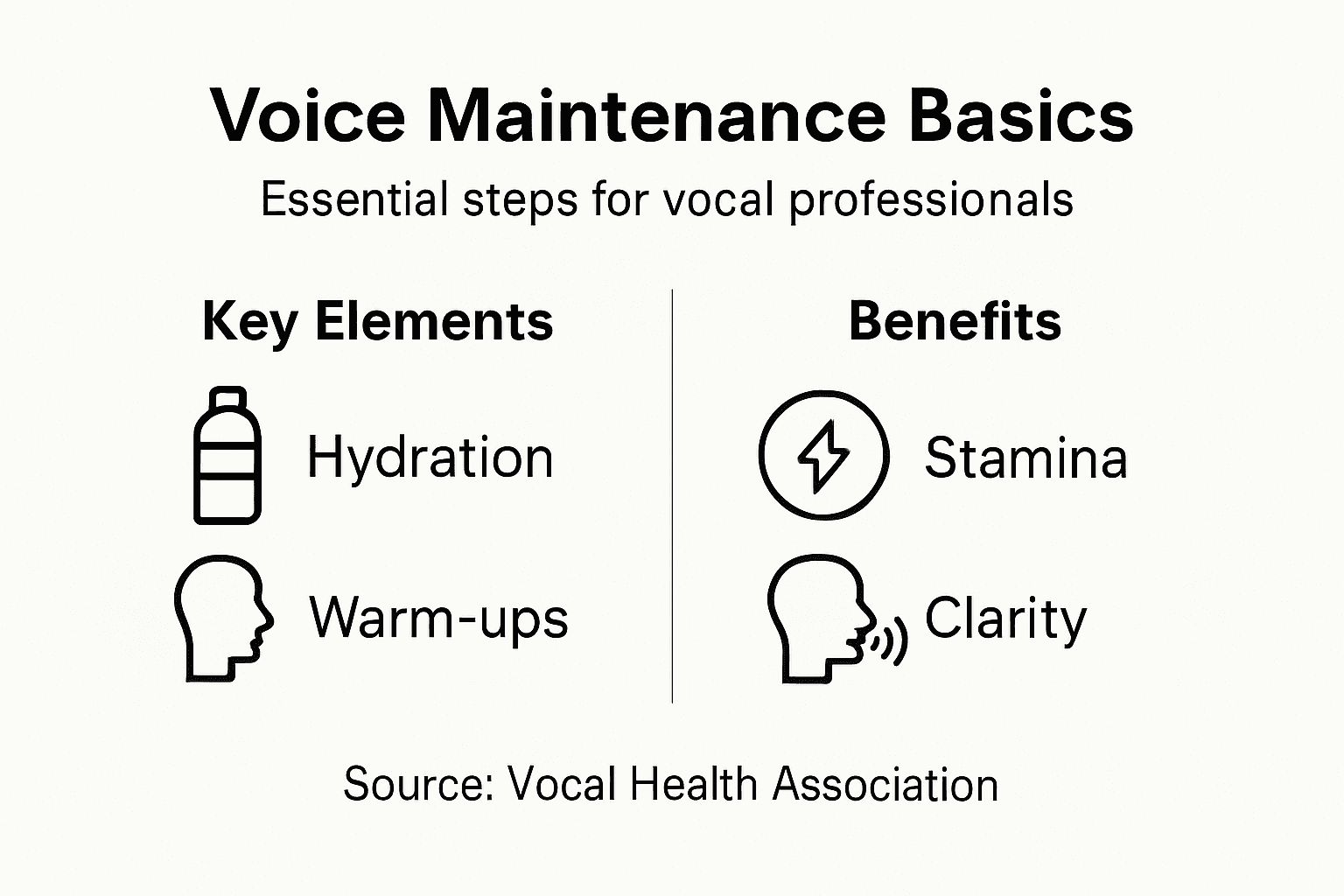
At its core, voice maintenance encompasses several critical components:
Professional vocalists recognize that their voice represents their primary professional instrument, requiring meticulous care and precision. Vocal health strategies extend beyond simple vocal warm-ups, integrating holistic approaches that address physiological function, performance demands, and long-term career sustainability.
The scope of voice maintenance includes understanding complex interactions between physical mechanics, psychological readiness, and environmental factors. Professionals must consider hydration levels, dietary impacts, stress management, and precise vocal technique to maintain optimal performance potential. By implementing comprehensive voice maintenance protocols, vocal artists can significantly reduce injury risks, extend their career longevity, and maintain consistently high-quality vocal output.
Pro tip: Schedule regular voice assessments with a professional vocal coach to identify potential strain patterns and develop personalized maintenance strategies.
Vocal professionals face numerous challenges that can lead to strain and fatigue, impacting their performance and long-term vocal health. Vocal strain emerges from multiple interconnected factors that challenge the delicate vocal mechanism and compromise overall vocal function.
The primary causes of vocal strain include:
Professional vocalists often encounter complex vocal strain triggers that extend beyond simple overuse. These can include subtle environmental factors like air quality, acoustic challenges in performance spaces, and individual physiological variations that impact vocal resilience. Chronic vocal strain can manifest through symptoms such as hoarseness, reduced vocal range, increased vocal fatigue, and heightened vulnerability to long-term vocal cord damage.

Here’s a quick comparison of common vocal strain triggers and their impact on vocal performance:
| Vocal Strain Trigger | Typical Impact | Prevention Method |
|---|---|---|
| Prolonged use | Loss of clarity and endurance | Scheduled vocal rest |
| Incorrect technique | Increased risk of injury | Professional training |
| Environmental stressors | Hoarseness, fatigue | Soundproofing, humidifiers |
| Dehydration | Mucus thickening, irritation | Continuous water intake |
Understanding the intricate dynamics of vocal strain requires a holistic approach that considers physical mechanics, psychological factors, and professional performance demands. Vocal professionals must develop comprehensive strategies that address prevention, recovery, and sustainable vocal practices to maintain their primary professional instrument.
Pro tip: Develop a personalized vocal health journal to track performance conditions, strain symptoms, and recovery strategies.
Vocal health requires a holistic approach that integrates natural strategies to protect and enhance the voice. Vocal hygiene education emphasizes personalized natural remedies that address individual vocal challenges and prevent potential injuries.
Natural approaches to supporting vocal health include:
The most effective natural remedies focus on creating an optimal internal and external environment for vocal cord health. These approaches go beyond temporary solutions, targeting the root causes of vocal strain and supporting long-term vocal resilience. Natural interventions can help reduce inflammation, improve mucus membrane health, and provide the body with necessary nutrients to maintain vocal cord elasticity and function.
Professional vocalists can leverage natural remedies as a comprehensive approach to vocal maintenance. By understanding the intricate relationship between lifestyle, nutrition, and vocal performance, singers and speakers can develop personalized strategies that support their vocal instrument’s health and longevity.
This table summarizes how natural remedies contribute to overall vocal health maintenance:
| Remedy Type | Benefit for Vocal Function | Best Use Context |
|---|---|---|
| Herbal teas | Soothes throat, reduces irritation | Pre-performance calming |
| Essential oils | Eases inflammation and dryness | During recovery periods |
| Anti-inflammatory diet | Minimizes swelling, boosts resilience | Daily meal planning |
| Humidity management | Maintains optimal vocal fold moisture | Practice and living spaces |
Pro tip: Create a personalized vocal wellness kit with natural throat lozenges, herbal teas, and hydration tracking tools.
Vocal hygiene requires consistent daily practices that protect and nurture the delicate vocal mechanism. Professional voice users must develop a comprehensive approach to maintaining their primary instrument through strategic, intentional habits.
Key daily habits for effective voice preservation include:
Maintaining vocal health demands a holistic approach that integrates physical, psychological, and environmental strategies. Professional vocalists must understand that voice preservation extends beyond simple vocal exercises, encompassing lifestyle choices that directly impact vocal resilience. Consistent application of these daily habits can significantly reduce vocal strain, prevent potential injuries, and enhance overall vocal performance.
The most effective vocal preservation strategies are personalized and adaptive, recognizing that each voice is unique. By developing a nuanced understanding of individual vocal mechanics and implementing targeted daily practices, vocal professionals can protect their most valuable asset and sustain long-term career potential.
Pro tip: Create a personalized daily vocal health checklist that tracks hydration, vocal load, and rest periods to monitor your vocal performance systematically.
Vocal health neglect poses significant professional risks for performers and professional voice users. The consequences of ignoring vocal maintenance extend far beyond temporary discomfort, potentially derailing entire careers and causing long-term physiological damage.
The most critical risks of neglecting voice maintenance include:
Professional voice users must recognize that vocal health is not a luxury but a fundamental requirement for sustainable performance. Voice problems significantly impact occupational functioning and can lead to substantial emotional and professional consequences. The cumulative effect of consistent vocal strain can transform minor issues into career-threatening conditions, making proactive maintenance an essential strategy for long-term success.
Understanding these risks transforms voice maintenance from an optional practice to a critical professional investment. By acknowledging the potential consequences, vocal professionals can develop more disciplined, strategic approaches to preserving their most valuable professional asset.
Pro tip: Conduct a monthly self-assessment of your vocal health, tracking any changes in vocal performance, fatigue levels, and recovery time.
The journey to maintaining a healthy voice demands more than just awareness. If you are a singer, speaker, or any vocal professional struggling with vocal strain, hoarseness, or fatigue, taking proactive steps today can make all the difference. Recognizing the importance of vocal hygiene, strategic rest, and natural remedy support can help you sustain performance and prevent long-term damage.

Explore our carefully curated Singer Enhancements - TMRG Solutions designed specifically for vocal artists seeking natural, effective care. Whether you need soothing sprays, herbal supplements, or tools to manage phlegm and mucous, our collection at Phlegm and viscous mucos - TMRG Solutions offers targeted relief. Backed by over 25 years of expertise, our products help you implement comprehensive voice maintenance strategies discussed in this article. Visit our main site now to discover solutions that protect your most valuable professional asset and keep your voice performing at its best.
Voice maintenance refers to the strategic practices aimed at preserving vocal health for performers, speakers, and vocal artists. It is crucial for ensuring optimal vocal function, preventing injuries, and extending career longevity.
Common signs of vocal strain include hoarseness, reduced vocal range, increased vocal fatigue, and a heightened risk of long-term vocal cord damage. Recognizing these symptoms early can prevent more serious issues.
Natural remedies such as optimal hydration, herbal teas, anti-inflammatory diets, and stress reduction techniques can help soothe the throat, reduce inflammation, and promote overall vocal resilience, supporting long-term vocal health.
Effective daily habits include maintaining hydration, structured vocal warm-ups, practicing controlled breathing, managing environmental exposure, and monitoring vocal load and rest periods. These practices help reduce strain and enhance vocal performance.
