Your Cart is Empty


Pushing through vocal fatigue can leave even the most accomplished performers feeling frustrated and uncertain about their next steps. Understanding the true nature of professional vocal training is essential for sustainable vocal health. Rather than relying on common myths and quick fixes, focusing on a codified system of knowledge and technique protects your voice and expands your expressive capacity. This guide clears up misconceptions and sets out clear strategies for enhancing stamina, resilience, and vocal longevity.
| Point | Details |
|---|---|
| Professional Vocal Training is Comprehensive | It encompasses anatomy, acoustics, and breath mechanics, focusing on sustainable techniques for both singing and speaking. |
| Training Applies Across Disciplines | Vocal training benefits not only singers but also actors, public speakers, and educators, enhancing overall voice production. |
| Ongoing Development is Essential | Vocal training is a continuous journey, vital for refining techniques and preventing injuries even in seasoned performers. |
| Hydration and Care are Crucial | Proper hydration and awareness of vocal rest significantly impact vocal health and stamina, ensuring longevity in performance. |
Professional vocal training is not simply learning to sing better or speak louder. It represents a codified system of knowledge and techniques developed over decades of voice science research and pedagogical practice. This goes far beyond the assumption that anyone with natural talent can become a professional vocalist. The reality involves understanding anatomy, acoustics, breath mechanics, and how to train both singing and speaking simultaneously.
Many performers believe that professional vocal training teaches you to force your voice or produce unnaturally loud sounds. This is one of the most damaging misconceptions. Actually, proper vocal training techniques teach you to work with your body’s natural resonance rather than against it. Trained vocalists learn to activate their diaphragm, align their posture, and use resonance cavities strategically. The goal is efficiency and longevity, not volume alone.
Another myth suggests that vocal training only benefits singers. In reality, vocal training influences both singing and speech in distinct ways. Professional actors, public speakers, teachers, and lecturers all benefit from the same foundational principles. Your voice production in conversation uses the same mechanisms as your voice in performance. Training one improves the other.
People also assume professional training requires natural talent as a prerequisite. The truth is more nuanced. While some individuals have anatomical advantages, most professional vocalists build their abilities through consistent, structured practice. Your technique, breath control, and resonance awareness can be developed regardless of starting point. Training teaches you to maximize whatever natural assets you possess.
A common belief is that professional vocal training is a one-time achievement. Actually, it’s an ongoing process. Even seasoned performers work with coaches throughout their careers to refine technique, prevent injuries, and adapt to aging changes in the voice. This is why vocal hygiene remains critical throughout a professional career, regardless of skill level.
Understanding these distinctions changes how you approach your vocal development. Professional training builds sustainable, healthy vocal production that protects your instrument for decades of performance work.
Here is a summary of common vocal training myths and the realities behind them:
| Common Myth | Reality | Impact on Learners |
|---|---|---|
| Only natural talent matters | Structured practice develops ability | Encourages anyone to improve |
| Training is a one-time process | Ongoing learning is essential | Promotes sustained development |
| Focus is only on loudness | Emphasizes efficiency and resonance | Reduces strain and protects voice |
| Only singers benefit | Applies to all professional voice users | Broadens appeal beyond music |
Pro tip: When evaluating vocal training, look for instructors who explain the anatomy and science behind exercises rather than simply demonstrating techniques, as understanding the “why” accelerates your learning and helps you troubleshoot issues independently.
Vocal training for performers comes in multiple specialized forms, each addressing different performance contexts and vocal demands. Rather than a one-size-fits-all approach, professional vocalists often benefit from understanding which training methods serve their specific performance goals. The type of training you pursue depends on your genre, performance environment, and long-term vocal health objectives.
Functional vocal training forms the foundation for most performers across genres. This approach develops core techniques like vibrato control, posture awareness, resonance optimization, agility, and registration work. The strength of functional training is that core vocal techniques transfer across musical styles, whether you perform classical repertoire, musical theater, or contemporary commercial music. You build foundational skills first, then adapt them to your specific performance context.
Another critical training type applies exercise physiology principles to vocal performance. Think of your voice as an athlete’s body that requires warm-up protocols, skill development phases, targeted muscle training, and proper recovery. Rather than complete voice rest when experiencing fatigue, vocal athletes use adapted voice use strategies that maintain vocal conditioning while protecting injured tissues. This athletic approach prevents the atrophy that occurs with complete rest.
Style-specific training addresses the unique demands of your performance genre. Classical singers focus on sustaining long phrases with consistent resonance. Musical theater performers develop rapid registration shifts and emotional expressivity. Contemporary commercial music vocalists emphasize mic technique, rhythm precision, and modern vocal textures. Working with a vocal coach experienced in your specific performance style accelerates your ability to master genre-specific conventions while maintaining vocal health.
Technical skill training isolates specific vocal functions like breath support, pitch accuracy, diction clarity, and sustained power. This granular approach allows you to strengthen individual components before integrating them into full performances. Many performers combine technical skill work with style-specific training to develop both precision and artistry simultaneously.
Pro tip: Identify your primary performance genre first, then seek training that emphasizes functional vocal technique as a foundation before adding style-specific elements, ensuring your vocal development builds sustainable mechanics across all your performances.
The following table compares types of vocal training for different performer goals:
| Training Type | Primary Focus | Ideal For | Unique Benefit |
|---|---|---|---|
| Functional | Core techniques, basics | All genres | Foundational skills for any style |
| Exercise Physiology | Warm-up, conditioning | High-load performers | Prevents fatigue and injury |
| Style-Specific | Genre conventions | Singers, actors | Targets unique demands |
| Technical Skill | Isolated function drills | Advanced performers | Precision and refinement |
Building vocal stamina requires more than just singing louder or longer. Professional vocalists need to understand the interconnected techniques that protect the voice while building endurance for demanding performances. These techniques form the foundation of sustainable vocal careers that can span decades without significant vocal decline.
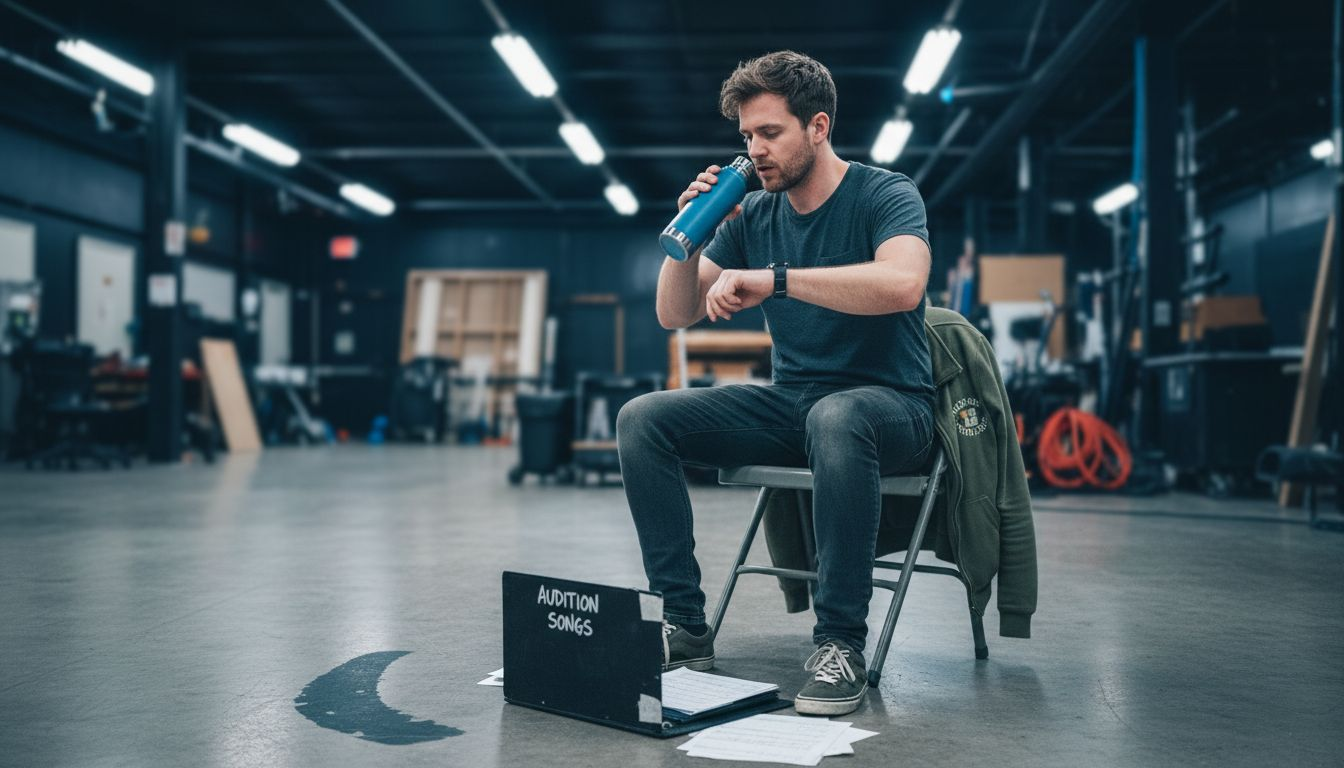
Hydration is your first line of defense for vocal health and stamina. Your vocal folds need consistent moisture to vibrate efficiently without friction or strain. Water intake should be generous throughout your day, not just before performances. Avoid caffeine and alcohol, which dehydrate tissues, making your voice feel tired and strained more quickly. Maintaining proper hydration directly impacts stamina by keeping tissues supple and reducing the effort required to produce sound.
Breath support determines how long you can sustain notes and phrases without fatigue. Rather than squeezing your throat, proper breath support engages your diaphragm and intercostal muscles to control airflow. This distributes the workload away from your vocal folds, preventing the tension that leads to hoarseness and fatigue. Many performers discover that vocal exercises targeting breath control directly translate to increased performance stamina and reduced post-show vocal strain.
Vocal rest means strategic silence, not complete voice deprivation. Professional voice users benefit from individualized vocal rest patterns that allow tissue recovery while maintaining vocal conditioning. After intense rehearsals or performances, 20 to 30 minutes of reduced speaking protects your tissues without causing the atrophy that comes from extended silence. Whisper less than you think you should, since whispering actually strains vocal folds more than normal phonation.
Tension awareness prevents muscle fatigue that shortens your stamina. Excessive neck, jaw, or shoulder tension forces your vocal folds to work harder than necessary. Gentle stretches, massage, and postural alignment reduce this compensatory tension. Many vocalists discover that relaxing their shoulders drops their pitch down naturally and reduces effort dramatically.
Pro tip: Track your hydration and vocal rest patterns for two weeks, noting which days you experience fatigue, then identify the specific behaviors that preceded that fatigue to build your personal stamina maintenance routine.
Professional vocal training transforms more than just how you sound in the moment. It directly determines whether your voice remains vibrant at age 50 or deteriorates by your 40s. The difference between vocalists who maintain their instrument throughout life and those who experience decline comes down to training approaches that protect longevity.
Consider the arc of a professional singer’s career. Early years bring energy and natural vocal capacity. Without proper training, performers often push harder to achieve bigger sounds, creating tension and compensatory strain patterns. Over time, these inefficient techniques accumulate micro-injuries in vocal tissues. By mid-career, voices that seemed invincible begin showing fatigue, hoarseness, and reduced range. Conversely, trained singers who understand breath mechanics and resonance maintain consistent vocal quality across decades because their technique distributes effort efficiently rather than concentrating it in vulnerable tissues.
The concept of vocal periodization mirrors athletic training for endurance athletes. Structured vocal periodization strategies optimize performance across career phases by incorporating performance peaks, recovery periods, and maintenance phases systematically. Rather than treating every week the same, professional singers plan heavy performance loads followed by lighter vocal weeks. This cyclical approach prevents the cumulative fatigue that leads to vocal damage. A soprano performing eight shows per month needs scheduled weeks with reduced vocal demands to allow tissue regeneration while maintaining conditioning.
Professional training also prevents injuries that cut careers short. Nodules, polyps, and structural damage develop gradually from repeated misuse. Early intervention through proper technique stops these problems before they require medical intervention. Performers who understand their vocal anatomy recognize warning signs immediately and adjust their approach before damage becomes permanent.
The financial impact is substantial. A professional vocalist losing their voice faces loss of income, expensive vocal therapy, and potential career termination. Meanwhile, trained singers maintain career earning potential across 30, 40, or even 50 years of professional work. The investment in professional vocal training returns exponentially through extended career longevity and reduced medical costs.
Pro tip: Schedule quarterly voice assessments with your vocal coach or teacher where you specifically review your performance schedule against recovery periods, adjusting upcoming commitments if vocal fatigue patterns emerge before they become injuries.
Poor vocal training creates cascading problems that extend far beyond a bad performance. Without proper instruction, singers develop compensatory patterns that damage vocal tissues gradually and invisibly. By the time symptoms appear, structural harm has often already occurred. Understanding these risks helps you make informed decisions about who guides your vocal development.
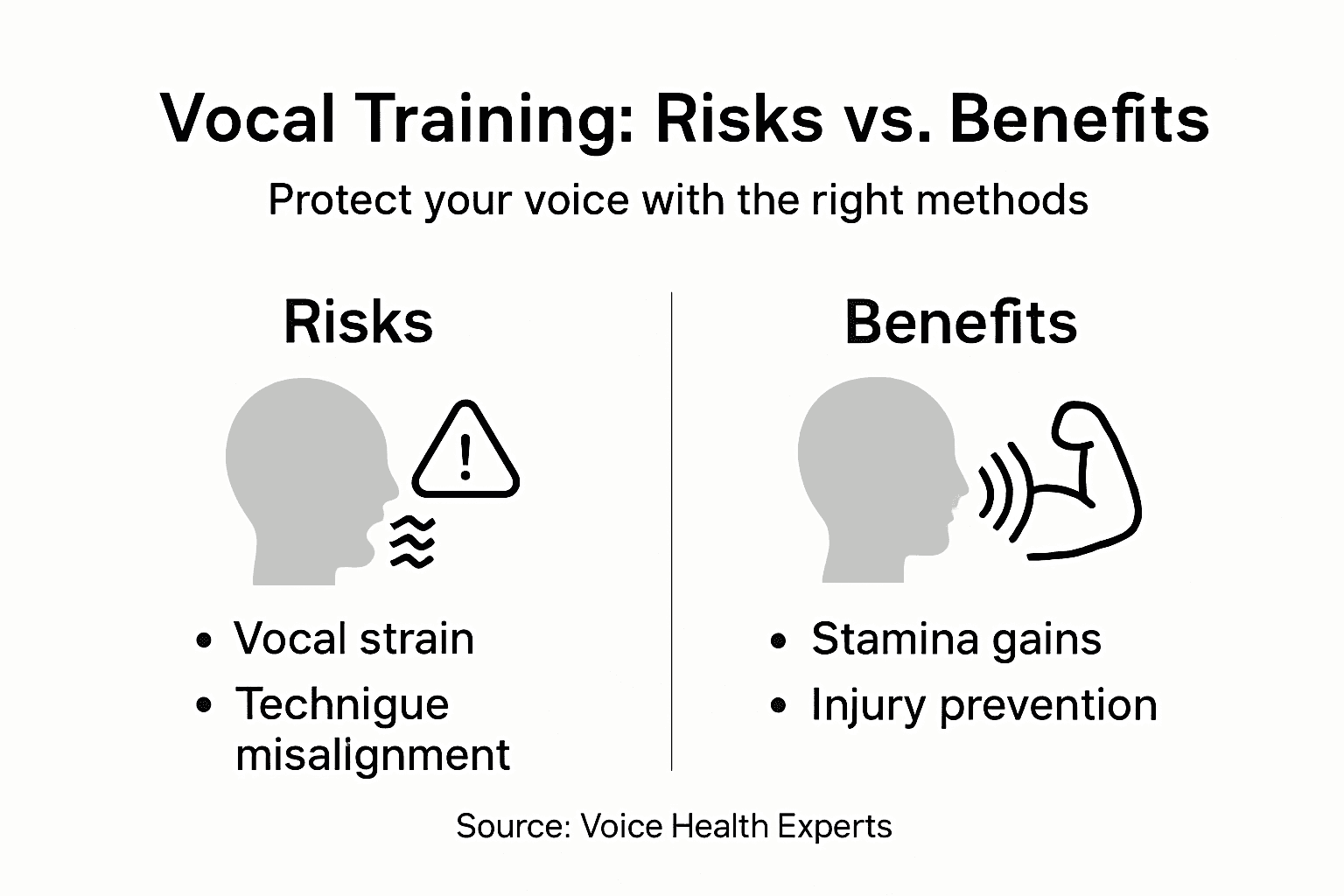
One of the most dangerous risks is technique misalignment. Untrained instructors sometimes teach outdated methods or personal approaches that worked for them but don’t suit your anatomy. This creates habits that feel normal but strain your voice systematically. Nodules and polyps develop from repeated trauma caused by incorrect technique. Once these form, they require medical intervention or specialized therapy that takes months to resolve. The damage could have been prevented with proper training from the start.
Ineffective instruction methods waste your practice time and money. Poor trainers lack clear learning strategies tailored to your needs. They demonstrate exercises without explaining why or how your body should respond. Absence of a clear learning strategy leads to wasted resources and missed goals. Without understanding the mechanics, you practice incorrectly for months without improvement. You become frustrated and may abandon training entirely, believing yourself incapable of improvement.
Another critical risk involves inadequate progress monitoring. Good vocal training includes regular assessment of your technique, breathing patterns, and vocal health markers. Poor training leaves you unaware of developing problems until pain or voice loss forces you to stop. Early warning signs like tension, reduced range, or increased effort should trigger technique adjustments. Without monitoring, these signals go unnoticed until injury becomes serious.
Lack of individualization causes significant harm too. Every voice has unique anatomy and needs. Training that ignores your specific challenges applies generic exercises that may not address your actual problems. This approach creates frustration and prevents real progress from occurring. Quality training evaluates your individual needs and adjusts progressively as you develop.
The risk of injury extends beyond your voice to your overall health. Poor posture cues and tension patterns from inadequate training create neck, shoulder, and back pain that compounds vocal strain. You end up managing pain alongside vocal problems.
Pro tip: Before committing to a vocal coach or training program, ask them how they assess individual needs, how they monitor progress, and what their approach is if you are not progressing as expected within four to six weeks.
The article highlights how professional vocal training is essential to maintain vocal longevity and prevent injury. If you have experienced vocal fatigue, hoarseness, or strain despite training, supporting your voice with natural remedies and targeted therapies is crucial. Combining proper technique with effective vocal care helps you achieve sustainable vocal stamina and prevents the frustrating setbacks caused by misuse or overuse.

Discover our range of carefully formulated products designed to complement your training and keep your voice resilient. From trusted Singer Enhancements that promote vocal strength to solutions addressing common challenges like phlegm and mucous buildup in our Phlegm and viscous mucos collection, we offer natural options backed by over 25 years of experience in vocal health. Browse our All Products and take control of your vocal well-being today at tmrgsolutions.com.
Invest in your voice now to enjoy a vibrant, lasting career free from avoidable vocal damage.
Professional vocal training is a system of knowledge and techniques that helps individuals improve their singing and speaking abilities by focusing on anatomy, acoustics, breath mechanics, and coordination of voice production.
No, vocal training benefits not just singers but also actors, public speakers, teachers, and anyone who uses their voice professionally, as the principles of voice production apply to both singing and speech.
Natural talent is not a prerequisite for professional vocal training. Most skills can be developed through consistent and structured practice, allowing individuals to maximize their vocal potential regardless of their starting point.
Poor vocal training can lead to compensatory vocal patterns and injuries, such as nodules or polyps, which can cause long-term damage to your voice. Quality training provides proper techniques and individualized assessments to prevent these issues.
