Your Cart is Empty


Most American singers who achieve long-lasting success owe their vocal growth to more than raw talent. The right professional guidance transforms natural ability into expressive power and sustainable technique. With over sixty percent of American performers seeking expert coaching during their careers, understanding what a vocal coach truly offers becomes essential. This guide explains the expert support, specialized skills, and real benefits that help vocalists reach their highest level.
| Point | Details |
|---|---|
| Vocal Coach Definition | A vocal coach specializes in enhancing singers’ performance through personalized training focused on vocal technique and artistry. |
| Types of Vocal Coaches | Coaches can be performance-focused, technical, or genre-specific, offering tailored training to meet diverse singing needs. |
| Coaching Methods | Techniques include breath control, emotional expression, and range expansion—promoting both technical skill and artistic development. |
| Choosing a Vocal Coach | Selecting the right coach involves assessing their credentials, teaching style, and specialized expertise to fit your personal goals. |
A vocal coach is a specialized music professional who helps singers enhance their vocal performance through targeted skill development and personalized training. Experienced singers work closely with clients to improve raw performance abilities, refine vocal techniques, and extend vocal longevity. Unlike general music instructors, vocal coaches provide deeply individualized guidance that transforms a singer’s technical capabilities and artistic expression.
The primary purpose of a vocal coach extends far beyond simple singing lessons. These professionals focus on musical accuracy, language nuance, stylistic interpretation, and character development to help performers bring authentic storytelling to their work. They develop comprehensive strategies that address multiple aspects of vocal performance, including:
Vocal coaches typically work with performers across diverse genres, from classical opera and musical theater to pop, rock, and contemporary styles. Their expertise allows them to customize training approaches that match a singer’s unique vocal characteristics, musical goals, and potential challenges. By providing targeted exercises, personalized warm-up routines, and strategic performance coaching, vocal coaches help artists unlock their full vocal potential and develop sustainable, healthy singing practices.
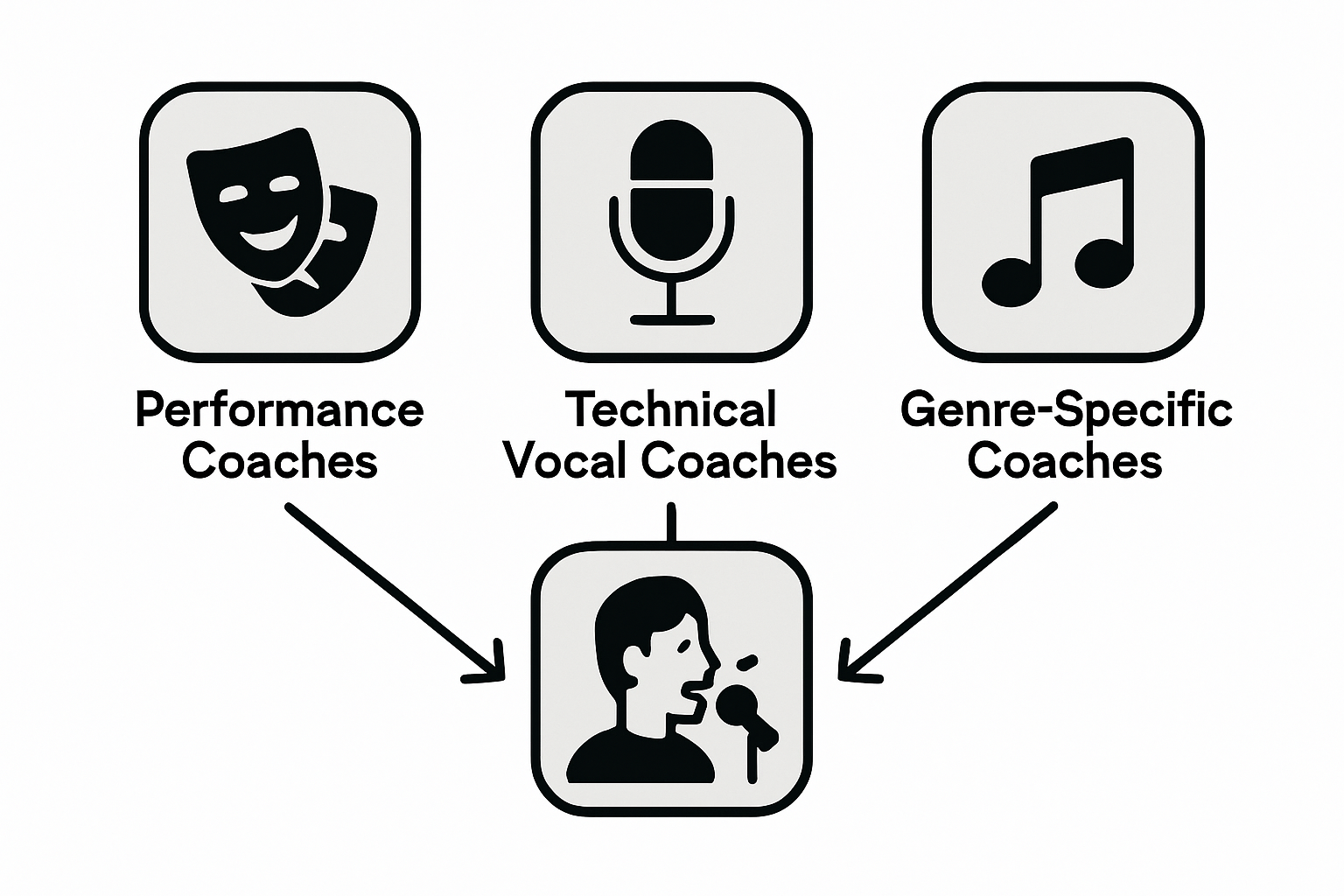
Vocal coaches are specialized professionals who support performers across multiple domains, with distinct areas of expertise tailored to specific performance needs. Professionals in voice training work with singers, actors, and public speakers to develop refined vocal techniques and performance capabilities. Understanding these specialized roles helps performers select the right coach for their unique goals.
The primary categories of vocal coaches include:
Each type of vocal coach brings unique skills to help performers transform their vocal abilities. The Ultimate Guide to Vocal Techniques Every Singer Needs provides additional insights into developing comprehensive vocal skills across different performance domains. Whether working with beginners or professional performers, these coaches create customized strategies that address individual vocal characteristics, musical goals, and potential technical challenges.
Vocal coaching involves a comprehensive approach to developing a performer’s vocal abilities through targeted techniques and personalized training strategies. Coaches employ specialized exercises to improve range, breathing, articulation, and projection, helping singers enhance their technical skills and overall vocal performance. These methods go far beyond simple singing lessons, addressing the intricate physiological and artistic aspects of vocal production.
The core skills and methods used in vocal coaching typically include:
Technical Skill Development
Performance Technique Refinement
Diagnostic and Improvement Strategies
Vocal coaches focus intensively on musical accuracy, language nuance, and stylistic interpretation, creating a holistic approach to vocal performance. They analyze each performer’s unique vocal characteristics, identifying strengths to amplify and limitations to address. Whether working with classical singers, musical theater performers, or contemporary artists, these professionals develop customized training strategies that transform raw vocal potential into polished, expressive performance skills.
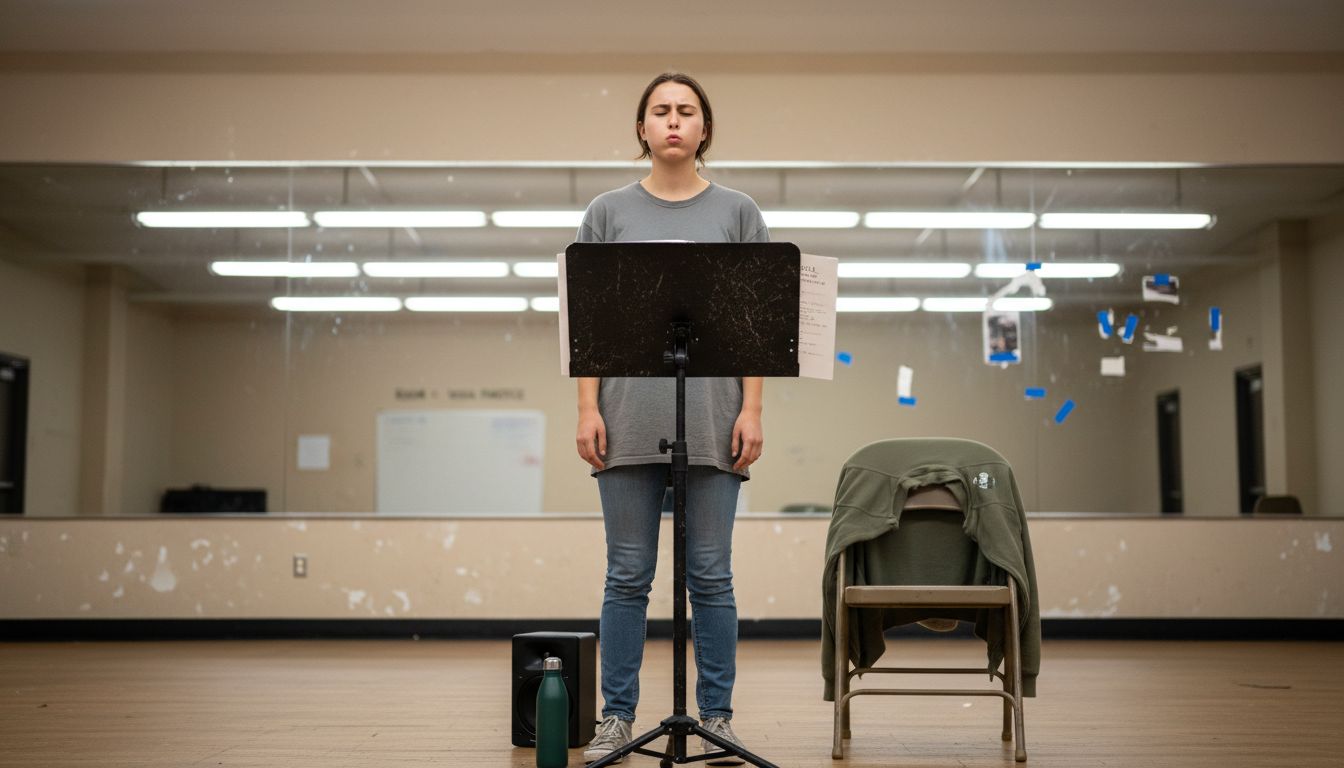
The most effective vocal coaches understand that technical proficiency must blend seamlessly with artistic expression. 7 Proven Singing Techniques to Instantly Improve Your Voice demonstrates how targeted methods can rapidly enhance vocal capabilities. Through patient guidance, precise technical instruction, and an deep understanding of individual vocal mechanisms, these professionals help performers unlock their true artistic potential.
Vocal coaching represents a transformative partnership that offers profound advantages for performers across multiple professional domains. Working with a vocal coach can dramatically improve a singer’s raw performance ability and overall vocal technique, providing targeted strategies to enhance skills and extend vocal longevity. These specialized professionals deliver far more than simple instructional lessons, offering comprehensive support that addresses both technical and artistic dimensions of vocal performance.
The key benefits for singers and voice professionals include:
Performance Enhancement
Technical Skill Development
Career Progression Support
Vocal coaches assist singers in achieving musical accuracy and developing nuanced character interpretation, transforming raw talent into refined artistry. They provide personalized guidance that helps performers understand their unique vocal characteristics, address potential limitations, and strategically develop their artistic voice. Whether working with classical opera singers, musical theater performers, or contemporary recording artists, these professionals create tailored approaches that unlock individual potential.
Want to Sing Better? Essential Vocal Practice Steps You Need highlights the critical importance of consistent, strategic vocal training. By investing in professional coaching, singers and voice professionals gain not just technical skills, but a comprehensive understanding of their vocal instrument, enabling them to perform with greater confidence, expressiveness, and long-term sustainability.
Selecting the ideal vocal coach requires careful consideration of multiple factors that align with your specific musical goals and personal learning style. Evaluating a potential coach’s professional qualifications is crucial, including their educational background, continued training, and professional certifications, ensuring you receive expert guidance tailored to your unique vocal development needs.
Critical factors to consider when choosing a vocal coach include:
Professional Credentials
Teaching Philosophy and Style
Specialized Expertise
Professional vocal coaches often establish their reputation through consistent performance results and professional network connections. Coaches frequently build their student base by advertising locally, connecting with music schools, and leveraging industry contacts, which provides insight into their professional reputation and success rate.
Unlock Your Best Singing Voice: Top Vocal Techniques & Sprays Revealed underscores the importance of finding a coach who understands comprehensive vocal development. The right vocal coach will not just teach techniques, but will provide a holistic approach to vocal performance, helping you develop confidence, technical precision, and a unique artistic voice.
Vocal coaches help you unlock your true singing potential by improving technical skills like breath control and vocal range while refining your artistic expression. However, even the best coaching cannot replace the need for dedicated vocal health care to protect your voice from strain and fatigue. If you experience challenges such as vocal stress, hoarseness, or difficulty maintaining your voice through performances, taking action now is essential to sustaining long-term vocal health and confidence.
Discover effective, natural remedies tailored for performers in the Singer Enhancements - TMRG Solutions collection.

Act today to complement your coaching journey by investing in proven sprays, oils, and voice therapy kits that support vocal recovery and prevent damage from vocal abuse and vocal load. Take control of your vocal wellness with trusted products backed by over 25 years of expertise at https://tmrgsolutions.com. Your voice deserves professional care beyond coaching—start enhancing your vocal endurance and expressiveness now.
A vocal coach helps singers enhance their vocal performance through personalized training and skill development, focusing on technical abilities, artistic expression, and vocal longevity.
A vocal coach can improve your singing by working on various aspects such as breathing techniques, vocal range, emotional expression, and stage presence to enhance your overall performance.
There are different types of vocal coaches, including performance coaches, technical coaches, and genre-specific coaches, each specializing in various aspects of vocal training and performance.
The benefits of working with a vocal coach include improved vocal range, enhanced technical skills, greater stage confidence, and personalized guidance for career progression in the music industry.
