Your Cart is Empty


TL;DR:
- Natural clear voice drops use herbs like slippery elm, licorice root, and ginger to soothe and hydrate vocal cords. They are most effective when used consistently as part of a broader vocal care routine and not as a sole treatment. Avoid menthol-based products, and seek professional evaluation if hoarseness persists beyond two weeks.
Natural clear voice drops are botanical formulations designed to relieve vocal strain and restore voice clarity by hydrating and protecting the vocal folds. Singers, actors, and public speakers rely on these herbal solutions as a first line of support when hoarseness, vocal fatigue, or dryness sets in. The American Speech-Language-Hearing Association (ASHA) recognizes that voice disorders stem from inefficient use rather than random chance, which means proactive care with the right remedies makes a measurable difference. Tmrgsolutions has spent over 25 years formulating natural vocal care products for exactly this purpose.
The most effective voice drops combine herbs and botanical extracts that target the vocal fold mucosa directly. Each ingredient serves a specific function, and knowing what to look for helps you choose a formulation that actually works.
Key ingredients and their roles:
One ingredient to avoid is menthol. Menthol can irritate delicate vocal fold mucosa, causing further strain rather than relief. Speech-language pathologists consistently warn voice professionals away from menthol-based lozenges and drops. Always read the ingredient label before purchasing any natural throat drops.
Pro Tip: Look for formulations that list slippery elm or licorice root as primary ingredients, not as trace additives. Concentration matters for real soothing effect.
Proper dosing and timing determine whether voice drops deliver results or simply sit in your cabinet unused. The standard professional protocol for clear voice drops is 10–15 drops dissolved in half a cup of water, taken 2–3 times daily. This spreads the herbal benefit across your vocal day rather than loading it all at once.
Follow this sequence for best results:
Voice drops are a support tool, not a cure. They complement proper technique, adequate rest, and good vocal hygiene. Expecting instant results from drops alone leads to overuse and disappointment.
Pro Tip: Set a phone reminder for each dose. Consistency matters far more than the occasional large dose when you feel your voice failing.

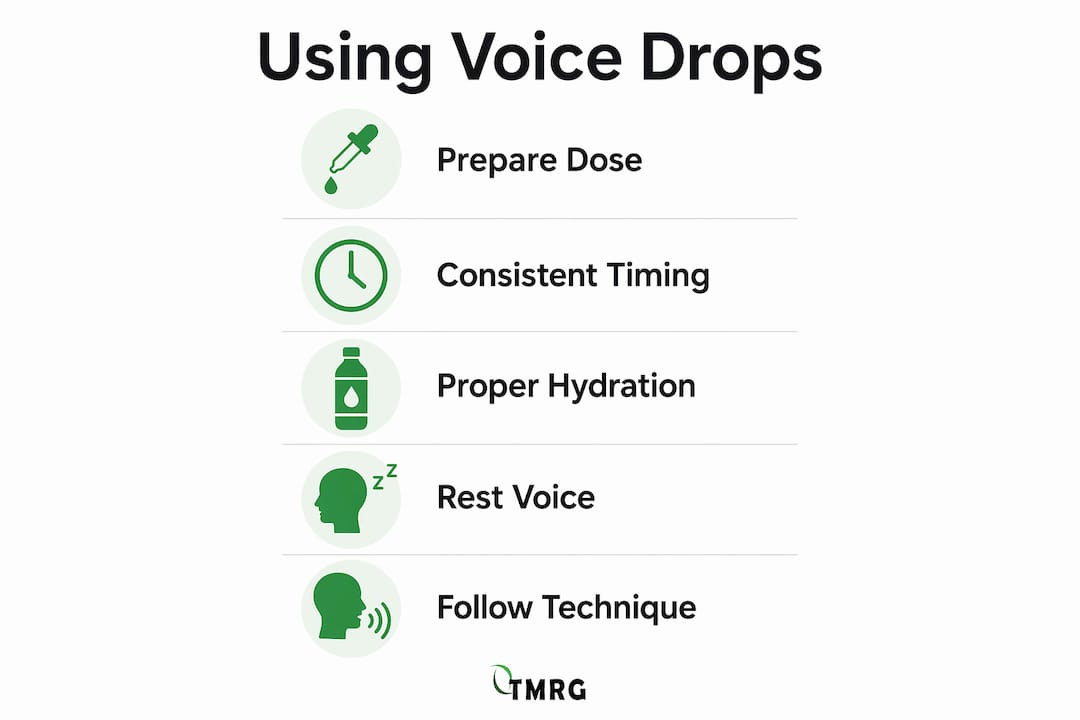
Voice drops work best inside a broader vocal care routine. Relying on drops alone while ignoring hydration, rest, and lifestyle factors limits how much recovery you can achieve.
Hydration beyond the drops:
Duke University experts recommend approximately 64 ounces of water daily, distributed evenly across the day for proper mucosal lubrication. Sipping steadily throughout the day keeps the vocal fold surface moist. Gulping large amounts at once does not hydrate the mucosa the same way. Pair your vocal cord hydration practice with your drop schedule for compounding benefit.
Vocal hygiene practices that protect your voice:
Lifestyle modifications that matter:
Smoking and vaping are among the most damaging habits for vocal fold health. Quitting smoking improves long-term vocal quality and reduces chronic inflammation in the larynx. Acid reflux is another major irritant. Stomach acid reaching the larynx causes posterior laryngitis, which no herbal drop can fully address without dietary changes. Dry air, especially in winter or air-conditioned spaces, accelerates mucosal drying. A room humidifier keeps ambient moisture at a level that supports vocal fold health.
“Vocal rest is most effective when replaced by vocal pacing with frequent micro-breaks. Sixty-second non-vocal pauses integrated throughout your day are more sustainable and produce better recovery than prolonged silence.” — Breatheworks Vocal Hygiene
Natural remedies and organic voice support products address mild to moderate vocal strain. They do not treat structural vocal fold conditions, and recognizing the difference protects your long-term vocal health.
Seek evaluation from an ENT or laryngologist when you notice any of the following:
Speech-language pathologists (SLPs) play a central role in voice recovery. ASHA notes that SLPs teach voice mechanics to prevent injuries and treat disorders through targeted voice therapy. Early intervention with an SLP prevents minor strain from becoming a chronic condition. Natural drops support the recovery process, but they work alongside professional therapy, not instead of it.
Different delivery formats serve different needs. Understanding the distinctions helps you build the right toolkit for your voice.
| Remedy type | Delivery method | Best use case | Key limitation |
|---|---|---|---|
| Natural clear voice drops | Diluted in water, taken orally | Daily support and post-performance recovery | Requires consistent dosing schedule |
| Herbal throat lozenges | Dissolved slowly in mouth | Quick soothing between performances | Often contain menthol or sugar; shorter effect |
| Vocal hydration sprays | Direct laryngeal mist | Immediate surface moisture for dry conditions | Does not address systemic hydration |
| Voice therapy kits | Multi-product protocol | Comprehensive recovery from vocal fatigue or strain | Requires commitment to full protocol |
| Steam inhalation | Inhaled warm vapor | Loosening mucus and reducing laryngeal dryness | Temporary effect; no herbal benefit |
Drops deliver herbal compounds systemically through the digestive tract, which means they support tissue recovery from the inside. Sprays and lozenges work on the surface only. For singers and speakers with recurring vocal fatigue, combining drops with a voice therapy kit addresses both surface comfort and deeper tissue recovery. Avoid any product, natural or synthetic, that lists menthol, alcohol, or artificial fragrances as primary ingredients. These compounds irritate sensitive vocal fold tissue regardless of how they are marketed.
Natural clear voice drops deliver the most benefit when used consistently as part of a complete vocal care routine that includes hydration, vocal pacing, and professional guidance when symptoms persist.
| Point | Details |
|---|---|
| Ingredient selection matters | Choose drops with slippery elm, licorice root, or ginger; avoid menthol-based formulas. |
| Consistent dosing beats occasional use | Take 10–15 drops in water 2–3 times daily for sustained mucosal support. |
| Hydration amplifies drop effectiveness | Drink approximately 64 ounces of water daily, spread evenly, not in large amounts at once. |
| Drops do not replace professional care | Hoarseness beyond 2 weeks or pain requires ENT or SLP evaluation regardless of remedy use. |
| Vocal pacing outperforms total silence | Sixty-second micro-rest breaks throughout the day support recovery better than prolonged vocal rest. |
Most voice professionals reach for drops when the problem is already advanced. That is the wrong time. The singers and speakers I have worked with who maintain the clearest, most resilient voices use drops as a daily maintenance tool, not an emergency fix. They take their dose before rehearsal, not after they have already strained through two hours of performance.
The second pattern I see consistently is over-reliance on any single remedy. Drops are genuinely effective at soothing the vocal fold mucosa and supporting hydration. But I have watched performers use excellent herbal formulations while continuing to shout over loud environments, skip sleep, and drink coffee all day. The drops cannot compensate for that load. They work when the rest of your vocal hygiene is also working.
The third thing I want you to take seriously is the two-week rule. Natural remedies are appropriate for short-term vocal strain. If your voice has not recovered in two weeks, you need a clinical evaluation. Nodules, polyps, and other structural conditions do not respond to herbal drops, and delaying that evaluation makes treatment harder. Use natural remedies confidently for what they do well. Know when to hand the problem to a specialist.
— Golan
Tmrgsolutions has formulated vocal care products for singers, actors, and speakers for over 25 years, drawing on herbal science and professional vocal health expertise.

The TMRG Loud & Clear Classic Voice Recovery Drops combine slippery elm, ginger, and electrolyte-balancing botanicals in a professional-grade formulation used by performers worldwide. For broader recovery support, the TMRG Voice Therapy Kit Premium pairs drops with complementary sprays and a structured protocol designed for sustained vocal health. Every Tmrgsolutions product is formulated without menthol or harsh additives, keeping your vocal folds protected rather than further irritated. If you are ready to build a consistent vocal care routine, Tmrgsolutions offers the tools to do it right.
Natural clear voice drops are herbal formulations used to soothe vocal fold irritation, reduce hoarseness, and support mucosal hydration in singers, actors, and speakers. They work best as a daily maintenance tool rather than an emergency remedy.
The standard professional dosage is 10–15 drops dissolved in half a cup of water, taken 2–3 times daily. Consistent use spread across the day delivers better results than irregular large doses.
Voice drops support mild to moderate vocal strain but do not treat structural conditions. Hoarseness lasting longer than 2 weeks requires evaluation by an ENT or laryngologist regardless of remedy use.
Menthol irritates the delicate mucosa of the vocal folds and can worsen strain rather than relieve it. Speech-language pathologists recommend avoiding menthol-based products for anyone with vocal fold sensitivity.
Slippery elm, licorice root, ginger, and electrolyte-balancing botanicals are the most effective ingredients in natural voice drops. These compounds coat, hydrate, and reduce inflammation in the vocal fold tissue.
