Your Cart is Empty


A sudden change in vocal quality or unexpected loss of voice can leave even the most experienced Canadian, American, or British vocalists searching for answers. Voice disorders often emerge from a mix of organic, structural, neurogenic, functional, and psychological causes, complicating the journey to recovery. Understanding these triggers is the first step toward protecting your artistry. This guide helps professional vocalists and voice coaches uncover practical, natural solutions and strategies for sustainable vocal health.
| Key Point | Explanation |
|---|---|
| 1. Identify Causes of Voice Loss | Understand that voice loss can stem from organic, structural, neurogenic, functional, or psychological factors. Assessing these can inform recovery strategies. |
| 2. Create a Voice-Friendly Environment | Minimize vocal irritants, maintain hydration, and implement regular vocal rest to support vocal health and performance. |
| 3. Utilize Natural Remedies | Employ herbal solutions like Licorice Root and Honey to soothe vocal cords and promote healing, alongside proper vocal rest. |
| 4. Monitor Vocal Recovery Progress | Track vocal stamina, pitch control, and discomfort levels to adapt recovery methods effectively and prevent setbacks. |
| 5. Implement Preventative Care | Establish daily vocal health habits, hydration routines, and regular assessments to prevent future voice complications. |
Vocalists and voice professionals need a systematic approach to understand why their voice might be compromised. Voice disorders arise from multiple complex factors that can impact vocal performance and health.
The root causes of voice loss typically fall into several critical categories:
Vocal cord disorders can emerge from various triggers, including:
Identifying the specific cause requires careful evaluation of your vocal health history, recent activities, and potential environmental factors. Professional voice users should pay special attention to persistent symptoms that might indicate a more serious underlying condition.
Consistent vocal monitoring and early intervention are key to preventing long-term voice damage.
Pro tip: Keep a detailed log of your vocal performance, noting any changes in sound quality, range, or discomfort to help healthcare professionals diagnose potential issues more accurately.
Preparing an optimal environment for vocal health requires strategic planning and consistent attention to detail. Minimizing exposure to vocal irritants becomes crucial for maintaining your vocal performance and preventing potential damage.
Your vocal routine and environment preparation should focus on several key areas:
Key steps to create a voice-friendly environment include:
Speech pathologists recommend tailoring your vocal routine to your specific performance demands, recognizing that each voice user has unique requirements. Professional singers, teachers, and speakers will need more sophisticated preparation strategies compared to occasional voice users.
Your vocal environment is as critical to performance as your physical technique.
Pro tip: Invest in a portable humidifier and keep it near your primary workspace to maintain consistent moisture levels and support vocal cord health.

Here’s a comparison of vocal environment strategies for occasional and professional voice users:
| Strategy Focus | Occasional Users | Professional Users |
|---|---|---|
| Environment Setup | Basic humidification | Advanced acoustic treatment |
| Hydration Routine | Drink water when thirsty | Scheduled hydration intervals |
| Vocal Warm-Up | Minimal, simple exercises | Structured, extended routines |
| Irritant Control | Avoid smoking or dust | Air purifiers, allergen removal |
| Rest Scheduling | Rest when tired | Planned vocal rest periods |
Restoring vocal health requires a strategic approach to natural healing, focusing on targeted herbal interventions that support vocal cord recovery. Herbal remedies offer potent therapeutic properties for soothing and rehabilitating damaged vocal mechanisms.
Effective natural remedies for voice restoration include:
Implementation strategies for herbal solutions involve:
Professional vocalists should approach herbal treatments methodically, understanding that each remedy interacts differently with individual physiology. Consultation with a healthcare professional can help customize your natural healing approach.
Natural remedies work best when integrated with comprehensive vocal care strategies.
Pro tip: Always source high-quality, organic herbal products and start with small doses to monitor your body’s specific response to each remedy.
The table below summarizes common natural remedies for vocal recovery and their primary actions:
| Remedy | Main Benefit | Typical Use Method |
|---|---|---|
| Licorice Root | Reduces vocal fold inflammation | Herbal tea, extract |
| Marshmallow Root | Soothes and coats throat | Tea, lozenge |
| Ginger | Eases throat soreness | Infusion, supplement |
| Slippery Elm | Relieves tissue irritation | Lozenges, gargle |
| Honey | Promotes healing and moisture | Warm drink, spoonful |
Successful vocal recovery requires systematic tracking and strategic adaptation of your healing approach. Speech experts recommend careful symptom monitoring to ensure comprehensive vocal rehabilitation and prevent potential setbacks.
Key indicators to track during vocal recovery include:
Progressive monitoring strategies involve:
Gradual voice reintroduction techniques help prevent potential relapse and support sustainable vocal recovery. Professional singers and speakers should remain patient and attentive during this process.
Recovery is a nuanced journey that requires consistent observation and adaptive strategies.
Pro tip: Create a digital tracking spreadsheet with specific vocal metrics to objectively measure your recovery progress and identify patterns in your vocal healing.
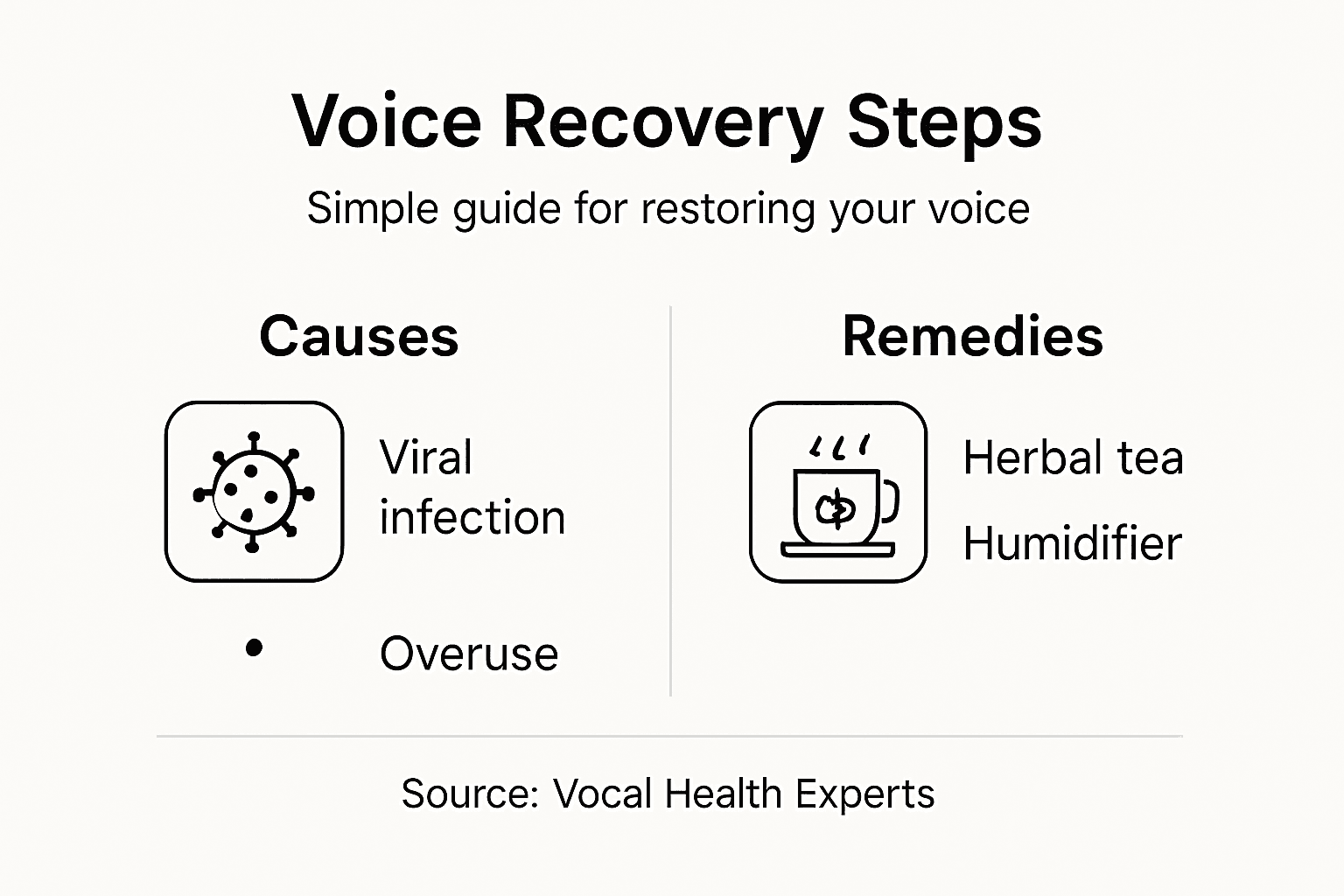
Safeguarding your vocal health requires a proactive and comprehensive approach to preventing future voice complications. Professional voice health strategies emphasize consistent care and strategic lifestyle modifications.
Critical preventative techniques for vocal preservation include:
Key preventative action steps:
Professional voice users must recognize that prevention is significantly more effective than reactive treatment. Understanding your unique vocal mechanisms allows for targeted, individualized protection strategies.
Consistent, mindful vocal practices are the foundation of long-term vocal health and performance sustainability.
Pro tip: Develop a digital vocal health dashboard tracking hydration, rest, performance quality, and environmental factors to create a comprehensive preventative maintenance system.
Struggling with hoarseness, vocal fatigue, or loss of voice can be frustrating when you need your voice to perform at its best. This guide highlights key challenges like inflammation, vocal strain, and the need for natural remedies such as licorice root and slippery elm. If you want to speed up your vocal recovery and protect your voice long term, explore tailored products designed specifically for your vocal health goals.

Discover a wide range of natural treatments and targeted enhancements with Singer Enhancements - TMRG Solutions that combine decades of expertise to support vocal restoration. For relief from persistent phlegm and irritation, check out our specialized selection at Phlegm and viscous mucos - TMRG Solutions. Start your natural healing journey today by browsing All Products - TMRG Solutions and unlock effective solutions backed by trusted herbal formulations and professional endorsements. Visit https://tmrgsolutions.com now and take the first step toward a stronger, healthier voice.
Natural remedies for voice loss include herbal options like Licorice Root, Marshmallow Root, and Ginger, which help soothe and heal your vocal cords. Start by making herbal tea blends or throat sprays that contain these ingredients to promote recovery.
You can prepare herbal solutions by creating tea blends or using throat sprays with natural extracts. For example, steep 1 to 2 teaspoons of Licorice Root in hot water for a soothing tea, and consume this daily for effective vocal support.
To track your vocal improvement, monitor key indicators like vocal stamina, pitch control, and hoarseness level. Keep a daily journal noting changes, and adjust your remedies as necessary to see significant improvements within a few weeks.
You should hydrate consistently throughout the day to maintain optimal vocal health. Aim to drink at least 8 glasses (64 ounces) of water daily, adjusting based on your level of vocal use and environmental conditions.
To prevent future voice loss, incorporate daily practices like proper hydration, vocal warm-ups, and avoiding irritants. Establish a routine that includes these practices to build long-term vocal resilience and minimize strain.
Create a supportive vocal environment by using a humidifier to maintain moisture and removing allergens from your space. Aim to keep room humidity levels between 30-50% to protect your vocal cords effectively.
