Your Cart is Empty


Losing your voice after a demanding performance or long teaching session can feel frustrating and worrisome. For singers and voice coaches, recognizing vocal strain and using proven techniques is critical to restoring strength and clarity. Learning to balance vocal rest, smart hydration strategies, gentle therapies, and gradual real-world use empowers you to heal safely and confidently, drawing on research-backed approaches for lasting vocal health.
| Key Point | Explanation |
|---|---|
| 1. Identify Vocal Strain Early | Be aware of symptoms like hoarseness and pain to prevent long-term vocal damage. |
| 2. Prioritize Voice Rest | Minimize unnecessary talking and engage in strategic voice rest to promote recovery. |
| 3. Stay Hydrated | Drink at least 8 glasses of water daily and avoid dehydrating beverages to support vocal health. |
| 4. Use Vocal Therapy Exercises | Implement systematic vocal exercises to rebuild strength and support vocal function effectively. |
| 5. Monitor Progress Consistently | Track progress and adjust techniques based on vocal performance and comfort to ensure effective healing. |
Identifying vocal strain early can prevent long-term damage and help you restore your voice effectively. Understanding the symptoms and implementing strategic rest techniques are crucial for successful vocal recovery.
When assessing vocal strain, pay attention to specific warning signs that indicate potential overuse or injury. Vocal cord strain symptoms include:
To properly assess your vocal condition, consider these diagnostic steps:
Here’s a summary of common causes and risk factors for vocal strain you should be aware of:
| Risk Factor | Example Activities | Potential Impact |
|---|---|---|
| Excessive voice use | Public speaking, singing for hours | Increased vocal fatigue and strain |
| Poor vocal technique | Speaking loudly, improper breath support | Greater risk of vocal injury |
| Environmental factors | Dry air, exposure to irritants | Throat dryness and irritation |
| Medical conditions | Allergies, acid reflux | Prolonged hoarseness and swelling |
Resting your voice is the foundational first step in vocal recovery and preventing further damage.
Immediate vocal rest means minimizing unnecessary talking, avoiding whispering (which can actually strain vocal cords more), and creating an environment that supports healing. This doesn’t mean complete silence, but strategic, minimal voice usage that allows your vocal muscles to recover.
Pro tip: Keep a small notebook or use a smartphone app to communicate when absolute vocal rest is necessary, reducing the temptation to speak unnecessarily.
Restoring your voice requires a strategic approach to hydration and natural healing techniques that support vocal recovery. Proper hydration strategies are essential for maintaining healthy vocal function and promoting healing.
To effectively hydrate and support your vocal health, focus on these key approaches:
Herbal remedies can provide additional support for vocal recovery. Consider these natural options:
To help you select effective hydration and herbal strategies, consider these option advantages and cautions:
| Method | Key Benefit | Caution or Limitation |
|---|---|---|
| Warm honey water | Soothing, coats throat | Avoid with honey allergy |
| Ginger tea | Reduces inflammation | May interact with blood thinners |
| Humidifier use | Increases air moisture | Regular cleaning required |
| Water-rich foods | Natural hydration source | Not a substitute for water intake |
Moderation is key when using herbal supplements to support vocal recovery.
When selecting herbal remedies, be cautious and research potential interactions. Some supplements can thin blood or cause unexpected side effects that might impact your vocal healing process. Always consult with a healthcare professional before starting any new herbal treatment regimen.
Pro tip: Keep a dedicated water bottle nearby and set hourly reminders to ensure consistent hydration throughout your vocal recovery process.
Regaining your vocal strength requires a systematic approach to therapeutic exercises designed to rebuild and support your voice. Vocal therapy techniques provide a structured path to vocal recovery and improved vocal function.
Begin with these fundamental vocal therapy exercises that progressively rebuild your vocal capabilities:
Progressive exercise stages help restore vocal function:
Consistent practice and gentle progression are key to successful vocal rehabilitation.
Focus on developing proper respiratory support and reducing muscle tension. Each exercise should be performed slowly and mindfully, paying attention to your body’s signals. Avoid pushing beyond comfortable limits and stop immediately if you experience pain or excessive strain.

Pro tip: Record yourself during exercises to track progress and identify areas needing improvement, using a smartphone or digital recorder.
Successful vocal recovery requires consistent evaluation and strategic adjustments tailored to your individual healing process. Voice health monitoring involves systematic assessment of your vocal performance and potential challenges.
Track your vocal recovery using these comprehensive monitoring techniques:
Key progress tracking steps include:
Small, consistent improvements indicate successful vocal rehabilitation.
Remain patient and attentive to your body’s signals. If persistent issues arise, consult a speech-language pathologist who can provide specialized guidance and potentially modify your recovery strategy.
Pro tip: Create a digital spreadsheet to systematically log your daily vocal exercises, recording duration, difficulty, and any noticeable changes in voice quality.
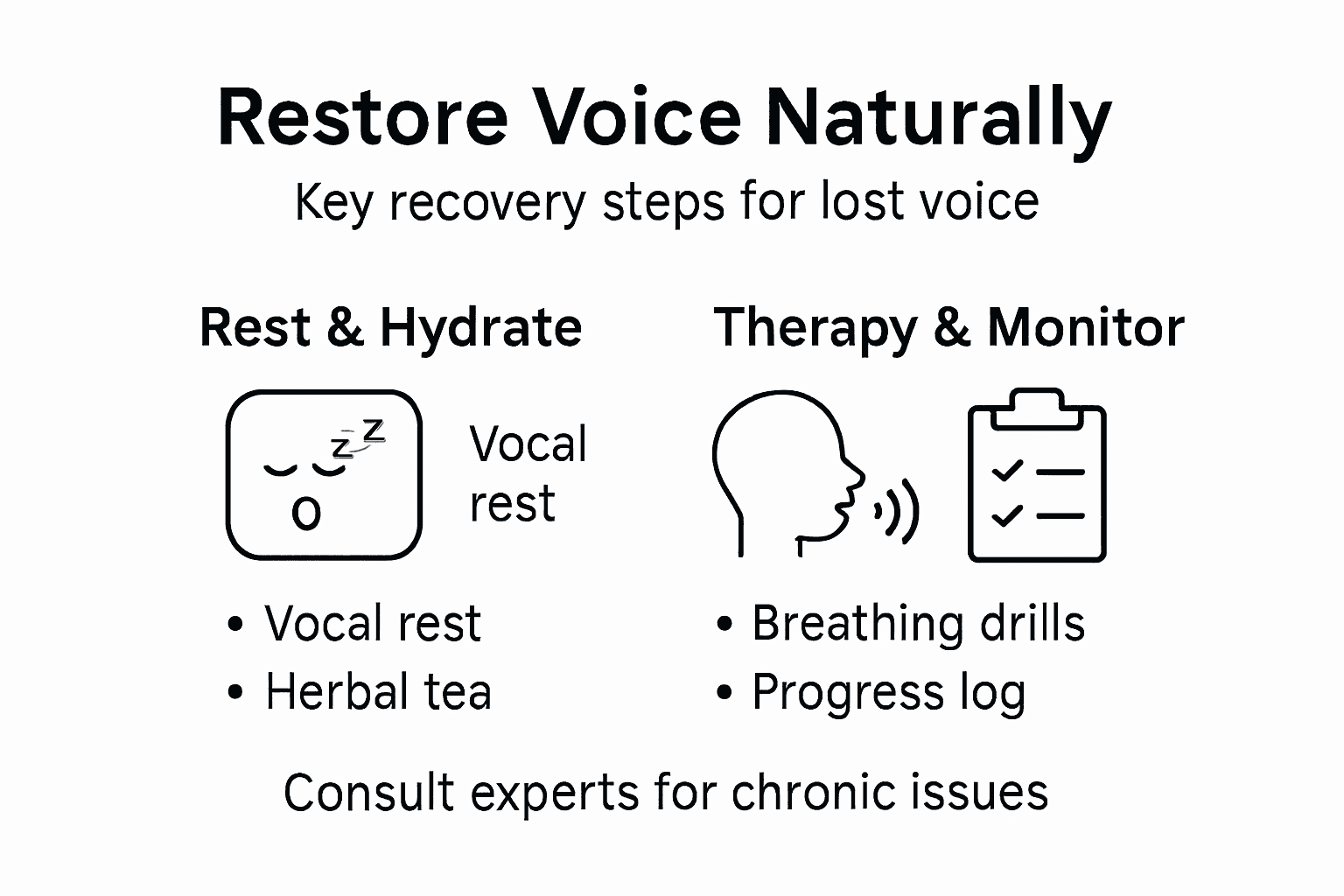
Validating your vocal recovery requires strategic testing in practical communication scenarios to ensure sustainable healing and performance. Vocal tract visualization techniques help professionals confirm comprehensive vocal restoration.
Design a comprehensive real-world vocal verification process:
Step-by-step verification approach:
Authentic voice recovery emerges through controlled, intentional real-world use.
Pay close attention to vocal fatigue, pitch stability, and overall comfort during these interactions. Any persistent discomfort or unusual sensations should prompt consultation with a speech-language pathologist for further assessment.
Pro tip: Create a daily log tracking vocal performance, noting specific challenges, duration of speaking, and perceived vocal quality to identify patterns and improvement trajectories.
Losing your voice or facing persistent hoarseness can be frustrating and impact your daily life and career. This guide highlights the importance of proper vocal rest, hydration, therapy exercises, and careful monitoring to regain vocal strength safely. If you want to complement these natural recovery steps with expert-backed products designed specifically for voice care, explore our range of natural remedies and targeted supports.

Discover effective options like sprays, oils, and therapy kits tailored for singers and voice professionals in our Singer Enhancements - TMRG Solutions. If phlegm or vocal mucus issues are affecting your voice recovery, check out specialized solutions at Phlegm and viscous mucos - TMRG Solutions. Start your healing journey today with trusted products backed by over 25 years of expertise at https://tmrgsolutions.com. Take control of your vocal health now and regain your confident voice naturally.
To assess vocal strain, pay attention to symptoms like persistent hoarseness or pain when speaking. Keep a symptom journal to track changes over a few days and identify potential triggers such as excessive talking or singing.
Effective hydration strategies include drinking at least 8 glasses of water daily and using a humidifier to maintain moisture in your environment. Incorporate water-rich foods like cucumbers and watermelon into your diet for added natural hydration.
Incorporate exercises such as lip trills, tongue trills, and diaphragmatic breathing. Start with simple consonant sounds and gradually advance to vowel extensions to gently rebuild your vocal strength.
Monitor your progress by recording your voice daily and noting any changes in symptoms or performance. Maintain a tracking journal to evaluate improvements, vocal range, and any discomfort you experience during exercises.
You can begin testing your voice in real-world situations once you’ve noticed consistent improvements in your vocal performance and comfort. Start with short, low-intensity interactions, and gradually increase the length and complexity of your speaking engagements.
