Your Cart is Empty


TL;DR:
- Clear speech requires targeted articulation work, resonance exercises, and consistent practice.
- Overcoming barriers like tension, fatigue, and environmental factors improves vocal clarity.
- Regular self-assessment and proper preparation are essential for long-term vocal improvement.
Unclear speech can cost you the role, the round of applause, or the client’s trust. A muddled lyric or a swallowed consonant pulls the audience out of the moment and makes even the strongest performance feel incomplete. Many performers struggle silently with this, cycling through warm-up routines that don’t quite solve the problem and wondering whether clarity is something you’re simply born with. It isn’t. With the right approach, including targeted articulation work, resonance-building exercises, and supportive natural habits, you can train your voice to communicate with precision and power. This guide walks you through every step.
| Point | Details |
|---|---|
| Identify barriers early | Pinpointing root causes allows for tailored improvement strategies. |
| Prepare specialized tools | Proper warm-up and environment setup set the stage for effective vocal clarity work. |
| Use proven exercises | Articulation drills and SOVTE are research-backed methods for meaningful clarity gains. |
| Avoid common mistakes | Regular feedback and gentle practice prevent setbacks and maximize lasting results. |
| Clarity demands sustained effort | Long-term improvement relies on consistent, mindful practice beyond quick fixes. |
Before you can fix a problem, you need to know what’s causing it. Unclear speech in performers rarely comes from a single source. More often, it’s the result of several overlapping factors that quietly erode your articulation over time.
The most common barriers to vocal clarity include:
Articulation and clarity are directly linked. Articulation exercises improve precision of consonants and vowels, which is exactly what makes speech intelligible across a noisy theater or a recording booth. A simple test: try the phrase “red leather, yellow leather” at speed. If it blurs, your articulation needs targeted work.
Environmental setup matters more than most performers realize. Performing in a highly reverberant room, for example, naturally smears consonants because sound waves overlap. Getting closer to the mic, adjusting your projection angle, and learning the acoustics of each space are all practical tools. For deeper reading on this, improving vocal clarity naturally covers the environmental and technique-based variables in practical detail.
| Clarity barrier | Primary cause | Typical symptom |
|---|---|---|
| Poor articulation | Limited tongue/lip movement | Blurred consonants |
| Vocal fatigue | Overuse or poor technique | Thin, effortful sound |
| Physical tension | Jaw, neck, or tongue restriction | Restricted resonance |
| Poor room acoustics | Reverb or noise | Muddled delivery |
| Breath support issues | Shallow or inconsistent airflow | Unstable tone |
If you’ve ever dealt with hoarseness alongside clarity problems, treating hoarseness explains why certain “good” techniques can actually work against you.
Pro Tip: Record yourself speaking a passage or lyric, then replay it while focusing only on consonants. You’ll quickly identify whether your main trouble spot is the tongue tip, lips, or jaw, which tells you exactly which drills to prioritize.
Having established the causes, let’s get ready for practical improvement. Good preparation separates performers who see fast results from those who spin their wheels.
Before any exercise session, gather these essentials:
Think of your voice as an instrument that needs to be tuned before it’s played. Skipping preparation is like running a race without a warm-up. You might finish, but you’re risking injury and leaving performance on the table.
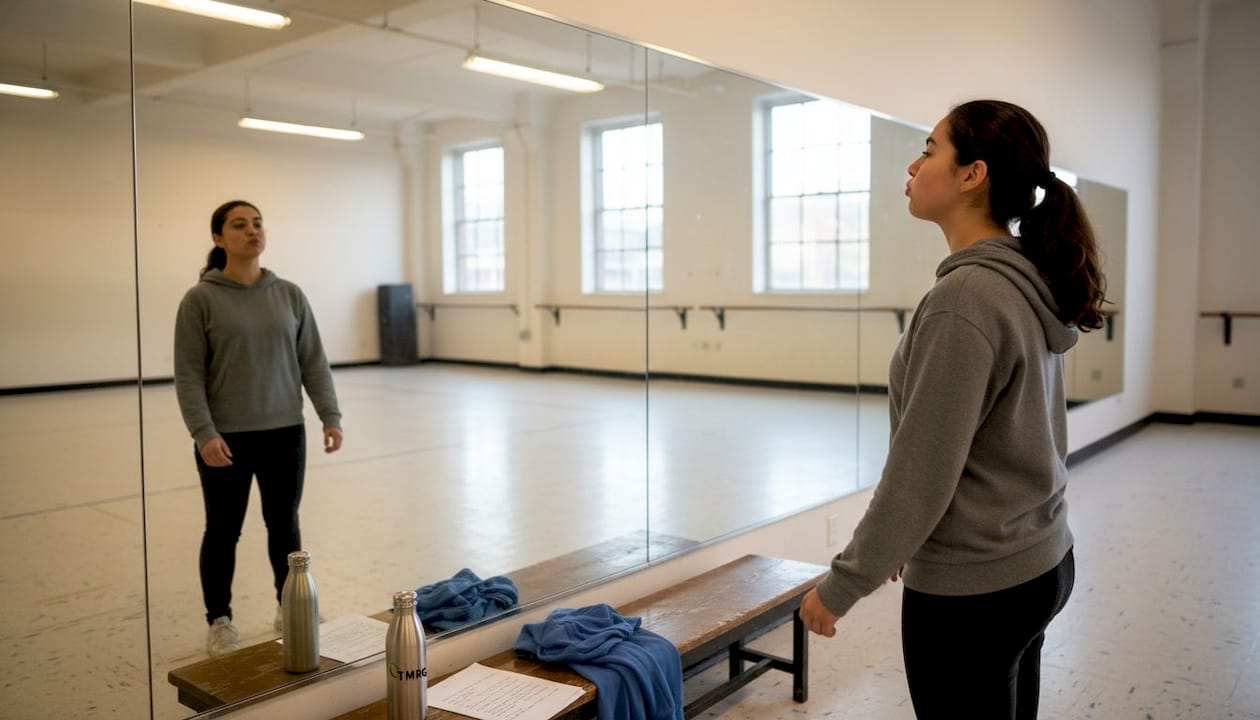
Here’s a comparison of the three main drill types to help you understand which fits each stage of your session:
| Exercise type | Best used for | Session timing |
|---|---|---|
| Articulation drills | Consonant precision and jaw mobility | Mid to late session |
| SOVTE routines | Resonance, efficiency, warm-up | Early session |
| Resonance-building exercises | Projection, fullness of tone | Mid session |
For vocal support tips that complement your preparation, consistent breath management is the foundation that holds all clarity work together. Diaphragmatic breathing, where the breath comes from low in the abdomen rather than the chest, gives you the sustained airflow needed for controlled, crisp articulation.
Also consider your hydration status before you begin. The vocal folds vibrate best when well-lubricated. Staying hydrated throughout the day, not just right before practice, makes a measurable difference in how responsive your voice feels. For practical strategies on improving vocal strength alongside clarity, strength and precision reinforce each other.
With everything prepared, now follow these proven exercises step by step.
1. Lip trill warm-up (SOVTE) Bring your lips together loosely and blow a steady stream of air through them, producing a motorboat-like vibration. Sustain this for 5 seconds, then glide your pitch gently up and down. Repeat 5 times. Lip trills and straw phonation reduce vocal fold impact stress while engaging the whole resonance system.
2. Straw phonation Place a thin straw between your lips and hum through it at a comfortable pitch. The narrow opening creates back pressure that gently stretches and balances the vocal folds. Do this for 2 minutes at the start of every session.
3. Consonant articulation drills Speak these tongue twisters slowly at first, exaggerating each consonant, then gradually increase speed while maintaining precision:
Articulation exercises sharpen the precision of both consonants and vowels, which is the foundation of intelligible speech in performance contexts.
4. Resonance exercise: The hum and open Hum with your lips closed and feel the vibration move forward into your lips and cheekbones. Then open your mouth slowly to an “ah” vowel, keeping the sensation of resonance in the front of your face. Repeat 8 times.
5. Jaw release and vowel stretch Gently massage your jaw hinge, then practice exaggerated vowel sequences (ah, eh, ee, oh, oo) with maximum mouth opening. This loosens tension and trains the jaw for fuller, more resonant speech.
For vocal cord relaxation techniques that support these exercises, gentle contraction and release work keeps the vocal folds responsive. You can also explore types of voice therapy to understand which therapeutic approaches align best with your performance goals.
Important: Never push through pain or discomfort during vocal exercises. Sensation of effort is normal; pain, scratchiness, or sudden loss of voice are warning signs. Stop immediately and rest if any of these occur. Vocal strain from over-practice can set your progress back weeks.
Pro Tip: Set a daily 15-minute practice block rather than occasional long sessions. Consistency beats intensity every time when it comes to building clarity as a lasting skill.
Even with a good method, mistakes can undermine your progress. Here’s how to spot and correct them.
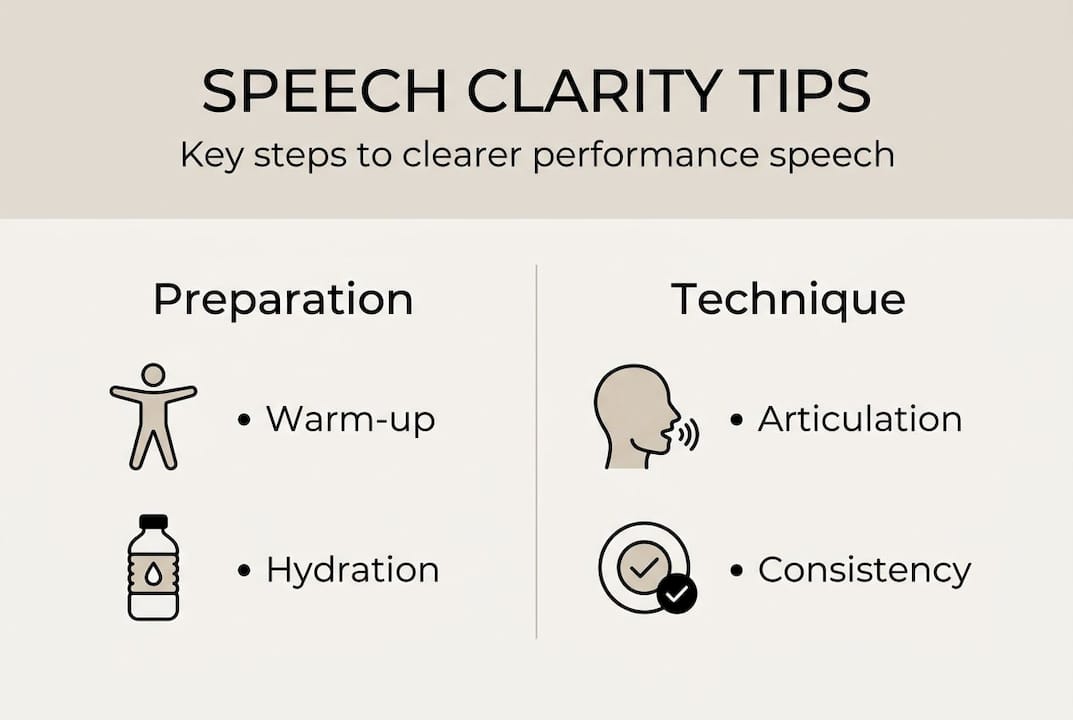
The most common pitfall is skipping the warm-up because you feel pressed for time. Jumping straight into articulation drills with cold, tight vocal folds is like sprinting before you’ve walked. Your muscles aren’t ready, and the exercises produce less benefit while increasing strain risk.
Another frequent error is pushing too hard too fast. Performers with high standards often equate effort with progress. But vocal improvement follows a gradual curve. Overloading your session leads to fatigue, which actually worsens clarity in the short term and can create compensatory tension patterns that are hard to undo.
Ignoring your own recorded feedback is also surprisingly common. Many performers practice exercises but never listen critically to the results. Without that feedback loop, you’re practicing blind.
Here’s a practical correction checklist:
The data supports consistency over intensity. Voice education programs show impressive knowledge retention, with participants maintaining 80.3% accuracy after one year of voice training. That kind of lasting improvement comes from sustained engagement, not short-term effort spikes.
For performers looking to push their sound further, vocal intensity techniques provide a structured approach to projecting clearly without strain. If speech is your primary concern rather than singing, the TMRG method for speech offers a specialized therapeutic framework worth exploring.
Beyond these practical steps, there are deeper truths about speech clarity that every performer should know.
Most guides teach you the exercises, but they stop short of addressing the real reason performers plateau. It isn’t lack of technique. It’s lack of honest, consistent self-assessment. You can do every drill perfectly and still miss the small compensatory habits your voice has built up over years, the slight jaw lock before a difficult phrase, the tongue pulling back on certain vowels, the breath that shortens under pressure.
Instant fixes feel appealing, but clarity doesn’t work that way. The voice adapts through repetition, not revelation. We’ve seen performers with decades of experience make dramatic gains simply by introducing a daily feedback ritual and tracking small wins consistently.
“Clarity is a muscle, not just a skill. You train it the same way you train any other part of your performance: with patience, attention, and honest review.”
If you’re ready to go beyond exercises, choosing the right voice solution for your specific needs is a natural next step that many performers overlook until the problem becomes urgent.
If you’re looking for next-level support, here’s how TMRG Solutions can help. With over 25 years of expertise in vocal health, TMRG offers targeted solutions designed specifically for performers who need more than generic advice.

Whether you’re dealing with persistent vocal fatigue, resonance challenges, or recovery from strain, TMRG’s voice therapy kits give you structured, expert-backed support at every level. The TMRG Voice Therapy Kit Basic is a practical starting point, while the Voice Therapy Kit Standard and Voice Therapy Kit Premium offer progressively deeper support for professional performers. Each kit pairs natural formulations with proven technique guidance to help your voice perform at its best, consistently.
Regular articulation drills combined with semi-occluded vocal tract exercises can produce noticeable improvements quickly, especially when practiced daily with recorded self-review.
Most performers notice a difference within a few weeks of consistent practice, but lasting results depend on ongoing work. Voice education programs show that gains are maintained over a year only with sustained engagement.
The majority of exercises are safe when done correctly, but skipping warm-ups or overtraining increases strain risk. Proper technique is essential, as articulation exercises require controlled execution to avoid adding tension rather than releasing it.
Natural remedies like hydration, herbal support, and gentle warm-up routines create the conditions your voice needs to respond to training. They work best alongside consistent articulation and resonance-building routines rather than as a standalone fix.
