Your Cart is Empty


Voice professionals face alarming rates of vocal strain, with over 25% of healthcare workers experiencing occupational voice fatigue. Singers, actors, and lecturers encounter similar challenges that threaten career longevity. Understanding the causes and prevention strategies empowers you to maintain vocal health naturally. This guide reveals how to recognize early warning signs, implement effective recovery techniques, and protect your voice through evidence-based holistic approaches.
| Point | Details |
|---|---|
| Vocal fatigue stems from overuse and stress | Physical strain combined with psychological tension creates voice disorders affecting professional performance. |
| Environmental factors directly impact voice quality | Smoke, dry air, and allergens harm vocal cords and require proactive management. |
| Early recognition prevents chronic damage | Identifying symptoms like hoarseness and reduced range enables timely rest and treatment. |
| Holistic care integrates exercises and lifestyle changes | Combining vocal warm-ups, hydration, mindfulness, and proper technique supports long-term vocal health. |
| Monitoring tools track vocal health effectively | The Singer Reflux Symptom Score provides validated assessment for early intervention. |
Vocal fatigue describes the sensation of tiredness or weakness in your voice after extended use. Hoarseness manifests as a raspy, strained, or breathy vocal quality. Both conditions signal underlying stress on your vocal mechanism that requires attention.
Muscle tension dysphonia affects up to 40% of voice disorder patients. This condition occurs when excessive muscle tension during phonation creates inefficient vocal production. You might experience throat tightness, vocal breaks, or difficulty projecting your voice.
Several primary causes contribute to vocal fatigue:
Singers regularly face these challenges during rehearsals and performances. Actors push vocal limits during long production schedules. Teachers and lecturers speak continuously throughout workdays. Healthcare professionals communicate in noisy environments that encourage vocal strain.
“The importance of voice maintenance cannot be overstated for anyone who depends on their voice professionally.”
Vocal dysfunction impacts your ability to perform job responsibilities effectively. Reduced vocal stamina limits performance duration. Inconsistent voice quality undermines professional credibility. Pain or discomfort during speaking discourages communication. Understanding these mechanisms prepares you to implement targeted prevention strategies.
Your nervous system state profoundly affects vocal production quality. When you experience stress or anxiety, your body enters a sympathetic response mode. This activation increases muscle tension throughout your body, including the intrinsic and extrinsic laryngeal muscles.

Stress and anxiety correlate strongly with vocal dysfunction. Mindfulness practices and vocal warm-ups improve vocal control by shifting your nervous system toward parasympathetic dominance. This relaxed state enables optimal muscle coordination for voice production.
Muscle tension dysphonia develops through a specific pathway:
Vocal overuse, improper technique, and excessive talking lead to vocal cord fatigue symptoms. Your vocal folds vibrate hundreds of times per second during speech. Extended phonation without rest accumulates microdamage that requires recovery time.
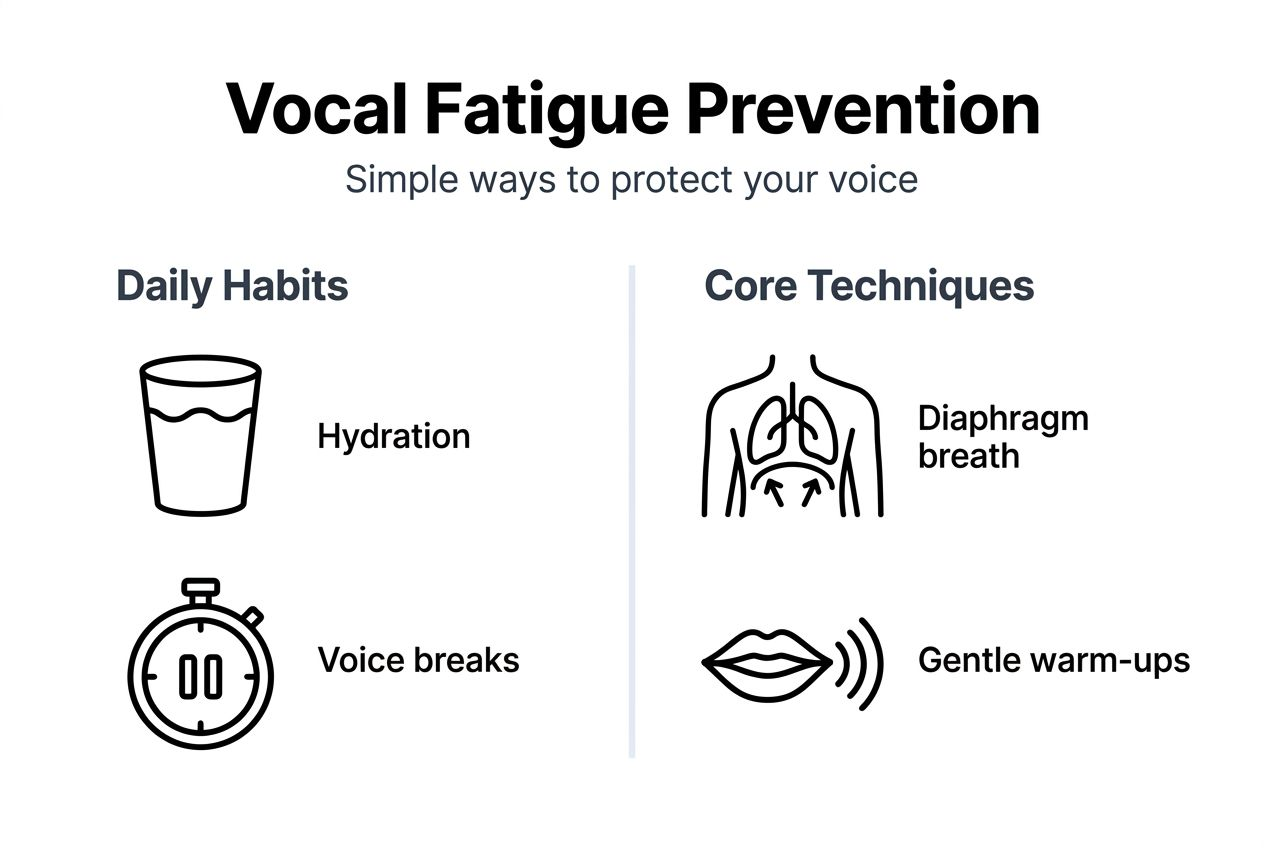
Pro Tip: Schedule regular voice breaks throughout your day. Even five minutes of complete vocal rest every hour significantly reduces accumulated fatigue and prevents chronic strain.
Managing stress requires a multi-faceted approach. Deep breathing exercises activate your parasympathetic nervous system. Progressive muscle relaxation releases physical tension. Adequate sleep supports tissue repair and recovery. Regular exercise improves overall stress resilience.
Improving vocal strength through proper technique reduces the muscular effort required for phonation. Efficient voice production minimizes strain while maximizing vocal impact. Learning to support your voice from your breath rather than your throat prevents harmful compensation patterns.
Essential exercises for vocal recovery address both strength and flexibility. Semi-occluded vocal tract exercises create back pressure that optimizes vocal fold vibration. Gentle humming and lip trills warm up your voice safely. These techniques prepare your vocal mechanism for performance demands.
Environmental factors like cigarette smoke, dry air, and allergens harm vocal health. Avoiding these exposures protects your vocal tissues from irritation and inflammation. Use air purifiers in your home and workspace. Maintain humidity levels between 30-50% to prevent vocal fold desiccation.
Hydration forms the foundation of vocal health maintenance. Your vocal folds require adequate systemic hydration to maintain pliability. Drink water consistently throughout the day rather than large amounts infrequently. Avoid excessive caffeine and alcohol, which have diuretic effects that promote dehydration.
Early rest and professional guidance prevent exacerbation of vocal strain. When you notice early fatigue symptoms, reduce vocal demands immediately. Complete voice rest for 24-48 hours often resolves acute strain before it becomes chronic.
Effective natural vocal exercises include:
Breathing techniques support efficient voice production. Diaphragmatic breathing provides steady airflow without upper body tension. Practice expanding your lower ribs and abdomen during inhalation. This approach supplies adequate breath pressure for vocal demands.
Pro Tip: Steam inhalation provides direct hydration to vocal fold surfaces. Use a personal steamer for 10-15 minutes before performances or after extended vocal use to soothe tissues and improve flexibility.
Stress management methods enhance vocal function. Mindfulness meditation reduces overall tension levels. Yoga combines physical stretching with breath awareness. Both practices improve body awareness that supports optimal vocal technique.
| Vocal Care Strategy | Implementation | Frequency | Expected Benefit |
|---|---|---|---|
| Hydration | 8-10 glasses water daily | Continuous | Maintains vocal fold pliability |
| Vocal rest | Complete silence periods | Daily breaks | Prevents accumulated fatigue |
| Steam inhalation | 10-15 minutes | Before/after use | Direct tissue hydration |
| Breathing exercises | Diaphragmatic practice | 2x daily | Efficient vocal support |
| Mindfulness practice | 10-20 minutes meditation | Daily | Reduces muscle tension |
The Singer Reflux Symptom Score provides a validated tool for assessing singing-related reflux symptoms. Laryngopharyngeal reflux affects many voice professionals but often goes unrecognized. Tracking symptoms helps identify patterns requiring intervention.
Vocal support tips and exercises teach proper breath management techniques. Support originates from controlled exhalation, not throat constriction. Engaging your core muscles stabilizes airflow for consistent vocal production.
One simple exercise can help treat tired voice effectively. The exercise targets specific muscle groups to release accumulated tension. Regular practice prevents chronic fatigue development.
The Singer Reflux Symptom Score demonstrates high diagnostic accuracy for identifying reflux-related vocal symptoms. This validated assessment tool uses specific questions about throat clearing, postnasal drip, and voice changes. Scoring above threshold values indicates the need for reflux management.
Comparing vocal health monitoring approaches:
| Monitoring Tool | Purpose | Best For | Limitations |
|---|---|---|---|
| Singer Reflux Symptom Score | Identifies reflux symptoms | Singers with throat symptoms | Specific to reflux only |
| Voice Handicap Index | Measures perceived disability | Overall impact assessment | Subjective perception |
| Acoustic analysis | Objective voice quality | Tracking treatment progress | Requires specialized equipment |
| Symptom diary | Pattern identification | Daily self-monitoring | Time-intensive |
Interpreting sRSS scores requires understanding threshold values. Scores above 15 suggest clinically significant reflux requiring medical evaluation. Individual questions identify specific symptom patterns. Tracking scores over time reveals treatment effectiveness.
Seek professional voice assessment when:
Medical professionals play a crucial role in vocal health for performers. Laryngologists specialize in voice disorders. Speech-language pathologists provide voice therapy. Vocal coaches teach proper technique. Collaborative care addresses all aspects of vocal function.
Common pitfalls that damage vocal health include:
“Tailoring vocal exercises to individual needs leads to better recovery and prevention outcomes.”
Pro Tip: Maintain a vocal health journal documenting daily voice use, symptoms, and environmental factors. Patterns emerge that reveal specific triggers requiring modification. Consistency in monitoring enables early intervention before minor issues become chronic problems.
Personalized exercise programs address your specific vocal demands. Singers require different conditioning than public speakers. Actors need versatility across vocal qualities. Working with qualified professionals ensures exercises match your needs.
Your vocal health deserves specialized support tailored to professional demands. TMRG Solutions offers comprehensive voice therapy kits designed specifically for singers, actors, and voice professionals facing fatigue and strain.

The basic voice therapy kit provides essential tools for daily vocal maintenance. Natural herbal formulations reduce inflammation and support tissue healing. The standard voice therapy kit includes additional recovery resources for more intensive needs. Both kits incorporate 25+ years of vocal health expertise into proven natural remedies.
For comprehensive recovery support, the herbal vocal recovery kit combines powerful botanical ingredients that address multiple aspects of vocal health. These formulations support your body’s natural healing processes without harsh chemicals. Combining therapy kits with the routine care strategies outlined above enhances results and accelerates recovery from vocal strain.
Early signs include hoarseness after voice use, feeling tired when speaking or singing, throat discomfort, and reduced vocal range. Your voice may sound breathy or require more effort to produce. Spotting these symptoms early allows you to implement rest and prevention strategies before strain becomes chronic damage.
Hydration forms the foundation, supported by adequate vocal rest and steam inhalation for direct tissue moisture. Herbal remedies with anti-inflammatory properties reduce swelling and irritation. Mindfulness practices release muscle tension while proper vocal exercises rebuild strength safely. Combining multiple approaches creates comprehensive recovery support.
Stress triggers muscle tension throughout your body, including laryngeal muscles controlling voice production. This tension creates inefficient phonation patterns and vocal strain. Practices like mindfulness meditation, yoga, gentle stretching, and proper vocal warm-ups help shift your nervous system toward relaxation. Regular stress management prevents tension from becoming chronic vocal dysfunction.
If hoarseness or fatigue persists beyond two weeks despite rest and care, seek evaluation from a laryngologist or speech-language pathologist. Pain during voice use, significant range loss, or difficulty performing professional vocal tasks warrant immediate assessment. Early intervention through voice maintenance prevents chronic damage and supports career longevity. Professional guidance ensures accurate diagnosis and appropriate treatment for your specific condition.
