Your Cart is Empty


Vocal disorders affect up to 30% of professional voice users, yet many cases go undiagnosed or improperly managed. Medical professionals, particularly otolaryngologists and speech therapists, play a vital role in preventing and treating these conditions in performers and educators whose careers depend on vocal function. Understanding otolaryngologists’ specialized approach to voice disorders helps establish effective treatment pathways for occupational voice users facing nodules, polyps, and other laryngeal conditions.
| Point | Details |
|---|---|
| Medical professionals prevent vocal disorders | Early intervention by otolaryngologists and speech therapists reduces long-term damage in occupational voice users. |
| Accurate diagnosis improves outcomes | Laryngoscopy and stroboscopy enhance diagnostic precision, leading to better treatment success rates. |
| Vocal hygiene reduces disorder risk | Proper hydration, voice rest, and environmental adjustments significantly lower voice disorder prevalence. |
| Interdisciplinary collaboration optimizes care | Team-based approaches combining medical, therapeutic, and coaching expertise improve patient outcomes by 35%. |
| Timely referral prevents chronic damage | Recognizing early warning signs and referring to specialists within four weeks prevents permanent vocal injury. |
Professional voice users face distinct vocal challenges that medical professionals must recognize quickly. Teachers, performers, and lecturers experience vocal disorders in performers at rates far exceeding the general population, with prevalence reaching 7-10% for vocal nodules alone.
Vocal nodules develop from chronic phonotrauma, appearing as bilateral callus-like growths on the vocal folds. Polyps typically present unilaterally and result from acute vocal trauma or hemorrhage. Laryngitis, whether acute or chronic, causes inflammation that impairs vocal fold vibration. Spasmodic dysphonia involves involuntary laryngeal muscle spasms that disrupt speech fluency.
These conditions manifest through characteristic symptoms:
The occupational impact proves substantial. Teachers frequently develop vocal nodules from prolonged loud speaking in poor acoustic environments. Performers face polyps from intense vocal demands during rehearsals and performances. These disorders threaten career viability for individuals whose livelihoods depend entirely on voice quality and endurance.
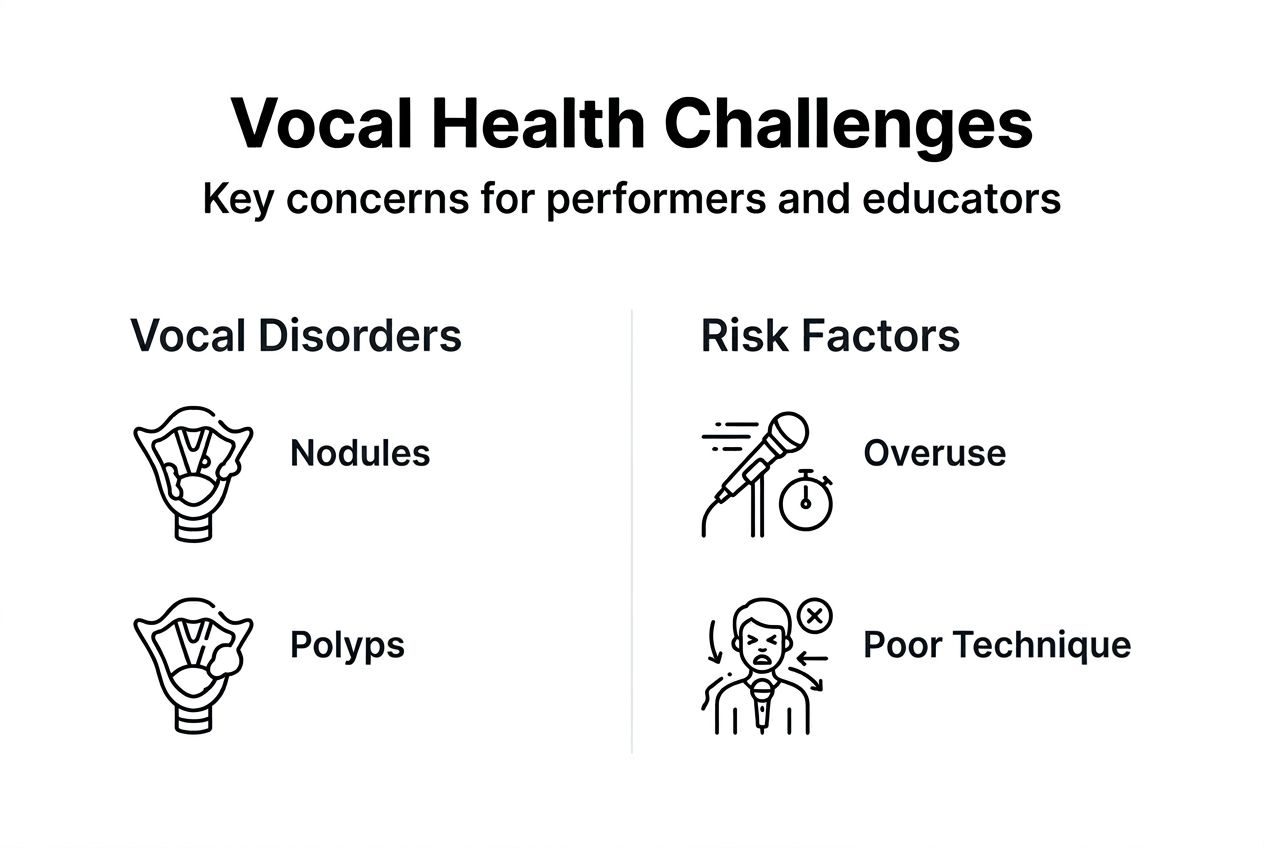
Recognizing these patterns enables clinicians to identify at-risk patients early. Medical professionals who understand occupational voice demands can implement preventive strategies before permanent damage occurs. Early detection through routine voice disorder screening significantly improves treatment outcomes and preserves vocal function.
Precise diagnosis forms the foundation of effective vocal health management. Medical professionals employ specialized techniques to visualize laryngeal structures and assess vocal fold function with accuracy impossible through perceptual evaluation alone.
Laryngoscopy provides direct visualization of the vocal folds using flexible or rigid endoscopes. This procedure reveals structural abnormalities including nodules, polyps, cysts, edema, and erythema. Clinicians examine vocal fold symmetry, closure patterns, and lesion characteristics that guide treatment decisions.
Stroboscopy revolutionizes diagnostic precision by illuminating vocal fold vibration patterns invisible to the naked eye. This technique uses synchronized light flashes to create slow-motion visualization of mucosal wave motion. Stroboscopy increases diagnostic accuracy by 25% over direct laryngoscopy alone, revealing subtle vibratory asymmetries and phase closure deficits that indicate early pathology.
Acoustic analysis quantifies voice parameters objectively:
These diagnostic modalities complement each other. Laryngoscopy identifies structural lesions, stroboscopy evaluates functional impairment, and acoustic analysis documents severity objectively. Together, they enable clinicians to differentiate between disorders requiring medical intervention versus those responsive to voice therapy alone.
Improved diagnostic precision translates directly to better treatment outcomes. Accurate identification of lesion type, size, and functional impact allows medical professionals to select optimal interventions. Patients benefit from targeted therapy that addresses specific pathophysiology rather than generic voice rest recommendations.
Prevention surpasses treatment in preserving vocal health for occupational voice users. Medical professionals who educate patients about vocal hygiene principles and environmental modifications can dramatically reduce disorder incidence.

Core vocal hygiene practices include systemic hydration maintaining mucus membrane pliability, scheduled voice rest periods preventing cumulative phonotrauma, and avoidance of irritants like smoke, excessive caffeine, and dehydrating medications. Individuals following vocal hygiene protocols reduce voice disorder risk by 40-50%.
Occupational and environmental factors substantially elevate vocal strain:
Voice ergonomics and amplification technologies offer practical solutions. Portable voice amplifiers reduce vocal intensity requirements in classrooms and performance venues. Strategic speaker positioning and room layout modifications improve acoustic efficiency. Humidity control systems maintain optimal mucosal hydration.
Pro Tip: Recommend performers and educators use personal amplification systems during prolonged speaking engagements, keeping vocal intensity below 75 dB to minimize phonotrauma while maintaining audience intelligibility.
Medical professionals should assess workplace vocal demands during patient evaluations. Understanding specific occupational challenges allows tailored recommendations addressing individual risk factors. Preventive counseling proves more effective than reactive treatment for preserving long-term vocal function.
Effective vocal disorder management requires matching interventions to pathology severity and patient needs. Medical professionals must understand the evidence base supporting conservative versus invasive approaches.
Voice therapy delivered by speech-language pathologists forms the foundation of benign vocal lesion treatment. Therapy protocols target inefficient vocal behaviors through resonance training, breath support optimization, and tension reduction techniques. Up to 70% of patients with benign vocal lesions improve with voice therapy alone, avoiding surgical risks and recovery periods.
Medical treatments address specific pathophysiology. Proton pump inhibitors manage laryngopharyngeal reflux contributing to chronic laryngitis. Botulinum toxin injections provide targeted relief for spasmodic dysphonia by weakening overactive laryngeal muscles. Anti-inflammatory medications reduce acute vocal fold edema when appropriate.
Surgical intervention becomes necessary when conservative management fails or structural abnormalities preclude functional improvement. Microlaryngeal surgery excises polyps, cysts, and refractory nodules under microscopic visualization. Laser procedures address vascular lesions and papillomas. Medialization procedures improve glottic closure in vocal fold paralysis cases.
| Treatment Approach | Success Rate | Recovery Time | Best For |
|---|---|---|---|
| Voice Therapy | 70% lesion resolution | 6-12 weeks | Nodules, functional dysphonia, early lesions |
| Medical Management | Variable by condition | 2-8 weeks | Reflux laryngitis, spasmodic dysphonia, inflammation |
| Microlaryngeal Surgery | 85-95% improvement | 2-6 weeks voice rest | Refractory nodules, polyps, cysts, structural defects |
Pro Tip: Reserve surgical recommendations for patients who complete at least eight weeks of compliant voice therapy without improvement, ensuring behavioral factors contributing to lesion formation are addressed before intervention.
Treatment selection requires shared decision-making considering vocal demands, timeline constraints, and patient preferences. Performers facing imminent career opportunities may prioritize rapid surgical intervention, while educators with flexible schedules may prefer conservative therapy. Medical professionals guide these decisions by presenting realistic outcome expectations and recovery requirements.
Complex vocal disorders demand expertise spanning medical, therapeutic, and pedagogical domains. Integrated care teams optimize outcomes by combining complementary skill sets that no single practitioner possesses.
Otolaryngologists provide diagnostic evaluation, medical management, and surgical intervention when indicated. They identify structural pathology, prescribe appropriate pharmacotherapy, and perform procedures addressing anatomical abnormalities. Speech-language pathologists deliver evidence-based voice therapy targeting inefficient vocal behaviors and facilitating functional rehabilitation. Vocal coaches and singing teachers offer performance-specific technique refinement and artistic guidance within healthy physiological parameters.
Integrated care teams improve outcomes by 35% compared to isolated treatment approaches. This improvement stems from reduced diagnostic errors, coordinated treatment planning, and consistent patient messaging across providers.
Successful interdisciplinary collaboration requires clear role definition and regular communication:
| Care Model | Diagnostic Accuracy | Treatment Adherence | Outcome Satisfaction |
|---|---|---|---|
| Isolated Provider | 72% | 58% | 65% |
| Interdisciplinary Team | 94% | 87% | 91% |
Practical implementation strategies include establishing referral networks with trusted voice specialists, developing communication protocols for case discussion, and creating shared documentation systems tracking patient progress. Medical professionals in communities lacking formal voice centers can build informal collaborative relationships ensuring patients access comprehensive care.
Patients benefit immensely from cohesive teams speaking with unified voices about vocal health. Conflicting advice between providers undermines treatment adherence and delays recovery. Coordinated care accelerates improvement and prevents chronic disability.
Misunderstandings about vocal disorders persist among medical professionals and patients alike. Correcting these misconceptions improves clinical outcomes and patient satisfaction.
Vocal rest alone rarely resolves voice disorders. While acute inflammation benefits from brief rest periods, chronic conditions like nodules require active behavioral modification through voice therapy. Complete silence for extended periods can actually impair recovery by promoting muscle atrophy and anxiety about voice use. Relative voice rest limiting duration and intensity of phonation proves more effective than absolute silence.
Surgery is not inevitable for vocal nodules. Over 60% of nodules treated with combined voice therapy and medical management avoid surgery. Many patients assume surgical removal represents the only solution, when behavioral modification addresses underlying causative factors more effectively. Surgery without behavioral change frequently results in recurrence.
Voice health management extends beyond professional singers. Teachers, attorneys, clergy, salespeople, and healthcare providers all qualify as occupational voice users requiring preventive care and early intervention. The misconception that only performers need vocal health services delays treatment for educators and other professionals facing significant voice demands.
Key corrections medical professionals should communicate:
Addressing these misconceptions during patient education improves treatment compliance and outcomes. Medical professionals who explain the rationale behind recommended interventions empower patients to make informed decisions about vocal health management.
Timely specialist referral prevents irreversible vocal damage. Medical professionals must recognize warning signs warranting immediate otolaryngology evaluation.
Persistent hoarseness exceeding four weeks increases long-term laryngeal damage risk by 50%. Voice breaks during phonation, increasing vocal effort requirements, and pain associated with speaking all indicate potential pathology requiring investigation. Sudden voice changes following upper respiratory infections may signal vocal fold hemorrhage needing urgent assessment.
Daily vocal hygiene practices preserve function:
Environmental modifications reduce vocal strain significantly. Install humidity controls maintaining 40-50% relative humidity in frequently used spaces. Implement classroom amplification systems reducing intensity requirements. Address background noise sources through acoustic panels and strategic scheduling.
Medical professionals should counsel patients about vocal maintenance strategies appropriate to their specific occupational demands. Educators benefit from microphone use during lectures. Performers require structured daily routines balancing vocal exercise with adequate recovery.
Implementing a comprehensive vocal care checklist helps patients systematize healthy habits. Regular monitoring of vocal function through patient-reported outcome measures enables early detection of declining function before catastrophic injury occurs.
Medical professionals seeking evidence-based tools to support patient vocal health can integrate specialized resources into treatment protocols. Voice therapy kits provide structured frameworks for home practice, reinforcing clinical interventions between sessions.

The TMRG Voice Therapy Kit Basic offers essential tools for patients beginning vocal rehabilitation, while the Voice Therapy Kit Standard includes advanced resources for complex cases. These kits complement professional therapy by providing patients with guided exercises and monitoring tools that enhance treatment adherence.
Medical professionals can review the comprehensive vocal problems overview to better understand patient challenges and available solutions. Integrating these resources into practice supports interdisciplinary care models and improves patient outcomes through consistent home practice protocols.
Persistent hoarseness lasting more than four weeks requires immediate specialist evaluation, as prolonged hoarseness increases damage risk by 50%. Voice breaks during normal speaking, increased effort to maintain phonation, and pain associated with voice use all indicate potential pathology. Early evaluation prevents progression to irreversible injury.
Otolaryngologists establish medical diagnosis through laryngoscopy and manage structural or neurological pathology requiring intervention. Speech therapists design and implement customized voice therapy addressing inefficient vocal behaviors and functional rehabilitation. Integrated care teams improve outcomes by 35% through coordinated treatment planning and regular progress monitoring.
Regular hydration maintaining mucus membrane function, scheduled voice rest periods during extended teaching days, and voice amplification systems reducing intensity requirements form the prevention foundation. Addressing environmental factors including background noise, poor acoustics, and dry air significantly reduces phonotrauma risk. Following a comprehensive vocal care checklist systematizes healthy habits.
Surgery is reserved for nodules that fail to resolve after at least eight weeks of compliant voice therapy and medical management. Over 60% of nodules improve with conservative treatment alone, avoiding surgical risks and recovery requirements. Surgery without addressing underlying behavioral factors frequently results in recurrence, making behavioral modification essential regardless of intervention choice.
