Your Cart is Empty


Stepping onto the stage or into a studio demands more from your voice than many realize. For professional singers and vocal coaches, optimizing vocal health means more than just singing scales or humming tunes. Scientific research confirms that warming up the singing voice enhances acoustic parameters and overall vocal performance, making intentional warm-ups a critical step rather than a mere routine. Discover how targeted warm-up techniques, paired with natural remedies, address vocal fatigue and prepare your instrument to thrive under pressure.
| Point | Details |
|---|---|
| Vocal Warm-Ups Are Essential | A proper warm-up prepares the vocal system for performance, enhancing quality and reducing the risk of strain. |
| Quality Over Quantity in Warm-Ups | Focused, intentional warm-up routines yield better results than longer, unfocused sessions. |
| Tailor Warm-Ups to Your Voice | Adjust your warm-up techniques based on daily vocal needs, considering factors like fatigue or freshness. |
| Natural Remedies Support Vocal Health | Incorporate herbal remedies consistently for long-term vocal care and recovery between demanding performances. |
Your vocal folds are always physiologically warm, even at rest. What warm-ups actually do is prepare your entire vocal system for the demands of performance. Think of it like this: your voice responds to countless factors including sleep quality, hydration, diet, mood, and even weather conditions. A proper warm-up routine addresses these variables by realigning your technique with optimal vocal function. When you warm up intentionally, you’re not just heating muscles; you’re creating the neurological and physiological conditions needed for your best performance.
Research shows that warming up the voice enhances acoustic parameters related to voice quality and overall vocal performance. Studies confirm that vocal warm-ups improve vocal fold function and output quality, establishing them as foundational practice for singers at all levels. The mechanism is straightforward: warm-ups prepare your vocal mechanism by fine-tuning coordination between breath support, vocal fold closure, and resonance. Without this preparation, you risk vocal strain, decreased range flexibility, and reduced tonal quality during your actual performance or rehearsal.
What distinguishes an effective warm-up from a random one is intentionality and time efficiency. Many singers spend 20 minutes on unfocused exercises and wonder why they still feel unprepared. Instead, a strategic warm-up targets specific areas your voice needs on that particular day. Whether you’re dealing with morning stiffness, recovering from illness, or preparing for a challenging rehearsal session, your warm-up approach should adapt accordingly. Quality matters more than duration. A focused 10-minute warm-up beats a scattered 30-minute session.
Your warm-up routine isn’t a performance in itself. It’s preparation designed to establish vocal readiness and prevent injury. The most effective warm-ups combine physical loosening of muscles with vocal exercises that gradually increase in intensity and complexity. This progression allows your vocal folds to adjust without shock, your breathing mechanism to coordinate properly, and your articulatory muscles to find their optimal position. When you understand what warm-ups actually accomplish, you stop viewing them as an obligation and start seeing them as essential preparation that directly impacts your vocal health and artistic expression.
Pro tip: Customize your warm-up based on how your voice feels that day, not just following a rigid routine, since factors like sleep, hydration, and stress directly influence what preparation your voice needs.
Not all warm-ups work the same way for your voice. The two primary categories of vocal warm-ups address different physiological needs: physiological warm-ups and traditional warm-ups. Physiological warm-ups, based on semi-occluded vocal tract exercises, prepare your phonatory system by reducing aerodynamic load on your vocal folds. These techniques keep air flowing through partially closed vocal pathways, allowing your folds to coordinate without excessive strain. Traditional warm-ups, by contrast, focus on open vowels and target technical aspects like voice placement, breath support, and tonal resonance. Both improve self-perceived voice quality, but they work through different mechanisms.
The choice between these approaches matters because they produce different results in your voice. Studies show that semi-occluded vocal tract exercises can help avoid early vocal fatigue by managing aerodynamic demands during warm-up. Traditional warm-ups, while effective for technical refinement, may induce fatigue more quickly if your voice is already stressed from previous use or poor vocal habits. Female singers often benefit significantly from combined warm-up strategies that pair vocal exercises with light aerobic activity, improving phonation threshold pressure and overall vocal readiness. Male singers show more variable responses, suggesting that gender and individual vocal characteristics should influence your warm-up selection.
Here is a simple breakdown of common techniques you might encounter:
Physiological approaches include lip trills (buzzing your lips with air flowing through), straw phonation, and other semi-occluded exercises that reduce tension while building coordination. These work especially well when your voice feels tired or tight.
Traditional approaches include open vowel scales, octave jumps, and arpeggios on syllables like “ng” or “ng-ah.” These build strength and placement but work best when your voice is already reasonably fresh.
Combined strategies layer both types together, often starting with physiological exercises to establish ease, then moving to traditional techniques for technical refinement. Many professional singers adopt this progression because it addresses fatigue prevention first, then vocal skill development.
Your warm-up type should match your current vocal state. If you woke up hoarse or just finished a taxing rehearsal, gravitating toward physiological warm-ups prevents compounding fatigue. If your voice feels fresh and you’re preparing for a technically demanding performance, traditional warm-ups sharpen your placement and support. The most effective singers adjust their approach based on what their voice needs that specific day, rather than robotically following one formula.
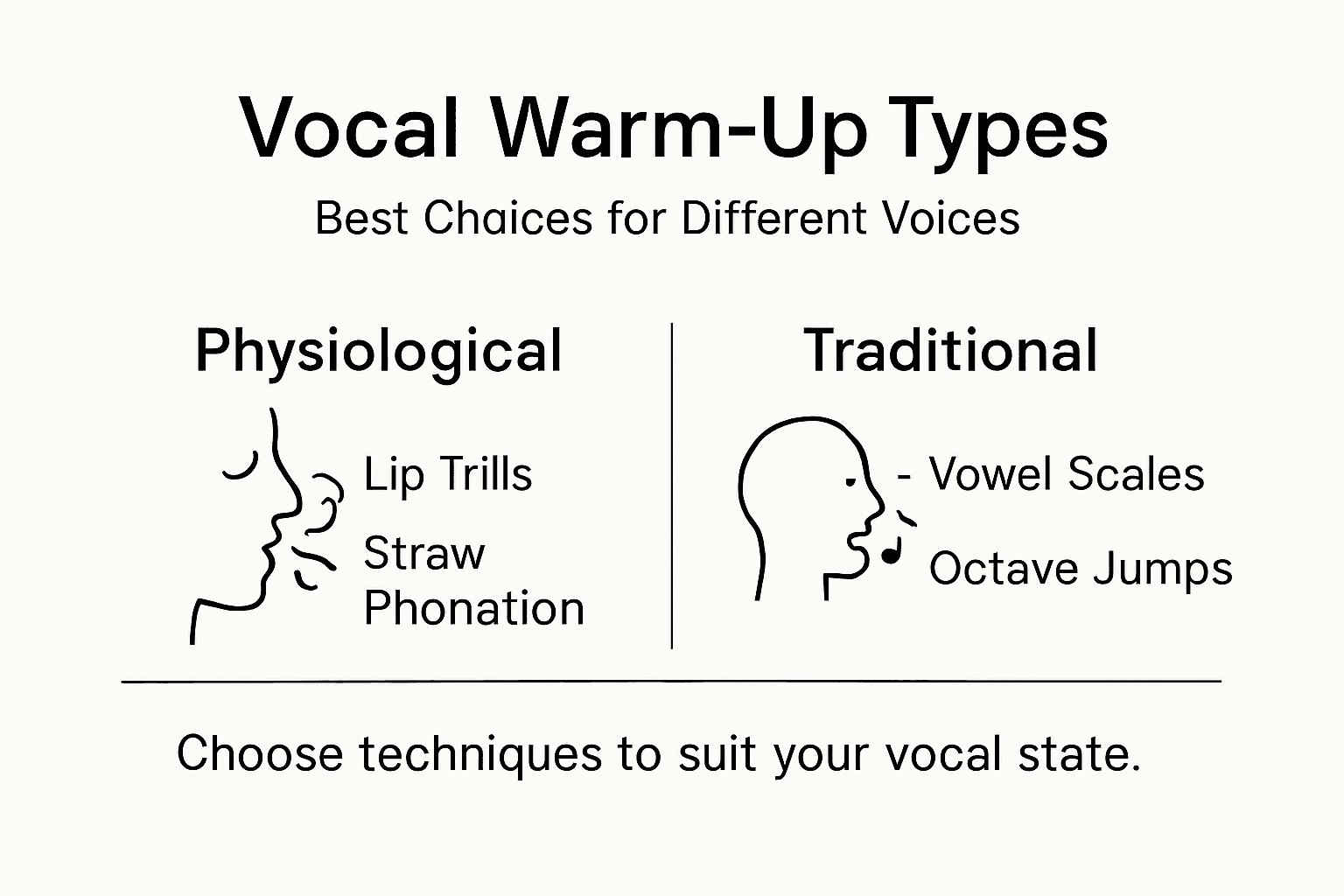
Here’s a side-by-side comparison of the main vocal warm-up approaches and their key effects:
| Warm-Up Type | Primary Benefit | Typical Techniques | Best For |
|---|---|---|---|
| Physiological | Reduces vocal fatigue | Lip trills, straw phonation | Tired or stressed vocal folds |
| Traditional | Refines technical skills | Open vowel scales, arpeggios | Fresh voices, technical rehearsals |
| Combined Strategy | Prevents fatigue, boosts skills | Both techniques in sequence | Versatile, adaptive routines |
Pro tip: Start with physiological exercises like straw phonation to establish ease and coordination, then transition to traditional techniques once your voice feels responsive and unrestricted.
Warm-ups don’t just prepare your voice. They actively transform how you perform by triggering multiple physiological changes that directly impact your singing quality. When you warm up, blood flow increases to your vocal muscles, connective tissues become more flexible, and the coordination between your breathing mechanism and vocal folds improves dramatically. This synchronized activation of your respiratory and phonatory systems creates the foundation for superior vocal control. Your vocal range expands, your tone becomes richer, and your ability to sustain challenging passages improves significantly. The changes aren’t subtle or subjective. They’re measurable improvements in how your voice functions under performance demands.

The performance benefits extend beyond just physical readiness. Inspiratory muscle warm-ups combined with vocal exercises significantly improve maximum phonation time and pitch range in singers. This means you can hold notes longer, access higher and lower pitches more easily, and maintain vocal power throughout demanding performances or rehearsals. Enhanced pulmonary function directly translates to better breath support and reduced fatigue. Your muscles work more efficiently, which means you’re using less energy to produce better sound. This efficiency matters enormously during long performances or multiple takes in the studio.
Beyond the physical mechanics, warm-ups deliver crucial mental and emotional benefits that often get overlooked. The process of warming up increases your mental focus and builds confidence before you step into performance mode. Your mind and body synchronize during warm-ups, creating a psychological shift that primes you for success. Many singers report that a solid warm-up routine transforms their anxiety into productive nervous energy. You feel more connected to your voice, more aware of your technique, and more present in the moment. This mental preparation directly influences your performance outcomes because confidence and focus enhance artistic expression and risk-taking on stage.
The injury prevention aspect cannot be overstated. Without proper warm-up, your vocal folds face unnecessary strain and risk of damage. With warm-up, you’re protecting your long-term vocal health while simultaneously enhancing your immediate performance. You get the best of both worlds: safer singing practices and better results right now. Professional singers who incorporate warm-ups consistently report fewer vocal problems, faster recovery between performances, and longer careers overall. The investment of 10 to 15 minutes in warm-up pays dividends in performance quality, vocal longevity, and professional sustainability.
Pro tip: Combine inspiratory warm-ups focusing on breath control with your vocal exercises to maximize phonation time and pitch range, ensuring you’re building both support and flexibility simultaneously.
Skipping warm-ups might seem like you’re saving time, but you’re actually gambling with your vocal health. When you launch into singing without preparation, your vocal folds and surrounding musculature face immediate stress they’re not ready to handle. Your voice operates less efficiently without warm-up because the muscles haven’t had time to coordinate properly. The result is increased tension throughout your neck, throat, and vocal mechanism. This tension compounds quickly. What starts as mild strain during your first phrase can escalate into vocal fatigue, loss of control, and reduced tonal quality by the time you’re halfway through your performance or rehearsal.
The specific risks are real and measurable. Skipping vocal warm-ups increases the risk of vocal strain and injury by failing to prepare your vocal muscles for increased activity. Without warming up, your vocal folds don’t function efficiently, leading to tension and compromised vocal quality. You lose consistency across your pitch range, meaning high notes feel strained and low notes sound thin. Your voice becomes unpredictable. One phrase feels great, the next feels forced. This inconsistency frustrates performers and damages confidence, which then feeds into further vocal tension and worse performance outcomes. The physical strain also accumulates over time. Professional singers who neglect warm-ups report recurring vocal problems, slower recovery between performances, and a shortened overall career span.
Beyond immediate performance issues, skipping warm-ups has long-term consequences. Your vocal folds are delicate structures that require careful preparation for any demanding use. Repeatedly forcing them into work without proper preparation increases injury risk significantly. You might not feel acute pain immediately, but chronic strain develops gradually. Vocal nodules, vocal polyps, and other structural damage often result from cumulative vocal abuse that began with skipped warm-ups. By the time you notice persistent hoarseness or loss of range, the damage may already require months of vocal rest to recover. Prevention through proper warm-up is exponentially easier than rehabilitation after injury.
The psychological impact matters too. When your voice feels unstable or unprepared, your anxiety increases and your artistic confidence drops. You become tentative instead of bold, conservative instead of expressive. This mental shift directly undermines your performance quality. You’re thinking about protecting your voice instead of focusing on the music and connecting with your audience. Warm-ups establish mental readiness alongside physical preparation. They create a psychological transition from your normal day into performance mode, allowing you to focus fully on artistry rather than survival.
Pro tip: Never skip warm-ups before high-demand vocal tasks, even if you’re running late; even a focused five-minute warm-up using semi-occluded exercises provides significantly better protection than jumping straight into demanding singing.
Warm-ups prepare your voice physically, but natural remedies support the healing and resilience your vocal system needs between performances and rehearsals. Think of warm-ups as the active training component, while natural remedies provide the recovery and nutritional support that keeps your voice healthy long-term. Professional singers across genres recognize that vocal excellence requires both preparation and maintenance. Natural herbal formulations address inflammation, support vocal fold lubrication, soothe irritation, and enhance overall throat health. When combined with consistent warm-up routines, these remedies create a comprehensive vocal care approach that prevents problems before they start rather than treating damage after it occurs.
Many professional voice users incorporate herbal medicinal products into their daily vocal care routines. Herbal products such as linden, sage, ginger, chamomile, and turmeric support vocal health and address hoarseness effectively. These botanicals work through different mechanisms. Sage reduces inflammation and provides antimicrobial properties that protect against throat irritation. Ginger promotes blood flow and reduces swelling in vocal tissues. Chamomile soothes and relaxes throat muscles. Turmeric combats inflammation at the cellular level. Linden supports immune function and protects delicate vocal structures. Rather than masking vocal problems with harsh treatments, these natural options address root causes while supporting your voice’s natural healing processes.
Integrating these remedies into your routine is straightforward. Start using herbal formulations several days before demanding vocal periods, not just when problems appear. This preventive approach is far more effective than reactive treatment. Many singers incorporate herbal teas or throat sprays into their morning routine, consume them after rehearsals, and use specialized vocal products before performances. The consistency matters more than the specific product you choose. Your voice responds better to sustained, gentle support than to sporadic intensive treatments. Consider that warm-ups prepare your voice for today’s demands, while natural remedies prepare your voice for tomorrow’s demands. Together, they create a sustainable vocal care system that protects your instrument across years and decades of professional singing.
For quick reference, here’s how commonly used herbal remedies target vocal health:
| Herb | Main Effect | Usage Advice |
|---|---|---|
| Sage | Reduces inflammation | Use in teas or sprays before singing |
| Ginger | Improves blood flow | Sip ginger tea during vocal rest |
| Chamomile | Soothes throat muscles | Take at night for relaxation |
| Turmeric | Acts as anti-inflammatory | Add to drinks routinely |
| Linden | Supports immune function | Incorporate before peak performance |
One critical note: education matters when using herbal products. While side effects are rare, knowing proper dosages, appropriate formulations, and individual sensitivities ensures you’re supporting your voice safely. Not all herbal products are formulated equally for vocal use. Products specifically designed for vocal health contain appropriate concentrations and combinations of botanicals that professional singers trust. Working with vocal coaches and specialists who understand natural remedies helps you select products that complement your specific vocal needs and performance schedule. Your warm-up routine plus targeted natural remedies create the foundation for vocal longevity.
Pro tip: Begin incorporating natural herbal remedies into your routine days before demanding performances or extended rehearsal periods, using them consistently rather than waiting until vocal strain develops.
If you understand how vital warm-ups are for preventing vocal fatigue and boosting your singing quality you know preparation is key. But warm-ups alone may not be enough to keep your voice healthy and performing at its best. That is where natural, targeted support comes in. At Singer Enhancements - TMRG Solutions, you will find expertly formulated herbal remedies and vocal care products designed specifically for singers dealing with hoarseness fatigue and vocal strain. Combining these solutions with a focused warm-up routine creates a powerful defense against injury and improves endurance for every performance.

Discover how professional singers rely on natural enhancements to maintain vocal health through long rehearsals and demanding gigs. Take action now to protect your vocal cords with trusted products from TMRG Solutions. Explore our full range of offerings in All Products - TMRG Solutions and invest just a few minutes a day to boost your vocal longevity and confidence before your next performance.
Warming up before singing enhances vocal fold function, reduces fatigue, and improves overall vocal performance by increasing blood flow, flexibility, and coordination between breath support and vocal folds.
A focused vocal warm-up can be effective in just 10 to 15 minutes. Quality matters more than duration, so target specific areas your voice needs based on its condition that day.
Singers can use physiological warm-ups, such as lip trills and straw phonation, to reduce tension, alongside traditional warm-ups like open vowel scales and arpeggios for technical refinement. Combining both strategies often yields the best results.
Skipping vocal warm-ups can lead to vocal strain, reduced tonal quality, and increased anxiety during performances. Without proper preparation, the vocal folds and surrounding muscles are at a higher risk of injury and fatigue.
