Your Cart is Empty


Fatigue after a demanding rehearsal or extended teaching session can leave even the most seasoned vocalists questioning their next steps. For professionals whose voice is their livelihood, ignoring warning signs is risky. By focusing on a blend of honest assessment and measurable recovery goals, you unlock a roadmap for restoring vocal endurance and clarity using proven natural strategies. This guide draws from expert vocal pathology research and evidence-based interventions to help you shape sustainable progress toward performance-ready voice quality.
| Key Point | Explanation |
|---|---|
| 1. Assess Voice Condition First | Evaluate your vocal quality and identify specific symptoms to understand your starting point for recovery. |
| 2. Set Specific Recovery Goals | Create clear, measurable goals tailored to your symptoms to track progress more effectively. |
| 3. Implement Vocal Rest Strategies | Use relative vocal rest to ease strain while keeping your vocal cords engaged to promote recovery. |
| 4. Utilize Natural Remedies | Focus on hydration and anti-inflammatory foods to accelerate healing while avoiding irritants. |
| 5. Monitor Progress with Recordings | Keep track of your vocal quality through regular recordings to identify improvements or setbacks. |
Before you begin any recovery work, you need an honest picture of where your voice stands right now. This assessment becomes your baseline—the starting point from which you’ll measure progress. Without it, you’re working blind.
Start by listening to your own voice with fresh ears. Record yourself speaking and singing in your natural range. Listen for qualities like breathiness, strain, limited volume, or inconsistency. Notice when your voice feels strongest and when it deteriorates.
Next, identify specific symptoms you’re experiencing:
Pay attention to when symptoms appear. Do they worsen after long rehearsals? During certain weather conditions? After dehydration?
Your recovery goals must connect directly to the symptoms you’ve identified. Generic goals don’t work—specificity drives results.
Now here’s where professional assessment of vocal pathology becomes valuable. Understanding how vocal hyperfunction and other voice-related behaviors affect your recovery helps you set realistic targets. Professional voice users face increased risk of voice disorders, so accurate diagnosis informs your entire recovery plan.
Set clear, measurable recovery goals. Instead of “improve my voice,” write objectives like these:
Measurable treatment goals in vocal intervention should integrate both quantitative markers (like endurance minutes) and qualitative descriptions (like tone clarity). This mixed approach gives you a complete picture of progress.
Write down your baseline observations and goals. This becomes your reference document throughout recovery.
Pro tip: Track your voice daily for one week before starting recovery work—note energy levels, hydration, practice duration, and vocal quality. This week of data reveals patterns you’d otherwise miss and helps you spot what actually triggers improvement or decline.
Now that you understand your vocal baseline, the next phase focuses on unloading strain and creating space for healing. Rest and gentle techniques work together—one gives your voice recovery time, the other keeps your vocal mechanism engaged without damage.

Start by implementing strategic vocal rest. This doesn’t mean complete silence. Total silence can actually work against recovery because your laryngeal muscles need some gentle activation. Instead, practice relative rest where you minimize unnecessary talking and singing while maintaining soft, easy vocal use.
Here’s how to structure your rest days:
During rest periods, hydration becomes your primary tool. Drink plenty of water throughout the day—aim for half your body weight in ounces daily. Avoid caffeine and alcohol, which dehydrate tissue and slow healing.
Evidence-based vocal hygiene practices focus on reducing vocal strain and promoting balance in muscle use, especially for professional voice users managing recovery.
When you’re ready to return to vocal activity, begin with gentle vocal techniques. These are low-intensity exercises designed to promote optimal muscle recovery without fatigue. Active vocal recovery combines deliberate rest periods with gentle exercise to build sustainable vocal endurance.
Start with these foundational techniques:
Perform these exercises with zero tension. Your throat should feel relaxed, not engaged. If you feel strain, stop immediately and rest longer.
Monitor your exertion carefully. Track how your voice feels after each activity and adjust rest accordingly. Self-assessment prevents overuse that undoes your progress.
Pro tip: Set a phone timer for vocal rest reminders during your workday—when it alerts you, consciously lower your voice volume and pause unnecessary speaking for two minutes, which interrupts strain patterns before they accumulate into fatigue.
While rest and gentle techniques form your foundation, natural remedies accelerate tissue repair and reduce inflammation. These remedies work best alongside your vocal practice, creating an environment where healing happens faster.
Start with aggressive hydration. Water is the most underrated vocal remedy. When tissue dehydrates, vocal folds become stiff and inflamed, making recovery slower. Drink water consistently throughout the day—not just when thirsty. Aim for eight to ten glasses daily, more if you live in a dry climate.
Humidification complements hydration. Use a humidifier in your bedroom and workspace to add moisture to the air. Dry air irritates vocal tissue and slows healing. Running a humidifier while you sleep gives your voice eight hours of continuous moisture recovery.
Next, manage your diet strategically. Natural healing strategies include dietary considerations that reduce inflammation and promote tissue repair. Avoid these vocal irritants:
Instead, add anti-inflammatory foods to your recovery diet. Ginger tea soothes the throat without the heat damage of hot water. Honey has natural antimicrobial properties that support healing. Green tea contains antioxidants that reduce inflammation.
Environmental control and dietary management prevent irritation and enhance vocal recovery, especially when integrated with voice therapy practices.
Avoid environmental irritants completely during recovery. Smoke, pollution, strong fragrances, and dry air all set back healing. If your workspace has poor air quality, consider wearing a mask during commutes or working from a cleaner environment temporarily.
Consider complementary natural products designed for vocal health. Throat sprays with slippery elm or marshmallow root can soothe irritation between practice sessions. Voice recovery teas blended with herbs like licorice root support tissue healing from the inside.
Combine these remedies strategically. Morning hydration plus humidification while you sleep creates 24-hour tissue support. Anti-inflammatory foods reduce underlying irritation while gentle practice rebuilds vocal strength.
Here’s a summary comparing natural remedies and lifestyle adjustments for voice recovery:
| Strategy Type | Main Focus | Primary Benefit | Example Actions |
|---|---|---|---|
| Natural Remedies | Direct tissue support | Accelerates healing, reduces inflammation | Herbal teas, throat sprays |
| Lifestyle Adjustments | Environmental/diet control | Prevents irritation, supports vocal use | Air humidifier, anti-inflammatory diet |
Pro tip: Keep a water bottle with time markers at your desk—fill it each morning and track whether you finish it by evening, ensuring consistent hydration without conscious effort throughout your day.
Progress without measurement is just guessing. You need objective data to confirm recovery is happening and to catch setbacks before they become serious problems. Testing and monitoring transform your recovery from hopeful to strategic.
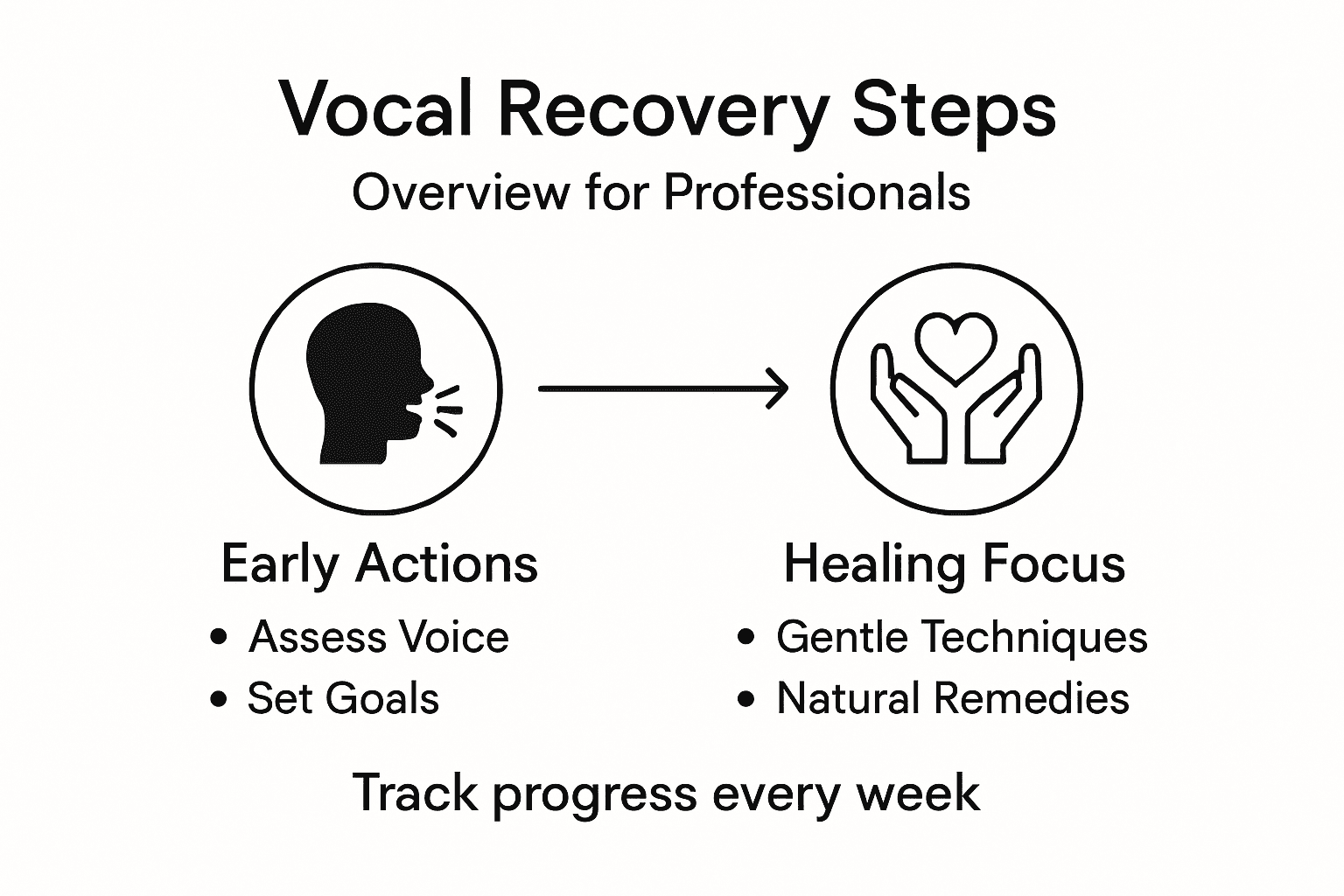
Start with baseline vocal recordings. Use your smartphone to record yourself speaking and singing at the beginning of your recovery journey. Save these files in a dedicated folder with dates. These recordings become your reference point for comparing clarity, volume, and tone quality over time.
Create a simple daily vocal log. Track these metrics each day:
Notice patterns. If your voice is strongest on days following complete rest, that tells you something. If it deteriorates after teaching, you’re overextending. These patterns guide your adjustments.
After two weeks of recovery work, make a new recording under identical conditions. Compare it directly to your baseline. You’re listening for changes in breathiness, strain, projection, and consistency. Professional voice users benefit from comprehensive voice assessments that measure pitch, volume, clarity, and vocal efficiency with precision.
Systematic tracking of vocal parameters identifies improvements or setbacks, allowing you to adjust your recovery approach based on objective data.
Monitor these specific vocal markers over time:
Compare quantitative and qualitative markers for monitoring vocal progress:
| Marker Type | Example Metric | How It Guides Recovery |
|---|---|---|
| Quantitative | Minutes of endurance | Shows measurable improvement |
| Qualitative | Clarity and ease of tone | Reveals subtle quality changes |
If you notice setbacks, don’t panic. They’re information. A setback signals you need more rest, better hydration, or adjusted practice intensity. Use it to fine-tune your recovery plan.
Schedule formal progress assessments every two to three weeks. Compare your recent recordings to previous ones. Note improvements and areas still needing work. Celebrate specific gains—when hoarseness clears, when you reach higher notes, when teaching becomes pain-free.
Pro tip: Record the same sentence each time you assess (like “The sun is shining brightly today”) so you’re comparing identical content across recordings, making vocal changes far easier to detect than random speech samples.
Vocal professionals face the unique challenge of overcoming hoarseness, vocal fatigue, and strain while maintaining their performance quality. This article outlines specific steps to assess, rest, and naturally heal your voice using gentle techniques and hydration. To truly support your recovery goals like increasing endurance, eliminating throat tension, and restoring tonal clarity, specialized care beyond resting is essential. Our curated TMRG Voice Therapy Kits provide effective tools designed to complement your vocal rest and provide natural relief.

Take control of your vocal health today by exploring our expertly crafted Singer Enhancements that include natural sprays, oils, and dietary aids proven to reduce inflammation and boost healing. With over 25 years of experience supporting professionals like you, https://tmrgsolutions.com offers trusted remedies and comprehensive options to accelerate your vocal recovery. Visit https://tmrgsolutions.com now and start your personalized journey toward a stronger, more resilient voice.
To assess your vocal condition, record yourself speaking and singing in your natural range. Listen for qualities such as breathiness or strain, and identify specific symptoms you may be experiencing, like hoarseness or fatigue following vocal use.
Set clear and measurable recovery goals that directly relate to the symptoms you’ve identified. For example, aim to eliminate hoarseness within 4 weeks or extend your singing endurance from 30 minutes to 60 minutes without fatigue.
Implement relative vocal rest, which involves minimizing unnecessary talking while still allowing for gentle vocal use. For instance, limit speaking to essential communication only and avoid whispering, focusing instead on soft, easy vocalization.
Aggressive hydration is crucial for vocal recovery, so aim to drink at least eight to ten glasses of water daily to keep your vocal folds moist. Additionally, incorporating anti-inflammatory foods like ginger and honey can help reduce inflammation and promote faster healing.
Track your vocal progress by creating a daily vocal log that includes metrics like overall voice quality and fatigue levels. After two weeks, make a new recording and compare it to your baseline to notice improvements or areas needing further attention.
