Your Cart is Empty


Facing intense audition pressure, professional singers and actors know their voice is more than talent alone. Audition success depends on more than just hitting high notes, it demands holistic vocal health that combines technical know-how, lifestyle habits, and targeted self-care. Natural remedies, when thoughtfully integrated with modern strategies, offer performers a powerful edge in protecting vocal strength and resilience throughout demanding theater and music opportunities.
| Point | Details |
|---|---|
| Vocal Health is Multifaceted | Performers must manage vocal mechanisms strategically for optimal performance and long-term sustainability. |
| Awareness of Vocal Limitations | Understanding personal vocal range and addressing vocal health challenges are essential for maintaining integrity during auditions. |
| Importance of Proper Technique | Regular training, hydration, and stress management are crucial in preventing vocal injuries and enhancing performance. |
| Utilization of Natural Remedies | Incorporating natural remedies can support vocal resilience, reduce inflammation, and improve overall vocal health. |
Vocal health is a complex, multifaceted concept that extends far beyond simply maintaining a clear voice. For performers preparing for auditions, it represents the strategic management of vocal mechanisms to ensure peak performance and long-term sustainability. Optimal vocal health involves understanding vocal anatomy and implementing targeted strategies that protect and enhance vocal capabilities.
At its core, vocal health encompasses the physiological well-being of the vocal mechanism, including the larynx, vocal folds, and surrounding muscle groups. Professional performers must recognize that their voice is both an artistic instrument and a delicate biological system requiring meticulous care. Factors like hydration, proper breathing techniques, consistent warm-ups, and environmental considerations play critical roles in maintaining vocal integrity during high-pressure audition scenarios.
Key Components of Vocal Health for Performers include:
Healthy vocal function requires a holistic approach that integrates physical, psychological, and technical elements. Vocal health strategies must account for individual genetic predispositions and unique environmental challenges performers encounter. By developing a personalized approach to vocal maintenance, singers and actors can significantly improve their audition performance and long-term career sustainability.
Pro tip: Invest 15 minutes daily in targeted vocal warm-ups and recovery exercises to build resilience and prevent potential vocal strain during critical performance moments.
Performers face a complex landscape of vocal health challenges that can dramatically impact their professional success. Common vocal injuries include nodules, polyps, and cysts, which can develop from persistent vocal strain, improper technique, or underlying physiological conditions. These benign lesions represent significant obstacles for singers and actors seeking consistent vocal performance.
The spectrum of vocal problems extends beyond physical tissue damage. Vocal disorders manifest through various symptoms including breathiness, unexpected vocal breaks, reduced range, persistent fatigue, and intermittent pain. Collegiate-level singers frequently experience vocal fold inflammation and irritation that can compromise their ability to perform at peak levels. Understanding these challenges requires recognizing the complex interplay between physical technique, emotional stress, and physiological predispositions.
Key Vocal Problem Categories for Performers:
Medical professionals utilize advanced diagnostic techniques like laryngoscopy and stroboscopy to assess and understand the precise nature of vocal injuries. These evaluations help performers develop targeted rehabilitation strategies that address both the immediate symptoms and underlying causative factors. Proactive management and early intervention are crucial in preventing long-term vocal damage and maintaining professional performance capabilities.
Here’s a summary of common vocal problems and suggested approaches for prevention and management:
| Vocal Problem Type | Usual Causes | Diagnostic Tools | Prevention Tips |
|---|---|---|---|
| Structural lesions | Excessive strain, poor technique | Laryngoscopy, stroboscopy | Warm-ups, voice rest, technique refinement |
| Functional disorders | Muscle tension, neurological | Voice analysis, imaging | Regular training, stress management |
| Performance-related issues | Overuse, fatigue, environment | Self-monitoring, clinical review | Hydration, rest, personalized routines |
Pro tip: Schedule a comprehensive vocal health assessment with a professional laryngologist annually to detect and address potential vocal issues before they become significant performance challenges.
Auditions represent a critical moment where performers must demonstrate exceptional vocal control under intense psychological and physiological pressure. Vocal demand directly impacts acoustic and aerodynamic voice parameters, revealing the delicate balance between performance readiness and potential vocal strain. These high-stakes environments require performers to showcase their most nuanced vocal capabilities while maintaining optimal vocal health.
Vocal Resilience Factors that influence audition performance include:
Vocal resilience emerges from complex interactions between physiological responses and performance techniques. Professional performers must develop adaptive strategies that allow them to maintain consistent vocal quality across varying audition scenarios. This requires understanding how vocal load, recovery time, and individual physiological characteristics interact to create sustainable performance capabilities.

Successful performers recognize that vocal resilience extends beyond technical skill. It encompasses a holistic approach that integrates physical conditioning, psychological preparation, and strategic vocal management. By developing comprehensive awareness of their vocal instrument’s unique characteristics and limitations, performers can create robust strategies that support consistent, high-quality performance under demanding audition conditions.
Pro tip: Develop a personalized pre-audition vocal warm-up routine that includes targeted exercises for stress reduction and vocal flexibility, allowing you to enter performance spaces with confidence and control.
Performers seeking sustainable vocal health have increasingly turned to natural remedies that support and enhance vocal resilience. Traditional herbal medicine offers significant insights into vocal healing strategies, revealing a rich cultural approach to maintaining vocal quality through plant-based interventions. These natural solutions provide performers with holistic alternatives to conventional treatments, focusing on reducing inflammation and supporting overall vocal mechanism health.
Key Natural Remedies for Vocal Support:
Specific natural compounds like Coenzyme Q10, curcumin, and Boswellia serrata demonstrate remarkable potential for vocal cord recovery. These substances work by reducing oxidative stress, supporting tissue healing, and enhancing vocal endurance. Professional performers can strategically incorporate these natural remedies into their vocal health regimen, creating a comprehensive approach that addresses both immediate performance needs and long-term vocal sustainability.
The most effective natural remedy strategies integrate multiple approaches, combining nutritional support, herbal interventions, and holistic lifestyle practices. Understanding the intricate relationship between botanical compounds and vocal mechanism function allows performers to develop personalized protocols that enhance vocal strength, reduce inflammation, and support overall vocal resilience. This nuanced approach transforms natural remedies from supplementary treatments to essential components of professional vocal maintenance.
Compare natural remedies and conventional vocal health strategies to help performers build a tailored regimen:
| Approach | Key Benefits | Typical Limitations | Ideal Use Case |
|---|---|---|---|
| Natural remedies | Reduce inflammation, holistic | May require expert guidance | Preventative daily support |
| Conventional care | Targeted medical intervention | Possible medication side effects | Injury recovery and acute care |
Pro tip: Consult with a holistic vocal health specialist to develop a personalized natural remedy protocol tailored to your specific vocal characteristics and performance requirements.
Vocal hygiene education plays a critical role in preventing performance-related injuries, addressing the complex landscape of potential vocal risks that performers encounter. Professional vocalists must develop a comprehensive understanding of common mistakes that can compromise their vocal health, recognizing that prevention is far more effective than treatment. Understanding these potential pitfalls allows performers to create proactive strategies that protect their most valuable instrument.
Critical Vocal Mistakes to Avoid:
Common vocal mistakes can lead to significant long-term performance challenges, ranging from temporary hoarseness to potential permanent vocal fold damage. Professional performers must develop a nuanced understanding of their vocal mechanism, recognizing the delicate balance between artistic expression and physiological limitations. This awareness involves creating personalized strategies that respect individual vocal characteristics while maintaining technical excellence.
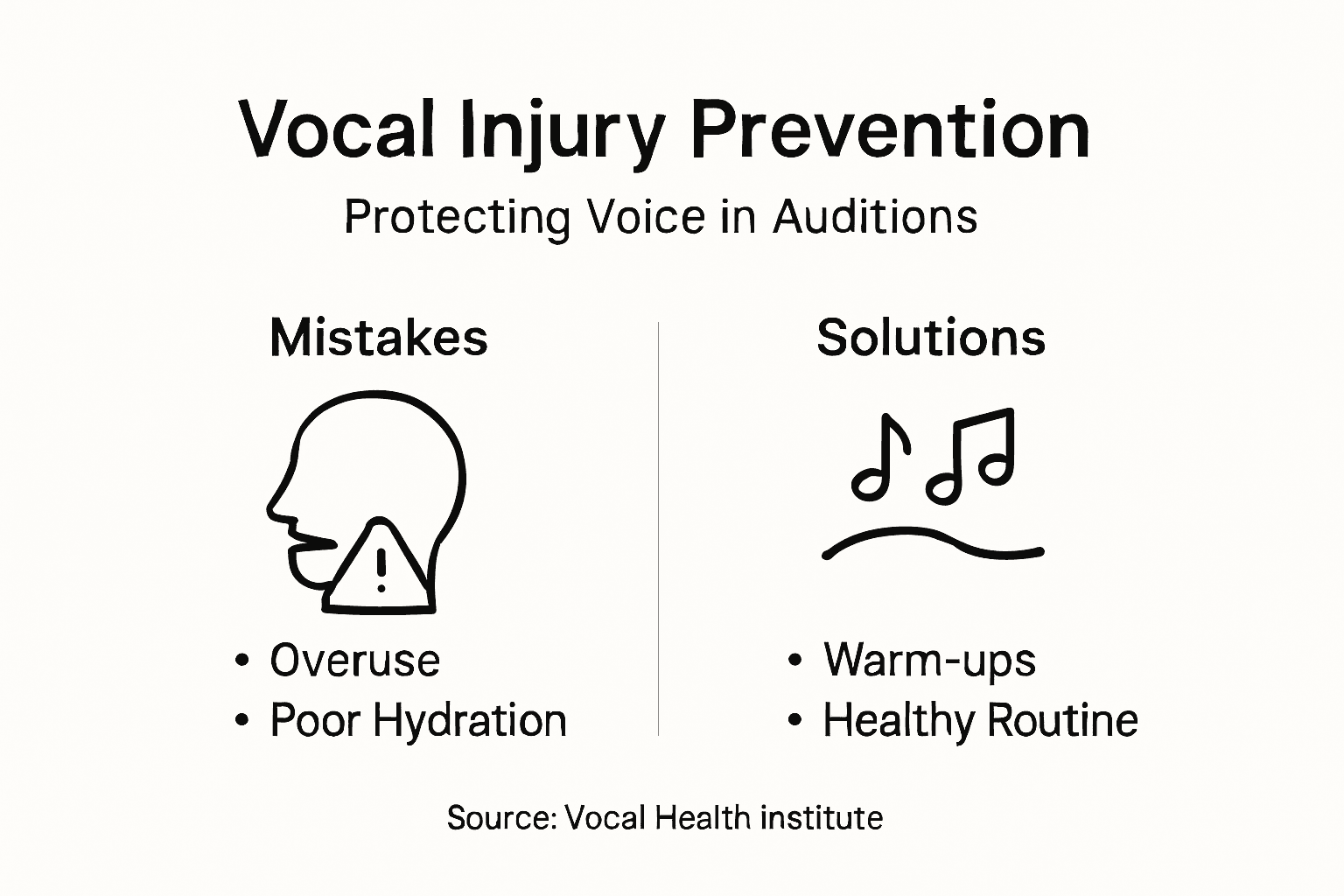
Effective injury prevention requires a holistic approach that integrates physical technique, psychological awareness, and strategic vocal management. Performers should develop a comprehensive understanding of their vocal mechanism, learning to recognize early warning signs of potential strain or damage. By cultivating a proactive mindset and implementing targeted preventative strategies, vocalists can significantly reduce their risk of performance-limiting vocal injuries.
Pro tip: Maintain a detailed vocal health journal tracking your vocal performance, fatigue levels, and any discomfort to identify potential patterns and address issues before they become significant problems.
Struggling with vocal fatigue or seeking natural ways to boost your vocal resilience during auditions The detailed insights on vocal health in audits highlight the importance of hydration proper warm-ups and inflammation control These critical factors can make the difference between a confident performance and vocal strain Explore the range of Singer Enhancements - TMRG Solutions designed specifically to support voice strength and recovery so you can perform at your best every time

Take control of your vocal health today with proven remedies that combine 25 years of expertise and natural formulations Visit https://tmrgsolutions.com to find tailored products for hoarseness, fatigue, and other common issues faced by singers and actors Don’t wait until vocal problems hold you back Build your customized vocal care routine now and step into every audition with confidence and power
Vocal health refers to the physiological well-being of the vocal mechanism, including the larynx and vocal folds. It’s crucial for auditions because it enables performers to showcase their vocal capabilities effectively, ensuring consistent performance and longevity in their careers.
Common vocal problems include structural lesions like nodules and polyps, functional disorders such as muscle tension dysphonia, and performance-related issues like vocal fatigue. These can impair vocal quality and range, impacting overall audition success.
Performers can maintain vocal health by staying hydrated, practicing proper vocal techniques, doing regular warm-ups, managing stress, and incorporating physical conditioning and recovery strategies into their routines.
Natural remedies can help reduce inflammation and support vocal strength. These include anti-inflammatory herbs and hydration enhancers, which can be integrated into a performer’s vocal health regimen to promote resilience and recovery.
