Your Cart is Empty


Most singers believe louder voices require pushing harder with their vocal folds. This common misconception leads to unnecessary strain and injury. In reality, proper vocal resonance amplifies your voice naturally, reducing fatigue while enhancing projection. This guide reveals the science behind vocal resonance and practical strategies to harness it for healthier, more powerful vocal performance.
| Point | Details |
|---|---|
| Vocal resonance amplifies sound naturally through anatomical cavities, not by forcing vocal folds | Understanding chest, head, and mask resonance types helps optimize tone and projection |
| Efficient resonance reduces vocal fold impact by up to 40%, preventing injury and fatigue | Natural remedies like hydration and herbal support complement resonance training |
| Common myths about loudness and nasal tone hinder progress | Practical exercises improve projection by 20-35% when practiced regularly |
| Balanced resonance suits different vocal styles and genres | Integration into daily practice sustains vocal health and performance longevity |
Vocal resonance is the amplification and enrichment of sound produced by your vocal folds as it travels through your vocal tract. Your vocal folds create the initial vibration, but resonance shapes that raw sound into your unique voice quality.
The anatomy involved includes your vocal folds, pharynx, oral cavity, and nasal passages. Each cavity acts as a natural amplifier with specific frequency ranges. When sound waves from your vocal folds enter these spaces, they bounce off the walls and reinforce certain frequencies while dampening others.
Acoustic amplification occurs because these cavities have natural resonant frequencies. Your vocal tract length and shape determine which frequencies get boosted. A longer tract amplifies lower frequencies, while a shorter tract enhances higher ones. This is why your voice sounds different when you change tongue position or open your mouth wider.
Key physiological components and their functions:
Understanding these fundamentals helps you recognize how subtle adjustments in your vocal tract shape dramatically change your sound quality and projection capacity.
Three primary resonance types work together to create your complete vocal sound. Each occupies different anatomical spaces and frequency ranges, contributing distinct tonal qualities to your voice.
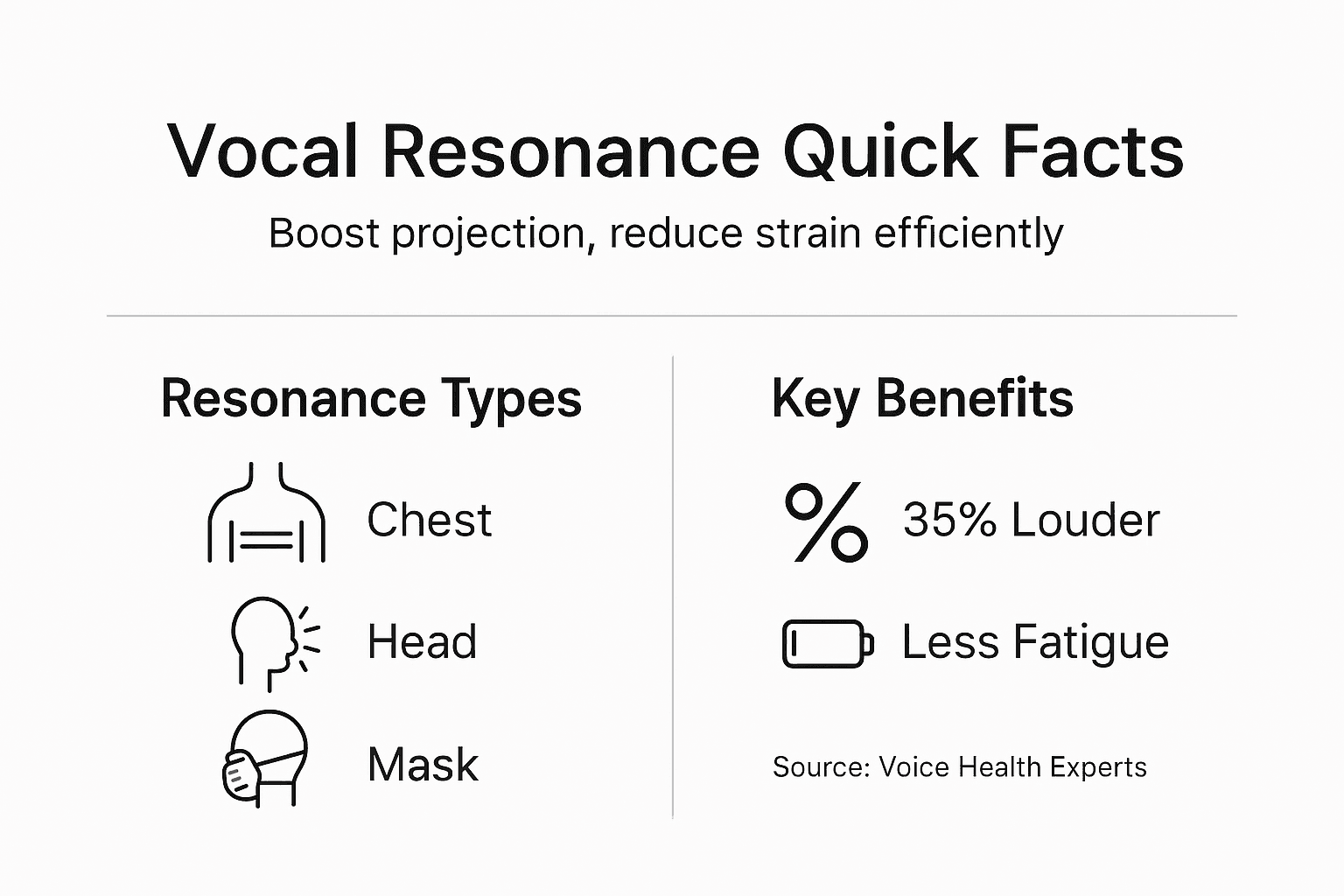
Chest resonance occurs when lower frequencies between 85 and 500 Hz vibrate primarily in your chest cavity and lower pharynx. You feel these vibrations in your sternum and ribcage. This resonance creates fullness, depth, and power in your voice. Singers use chest resonance for strong, grounded tones in lower vocal ranges.
Head resonance involves higher frequencies from 1000 to 4000 Hz resonating in your upper pharynx and cranial spaces. You sense these vibrations in your face, forehead, and skull. This resonance adds brightness, clarity, and ring to your voice. It becomes prominent in higher pitches and lighter vocal qualities.
Mask resonance engages your nasal and sinus cavities, typically amplifying frequencies between 1500 and 3500 Hz. The sensation centers around your nose, cheekbones, and upper face. This resonance enhances presence and projection, helping your voice cut through background noise without strain.
| Resonance Type | Frequency Range | Tonal Quality | Typical Uses |
|---|---|---|---|
| Chest | 85-500 Hz | Full, deep, powerful | Lower notes, dramatic passages |
| Head | 1000-4000 Hz | Bright, clear, light | Higher notes, lyrical phrases |
| Mask | 1500-3500 Hz | Present, projecting, forward | All ranges for enhanced clarity |
Pro Tip: Balanced integration of all three resonance types creates the most natural, versatile tone while minimizing strain on your vocal folds.
Developing awareness of these resonance types through vocal exercises for resonance development helps you consciously adjust your sound for different musical styles and performance situations.
Optimized vocal resonance directly reduces the mechanical stress on your vocal folds during phonation. When resonance efficiently amplifies sound, your vocal folds vibrate with less force and collision intensity. This means you produce louder, clearer sound with less physical effort.
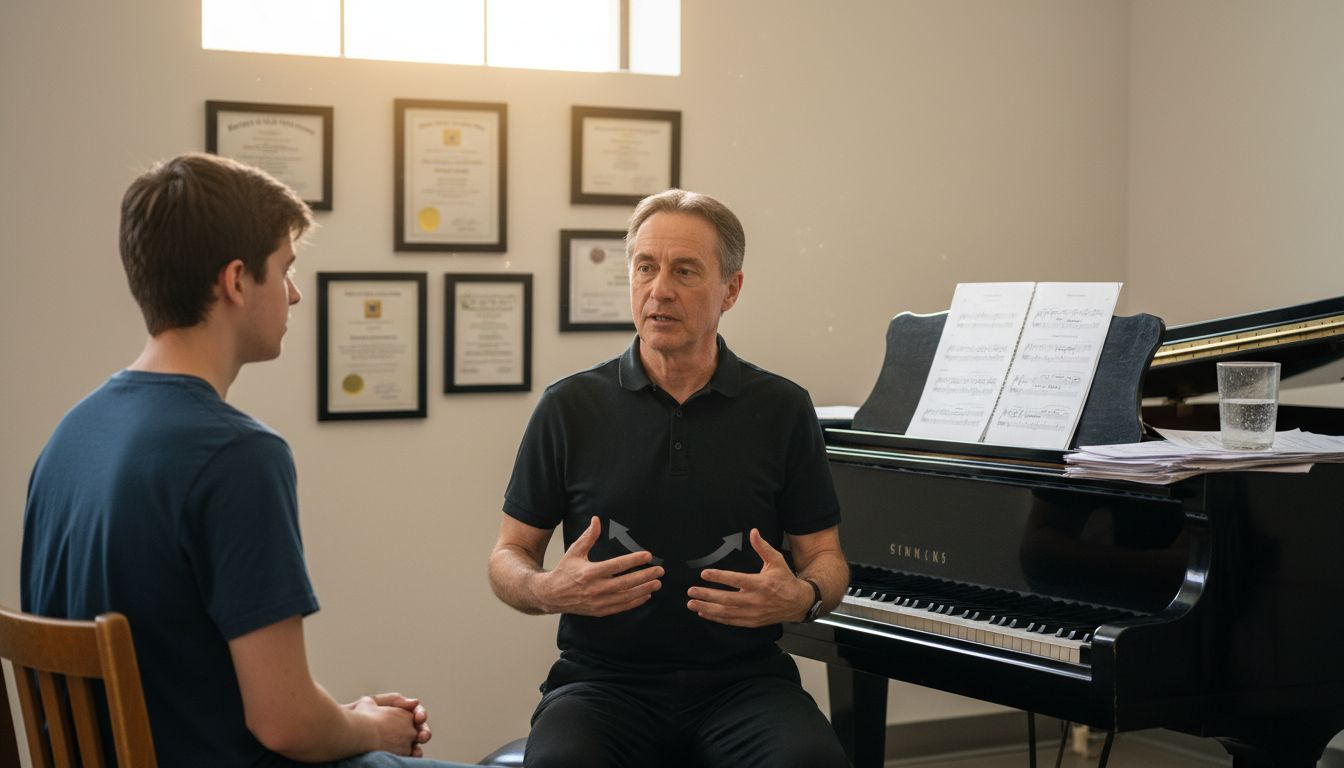
Poor resonance forces you to push harder with your vocal folds to achieve adequate volume. This increased collision force damages delicate vocal fold tissue over time. The result is inflammation, swelling, nodules, or polyps that compromise voice quality and require extended recovery periods.
Effective resonance techniques can reduce vocal fold impact by up to 40%, significantly lowering injury risk during demanding performances or extended speaking engagements.
Common causes of vocal fatigue linked to resonance misuse:
Monitoring your resonance quality throughout practice sessions and performances preserves vocal longevity. When you feel excessive throat tension or fatigue after short singing periods, your resonance likely needs adjustment. Understanding the benefits of vocal health motivates consistent attention to proper resonance technique.
Several myths about vocal resonance persist among performers, hindering progress and sometimes causing harm. Clearing these misconceptions opens the path to healthier, more effective vocal technique.
Myth: Loudness comes only from pushing your vocal folds harder. Reality: Proper resonance amplifies sound naturally, allowing you to project powerfully with minimal vocal fold strain. Forceful phonation damages tissue without improving true projection.
Myth: Resonance is just nasal sound or “singing through your nose.” Reality: Balanced resonance involves chest, head, and mask cavities working together. Excessive nasal focus creates an unpleasant, pinched tone while neglecting the richness from other resonant spaces.
Myth: Vocal resonance is an innate gift that cannot be trained or improved. Reality: Specific exercises and awareness practices develop resonance skills systematically. Anyone can learn to optimize their natural resonant potential through dedicated practice.
Pro Tip: Avoid forcing nasal resonance by keeping your soft palate slightly lifted while still allowing some nasal port opening for mask resonance benefits.
Understanding that resonance development is a trainable skill, not a fixed trait, empowers you to take control of your vocal improvement. Combining resonance awareness with healthy vocal habits creates sustainable performance capacity across your career.
Supporting your vocal health with natural methods creates the optimal foundation for resonance development. Healthy, hydrated vocal fold tissue vibrates more efficiently and transmits clearer sound waves into your resonant cavities.
Consistent hydration maintains optimal vocal fold viscosity and mucosal layer function. Drink water throughout the day, aiming for pale yellow urine as a hydration indicator. Well-hydrated tissues vibrate with less friction and strain.
Herbal remedies provide gentle support for throat health:
Dietary choices support mucosal health and reduce inflammation. Include omega-3 fatty acids from fish or flaxseed, antioxidant-rich fruits and vegetables, and avoid excessive dairy before performances if it increases mucus production for you.
Voice therapy kits and gentle exercises complement resonance training by maintaining vocal fold health and flexibility. Regular practice of your daily vocal care routine prevents issues before they start.
When vocal strain occurs despite good technique, knowing how to recover from hoarseness naturally speeds healing. Prevention through proper resonance use and recovery strategies together maintain vocal efficiency. Review essential voice care tips to build comprehensive vocal health habits.
Targeted exercises train your awareness and control of resonance placement. Regular practice rewires neuromuscular patterns, making efficient resonance your default mode of phonation.
Regular resonance exercises improve vocal projection by 20-35% and decrease perceived vocal effort, according to speech science research. Here are proven exercises to develop your resonance:
Humming scales: Start on a comfortable pitch and hum up and down five-note scales. Focus on feeling vibrations in your face and skull. Keep your jaw relaxed and lips lightly closed. This exercise balances airflow and vibrational energy across all resonant cavities.
Lip trills on pitch: Blow air through loosely closed lips to create a buzzing trill sound while singing scales or melodies. This maintains consistent airflow and breath support while training resonance without excessive vocal fold tension.
Nasal consonant exploration: Sing sustained “nnn,” “mmm,” and “nggg” sounds on various pitches. Feel the vibrations in your mask area. Gradually transition to vowels while maintaining that forward placement sensation.
Siren sounds: Glide from your lowest comfortable pitch to your highest on a “woo” or “vvv” sound. This smoothly transitions through your entire range while maintaining consistent resonance connection.
Acoustic feedback monitoring: Record yourself or use spectrum analyzer apps to visualize your resonance patterns. Higher peaks in the 2000-4000 Hz range indicate strong forward resonance and projection capacity.
Pro Tip: Start exercises slowly and focus on breath control before increasing speed or intensity. Proper breath support underlies all efficient resonance.
Integrate these exercises into your vocal recovery and strength program. Consistent practice over weeks builds the muscle memory and awareness needed for automatic resonance optimization. Explore various vocal exercises for resonance to find combinations that work best for your voice type and goals. Additional guidance on effective resonance exercises provides scientific backing for these techniques.
Translating resonance awareness from practice room to stage requires intentional integration strategies. Conscious attention during warm-ups and rehearsals builds automatic habits that serve you during high-pressure performances.
Monitor resonance during your warm-up routine to establish efficient patterns before demanding vocal work. Notice where you feel vibrations for different pitch ranges and vowels. If you sense excessive throat tension or reduced projection, adjust your vocal tract shape rather than pushing harder.
Adjust resonance balance to fit your vocal style and genre. Classical singing often emphasizes more head resonance for ethereal qualities, while contemporary commercial music may favor chest and mask resonance for powerful, direct sound. Understanding these aesthetic differences helps you make informed artistic choices.
Strategies for resonance awareness in rehearsals and performances:
Rest your voice adequately between demanding performances and seek professional voice therapy if issues persist despite good technique. Combining resonance techniques with comprehensive vocal health habits creates sustainable performance capacity across your entire career. This integrated approach protects your instrument while maximizing your artistic expression.
Mastering resonance technique provides the foundation, but supporting your voice with quality products enhances results and prevents problems.

TMRG Solutions offers herbal remedies specifically formulated to soothe and protect your vocal folds during demanding performance schedules. Our top-rated vocal remedies combine traditional herbal wisdom with modern vocal science, providing natural support that complements your resonance training.
Our premium voice therapy kit includes everything you need for comprehensive daily vocal care. These products integrate seamlessly into professional routines, supporting the healthy tissue function that efficient resonance requires. With over 25 years of expertise in vocal health, TMRG Solutions provides trusted products that thousands of vocal professionals rely on to maintain peak performance capacity.
Most singers notice improved resonance awareness within two to three weeks of daily focused practice. Significant projection improvements typically emerge after six to eight weeks of consistent exercise. However, resonance refinement continues throughout your vocal career as you develop greater sensitivity and control.
Yes, proper resonance significantly reduces vocal fatigue by decreasing the mechanical stress on your vocal folds. When you amplify sound through resonance rather than forceful phonation, you produce greater volume with less tissue collision. This efficiency allows longer practice sessions and performances without strain.
Balanced nasal resonance enhances projection and is not harmful. Problems arise only when you force excessive nasal quality or constrict your throat while attempting nasal focus. Proper mask resonance feels easy and forward, with your soft palate slightly lifted to avoid the pinched sound of hypernasality.
Quality herbal remedies formulated specifically for vocal use are safe for daily application. Choose products from reputable companies like TMRG Solutions that use pure ingredients without harsh additives. Slippery elm, licorice root, and marshmallow root have long histories of safe use for throat support.
Consult a voice therapist or laryngologist if you experience persistent hoarseness lasting more than two weeks, pain while singing or speaking, sudden voice changes, or progressive difficulty with pitch control. Early professional intervention prevents minor issues from becoming serious vocal injuries requiring extended recovery.
