Your Cart is Empty


Yes, vocal sprays can cause side effects, most commonly dryness, local irritation, allergic reactions, and a numbing effect that hides vocal strain instead of preventing it. Before you use any new spray, check the ingredient list, skip anything with alcohol or menthol before a heavy rehearsal, and stop immediately if your throat feels worse. If you take blood thinners, digoxin, or diabetes medications, talk to a pharmacist first.
TL;DR:
- Sprays with alcohol or menthol can cause dryness, irritation, and numbness, which may hide vocal strain and lead to injury if not carefully monitored.
- Ingredients like licorice, propolis, and ginger carry specific risks such as drug interactions, allergies, or blood sugar effects, especially for users on certain medications.
- People with health conditions like anticoagulant use, diabetes, or allergies should consult a healthcare professional before trying new vocal sprays.
- Hydrating, saline-based sprays or water vapor are safer options, and testing any new spray during low-stakes rehearsal can prevent adverse reactions before performances.
- Regular use of sprays should focus on glycerin or saline bases, avoiding menthol and anesthetics, combined with proper vocal hygiene and technique to minimize the need for topical relief.
Most reactions show up fast, and they tend to fall into a few predictable categories. Knowing the timeline helps you tell a harmless adjustment from something worth stopping over.
Immediate irritation announces itself right away. Delayed allergic reactions, on the other hand, can surface hours later, which is one reason testing a new spray the night before opening night is a bad idea.
Reading a label matters more than picking a brand name. Different active ingredients carry distinct risk profiles, and lumping them together as “natural, therefore safe” is where most vocal spray risks start.
A spray that’s harmless for one singer can be a real problem for another, depending on what’s already in their system. Certain medication classes and health conditions raise the stakes considerably.
If any of this applies to you, bring your full medication list to a pharmacist before adding a new herbal or multi-ingredient spray to your routine, rather than testing it cold before a show.
Safe use comes down to a handful of habits, not a complicated protocol. Get these right and you eliminate most of the avoidable risk without giving up the relief a good spray provides.
Pro Tip: Test any new spray during a low-stakes rehearsal, never right before a paid gig or audition. If something is going to react badly with your throat, you want to find out on a Tuesday afternoon, not opening night.
For dosing specifics and how often is too often, our throat spray usage guide breaks down frequency by use case.

Steam and saline aren’t glamorous, but they’re the foundation most vocal health routines should rest on. Warm humidification, without boiling steam or menthol additives mixed in, delivers gentle surface moisture with essentially no side-effect profile. Nebulized isotonic saline goes a step further, reaching deeper into the vocal tract than a spray can.
Hydration, proper warmups, pacing between sets, and technique adjustments address the root causes that sprays only manage symptomatically. A vocal coach’s guidance on natural, sustainable voice care can help you build these habits into a routine that reduces how often you reach for anything topical at all. When symptoms persist despite good technique and hydration, that’s the point where a spray should hand off to actual medical review, not more product.

Most performers treat “natural” as a synonym for “harmless,” and that assumption is where the real risk hides. Licorice, propolis, and menthol are all natural. They’re also the three ingredients most likely to cause you trouble, whether through drug interaction, allergy, or masked strain. My practical recommendation hasn’t changed in years: test new formulas on a quiet day, default to glycerin or saline bases, and treat menthol and alcohol as ingredients you actively avoid before real vocal work, not features to look for.
This article’s recommendations are built around this exact philosophy. For readers who want the deeper mechanics, our natural throat spray ingredient guide covers formulation choices in more depth, and adds further grounding to the recommendations above.
— Golan
Tmrgsolutions builds every formula around the same principle this article just walked through: hydration first, no alcohol, no menthol masking your feedback. That’s the real difference between grabbing a random spray off a shelf and picking one built specifically for working voices.
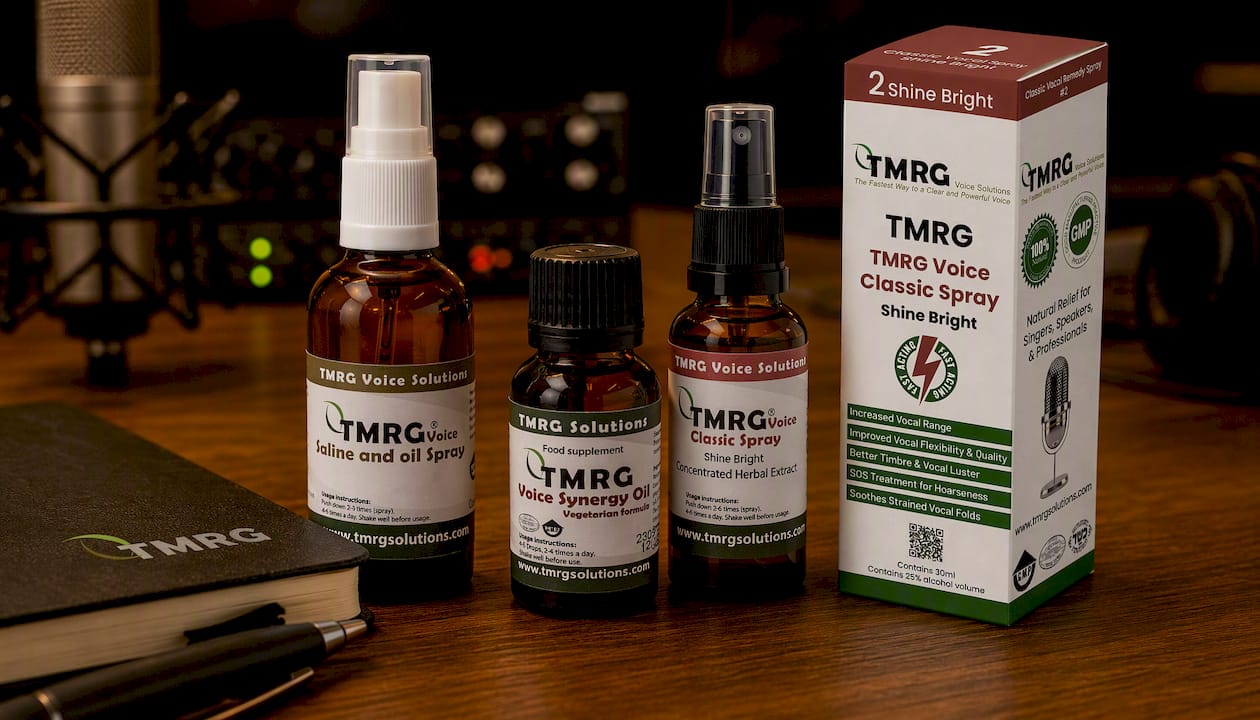
For performers who want layered protection, the TMRG Defense and Protection Duo pairs a saline-based spray with a supporting oil formula, following the alcohol-free, glycerin-forward approach clinicians favor. If you specifically need a spray built around a saline and oil base rather than herbal actives, the TMRG Defense oils and saline spray skips the propolis and licorice risk profile entirely. For quick relief between sets without reaching for menthol, the TMRG Shine Bright classic recovery spray is designed for short-term soothing rather than numbing.
Whichever you choose, test a small dose during a rehearsal first, not before a show. Browse the full lineup and find the formula that matches your routine at Tmrgsolutions.
This article is general information, not a substitute for advice from a qualified doctor. Consult a qualified healthcare professional about your own circumstances before acting on anything here.
Alcohol-free, glycerin or saline-based sprays are generally fine for regular use, but menthol or anesthetic-containing sprays should be limited since they can mask strain rather than prevent it.
Dryness, local irritation, allergic reactions, and numbing that hides vocal strain are the most frequently reported effects, and most appear within minutes of use.
Yes. Licorice can interact with digoxin and warfarin, and ginger can affect anticoagulants or diabetes medications, so anyone on these drugs should check with a pharmacist first.
See a laryngologist if hoarseness lasts more than two weeks, if you have pain during phonation, visible swelling, or breathing difficulty. A spray won’t resolve any of those symptoms.
Saline and glycerin bases carry a lower risk profile than herbal blends containing licorice or propolis, which is why products like the TMRG Defense oils and saline spray lean on that simpler formulation.
