Your Cart is Empty


TL;DR:
- Throat sprays provide immediate, targeted relief for singers experiencing vocal fatigue and hoarseness. They work by lubricating and soothing the vocal tract, but should be integrated into a comprehensive vocal care routine, not relied upon exclusively. Proper timing, technique, hydration, and professional guidance are essential for maintaining long-term vocal health and performance longevity.
Your vocal folds are not invincible, and that tight, scratchy feeling before a big show is not something you simply have to push through. Too many singers treat hoarseness and vocal fatigue as unavoidable side effects of performing, when in reality, targeted support can make a measurable difference. Natural throat sprays have become one of the most practical tools in a professional singer’s toolkit, offering fast-acting relief and preventive protection during demanding rehearsal schedules and live performances. This article breaks down how they work, which options stand out, and how to use them strategically.
| Point | Details |
|---|---|
| Natural sprays reduce fatigue | Herbal throat sprays can help minimize vocal fatigue and hoarseness for singers. |
| Choose sprays by needs | Match throat spray ingredients and features to your specific vocal requirements and performance style. |
| Correct timing matters | Timing your throat spray usage enhances its effectiveness during singing sessions. |
| Combine with vocal routine | Throat sprays are most powerful when used alongside a solid vocal care regimen. |
| Avoid spray overuse | Excessive reliance on throat sprays can mask vocal issues and should be avoided. |
Throat sprays are liquid formulations delivered directly to the back of the throat and vocal tract via a pump or squeeze mechanism. Unlike lozenges, which dissolve slowly and rely on saliva flow, or teas that require brewing and cooling time, throat sprays reach the target area almost immediately. That speed matters when you are about to step on stage or when you notice your voice starting to tire mid-set.
Most natural throat sprays designed for singers contain a blend of botanicals and soothing agents. Common ingredients include:
These ingredients work together to lubricate the mucosal lining of the throat, reduce friction on the vocal folds, and support tissue recovery. As throat sprays formulated for vocal health can help prevent vocal fatigue and hoarseness, they are most effective when used as part of a proactive routine rather than only as a last resort.
“Think of a throat spray as a buffer between your vocal folds and the stress of performing. Used correctly, it’s one of the most direct forms of targeted vocal support available.”
Throat sprays differ from other remedies in both delivery and purpose. Lozenges stimulate saliva production but rarely reach the vocal folds directly. Herbal teas provide systemic hydration and anti-inflammatory benefits but take time to absorb. Throat sprays, by contrast, are immediate and localized. For more ideas on how to support your voice between sprays, explore natural remedies for singers that complement a spray-based routine.
Pro Tip: If you perform frequently in dry or air-conditioned environments, use a natural throat spray about 15 minutes before going on stage to give the ingredients time to coat the vocal tract fully before you begin singing.
Actors face similar demands to singers, and many crossover techniques apply. Reviewing vocal remedies for actors can give you additional perspective on how voice professionals manage sustained vocal output.
Once you understand what throat sprays can do, it helps to see how leading products stack up for singer-specific needs. When evaluating any throat spray for vocal performance, four criteria matter most: the quality of ingredients, demonstrated effectiveness for prolonged use, ease of application, and taste.
Different throat sprays offer unique herbal blends aimed at soothing vocal cords, which means no single product suits every singer equally. Your voice type, performance schedule, and personal sensitivities all play a role in finding the best fit.
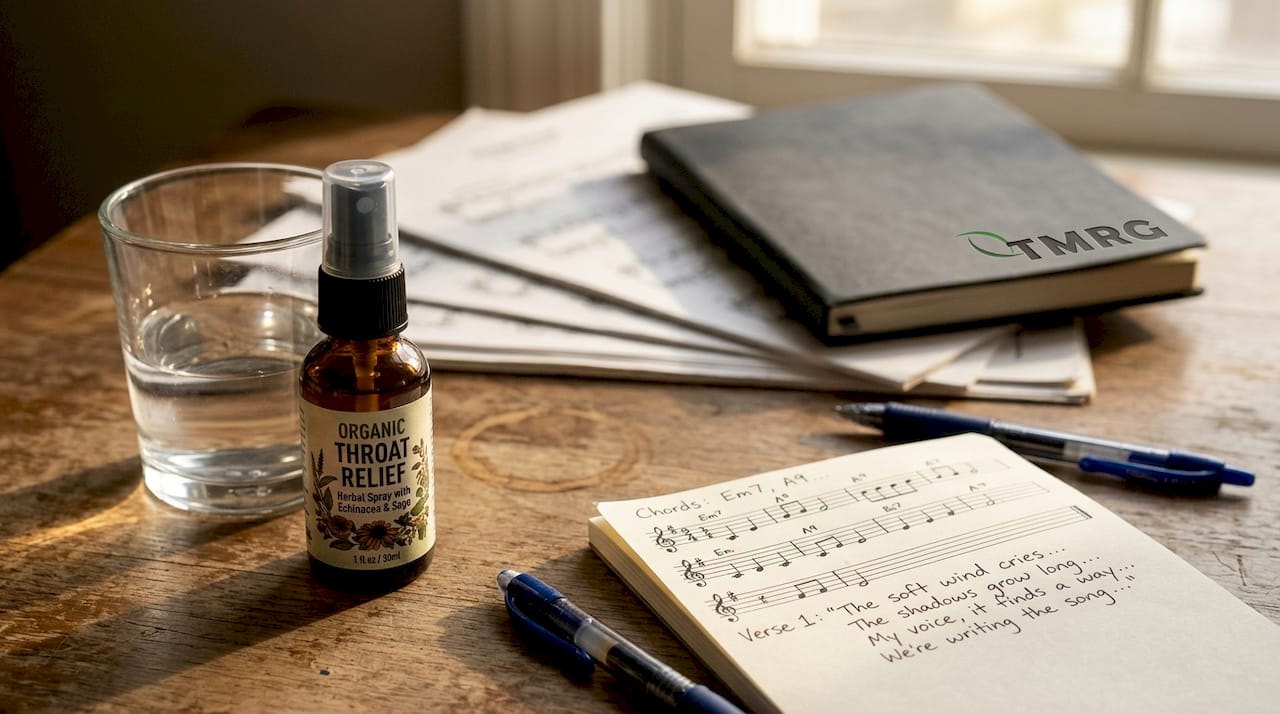
Here is a comparison of some of the most recognized natural throat spray options for singers:
| Product type | Key ingredients | Best suited for | Taste profile |
|---|---|---|---|
| Herbal blend spray | Slippery elm, echinacea, sage | Long rehearsal sessions, touring artists | Mild herbal, slightly earthy |
| Honey-based spray | Manuka honey, propolis, licorice | Sensitive vocal folds, mild hoarseness | Sweet, smooth |
| Essential oil spray | Peppermint, tea tree, eucalyptus | Pre-performance freshness, nasal support | Cool, slightly medicinal |
| Aloe-based spray | Aloe vera, chamomile, zinc | Post-performance recovery, inflammation | Neutral to mild floral |
| Comprehensive vocal spray | Multiple botanicals, mucilaginous herbs | Professional vocalists, frequent performers | Varies by formulation |
When selecting from these categories, consider the following factors:
For a detailed, up-to-date breakdown of the best throat sprays for singers, it is worth reviewing product-specific formulations alongside their intended use cases. You can also find a side-by-side evaluation at the natural vocal sprays comparison guide, which highlights key distinctions between products designed for sustained vocal use.
Singers who tour frequently tend to favor comprehensive botanical blends because they address multiple concerns at once: lubrication, inflammation, and immune support. Singers who perform occasionally or experience mainly post-performance dryness may find simpler, aloe-based or honey-based options sufficient.
After choosing a throat spray, getting the timing and technique right makes all the difference. Using a throat spray at the wrong time or in the wrong way can reduce its effectiveness or, in some cases, cause additional irritation if the formulation is not well-matched to your needs.
Follow this step-by-step approach for optimal results:
Expert recommendations suggest using throat spray before, during, and after performances to maintain vocal clarity throughout the full arc of a performance event.
Timing guidelines:
Common mistakes singers make with throat spray application:
Pro Tip: Avoid throat sprays that contain anesthetic compounds. Numbing your throat reduces your ability to sense when you are pushing too hard, which significantly raises your injury risk.
For additional guidance on managing hoarseness when it develops, the resource on treating hoarseness outlines a targeted three-step protocol. You can also review vocal health remedies to understand which everyday habits may be working against your recovery.
Maximizing throat spray results means pairing them with a smart vocal care routine. A spray applied in isolation, without attention to hydration, sleep, or warm-up practices, delivers a fraction of its potential benefit.
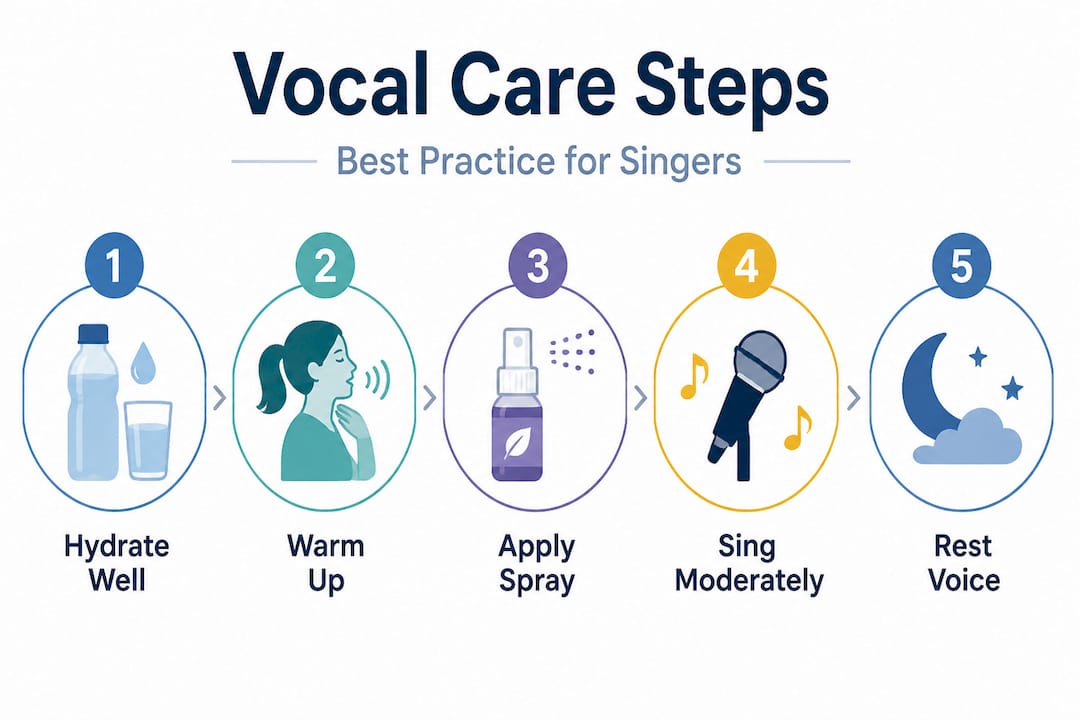
A holistic routine including hydration, rest, and targeted remedies improves vocal longevity, which is why the most resilient performers treat their throat spray as one component in a larger system.
Here are practical ways to build that system:
Pro Tip: Keep a small spray bottle of warm, plain water in your bag alongside your throat spray. Between songs or at set breaks, a few small sips of warm water helps flush any accumulated mucus without interrupting the protective coating your spray has built up.
Building vocal strength remedies into your daily practice creates a foundation that makes throat sprays significantly more effective when you need them most. For a broader view of what works, the guide to best vocal health remedies covers a full spectrum of evidence-informed approaches used by professional performers.
Combining all of these habits consistently, rather than in bursts around major performances, is what separates singers who perform at a high level for years from those who burn out early.
Here is something that does not get said often enough in singing communities: throat sprays are a tool, not a treatment plan. They are genuinely useful, but they have real limits that are easy to overlook when you are standing backstage and your voice feels thin.
The temptation is to reach for a spray every time something feels off and assume the problem is handled. It rarely is. Overreliance on throat sprays may mask underlying vocal strain, emphasizing the need for balanced care rather than symptom suppression alone.
Many performers develop a pattern where they push hard, spray, push again, and spray more. Over time, they stop noticing gradual changes in their voice because the spray is constantly dulling the feedback signal. This is where real damage quietly accumulates.
The singers who genuinely protect their voices over a long career are not the ones with the best spray. They are the ones who treat their vocal folds the same way a sprinter treats their legs: with warm-ups, cool-downs, rest periods, professional check-ins, and smart load management. They use targeted tools like throat sprays to support a system that is already working, not to compensate for a system that is failing.
If your voice consistently feels strained, scratchy, or fatigued despite using throat sprays, that is not a product quality issue. That is your body telling you to review your habits, reduce vocal load, and possibly consult a speech-language pathologist or laryngologist. Explore the full range of voice health insights to understand what warning signs should prompt professional attention.
The best use of a throat spray is preventive. Not reactive.
Your voice deserves more than occasional relief. If you are serious about sustaining vocal performance over a long career, a targeted, multi-layered approach is the most reliable path forward.

At TMRG Solutions, we have spent over 25 years developing natural formulations and voice therapy systems built specifically for singers, actors, and voice professionals. Our range includes herbal throat sprays, comprehensive voice therapy kits, vocal enhancement drops, and specialized dietary guides that work together to support your voice from the inside out. Whether you are managing active hoarseness or looking to build long-term vocal resilience, our products are formulated to meet the demands of professional performance. Visit our voice care FAQ for guidance on choosing the right solution for your specific vocal needs, or explore our full product catalog to find the tools that fit your routine.
Throat sprays with herbal blends for singers are most effective for prolonged use because they combine lubrication with anti-inflammatory support rather than offering only short-term numbing or moisture.
Most experts recommend using throat spray before, during, and after performances, respecting each product’s dosage instructions to avoid diminishing returns or irritation from overuse.
Yes, overreliance on throat sprays can reduce your awareness of real vocal strain, which is why pairing sprays with healthy technique and regular rest is essential for protecting long-term vocal health.
If discomfort persists despite consistent spray use, review your full vocal care routine and consider professional evaluation, since a holistic routine including hydration and rest is often what resolves persistent vocal issues when sprays alone cannot.
