Your Cart is Empty


TL;DR:
- Vocal sprays hydrate the throat surface but do not treat underlying vocal issues or injuries.
- They can provide temporary comfort when used wisely but should not replace rest and proper technique.
- Choosing natural, glycerin-based sprays without artificial or numbing ingredients enhances safety and effectiveness.
Many singers keep a bottle of vocal spray in their bag as if it holds the answer to every hoarse, tired, or strained performance. It’s an easy habit to form. But the truth is, vocal sprays are not a cure, and treating them like one can actually put your voice at risk. What they can do, when chosen wisely and used correctly, is offer genuine comfort and support as part of a broader vocal care routine. This guide explains what vocal sprays are, what the evidence says, how to pick a safe one, and how to build them into your practice without depending on them.
| Point | Details |
|---|---|
| Vocal sprays hydrate, not heal | They offer symptom relief via lubrication but can’t cure injury or replace vocal rest. |
| Ingredient quality matters | Opt for glycerin-based, natural formulas and avoid products with alcohol, numbing agents, or artificial additives. |
| Use sprays as a support tool | Sprays help comfort but should be paired with proper technique, hydration, and rest for lasting vocal health. |
| Check labels for allergens | Singers sensitive to herbs or additives need to carefully read spray ingredients before use. |
Vocal sprays are non-medicated, topical products designed to soothe and hydrate the throat and vocal tract. They are not medications. They won’t treat infection, reverse vocal fold damage, or repair strain caused by poor technique. What they do is deliver targeted moisture and soothing agents directly to the pharynx (the back of the throat), the area most exposed to dryness and irritation during performance.
Think of them as a targeted misting system for your vocal environment. As natural remedies for singers go, sprays are among the most immediately accessible. They hydrate and lubricate the throat and vocal folds with natural ingredients, offering fast surface-level relief. Because they deliver a fine mist to the pharynx, mimicking natural mucus, they can briefly ease the friction and dryness that makes singing uncomfortable.
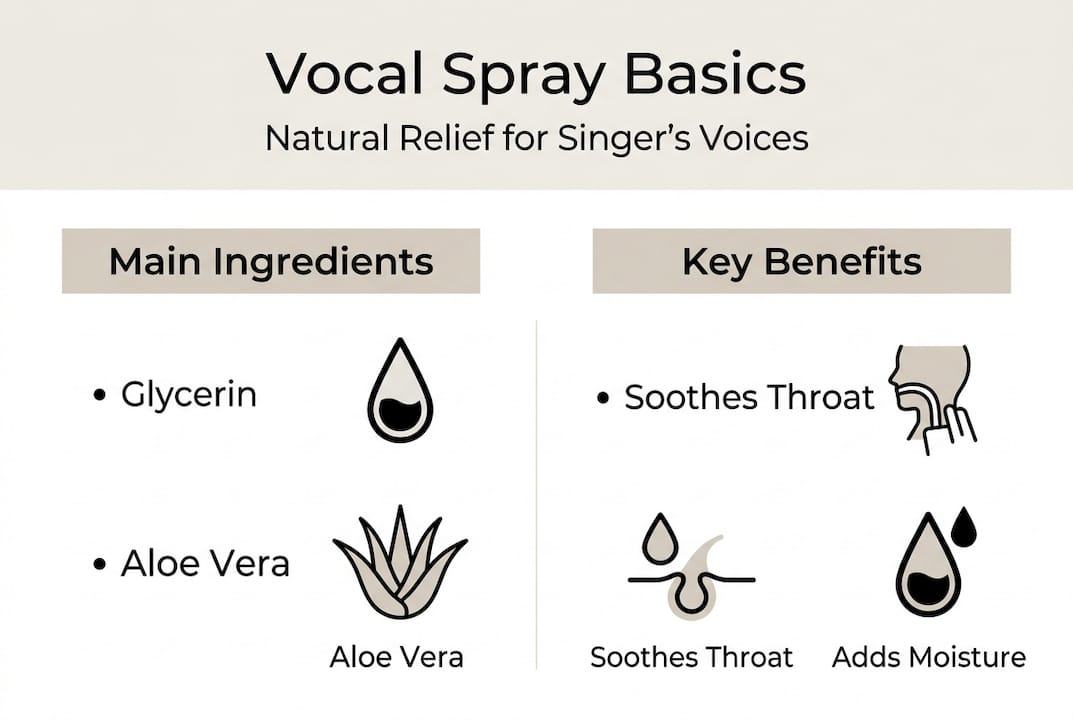
Common ingredients and what they do:
| Ingredient | Purpose |
|---|---|
| Glycerin | Draws moisture to throat tissues |
| Aloe vera | Soothes mild irritation |
| Honey | Coats the throat, mild antimicrobial |
| Ginger | Anti-inflammatory, warming effect |
| Slippery elm | Forms a gel-like coating on mucous membranes |
| Licorice root | Soothes inflammation |
| Marshmallow root | Moisturizes and coats the throat lining |
These ingredients work on the surface of the vocal tract. They do not reach the vocal folds directly, since anything you spray or swallow passes over the folds, not onto them. This is a key distinction many singers misunderstand.
When does it make sense to use a vocal spray?
The best time to avoid a spray is when you are using it to push through serious pain or fatigue. That’s when your voice is telling you something important, and spraying over it is like putting tape over a warning light.
Here’s where the picture gets more complicated. Thousands of performers swear by their favorite spray, and the testimonials are genuinely enthusiastic. But enthusiasm is not the same as evidence.
No clinical studies specifically validate vocal sprays, with evidence being anecdotal or product-claimed. That doesn’t mean they’re useless. It means we should be honest about what they’re doing and why they seem to help.
User claims vs. expert recommendations:
| What singers report | What medical experts recommend |
|---|---|
| Instant throat comfort | Vocal rest as the primary recovery tool |
| Less dryness on stage | Increased daily water intake |
| Reduced pre-show nerves | Avoiding caffeine, alcohol, and irritants |
| Faster perceived recovery | Seeking professional care for persistent symptoms |
| Better vocal clarity | Addressing underlying technique issues |
Medical sources prioritize rest, hydration, and avoidance of irritants over vocal sprays for actual vocal cord disorders. Harvard Health, for example, emphasizes that true vocal recovery requires reducing demand on the voice and managing environmental factors, not applying surface treatments.
That said, the comfort effect of a good spray is real and worth something. A singer who feels less physical tension before going on stage is likely to perform with less compensatory tension in the larynx. That indirect benefit matters. Explore the natural vocal remedies guide for a fuller picture of how these tools fit together, or look at throat drops and recovery tips for complementary options.
“A spray can ease the sensation of dryness and help you feel more prepared, but it cannot substitute for what your voice truly needs: rest, proper hydration, and technique that doesn’t place undue stress on the vocal folds.”
Pro Tip: If you find yourself reaching for your spray because something hurts, stop. Pain is a signal from your vocal folds, and numbing or masking it can lead to worsening injury. Listen to your body first.
Not all sprays are created equal. The market is crowded with products that range from genuinely supportive to potentially irritating. Knowing what to look for protects your voice and your money.
What to look for:
What to avoid:
Simple glycerin-based formulas are safest for regular use. Avoid sprays with numbing agents, alcohol, and artificial additives. This isn’t just about short-term comfort. Numbing agents are particularly risky because they remove your ability to feel when you’re pushing too hard. You might finish a performance feeling fine only to wake up the next morning barely able to speak.
Popular singer-focused brands that receive consistent positive feedback from performers include Entertainer’s Secret, Vocal Eze, and Singer’s Saving Grace. Each uses relatively clean formulas built around hydration rather than pharmacological action. That’s the right approach.
If you’re considering herbal supplements for vocalists alongside your spray, be aware of cumulative exposure to the same herbal compounds. Too much slippery elm or licorice root from multiple sources can upset digestion. Balance matters. And always check out the essential throat drops guide to understand how drops and sprays can work in tandem without overlap.
Pro Tip: If you’re allergy-prone or sensitive to plants, choose the simplest formula available. A spray with just glycerin, water, and honey is far less likely to cause a reaction than one with ten herbal extracts.
Knowing which spray to buy is only half the equation. Using it smartly, within a full vocal care routine, is what actually protects your voice over time.
A practical step-by-step approach:
“Vocal sprays are not a cure and should be paired with rest, proper technique, and hydration. Using them to mask more serious injury puts your long-term vocal health at serious risk.”
Harvard Health on vocal health reinforces that rest and avoiding overuse remain the gold standard for managing hoarseness and vocal fatigue. Read more voice care tips to build a routine that actually sustains your instrument. Combining sprays with herbal solutions for vocal care can create a more complete support system.
After 25+ years working with singers and voice professionals, our view is straightforward: vocal sprays earn their place in your bag, but they don’t deserve the star role many performers give them.
The singers who fare best over long careers aren’t the ones with the most products. They’re the ones who treat their voice as a full-body instrument, rest when it hurts, practice efficient technique, and stay consistently hydrated. Sprays are useful adjuncts in that system. They create comfort, reduce surface dryness, and can support a pre-performance ritual that signals mental readiness.
But when a spray becomes a crutch, something shifts. You start performing through signals your body is sending for good reason. The immediate relief feels reassuring, and sometimes that reassurance is mostly psychological. That’s not nothing. Trusted routines genuinely support performance confidence. Just don’t let that comfort replace the fundamentals.
Our honest recommendation: use sprays as a finishing touch, not a foundation. Explore best vocal remedies to build a complete support system your voice can rely on for years.
At TMRG, we’ve spent more than 25 years developing and curating natural vocal health solutions designed specifically for performers. We understand that a singer’s voice is their livelihood and that you need products you can trust before a show, during recovery, and throughout your career.

Our voice therapy kit brings together the essential tools for ongoing vocal support in one practical package. For targeted daily use, the voice enhancement drops offer natural, gentle relief that complements any spray routine. If you’re dealing with more persistent issues, explore our full range of vocal problems solutions to find support that matches your specific needs. Your voice deserves more than a quick fix.
Yes, simple hydrating sprays without alcohol or numbing agents are safe for daily use by most singers. Stick to clean, glycerin-based formulas for regular application without risk.
No. Vocal sprays cannot cure laryngitis or a completely lost voice. Rest, adequate hydration, and professional medical advice are necessary for true recovery from these conditions.
Singers should avoid sprays containing alcohol, benzocaine, phenol, artificial flavors or dyes, and complex herbal blends if you have known plant sensitivities or allergies.
Medical experts do not specifically recommend sprays for hoarseness. Sources like Harvard Health emphasize rest, hydration, and avoiding irritants as the primary approach.
Most natural sprays have minimal side effects, but allergic reactions can occur, particularly with complex herbal formulas. Always read the label carefully and introduce new products one at a time.
