Your Cart is Empty


TL;DR:
- Choosing glycerin-based throat sprays with herbal ingredients supports vocal hydration and reduces irritation.
- Proper usage and integrating sprays into a broader vocal care routine prevent further strain and long-term damage.
- Throat sprays are tools for relief but should complement rest, hydration, and proper technique for lasting vocal health.
Picture this: you have a sold-out show in two hours, and your voice comes out rough, thin, and unreliable. You reach for the first throat spray you can find, hoping it will save the night. But not every spray is built the same, and the wrong formula can actually make things worse. Vocal professionals face unique demands on their voice, and choosing the right throat spray is a decision that deserves real guidance. This article breaks down what causes hoarseness in performers, which ingredients actually work, and how to use throat sprays effectively so your voice can recover and perform at its best.
| Point | Details |
|---|---|
| Choose gentle ingredients | Opt for throat sprays that are glycerin- or herbal-based to avoid drying out your voice. |
| Use as part of routine | Integrate throat spray into a broader plan including rest and proper vocal technique for best recovery. |
| Compare before buying | Review side-by-side differences in formulas and user feedback to ensure the spray meets your vocal needs. |
| Follow safe application | Adhere strictly to product directions to maximize benefits and avoid overuse. |
Hoarseness happens when the vocal folds, the two bands of muscle tissue inside your larynx, become irritated, swollen, or fatigued. For singers, actors, and speakers, this is not a rare inconvenience. It is an occupational hazard.
The most common causes of hoarseness in vocal professionals include:
Performers are especially at risk because they often push through discomfort rather than rest. The show-must-go-on mindset is admirable, but it can turn minor strain into a serious condition. Learning about treating stiff or floppy vocal cords can help you recognize when your folds need targeted support rather than more rehearsal.
Symptoms to watch for include a lowered pitch, reduced range, voice cracking, throat tightness, and a persistent urge to clear your throat. These are signals your vocal folds are under stress.
“Overused and strained vocals are a primary reason vocalists use throat sprays like Vocal Eze to find relief between performances.”
Why do quick fixes sometimes backfire? Because many performers reach for sprays or lozenges that contain menthol or alcohol, which create a temporary numbing sensation but actually dry out the vocal folds further. That false sense of relief can encourage you to keep singing when rest is what your voice truly needs. Understanding preventing persistent hoarseness is just as important as treating it once it appears.
Pro Tip: If your hoarseness lasts more than two weeks without improvement, do not self-treat. Seek evaluation from a laryngologist or voice-specialized speech therapist.
Understanding what causes hoarseness sets the stage for evaluating the best throat spray ingredients. Not all formulas are created equal, and some popular options on pharmacy shelves can actually work against vocal recovery.
Here is a breakdown of what to look for and what to avoid:
| Ingredient | Effect on vocal folds | Recommended? |
|---|---|---|
| Glycerin | Coats and moisturizes | Yes |
| Slippery elm | Soothes inflammation | Yes |
| Echinacea | Supports immune response | Yes |
| Honey | Natural antimicrobial, soothing | Yes |
| Alcohol | Dries out mucous membranes | No |
| Menthol | Numbs, masks pain, drying | Use with caution |
| Artificial dyes | No vocal benefit, potential irritant | No |
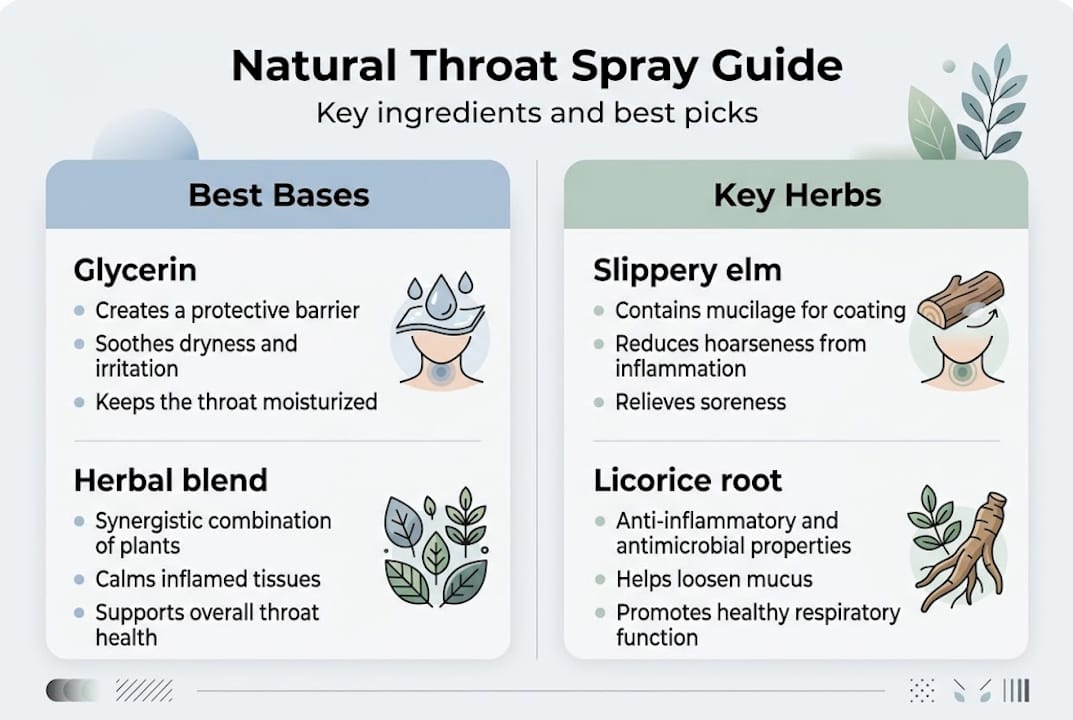
Glycerin-based formulas are the gold standard for vocal health. Glycerin-based sprays are preferred because they soothe without drying, creating a protective layer over irritated tissue rather than stripping it. This matters enormously when your vocal folds need to vibrate hundreds of times per second during a performance.
Herbal extracts like slippery elm, licorice root, and marshmallow root have a long history in vocal health for their ability to reduce inflammation and coat the throat. These plant-based agents work gently, which is exactly what stressed vocal tissue needs.

Alcohol-based sprays are the most common pitfall. They feel effective because they cut through mucus quickly, but they dehydrate the delicate mucous membranes lining your throat. The result is short-term relief followed by greater dryness and irritation. The same applies to high-menthol formulas, which can numb discomfort without addressing the underlying cause.
For a detailed breakdown of how leading sprays compare, the expert throat spray comparison at TMRG Solutions offers side-by-side analysis based on real performer needs.
Pro Tip: Read the inactive ingredients list too. Preservatives, artificial sweeteners, and dyes can irritate sensitive vocal tissue even when the active ingredients look good.
If you perform frequently or have a demanding schedule, reviewing preparing for vocal strain will help you build a proactive ingredient strategy rather than a reactive one.
Knowing which ingredients work, it is vital to master the best usage strategies. Even the finest natural spray delivers poor results if you apply it incorrectly or at the wrong time.
Step-by-step guide to using throat spray:
Using Vocal Eze as directed helps soothe overused or strained vocals for performers, especially when applied consistently rather than only when discomfort peaks.
Common mistakes to avoid:
Pairing your spray with a recovery routine:
| Recovery element | Timing | Notes |
|---|---|---|
| Throat spray | Before and after performance | Follow product directions |
| Water intake | Throughout the day | Aim for at least 8 glasses |
| Vocal rest | After heavy use | Minimum 30 to 60 minutes |
| Steam inhalation | Morning and evening | Adds deep moisture to folds |
| Gentle humming | Warm-up before performing | Activates folds without strain |
For more targeted guidance, the tips for hoarse voice resource covers additional strategies that complement spray use. You can also explore the hoarse voice prevention guide to build habits that reduce how often you need emergency vocal care.
To make choosing simpler, let us see how popular sprays stack up side by side. When you are a working vocalist, you need options you can trust and access reliably.
| Brand | Base formula | Key herbs | Best for | Value |
|---|---|---|---|---|
| Vocal Eze | Certified organic glycerin | Echinacea, slippery elm, honey | Frequent performers | High |
| Entertainer’s Secret | Glycerin, saline | Aloe vera | Dry throat, speaking | Moderate |
| Grether’s Pastilles (spray) | Glycerin | Blackcurrant, vitamin C | Mild irritation | Moderate |
| Thayers Slippery Elm | Glycerin, slippery elm | Slippery elm bark | General soothing | Budget |
Vocal Eze features a certified organic herbal and glycerin formula, making it ideal for frequent and overused voices. This matters because many performers use their spray multiple times per day, and a non-organic formula may introduce unwanted chemical residues to already-stressed tissue.
What professionals look for when choosing a spray:
For a broader look at your options, the vocal spray comparison and natural vocal spray options pages offer performer-focused reviews. If you want a ranked list, the best throat sprays for singers guide covers seven leading products with clear criteria.
The bottom line is that natural, glycerin-based formulas with certified organic herbs consistently outperform alcohol-heavy alternatives for vocal professionals who need both immediate relief and long-term safety.
Here is something we have observed over 25 years of working with singers and voice professionals: throat sprays are a tool, not a treatment plan. The most common mistake we see is performers using a high-quality spray and then continuing to push their voice without rest, hydration, or technique correction. The spray becomes a permission slip to keep going when the real message is to stop and recover.
There is also a subtler problem. When a spray reduces discomfort quickly, it removes the pain signal that was protecting your vocal folds from further damage. You feel better, so you sing harder. This cycle is how minor strain becomes nodules or hemorrhage.
Experienced pros use sprays as one layer in a broader system that includes proper breath support, consistent hydration, smart scheduling, and genuine vocal rest. The debate around good vocal technique is worth exploring because even technically sound singers can develop hoarseness if they ignore recovery. A spray enhances a healthy routine. It cannot replace one.
Bringing it all together, here is how you can support your voice further. Throat sprays are one important piece of the picture, but lasting vocal health comes from a complete approach.

At TMRG Solutions, we have spent over 25 years developing tools specifically for singers, actors, and vocal professionals. The TMRG Basic Voice Therapy Kit pairs natural remedies with structured vocal care guidance, giving you a system rather than a single product. For targeted support between performances, Impact Voice Enhancement Drops work alongside throat sprays to support vocal fold health from the inside. If you are dealing with more persistent vocal challenges, explore our comprehensive solutions for vocal problems to find the right combination for your voice.
A safe throat spray avoids drying ingredients like alcohol and uses soothing agents such as glycerin and herbal extracts. Glycerin-based sprays are preferred for vocal health because they moisturize rather than strip the mucous membranes.
Natural throat sprays may bring relief within minutes, but full voice recovery typically requires ongoing vocal care and rest. Vocal Eze soothes vocal cords and is specifically formulated for overused, strained voices.
They can provide significant relief for mild to moderate hoarseness, but severe cases may need professional evaluation. Certified organic herbs in quality sprays target sore and hoarse throats effectively within their appropriate scope.
Yes, throat spray works best when paired with proper hydration, rest, and gentle vocal exercises. Combining approaches gives your vocal folds multiple layers of support during recovery.
Natural, non-alcoholic sprays are generally considered safe for daily use within recommended guidelines. Vocal Eze’s glycerin base is safe for regular use by vocal professionals who need consistent support.
