Your Cart is Empty


TL;DR:
- Vocal strain causes swelling and irritation, impairing voice vibrancy and risking long-term damage.
- Immediate relief includes voice rest, steam inhalation, hydration, and gentle SOVT exercises.
- Prevention relies on consistent vocal care, proper technique, hydration, and avoiding chronic overuse.
Vocal strain can silence you at the worst possible moment. A demanding rehearsal, a long lecture, or a back-to-back performance schedule leaves your vocal folds swollen and your voice thin and rough. Many performers reach for honey, lemon, or a quick steam session expecting instant results, but the reality is more nuanced. There is no remedy that restores full vocal function within one hour. What you can do is apply the right combination of evidence-based steps to reduce discomfort fast, protect your vocal folds from further damage, and set yourself up for a quicker recovery. This guide walks you through exactly that.
| Point | Details |
|---|---|
| Voice rest is essential | Resting your voice is the most effective and safest immediate remedy for hoarseness. |
| Hydration speeds recovery | Steam or humidifiers hydrate vocal tissues faster than drinking water. |
| Natural remedies offer support | Honey, herbal teas, and steam can soothe symptoms but do not directly heal vocal cords. |
| Avoid whispering when strained | Whispering worsens vocal strain; use low-volume speech, writing, or apps to communicate. |
| Seek medical help if symptoms persist | Consult a specialist if hoarseness lasts over two weeks or is accompanied by pain. |
Hoarseness is your body’s warning signal. When you push your voice beyond its limits, the vocal folds (the two thin bands of muscle tissue inside your larynx) swell and become irritated. That swelling prevents them from vibrating smoothly, which is why your voice sounds rough, breathy, or weak. For performers, this can happen after a single high-demand show or after weeks of accumulated fatigue.
One of the most persistent myths in vocal health is that whispering protects a strained voice. It does the opposite. When you whisper, your vocal folds press together with significant tension, which actually increases the mechanical stress on already irritated tissue. Many performers discover this the hard way.
Here are the key facts every vocalist should understand about vocal strain:
“The voice is a physical instrument. Like any muscle group, it needs structured rest to repair itself. Skipping that step is like running on a sprained ankle.”
Building good voice care strategies into your regular schedule is far more effective than scrambling for solutions after damage occurs. Understanding the mechanics helps you make smarter choices in the moment. Read more about vocal maintenance tips during high-demand periods to stay ahead of strain.
Once you know what causes vocal strain, moving to proven relief techniques is critical for fast, safe recovery. The honest starting point is this: no true one-hour cure exists for vocal strain. What you can achieve in the first hour is meaningful symptom reduction and damage control.
Here is a step-by-step routine you can start right now:
Whispering worsens strain more than low-volume supported speech. If you absolutely must communicate verbally, use a soft, slightly breathy tone with good breath support rather than a whisper.
| Method | Speed of relief | Evidence level | Risk level |
|---|---|---|---|
| Voice rest | Fast | Strong | None |
| Steam inhalation | Fast | Moderate | Low |
| Hydration (drinking) | Moderate | Strong | None |
| SOVT exercises | Moderate | Strong | Low |
| Whispering | None | Strong (harmful) | High |
| Throat clearing | None | Strong (harmful) | High |
Pro Tip: Set a phone timer to remind yourself to take sips of warm water every 15 minutes. Consistent hydration beats large, infrequent gulps when your vocal folds are inflamed.
For a structured approach, our 3-step hoarseness treatment guide breaks this down further. You can also review voice care best practices for a broader recovery framework.
Now, let’s take a closer look at which natural remedies help most, and where their strengths and limits lie. The market is full of teas, lozenges, and herbal tonics promising vocal recovery. Some have genuine value. Others are well-intentioned but fall short.
Honey is one of the most studied natural options. Dark honey varieties like buckwheat have demonstrated better soothing effects than placebo and even outperformed dextromethorphan (a common cough suppressant) in some studies. A teaspoon of raw honey in warm water is a reasonable addition to your recovery routine.

However, there is an important limit to understand. Honey coats the throat and pharynx, not the vocal folds themselves. Swallowed substances do not touch the vocal folds directly because the airway closes during swallowing. So honey soothes surrounding tissue and reduces the urge to cough, which indirectly protects your vocal folds from additional trauma.
Here is a quick breakdown of common natural remedies:
| Remedy | Direct vocal fold benefit | Soothing effect | Risk of irritation |
|---|---|---|---|
| Dark honey | No | High | Very low |
| Steam inhalation | Yes | High | Low |
| Chamomile tea | No | Moderate | Very low |
| Lemon juice | No | Low | Moderate to high |
| Menthol lozenges | No | Moderate | Low |
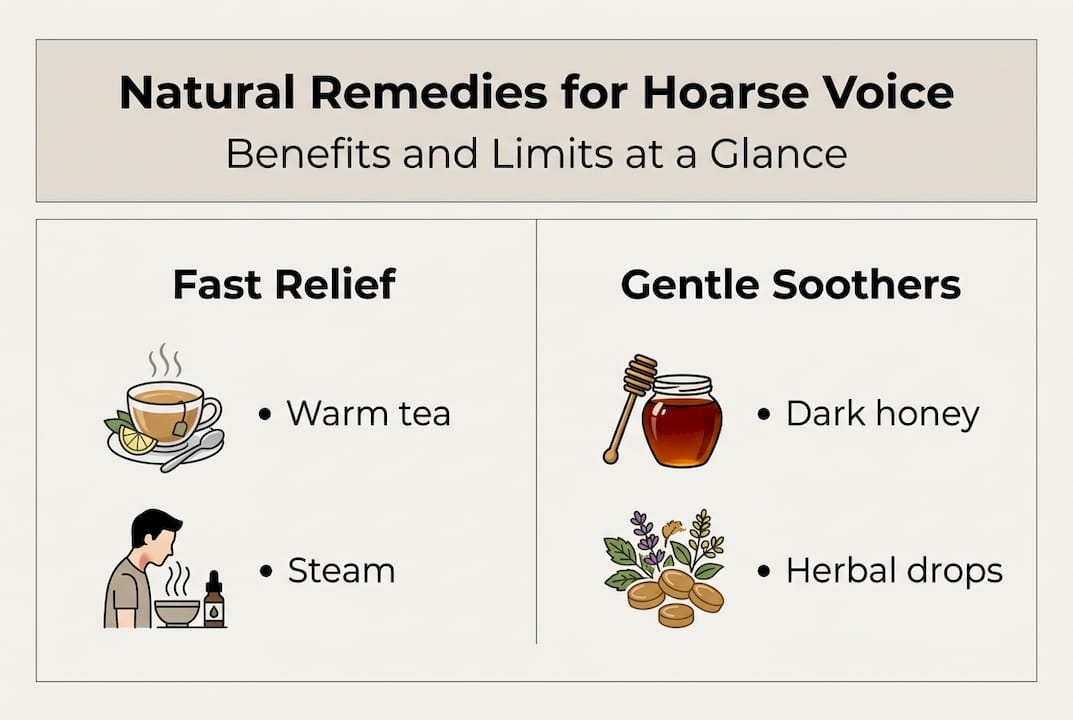
For ongoing vocal health tips that incorporate natural remedies into a sustainable routine, it helps to think of these tools as support, not solutions. Building a daily vocal care routine around hydration, rest, and gentle exercise will always outperform reactive remedy use.
Even with rapid relief methods, knowing when to seek expert help and adopting preventive habits is crucial. Most cases of hoarseness from vocal strain resolve within a few days of proper rest. But some situations require more than home care.
Hoarseness lasting more than two weeks warrants evaluation by an Ear, Nose, and Throat (ENT) specialist. Persistent strain in performers significantly raises the risk of vocal nodules or polyps, which are structural changes to the vocal folds that require medical management or, in some cases, surgery.
Watch for these warning signs:
For prevention, consistency is everything. Performers who avoid chronic vocal strain share a few key habits:
Pro Tip: Schedule one full day of vocal rest per week, even when your voice feels fine. Proactive rest prevents the accumulation of micro-trauma that leads to acute injury.
An effective voice care routine built around these habits is the most reliable protection against recurring strain. For a focused checklist, review these essential voice care tips designed specifically for performers.
After learning what works and what doesn’t, let’s dig deeper into the real truth about how professionals successfully manage vocal strain. Here it is: the obsession with quick fixes is itself a risk factor.
When performers chase one-hour cures, they often return to performance before their vocal folds have adequately recovered. That pattern, repeated over months or years, is precisely how nodules form and careers get cut short. No true one-hour cure exists, and believing otherwise leads to misuse.
The performers with the longest, most consistent careers are not the ones who found the best emergency remedy. They are the ones who built sustainable vocal habits that made emergencies rare. They warm up every single time. They rest proactively. They know their limits and respect them.
What most articles miss is this: the goal is not to recover fast enough to perform tomorrow. The goal is to build a voice that rarely needs emergency recovery at all. Reactive care will always be less effective than proactive management. Explore professional vocal care principles to shift your approach from crisis response to long-term vocal resilience.
The strategies in this guide give you a strong foundation, but sometimes you need more targeted support to get back to full performance capacity.

At TMRG, we have spent 25+ years developing solutions specifically for vocal performers dealing with hoarseness, fatigue, and strain. Our voice therapy kit basic is designed for performers who need structured, reliable relief tools in one place. For more advanced needs, the voice therapy kit standard includes herbal formulations and additional resources suited to professionals with higher performance demands. Browse our full range of vocal health solutions to find the right fit for your voice and schedule.
Voice rest, hydration, and SOVT exercises offer the quickest relief, but total recovery takes longer than one hour and requires consistent care.
Honey soothes the throat and may reduce coughing, but it does not directly contact or heal the vocal folds, so it cannot fix hoarseness quickly on its own.
Whispering worsens strain by increasing vocal fold tension; low-volume, breath-supported speech is a safer option if you must communicate.
If your hoarse voice lasts longer than two weeks or is accompanied by pain, sudden voice loss, or other concerning symptoms, consult an ENT specialist promptly.
