Your Cart is Empty


Performers face unique vocal challenges that can derail careers if left unmanaged. Hoarseness, strain, and vocal fatigue are not just inconveniences but serious threats to your livelihood. Whether you’re a singer hitting high notes nightly or an actor projecting across a theater, your voice is your primary tool. A strategic voice care routine combining hydration, warm-ups, rest, and smart lifestyle choices can prevent damage and extend your performing years. This guide delivers practical, evidence-based strategies to keep your voice strong and resilient through demanding schedules and intense vocal use.
| Point | Details |
|---|---|
| Hydration prevents hoarseness | Drinking 8-10 glasses of water daily lubricates vocal cords and reduces friction during phonation. |
| Warm-ups reduce strain | Exercises like humming and lip trills prepare vocal folds and decrease injury risk before performances. |
| Avoid vocal irritants | Eliminating throat clearing, shouting, smoking, and certain foods protects against inflammation and mucus buildup. |
| Rest enables recovery | Vocal naps and post-performance cool-downs allow tissues to heal and prevent cumulative damage. |
| Seek help early | Consulting an ENT or speech-language pathologist within two weeks of persistent hoarseness prevents long-term problems. |
Voice problems are surprisingly common among performers. 17.9 million US adults report voice problems, with performers and teachers facing disproportionately higher risk due to occupational demands. Your voice undergoes extraordinary stress during performances, rehearsals, and teaching sessions. Unlike office workers who can rest their voices throughout the day, you’re expected to deliver consistent vocal quality under pressure, often in less-than-ideal acoustic environments.
Several risk factors compound these challenges. Overuse is the most obvious culprit, but improper technique amplifies damage exponentially. Many performers develop vocal nodules in professionals because they push through fatigue rather than addressing technique flaws. Illness, dehydration, and lifestyle habits like smoking or poor sleep create a perfect storm for vocal injury. Environmental factors such as dry air, allergens, and backstage dust further irritate delicate vocal tissues.
The stakes are high. Chronic hoarseness can signal developing pathology that may require surgery or extended voice rest, effectively sidelining your career. Understanding causes of vocal nodules helps you recognize warning signs before they become career-ending problems. Early identification is crucial.
Critical warning signs include:
If hoarseness persists beyond two weeks, seek evaluation from an ENT or speech-language pathologist immediately. Early intervention prevents minor issues from becoming permanent damage.
Prevention through consistent routines dramatically reduces long-term damage risk. The following sections provide actionable strategies to protect your most valuable professional asset.
Hydration forms the foundation of vocal health. Your vocal cords require adequate moisture to vibrate efficiently without friction. Daily hydration with 8-10 glasses of water, warm herbal teas, and steam inhalation lubricates vocal cords to prevent hoarseness. Think of your vocal folds as delicate machinery that needs constant lubrication to function smoothly. Dehydration thickens mucus, increases friction, and makes phonation physically harder on your tissues.

Warm herbal teas offer dual benefits. They hydrate while the warmth soothes inflamed tissues. Steam inhalation before performances adds moisture directly to your respiratory tract, creating optimal conditions for vocal production. Carry a water bottle everywhere and sip consistently rather than gulping large amounts infrequently. Your body absorbs water more effectively through steady intake.
Eliminating vocal irritants is equally critical. You must avoid throat clearing, shouting, whispering, smoking, dairy, spicy/fried foods, and caffeine/alcohol to prevent irritation and mucus buildup. Each of these creates inflammation or mucus that compromises vocal function. Throat clearing, while tempting when you feel phlegm, actually slams your vocal folds together violently, causing micro-trauma. Whispering forces abnormal vocal fold tension that’s more damaging than normal speech.
Lifestyle modifications for vocal protection:
Dietary choices directly impact vocal function. Acid reflux from spicy foods can damage vocal folds overnight while you sleep. Dairy increases mucus production, forcing you to clear your throat more frequently. Caffeine and alcohol act as diuretics, counteracting your hydration efforts. Understanding preventing vocal fatigue requires recognizing how lifestyle choices accumulate into either protection or damage.
Pro Tip: Time your hydration strategically by front-loading water intake in the morning and early afternoon, then reducing intake two hours before performances to avoid bathroom emergencies. Avoid all dairy and caffeine for 24 hours before important shows.
These preparation steps create the physiological conditions necessary for healthy vocal production. Without proper hydration and irritant avoidance, even perfect technique can’t fully protect your voice from damage.
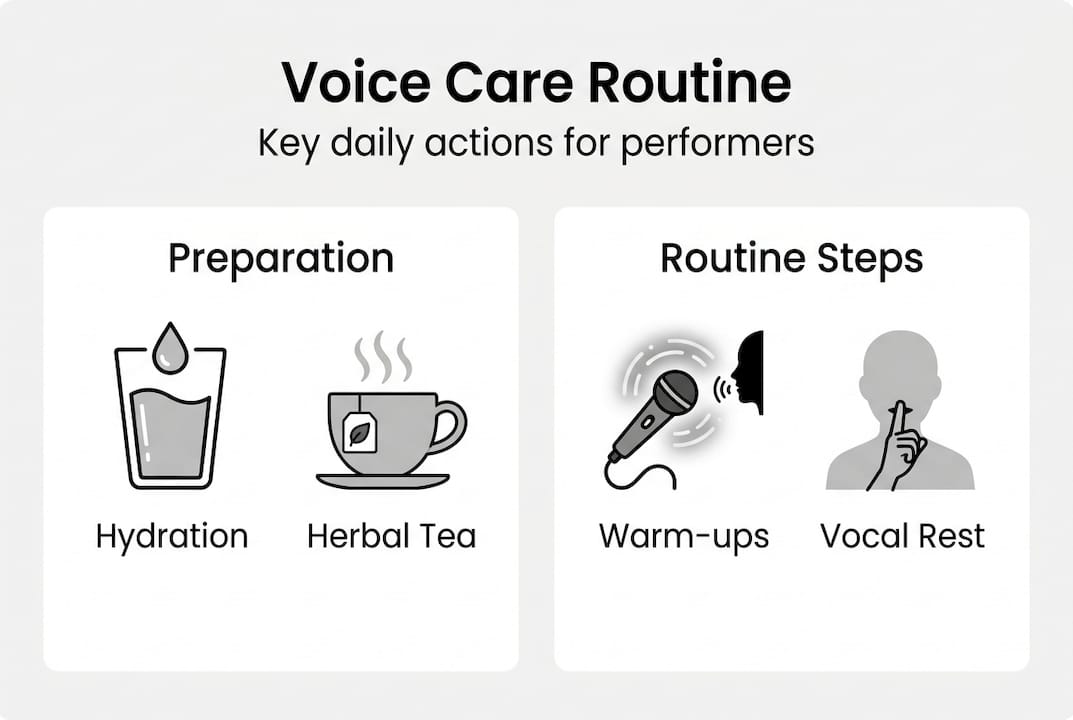
Vocal warm-ups are non-negotiable before any performance or rehearsal. Warm-up exercises like humming, lip trills, sirens, and straw phonation before performances reduce strain and prepare vocal folds for intense use. These exercises gradually increase blood flow to your laryngeal muscles and establish optimal vocal fold coordination before you demand full performance capacity.
Step-by-step warm-up sequence:
Each warm-up type serves specific purposes. Humming engages vocal folds gently while establishing breath support. Lip trills provide tactile feedback about airflow consistency and help release jaw tension. Sirens stretch your vocal range safely. Straw phonation has gained popularity because it creates semi-occluded vocal tract conditions that reduce impact stress on vocal folds. Explore proper vocal warm-ups for detailed technique guidance.
| Warm-up Type | Primary Benefit | Best Used For | | — | — | | | Humming | Gentle engagement without strain | Early morning or fatigued voices | | Lip Trills | Airflow consistency and jaw release | Mid-range flexibility development | | Sirens | Full range stretching safely | Preparing for demanding repertoire | | Straw Phonation | Reduced impact stress on folds | Vocal rehabilitation or prevention |
Cool-downs are equally important but often neglected. Vocal rest, naps, and cool-downs like descending hums are essential during illness, fatigue, or post-performance to allow recovery. After intense vocal use, your laryngeal muscles need gentle return to baseline rather than abrupt cessation. Spend 5-10 minutes doing descending hums, starting from comfortable mid-range and sliding downward, releasing tension accumulated during performance.
Vocal rest deserves serious attention. Schedule vocal naps during demanding periods like tours or tech weeks. A vocal nap means complete silence for 20-30 minutes, allowing tissues to recover from micro-trauma. During illness, avoid voice use entirely until symptoms resolve. Pushing through illness dramatically increases injury risk. Implement vocal recovery strategies when you notice early fatigue signs.
Essential rest practices:
Pro Tip: Research shows inspiratory muscle warm-up combined with vocal warm-up improves maximum phonation time by 21%, high-pitch duration 32%, low-pitch 27%, and vocal range. Add five minutes of inspiratory muscle training using a resistance device before your standard vocal warm-up for measurable performance gains.
Consistent execution of warm-ups, cool-downs, and strategic rest creates the physiological resilience needed for long performing careers. These aren’t optional luxuries but essential maintenance for your professional instrument.
Tracking your vocal health helps you catch problems before they become serious. Monitor for persistent hoarseness, increased effort during phonation, reduced range, vocal breaks, or pain. Keep a simple voice journal noting daily vocal demands, hydration levels, and how your voice feels. Patterns emerge quickly, revealing which situations stress your voice most.
Common mistakes undermine even well-intentioned routines. Insufficient warm-up time is the most frequent error. Rushing through five minutes of humming before a two-hour show doesn’t adequately prepare your voice. Allocate at least 15-20 minutes for thorough warm-ups. Ignoring rest needs is equally problematic. Many performers pride themselves on pushing through fatigue, but this bravado leads directly to injury.
Mistakes that sabotage vocal health:
Poor hydration habits create cyclical problems. You can’t hydrate effectively by drinking a gallon of water an hour before your show. Your body needs consistent intake throughout the day. Overuse without adequate recovery time accumulates micro-trauma that eventually manifests as pathology. Understanding vocal maintenance tips helps you adjust routines for demanding periods.
Schedule vocal breaks strategically on high-demand days. During tours or multiple-show days, protect your voice between performances by minimizing unnecessary talking. Use amplification for teaching or rehearsals instead of projecting constantly. Your psychological relationship with your routine matters too. Self-efficacy, your belief in your ability to maintain healthy habits, predicts long-term adherence better than knowledge alone.
If hoarseness persists beyond two weeks despite implementing proper voice care routines, seek immediate evaluation from an ENT or speech-language pathologist. Waiting longer risks permanent damage that could have been prevented with early intervention.
Adjust your routine based on vocal demands and individual response. Some performers need more aggressive hydration, while others require extended warm-up periods. Pay attention to what your voice tells you. Increased effort or reduced flexibility signals the need for modifications. Implement vocal recovery process protocols at the first sign of trouble rather than waiting for obvious injury.
Successful monitoring combines objective tracking with subjective awareness. Note changes in your vocal capabilities, physical sensations during phonation, and recovery time needed between performances. This data helps you refine your routine for optimal protection and performance.
Implementing the strategies outlined above creates a solid foundation for vocal health, but specialized tools can amplify your results. TMRG Solutions offers voice therapy kits specifically designed for performers facing the unique challenges of professional voice use. These kits complement your hydration, warm-up, and rest routines by providing targeted recovery aids that address inflammation, dryness, and vocal fatigue.

Whether you’re managing occasional hoarseness or recovering from intense vocal demands, options range from the TMRG Voice Therapy Kit Basic for everyday maintenance to the Voice Therapy Kit Standard for more comprehensive support. Performers with demanding schedules benefit from the Premium Voice Therapy Kit, which includes advanced formulations developed over 25 years of vocal health expertise. Explore these solutions to optimize your vocal recovery and maintain peak performance capability throughout your career.
Performers should maintain consistent hydration throughout the day, targeting 8-10 glasses of water minimum. Front-load intake in morning and early afternoon, reducing consumption two hours before performances to avoid interruptions. Include warm herbal teas for additional soothing benefits, and use steam inhalation before vocal use to add moisture directly to respiratory tissues.
Humming, lip trills, sirens, and straw phonation are proven exercises that prepare vocal folds while reducing strain risk. Allocate 15-20 minutes for thorough warm-ups, progressing from gentle humming through increasingly demanding exercises. Straw phonation is particularly effective because it creates optimal vocal fold contact conditions with reduced impact stress.
Complete voice rest is critical during respiratory illness, obvious vocal fatigue, or after unusually intense vocal use. Avoid all phonation including speaking, whispering, and singing until symptoms resolve. Schedule 20-30 minute vocal naps between performances during demanding periods, and limit social talking on show days to preserve vocal energy for professional use.
Persistent hoarseness lasting more than two weeks, pain during phonation, reduced vocal range, increased effort for normal tasks, and vocal breaks are red flags requiring professional evaluation. Don’t ignore subtle changes like slightly increased breathiness or reduced stamina. Consult an ENT or speech-language pathologist immediately if symptoms don’t resolve with rest and proper care within two weeks.
